
Affiliate disclosure: This post may contain affiliate links. Please see our disclosure policy.
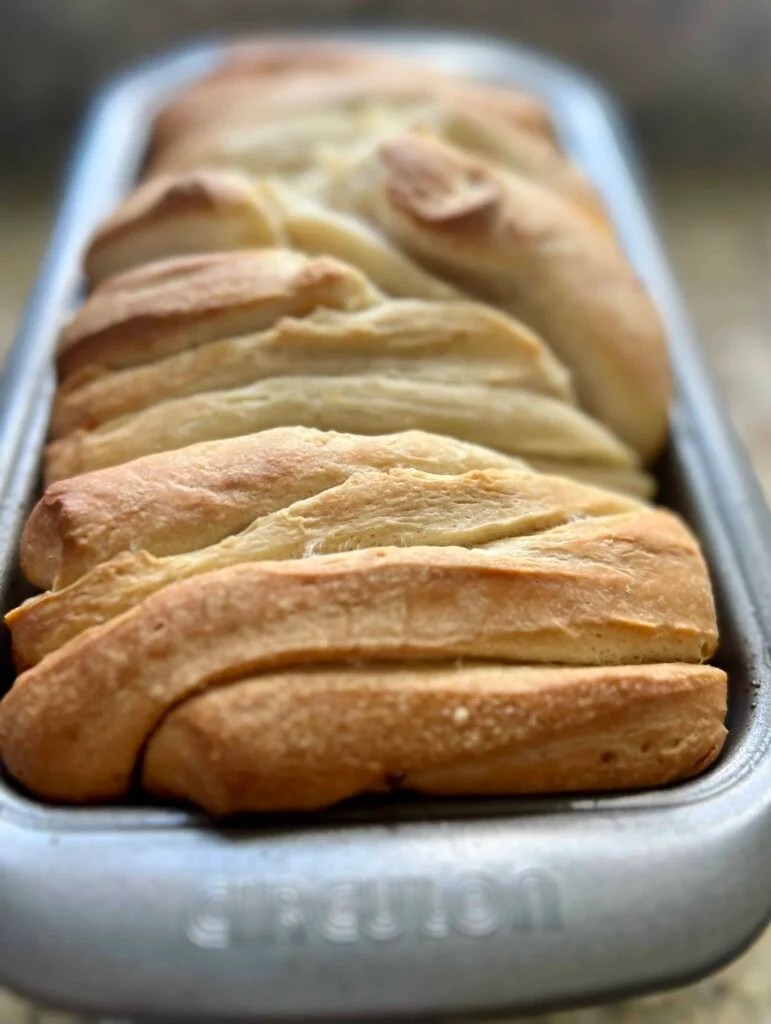
This bread – so buttery delicious, so soft and tender. And so super easy! It’s the perfect side for dinner or just to enjoy on its own. Throw in some garlic and herbs to make this a garlic loaf, or just enjoy it plain, buttery and delicious. Buttery sourdough pull apart bread is made with natural yeast sourdough meaning it will take a little extra time to rise, but the flavor and fermentation benefits are worth it!
And if you love a good pull-apart, you’ll also love this Spinach Artichoke Pull-Apart Sourdough Focaccia.

Save this for later!
Table of Contents
- Ingredients in Buttery Pull Apart Sourdough Bread
- Sourdough Sample Schedule for Buttery Sourdough Pull Apart Bread
- Mixing a Levain
- Mixing the Pull Apart Bread Dough
- Bulk Fermentation
- Shaping and Proofing Buttery Sourdough Pull Apart Bread
- Bake and Enjoy!
- If you like Buttery Pull Apart Sourdough Bread, you’ll also like…
- Frequently Asked Questions
- Buttery Sourdough Pull Apart Bread Recipe
Ingredients in Buttery Pull Apart Sourdough Bread
- Sourdough Starter: Use an active/ripe sourdough starter (doubled in size/bubbly/mild sour aroma) to mix the levain.
- Bread Flour: I almost always use a 12.5% protein bread flour for any bread that I am kneading. The higher protein content and properly activating the gluten results in a lighter/springy baked good.
- Water: Temperature is very important to how sourdough ferments. Following the temperature recommendations in this recipe will help this dough rise and ferment properly.
- Egg: An egg adds a delicious richness to the dough.
- Sugar: This bread is not very sweet. A little bit of sugar helps balance the other ingredients.
- Olive Oil: Oil gives the bread a soft and tender texture. Use any neutral flavored oil.
- Salt: Salt enhances flavor and works with the yeast to produce the best fermentation. Don’t forget to add it!
- Butter: This bread is baked in a whole stick of butter. It makes the bread deliciously crispy and decadent. I like using unsalted butter in my baking so I can adjust the seasonings as needed.

Sourdough Sample Schedule for Buttery Sourdough Pull Apart Bread
A sample baking schedule helps me when baking with sourdough. Sourdough takes much longer to rise than traditional bread. This schedule helps me plan my bake.
Note: This schedule assumes the dough temperature will be maintained at 78-80 degrees F (or a little higher) throughout the process.
| 8:00 AM – 11:30 AM | Mix Levain (1:1:1) Cover and let sit for 3-4 hours until bubbly and ripe |
| 11:30 AM – 11:45 AM | Mix Dough |
| 11:45 AM – 3:45PM | Bulk Fermentation (4-5 hours) |
| 3:45 PM – 4:00 PM | End Bulk Fermentation (Optional: Cold Bulk Fermentation overnight) Shape Loaf |
| 4:00 PM – 7:00PM | Let bread rise in a warm (80-85 degree F) place for 2-3 hours until puffed up, doubled in size and filling the loaf pan. Do not bake unless dough has puffed up and risen. |
| 7:00 PM – 7:35 PM | Preheat oven at 375 degrees F. Top and bake loaves for 35-40 minutes until loaf is baked through. |
Mixing a Levain
I use a levain method for making sourdough. You can read more about that here.
For this recipe I use a 3-4 hour levain (1:1:1 ratio).
- 35 grams ripe/mature sourdough starter
- 35 grams all-purpose or bread flour
- 35 grams water
Before mixing, take the temperature of the sourdough starter and flour. If it is colder than the 75-80 degree range, use warm water to mix the levain. If the ingredients are warmer than 75-80 degrees, use cooler water. The goal is for the levain to stay in the 75-80 degree temperature range. After mixing, cover loosely and let sit for about 3-4 hours (at 75-80 degrees F). If you want to mix levain overnight, mix a 1:10:10 levain with 5 grams ripe sourdough starter, 50 grams flour and 50 grams water. Let sit for 10-12 hours until bubbly, doubled in size and barely beginning to fall back down.

Mixing the Pull Apart Bread Dough
Set the bowl of a stand mixer on a kitchen scale. Add the ripe levain, water, egg, sugar, oil and salt to the bowl. Add most of the flour, reserving a little bit to add in as you mix. This can help to account for excess liquid or humidity. Start the mixer and knead the dough together for about 8-12 minutes until smooth. Add a little extra flour as needed. This dough will be tacky, but not super sticky. For an extra check that the dough is ready, the dough should pass the windowpane test before moving on to bulk fermentation.
Bulk Fermentation
Move the dough to a container for the bulk fermentation. Do your best to keep the temperature of the dough at 78-80 degrees F. I use a bread proofer in the winter to help the dough develop at the right temperature. Cover the container. The entire bulk fermentation will take about 4-5 hours (depending on the temperature of the dough). By the end of bulk fermentation, you may notice the dough is more cohesive, strong and aerated. It will have risen a little, maybe as much as 20-30%.
Cold Fermentation Option: If it is more manageable for you to split this recipe up into multiple days, you can refrigerate the dough after the bulk fermentation. Place the covered dough in the refrigerator for up to 48 hours. Once you shape the loaves, allow a little extra time for the dough to rise as it comes up to the 78-80 degree F dough temperature.
Shaping and Proofing Buttery Sourdough Pull Apart Bread
Dump the dough on the countertop. Roll the dough out into a rectangle and use a pizza cutter to cut the dough into 18-24 pieces (depending how many slices you want in the loaf). Melt 1/2 cup of butter (113 grams) in a bowl and add a little salt, minced garlic and seasonings if desired. Pour about a third of the butter mixture into a 9 by 5 loaf pan, coating the bottom of the pan.


Take a piece of cut dough and dip/dunk/coat it in the butter mixture. Place it at one edge of the loaf pan. Repeat the with the remaining pieces of dough, dunking and nestling the pieces into each other until you’ve filled the whole loaf pan. Pour any remaining butter mixture over the top of the bread. The pan will be full and the pieces of dough will be nestled up against each other.


Cover the loaf pan and let rise in a 80-85 degree F place until puffed up, doubled in size and risen, about 2-3 hours. Do not bake this loaf if the dough has not risen. If the dough was refrigerated before assembling, it may take a little longer to rise.

Bake and Enjoy!
Pre-heat the oven to 375 degrees F. Press your finger into the risen buttery sourdough pull apart bread and pull it away. If the indentation stays and springs back just a little, it is ready to bake. DO NOT Bake this bread if it hasn’t puffed up and risen well. If it’s not rising, place the loaf in a warmer place to increase the temperature of the dough. Bake for about 35-40 minutes until baked all the way through. Let cool for 5 minutes and then turn out onto a serving platter. Pull apart the bread and enjoy!


If you like Buttery Pull Apart Sourdough Bread, you’ll also like…
- Cheesy Pull Apart Sourdough
- Soft Sourdough Sandwich Bread
- Caramelized Onion Sourdough Bread
- Soft Rosemary Sourdough Bread
- Sourdough Challah Bread
Frequently Asked Questions
This bread stores well in the freezer after it cools. Freeze for up to 2 months. It can sit on the counter for up to 48 hours. Reheat a little before eating for best taste.
Sourdough takes a long time to rise. Make sure your dough is warm enough. This dough rises best when the dough itself is 80-85 degrees F. Also double check that your starter is active and strong and you used the levain when it doubled and peaked.
Yes. You may want to decrease the salt a little in the recipe if you use salted butter.


Buttery Sourdough Pull Apart Bread
Save this for later!
Equipment
- pizza cutter
Ingredients
Levain (1:1:1, ready in 3-4 hours at 78 degrees F)
- 35 grams ripe/active sourdough starter, about 2 Tablespoons
- 35 grams all-purpose or bread flour, about 1/4 cup
- 35 grams water, warmed or cool depending on temperature (see recipe notes), about 2 Tablespoons
Buttery Sourdough Pull Apart Bread
- 100 grams ripe/active levain, about 1/2 cup
- 200 grams water, about 1 cup
- 1 large egg, about 50 grams
- 50 grams granulated sugar, about 1/2 cup
- 15 grams olive oil, or other neutral flavored oil, about 1 Tablespoon
- 10 grams salt, about 1 1/2 teaspoons
- 470 grams bread flour, 12.5% protein content, about 3.5 cups
Assembling
- 113 grams unsalted butter, 8 Tablespoons
- 2-3 grams salt, about 1/2 teaspoon
- 4-5 cloves minced garlic, if desired
- 1-2 teaspoons favorite dried herb blend , if desired
Instructions
Levain (1:1:1, ready in 3-4 hours at 78 degrees F)
- Mix together 35 grams of ripe/bubbly/active sourdough starter with 35 grams all-purpose flour and 35 grams water. Cover and keep levain at 78 degrees Fahrenheit for 3-4 hours until bubbly, active and ripe.
Buttery Sourdough Pull Apart Bread
- To the bowl of a stand mixer, mix together the ripe levain, water, egg, granulated sugar, olive oil, salt and bread flour. Mix until completely combined and the dough feels tacky (not super sticky) and pulls away from the sides of the bowl. I like to reserve about 70 grams of bread flour (about 1/2 cup) and add it in as the dough kneads together, making sure that I'm not adding too much flour to the dough.
- Knead together for 8-10 minutes, adding the rest of the flour as needed, until the dough is soft and smooth. The dough should be tacky to the touch, not overly sticky. If it is very sticky, add a little bit more flour, about 20-30 grams at a time.
- Bulk Fermentation: Put the dough in a container and cover. Set the dough in a warm, 76-78 degree F place for 4-5 hours. Take the temperature of the dough as needed to maintain the dough temperature right around 78 degrees F (I use this bread proofer to keep my dough temperature consistent). 78 degrees F is the optimal for fermentation.
- At the end of about 4 hours, the dough should be puffed up and feel very elastic. If it doesn't feel this way, let it bulk ferment for another half hour and check again
- Overnight Option: At this point, after the bulk fermentation has finished, you can cover the dough and put it in the refrigerator for 24-48 hours. Proceed with the recipe the next day, shaping and proofing the bread before baking. Add a little extra time for the loaf to rise to account for the temperature change.
- Assembling: Dump the dough onto a countertop. Roll the dough out into a rectangle and use a pizza cutter to cut the dough into 18-24 pieces (depending on how many slices you want in the loaf).
- Melt 1/2 cup of butter (113 grams) in a bowl and add a little salt, minced garlic and seasonings if desired. Pour about a third of the butter mixture into a 9 by 5 loaf pan, coating the bottom of the pan.
- Take a piece of cut dough and dip/dunk/coat it in the butter mixture. Place it at one edge of the loaf pan. Repeat with the remaining pieces of dough, dunking and nestling the pieces into each other until you've filled the whole loaf pan. Pour any remaining butter mixture over the top of the bread. The pan will be full and the pieces of dough will be nestled up against each other.
- Proofing: Cover the loaf pan with a dish towel and let rise in a 80-85 degree F place until puffed up, doubled in size and risen, about 2-3 hours. Do not bake this loaf if the dough has not risen. If the dough was refrigerated before assembling, it may take a little longer to rise.
- Baking: Pre-heat the oven to 375 degrees F. Press your finger into the risen loaf and if the indentation stays and springs back just a little, it is ready to bake. Bake for about 35-40 minutes until baked all the way through. Let cool for 5 minutes and then turn out onto a serving platter. Pull apart the bread and enjoy!
Notes
Nutrition
Nutrition information is automatically calculated, so should only be used as an approximation.


Love this recipe! So simple and easy to follow but makes a brioche-like loaf! Made it twice for friends and family gatherings and got rave reviews. Thank you!
I reduced the sugar by half because it was a savoury loaf. I was too lazy to roll the dough out. So I just cut it off with scissors in equal amount, tightened each like a dinner roll and stash them on the bottom of the butter-filled pan. They were perfect.
Thanks for the review – I’m glad it’s a family favorite. It’s one of my favorites too!
Have you tried fully assembling the loaf and having it cold proof overnight for the second proof? I am wondering if the butter solidifying in the fridge will change the loaf.
Thanks
I haven’t tried it that way. I think the butter solidifying might make a difference, but I think it might still turn out. Let me know if you give it a try and how it turns out!
During the bulk fermentation process of 4-5 hours sitting out is it supposed to double in size? Mine is not doubling in size. Is my starter weak?
It should be puffed and feel elastic by the end of the bulk fermentation, but it is okay if it hasn’t fully doubled in size. There are a few possible factors if you feel like it isn’t rising. Is your starter reliably rising and falling after each feeding? What is the temperature of the dough as it is rising?
I made a sweet version of this – dipped each piece into melted butter then sprinkled with cinnamon sugar. SO good. Soft, buttery, sweet, crispy edges. Like a cinnamon roll in loaf form.
Yum! That sounds delicious! Thanks for the idea.
Can I substitute honey for the sugar?
You can do that. You may need a touch more flour when kneading the dough to compensate for added moisture.
Insanely good moist buttery richness I blended fresh rosemary, garlic powder with melted butter five star goodness
So glad you enjoyed this recipe! The rosemary and garlic sounds amazing. Thanks so much for your review.
I would like to try this adding cheese between the pieces of bread. Would that work?
I think that would be delicious!
Made this bread for a family dinner recently and it was gone before I even sat down to eat! My family loved it! Will definitely be making again!
I’m so glad you guys loved it!
What if you don’t have a bread proofer….how else can you get the temp to 78 degrees?
A warm appliance, oven with the light on, cooler with boiling water or microwave with a light or boiling water inside, a dough mat or seedling mat. It can take a little creativity.
Myyy oh myyyy!! This looks decadent and delicious! I may have finally just met the bread I don’t need to butter! 🤣😂🍞🧈🧈🧈