How Temperature Affects Sourdough

Updated Mar 27, 2025
Affiliate disclosure: This post may contain affiliate links. Please see our disclosure policy.
Throughout my years of baking bread and working with dough, I haven’t always fully appreciated how significantly temperature affects the dough. I’ve always known my rises take longer in the winter and often go faster in the summer, but only when I started working with sourdough bread did I realize how much temperature affects sourdough, and how important it is in baking.

Save this for later!
How Temperature Affects Sourdough
Temperature is one of the most important variables in making sourdough bread. It will affect how quickly your starter will rise and fall (or if it will rise and fall). It affects how quickly your dough will rise and fall. The wild yeast and bacteria in a sourdough starter perform BEST together at a temperature of 76-80ºF.
If your sourdough starter or dough is lower than 70ºF, it is going to take a lot longer for the fermentation process to take place. If your sourdough starter or dough is in the higher 80ºFs, the fermentation process can move too quickly, resulting in an overly sour taste and potential gluten breakdown. I almost always shoot for 76-80ºF for the “room temperature” of my sourdough – unless I’m making a sourdough croissant loaf (if you know you know!).

Why I Always Use a Baking Thermometer
I can’t tell you how many times I thought my dough was warm enough, only to check the temperature and realize it wasn’t even close. That’s why I’m such a big advocate for using a good baking thermometer.
Being able to check your dough’s temperature helps you:
- Predict when it’ll be ready to shape or bake
- Adjust proofing time based on actual dough temperature
- Avoid under- or over-proofing, especially in tricky seasons
It’s also super helpful when checking if your bread is fully baked. Most sourdough loaves are done when the internal temp hits 190–210ºF, depending on how enriched the dough is.
After years of trial and error (and way too many Amazon duds), Thermoworks is hands-down my favorite thermometer brand. They’re fast, accurate, and easy to use—and honestly, they’ve saved me from so many baking headaches. These are my favorites for bakers:
- ThermoPop 2: Great for a beginner, Affordable, 2-3 second readings, reliable.
- Thermapen One: My favorite! Fast – within 1 second of accurate temperature readings and reliable.
Thermoworks is an incredible company and my husband uses them for all his grilling/smoking needs, so definitely check them out if you need a good quality thermometer.

Manipulating Dough Temperature through water
The temperature of your ingredients matter when mixing sourdough bread – some more than others. Of all the ingredients added, water is a key ingredient that is really easy for us to control the temperature of. This means that we can be strategic when adding water and make it warmer or colder to compensate if the starter/levain/dough temperature is not what we want it to be.
- If you want your dough warmer – add warm water when mixing.
- If you want your dough cooler – add cool water when mixing.
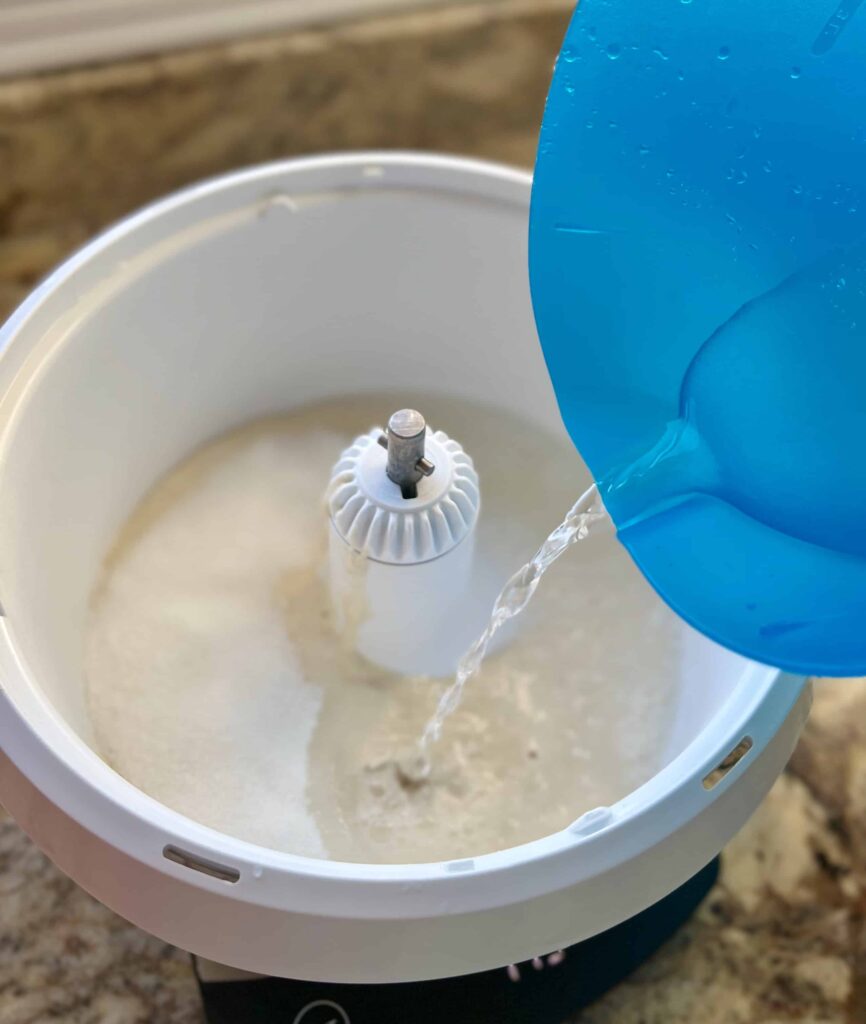
Example: Using a thermometer, I quickly check the temperature of the flour, salt, and levain. They are all under 70ºF. It is winter, so I know the ambient temperature is in the 60s. I add hot (90-95ºF water) to my dough and mix it together. Then, I take the temperature of the dough after mixing it. It is 70ºF. I put my dough in a bread proofer set at 78ºF (or other warm place). I know that my dough may take a little longer to ferment because the dough temperature is cooler than it should be.
New to Sourdough? If you are new to sourdough, learn how to make a sourdough starter from scratch and check out my Free Sourdough Beginner Guide. Using naturally fermented sourdough will take much longer, but you will love the fermentation benefits and the flavor!
What happens when it’s too hot or too cold?
Sourdough thrives best between 74–86°F, with the sweet spot around 76–80°F. The more consistently you can keep your starter, levain, and dough in that range, the more predictable your results will be. Here’s what happens when your sourdough drifts too far in either direction:
- Too Cold (68ºF and below): At these cold temperatures, fermentation will slow way down, take much longer to rise (or not rise at all), have dense texture and can lead to underproved bread.
- Too Hot (90ºF or above): If the temperature is too hot, fermentation will speed up. This can lead to overly sour flavor and dough that breaks down fast. It can also lead to weak structure and gummy crumb and temperatures over 120ºF can kill your yeast completely. Personally, I avoid using water over 100ºF when mixing dough to protect my sourdough starter.
How to Keep Sourdough Warm
In the winter, my house is cold (in the 60ºFs) and that cold temperature slows my sourdough way down. While long, slow rises can be great for flavor, sometimes you need a little help to keep things moving. Here are a few easy ways I warm up my dough in cooler temps:
1. Sunny Window, Warm Room, warm appliance
- If the sun is shining, a warm windowsill, a cozy bathroom or a warm appliance (the top of my dishwasher or refrigerator often works) can be great places to keep rising dough or sourdough starter.
2. Oven with the Light On
- Pop the dough into your oven with just the light turned on.
- This creates a warm space, perfect for proofing. Every oven is a little bit different, though, and you may need to move the starter around so it’s not directly under the oven light. It can sometimes get too hot in the oven, so you may need to move the starter or dough back and forth out of the oven to adjust the temperature.
- Warning: Be careful not to preheat your oven while the dough or starter is in there! Stick a sign or sticky note on the oven reminding you the oven is occupied with your starter so you don’t accidentally bake it.
3. Microwave or Cooler Trick
- Place a mug of hot water in the microwave, then put your covered dough next to it and close the door.
- The warm, steamy environment helps boost the temperature and acts as a pseudo-proofing box.
4. Heating Pad or Dough Mat
- A seedling mat is an inexpensive and easy way to get warmth to a starter. These mats typically don’t have the temperature controls of a dough mat so be sure to use a towel as a buffer.
- Dough Mat: I like the large size from Bakehouse Essentials (code: AMYBAKESBREAD10 for 10% OFF, affiliate link). This can easily fit your starter and a pan of sourdough dinner rolls and keeps the temperature consistent. Stick a towel underneath the dough mat to help insulate the warm temperatures.
5. Bread Proofing Box
- Proofing Box: I recently purchased this Brod & Taylor proofing box. I absolutely love it. It folds up easily for storage and has made a huge difference in keeping my sourdough right in that 78ºF range.

How to Keep Sourdough Cool for Warm Climates
Warm temperatures and high humidity can speed up fermentation, leading to over-proofed dough or a sourdough starter that’s hard to manage. Here are a few easy ways to keep things cool.
1. In and Out of the Fridge
- Use your fridge to slow things down.
- Take the temperature of the dough. If it’s in the mid-80ºF or higher, put it in the fridge for the first 30 minutes. Then take the temperature again and bring it out of the fridge if it’s dropped into the desired 76-80ºF range. Continue this process in and out of the refrigerator throughout the bulk fermentation as needed.
- Proof the dough in the refrigerator overnight.
2. Cooler with Ice Packs
- A portable cooler with a couple of ice packs can act like a mini fridge.
- Use a thermometer to monitor the dough temperature, aiming for around 76-80°F.
3. Sourdough Home (Temperature-Controlled Box)
- Devices like the Brod & Taylor Sourdough Home give you control over the temperature of your sourdough starter. It’s not big enough for your dough, but can help you control the fermentation of your starter.
- This is a great investment if you’re baking often in a hot climate.
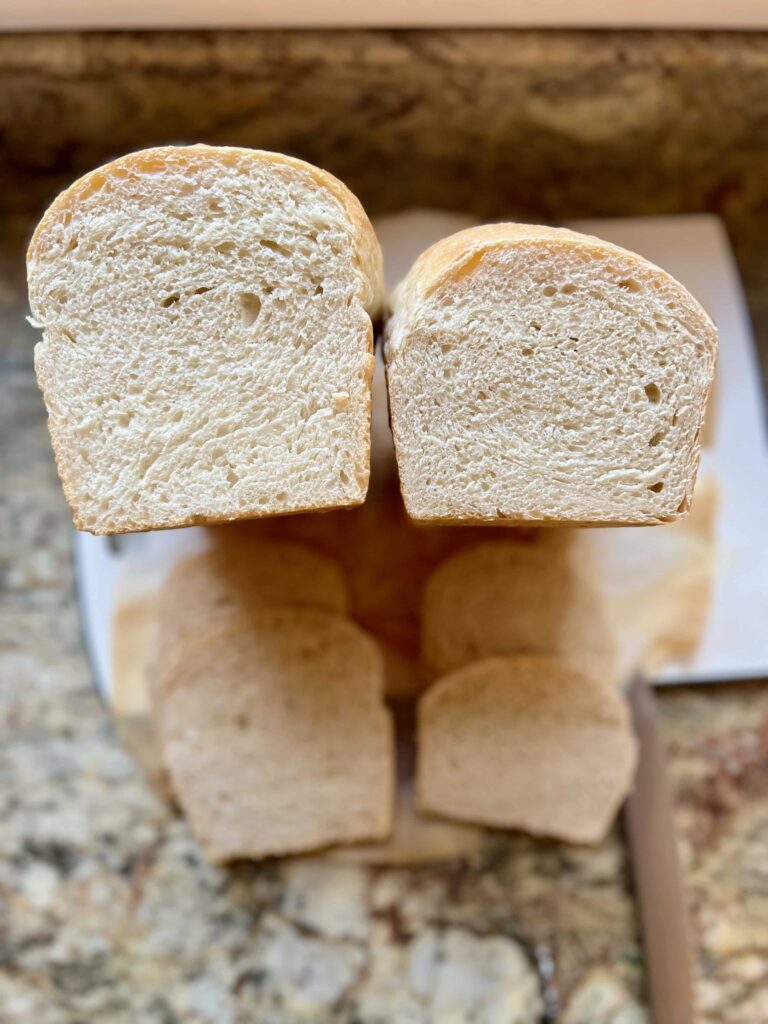
These two loaves of sourdough sandwich bread were proofed for the same amount of time but at different temperatures. Notice the difference! The loaf on the left proved at 78 degrees with the dough temperature being 78 degrees. The one on the right the dough temperature was 10 degrees cooler.
Frequently Asked Questions
Yes. This is especially helpful for breads that aren’t as high hydration. Sourdough sandwich bread and sourdough cinnamon rolls, for example, don’t have as much water in the dough, which means that they will often take longer to proof. I usually increase the temperature of the dough in these instances, trying to get them in the low to mid-80ºF range, so they will proof a little faster and get light and airy. You can play around with adjusting temperatures and see how it works for your bread dough.
If your dough or starter is cooler than 78ºF, that’s okay. You just need to understand that the starter and dough may take longer to rise, and account for that in your baking schedule. You may need to adjust your feeding ratios or increase the amount of starter you use in your dough if your dough is colder.
If you live in a warmer climate, your starter or dough may be warmer than 78ºF. Be aware that your starter and dough will ferment faster and can tend to be more acidic. Your sourdough starter will need frequent refreshing. You may need to adjust your feeding ratios and decrease the amount of starter you use in your dough. Also use cool water when mixing and refrigerate your dough as needed throughout the process to bring the temperature down.
Sourdough Beginner Guide
 What is Sourdough?
 How to Make a Sourdough Starter
 How to Feed and Maintain a Sourdough Starter
 When Is Sourdough Starter Ready to Use? Easy Signs to Look For
 What is Sourdough Discard?
 How and Why to Make Levain
 Sourdough Timeline for Beginners: How To Fit It Into Your Day
 How Temperature Affects Sourdough
 Sourdough Starter Ratios Explained
 Essential Tools for Baking with SourdoughSourdough Frequently Asked Questions
 How to Dehydrate and Rehydrate Sourdough Starter
 How to Add Sourdough Discard to Any Recipe
 How to Replace Yeast with Sourdough Starter
 Adjusting the Sour Flavor in Sourdough Bread
 Sourdough Artisan Bread Guide
 How to Bake Sourdough in A Loaf Pan
 Adding Inclusions to Sourdough Artisan Bread
Need More Help? Take a Sourdough Class with Amy Bakes Bread
Looking for in-depth Sourdough instruction?
You need my online sourdough course.
- Step by Step Instruction on Beginner and Advanced Recipes
- 2+ hours of pre-recorded video instructions
- Community forum to ask questions and help you troubleshoot
- 15+ PDF recipe downloads
- Make incredible sourdough bread today!


I learned today, that after stretch and folds, bulk proofing generates bubbles. My dough does bubble, it doesn’t double in size. Then, I shape and cold proof overnight. After 24 hours, I take it out, score, bring it up to room temp, cover with another bread pan upside down and bake at 425 for 20 minutes. Take off the lid, bake another 15 ish minutes….
Sometimes, she’s perfect…… Sometimes gummy.
During bulk fermentation, it gets bubbly, there is a dome, it doesn’t grow in size ….I am going to do the temperature next time …..It is Frustrating! thanks for your advice!
Sourdough is a learning curve for sure! It sounds like you are on the right track. Being aware of temperature throughout the process definitely helps in getting more predictable and consistent results.
I made levain to my take your cinnamon focaccia. My levain was on a seeding mat overnight. Thus morning when I took it off and checked the temperature (just for curiosity) the temp was 92-93°! Should I start all over? I put it in the refrigerator since it will be a couple of hours before I can bake with it. I need to make this today if at all possible. Thank you for your help.
The goal with levain is to mix your dough when your levain reaches its peak rise so that your focaccia has an active bulk fermentation. The high temperature combined with the refrigeration might make your levain less ideal to work with, but depending on its activity it might still work. I would assess based on how it looks. If it smells pleasantly tangy and isn’t totally collapsed, go ahead and use it. If it’s very sunken and sharp-smelling, then I might feed it again and mix your dough when the levain is ready. Next time, you can lower the mat temp or use it just to get it started, then move it off overnight. Hope that helps!
So excited to start on my own sourdough journey. Grateful for your website and all I’m learning from it, thanks for sharing your knowledge!
I went to order a Doug mat from Bakehouse Essentials, but the code isn’t valid. Any chance u have a new one?
Thank you so much! I just realized that I had entered the wrong discount code, it should be:
AMYBAKESBREAD10
I have updated the post, thanks again for reaching out so I could fix it!
How to restart sourdough bread from being in fridge for 4 day from leaving on vacation. Anna
Pull it out from the fridge and feed (all of it or a little of it) with flour and water. You can read more about feeding a refrigerated starter here: https://amybakesbread.com/beginner-guide-sourdough-starter/
How do I lower the temp of my sour dough after I mixed the starter when the water and starter the temp says 84. Is that too warm
That isn’t too warm, it will just rise potentially faster (depends on your house/kitchen temperature too). If you want to lower the temperature, stick it in the fridge for 20-30 minutes.
Your recipe’s are perfection!!! Thank you so much for sharing your expertise!!! I love seeing alll if y try our beautiful creations! Best regards,
Chris
Thank you! I really appreciate your kind words. So glad you are loving the recipes.