
Affiliate disclosure: This post may contain affiliate links. Please see our disclosure policy.
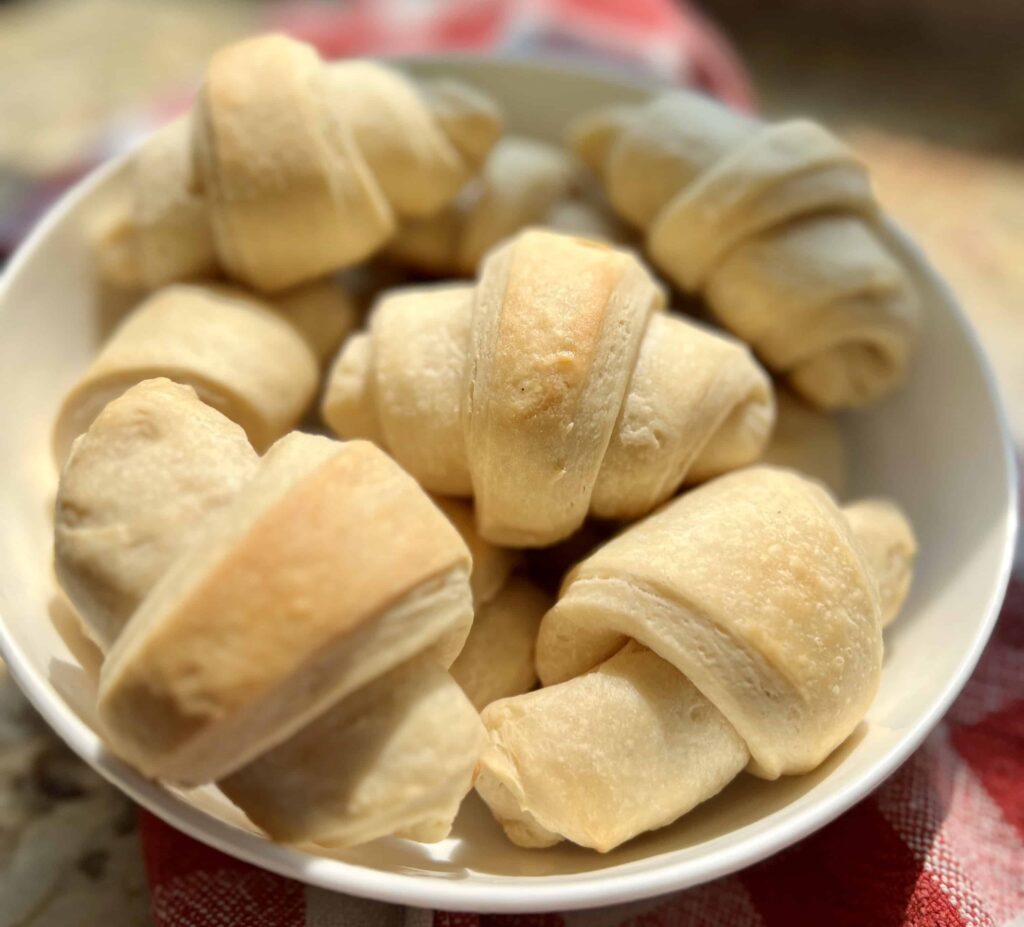
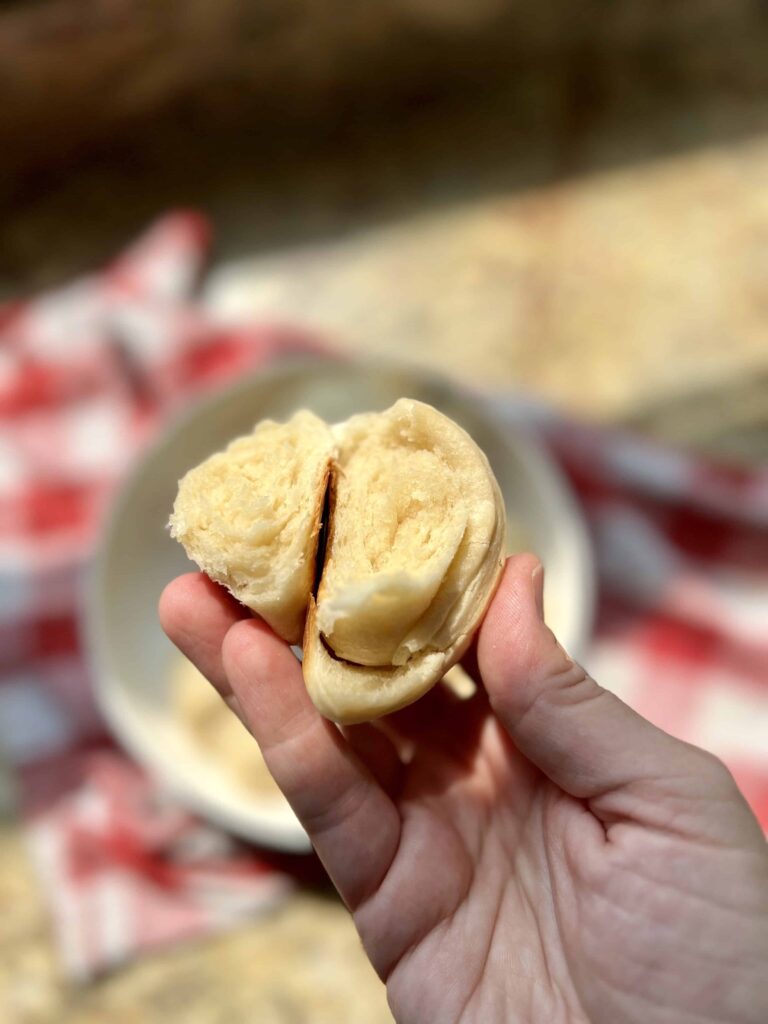
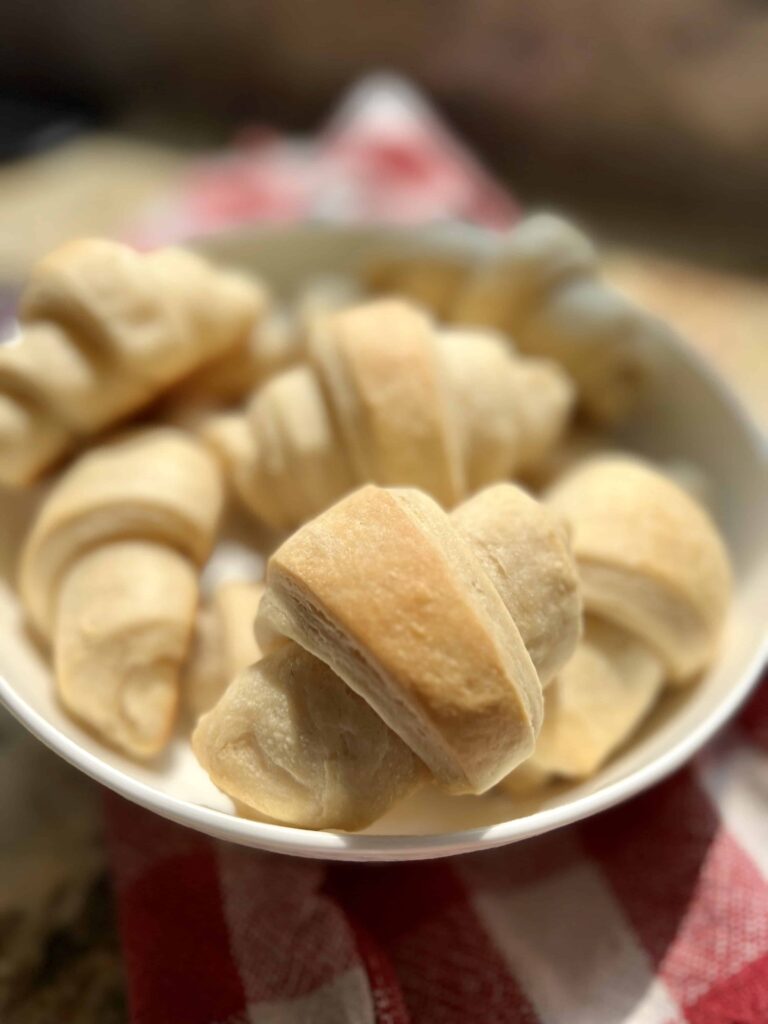
Rolls are one of my favorite, easy ways to make a dinner go from good to memorable. If you’re looking for the perfect little roll to go with a special weekend meal, an ordinary dinner or even Thanksgiving dinner these sourdough crescent rolls are amazing.
Buttery, super soft and no kneading required. They are delicious and will be the star of your night. Made with 100% sourdough – no instant yeast – sourdough crescent rolls are the easiest, most delicious little rolls, rolled in a croissant roll style.
And if you’re looking for a more traditional roll shape, you have to try my buttery sourdough brioche rolls too!
Save this for later!
Sample Sourdough Schedule for Sourdough Crescent Rolls
A sample baking schedule helps me when baking with sourdough. Sourdough takes much longer to rise than traditional bread. This schedule helps me plan my bake.
Note: This schedule assumes the dough temperature is 78 degrees F unless it is in the refrigerator to cold ferment.
| Day 1 | |
| 8:00 AM- 11:30 AM | Mix levain, let rise until bubbly and active about 3-4 hours |
| 11:30 AM – 3:30 PM | Mix Dough, cover and keep at 78ºF for 4 hours to begin fermentation. |
| 3:30 PM – 8:00 AM | Cover dough and refrigerate at least 12 hours or up to 3 days |
| Day 2 | |
| 8:00 AM | Separate, shape and roll crescent rolls. Let rise about 4-6 hours until puffed up and risen (78-80ºF) |
| 12:00 PM -2:00 PM | Bake rolls |
How to Make Sourdough Crescent Rolls
Mix the Levain
For this sourdough crescent roll recipe, I make a levain that is 1:1:1 (equal parts starter/flour/water). This levain will bubble and double in size in about 3-4 hours if it’s an active starter and kept at the right temperature, right around 75 degrees. You can also mix the levain overnight at a 1:5:5 ratio (20 grams starter/100 grams flour/100 grams water) and let it ferment longer before using. All that to say, making the levain is very adaptable to your schedule. You want to end up with 200 grams of bubbly, active levain that has doubled or tripled in size. I mix my levain in a liquid measuring cup, cover it with plastic wrap and then watch until it’s ready to use. The liquid measuring cup makes it easy to read and know when my levain has doubled in size. Alternatively you can just mark your jar and eyeball it. Once the levain has doubled in size, and is bubbly and active – just about to fall back down, it is ready to use in the recipe.
Sourdough Starter: If you prefer using sourdough starter instead of levain, you can substitute ripe, bubbly active starter for the levain in this recipe.
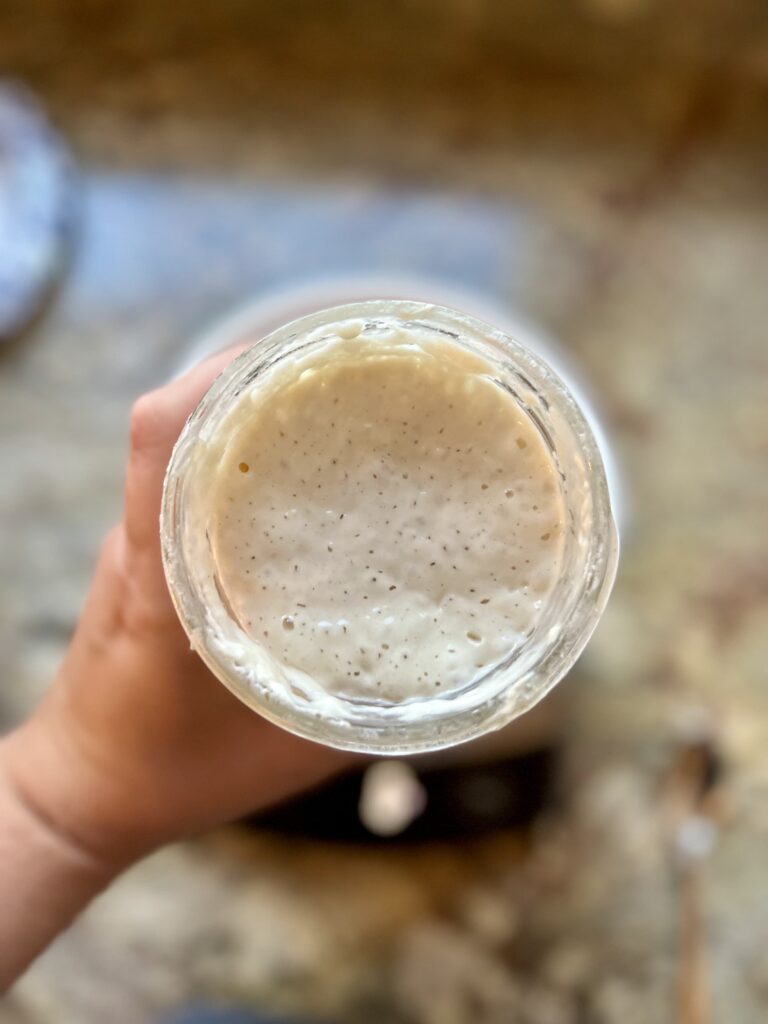
Mix Crescent Roll Dough
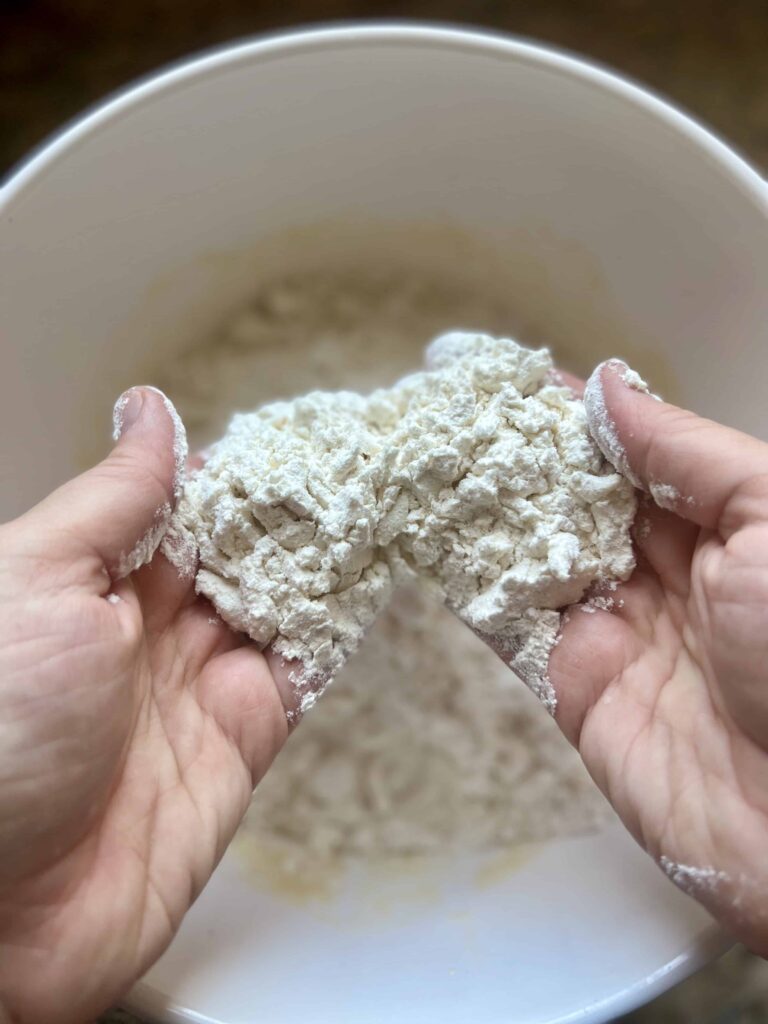
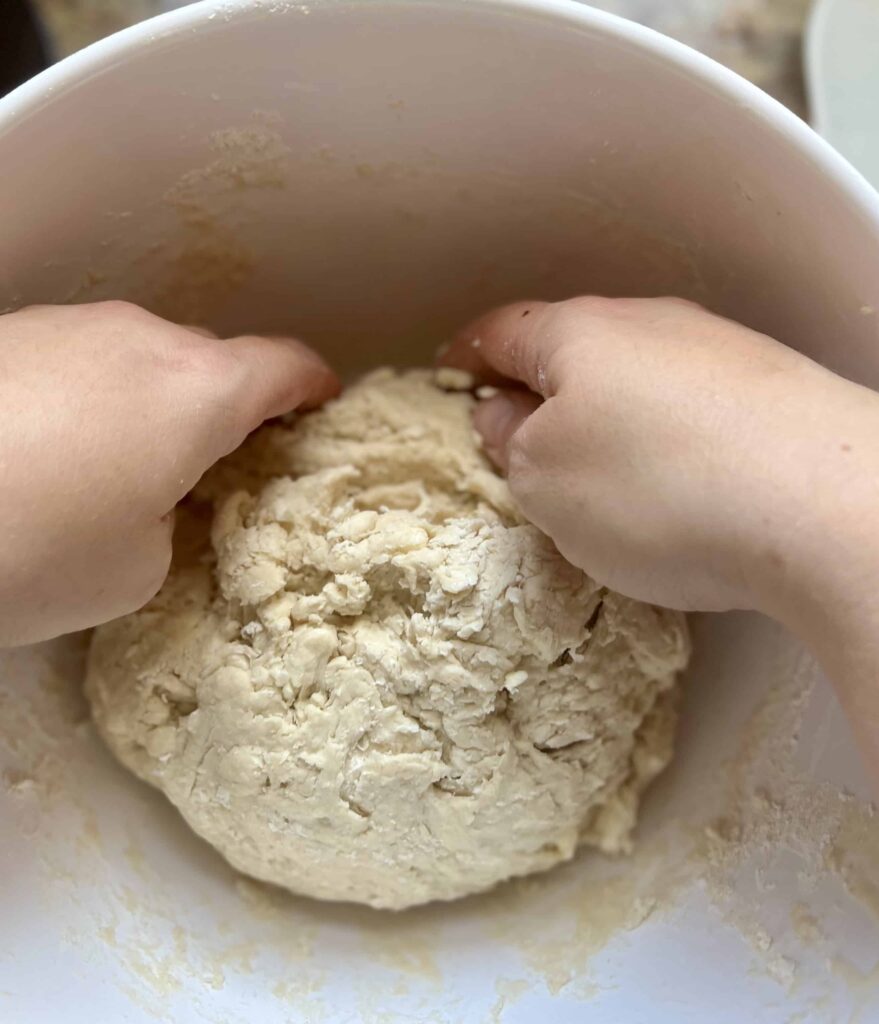
Whisk together the bubbly levain, evaporated milk, water, egg, melted butter, sugar, salt and 140 grams of the flour. When it’s all whisked/mixed together it will look like a wet batter. I love saving myself some dishes, so you can do this next part right in the same bowl or if you don’t mind washing an extra bowl, pull out a new one. Right on top of the wet batter, add the flour, but DON’T MIX. Grate the cold butter on top of the flour and using your hands, gently mix the cold butter into the flour until it’s fairly evenly dispersed. Try not to mix the flour into the batter that’s underneath during this part. After the butter is evenly distributed in the flour, use a kitchen spoon and mix all the ingredients in the bowl together. Your dough should have little chunks of grated butter in it. Those are good and when melted eventually will form flaky pockets of delicious crescent roll. This mixing will form a ball of dough.
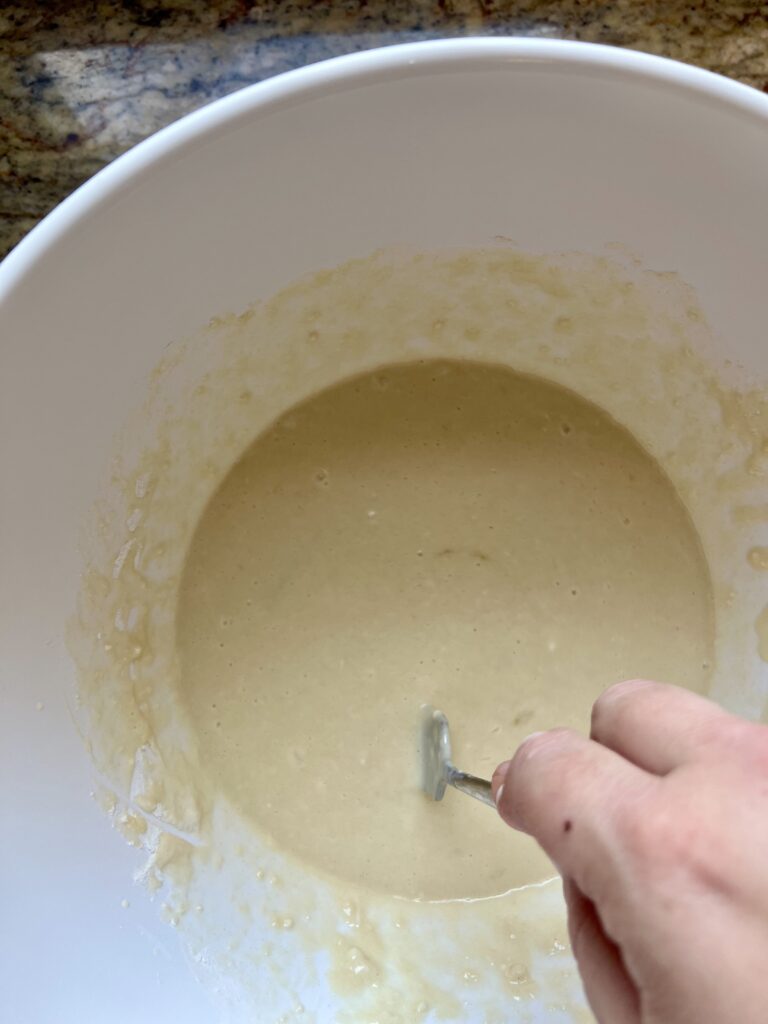
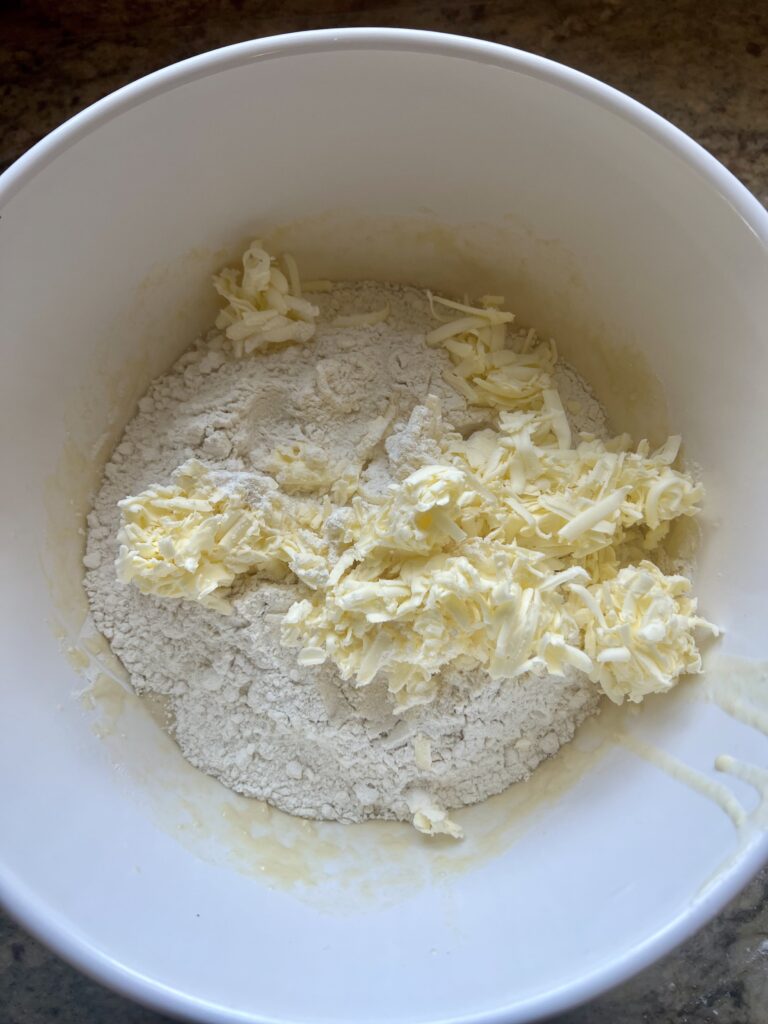
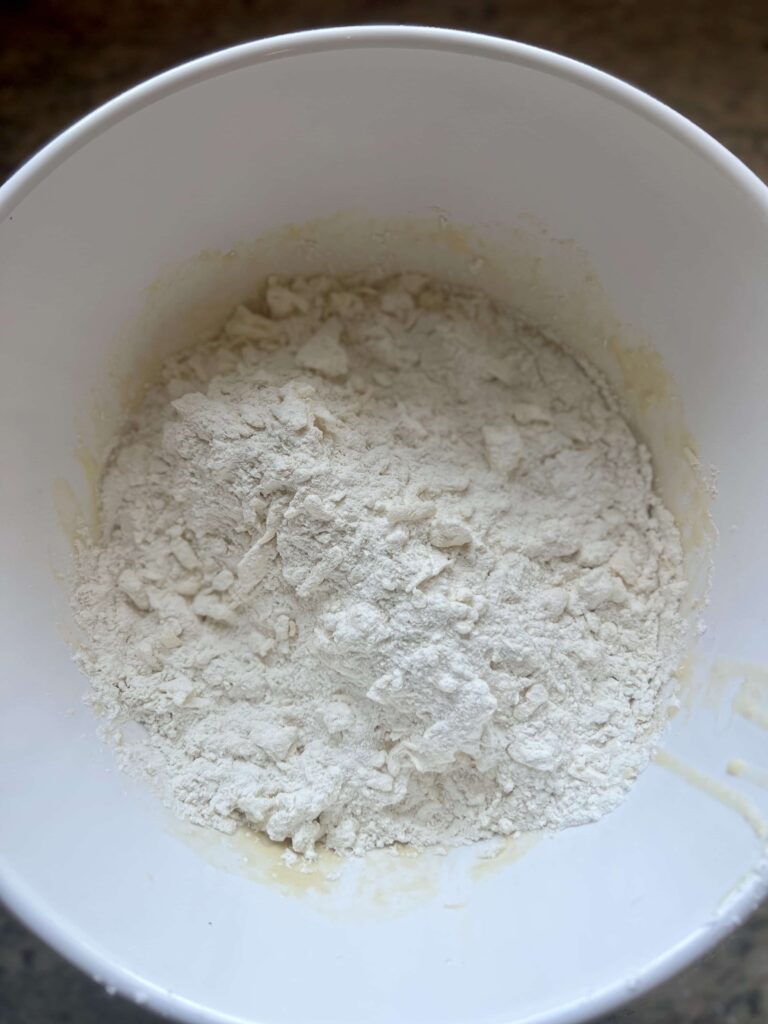
Bulk Fermentation
Sourdough recipes need a bulk fermentation to properly rise/ferment. Bulk fermentation begins when the levain or active starter is mixed with flour (and other ingredients). The wild yeast have fresh “food” from the flour and they need time to begin the fermentation process. Bulk fermentation is best at 78-80 degrees F because that is the temperature the wild yeast are most active. Do your best to keep your dough in the78-80 degree F temperature range for about 4 hours of bulk fermentation before putting the dough in the refrigerator. I use a bread proofer or the oven with my kitchen light on and a thermometer to maintain temperature. Cover the dough and let it sit. By the end of bulk fermentation the dough should be a little puffy but you won’t notice a significant rise. If your dough is colder, leave it to ferment for longer. Don’t let it get too much warmer than the 78-80ºF degree range because you don’t want the butter chunks to melt.
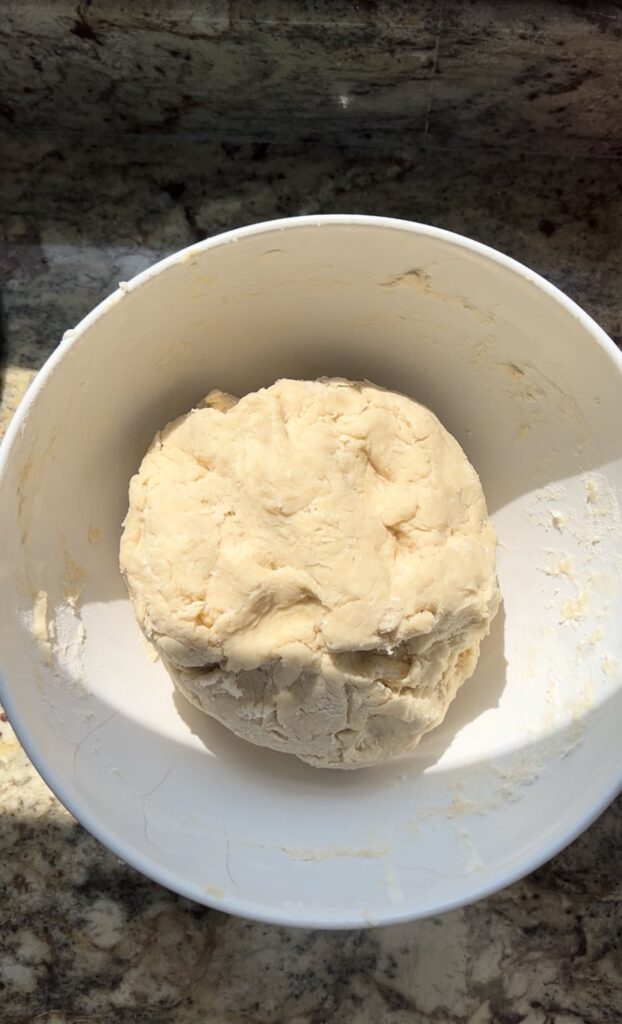
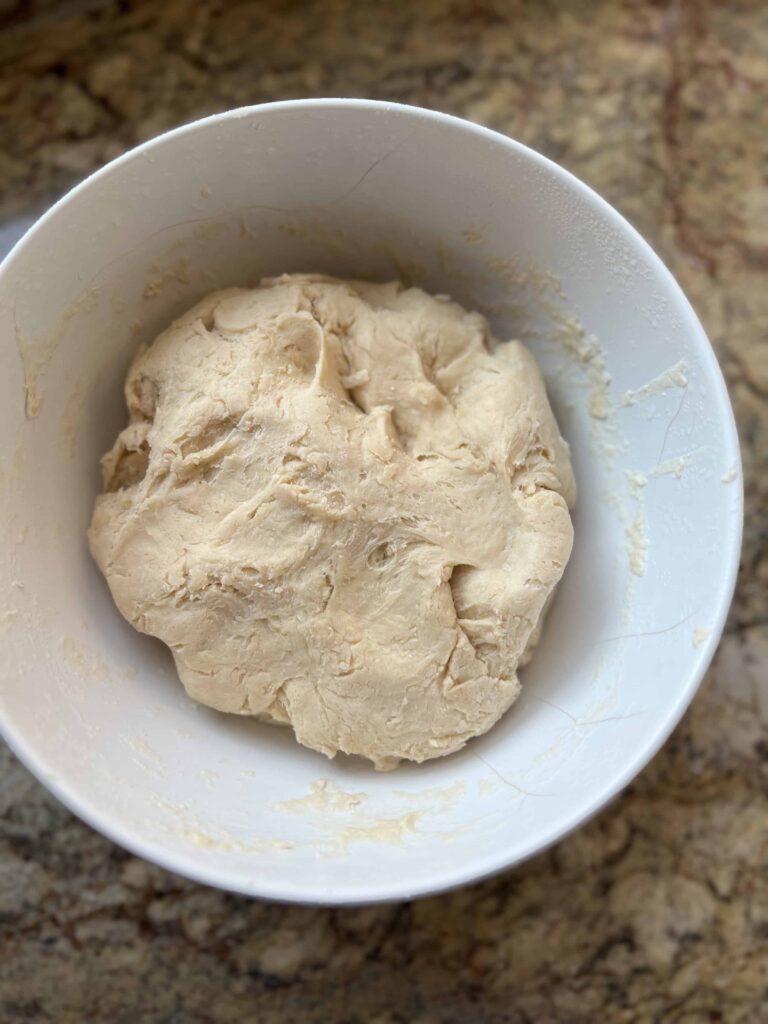
The first photo is just mixed dough. The second photo is after a 4 hour bulk fermentation. Not a huge rise, but puffed up a bit and spread out about a 20% rise.
Cold Fermentation (Long Refrigeration)
A long, typically overnight refrigeration, is not only good for your time management (these no-knead sourdough crescent rolls are SO easy!) but that overnight refrigeration is where a lot of “magic” happens:
- Enzymes break down the long protein strands of gluten in the dough, eliminating the need for a typical “kneading.”
- Butter chunks are solidified making flaky layers in the dough.
- Increased amount of time in the refrigerator improves the bread’s flavor.
After 12 hours or up to 3 days, it’s time to take the dough out of the refrigerator and start shaping your crescent rolls.
Note: If you want to make these rolls right away, I can tell you they do still taste delicious – just skip the refrigeration and move on to the next steps of shaping the roll dough.
Shaping Sourdough Crescent Rolls
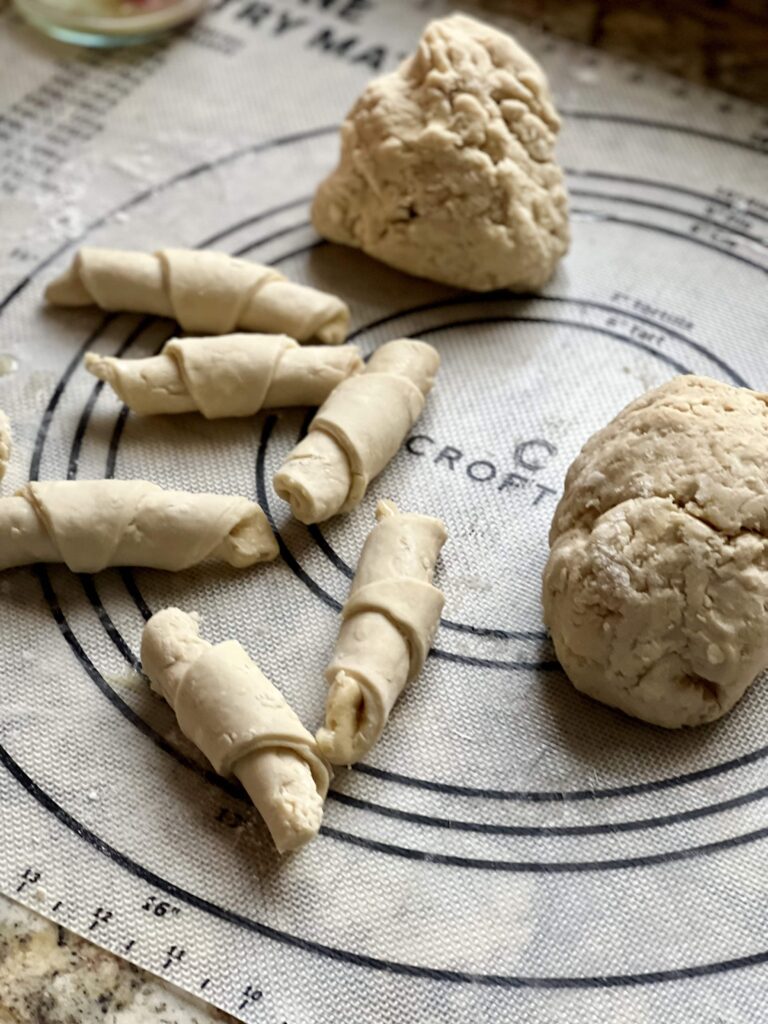
Sourdough crescent rolls are shaped the same way you would a regular crescent roll.
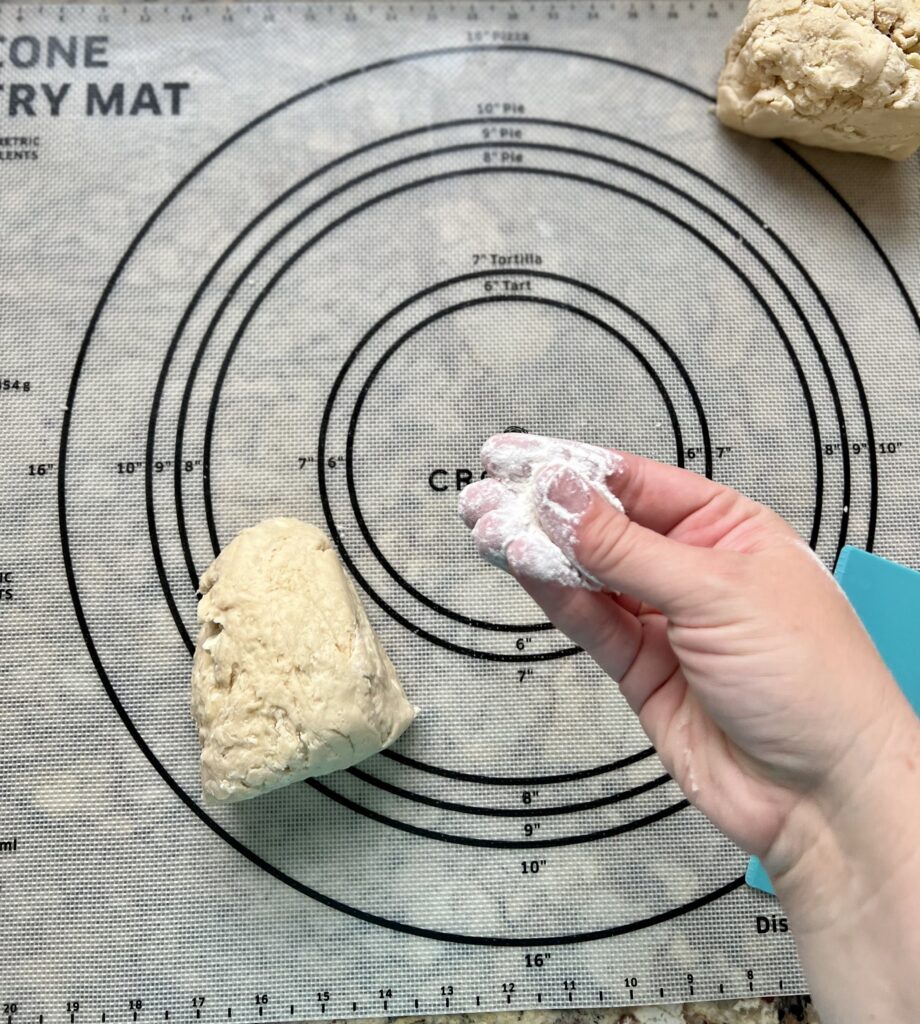
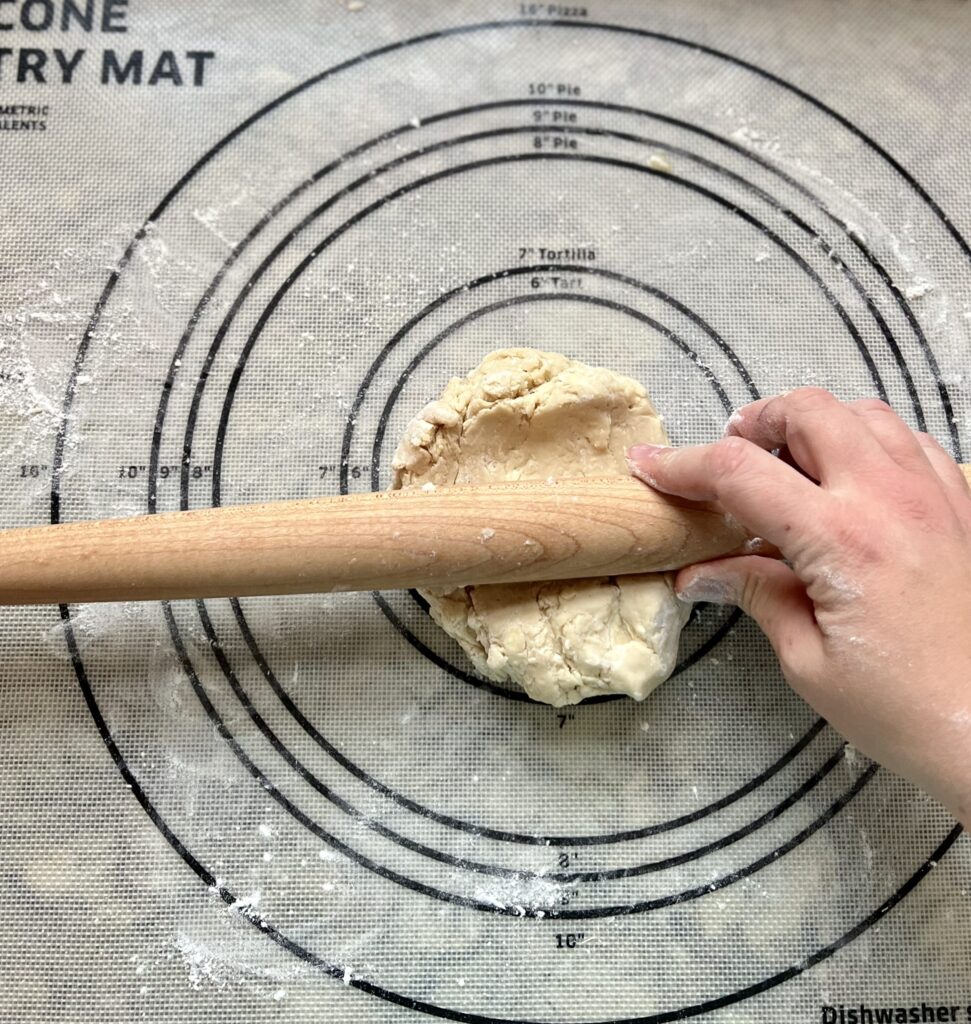
- Prepare two large baking sheets with parchment paper. Separate dough into 4 equal pieces.
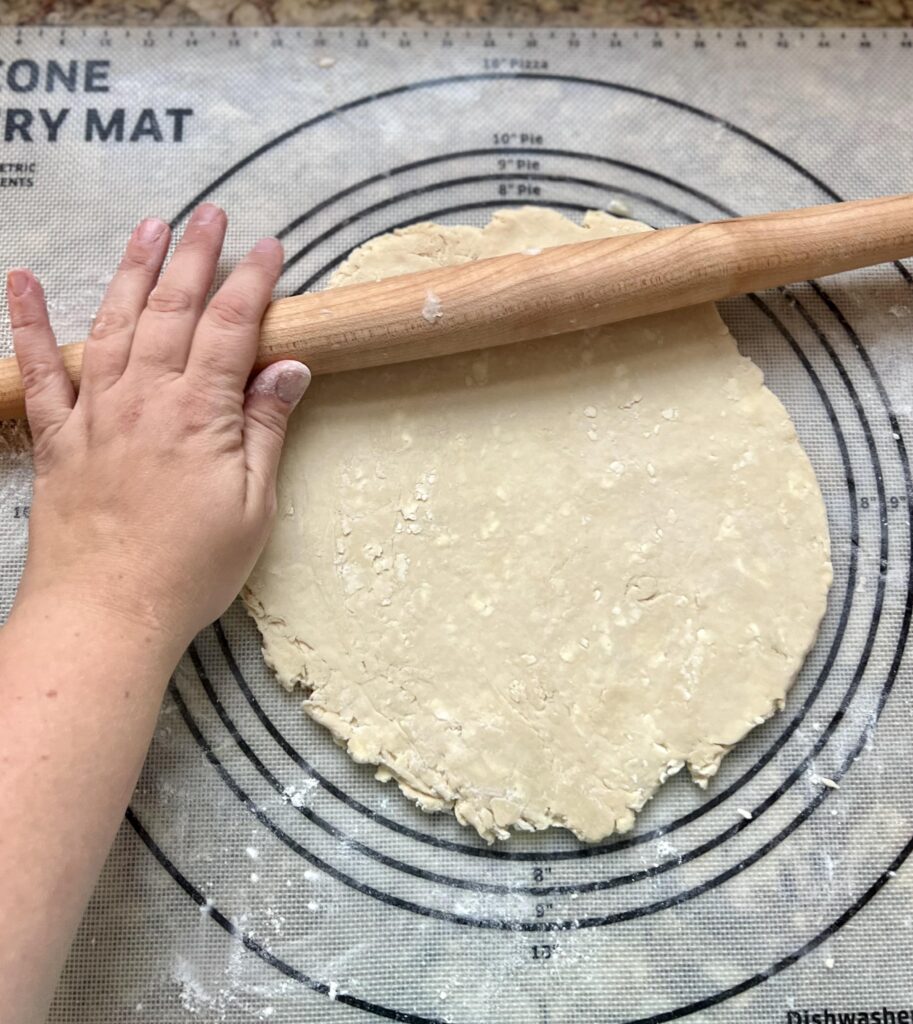
- Lightly flour a surface and roll one piece of dough out about 10-11 inches round. I like to use a pastry mat for easier rolling. Turn the dough 30-45 degrees like you would for pie crust to get a circle shape.
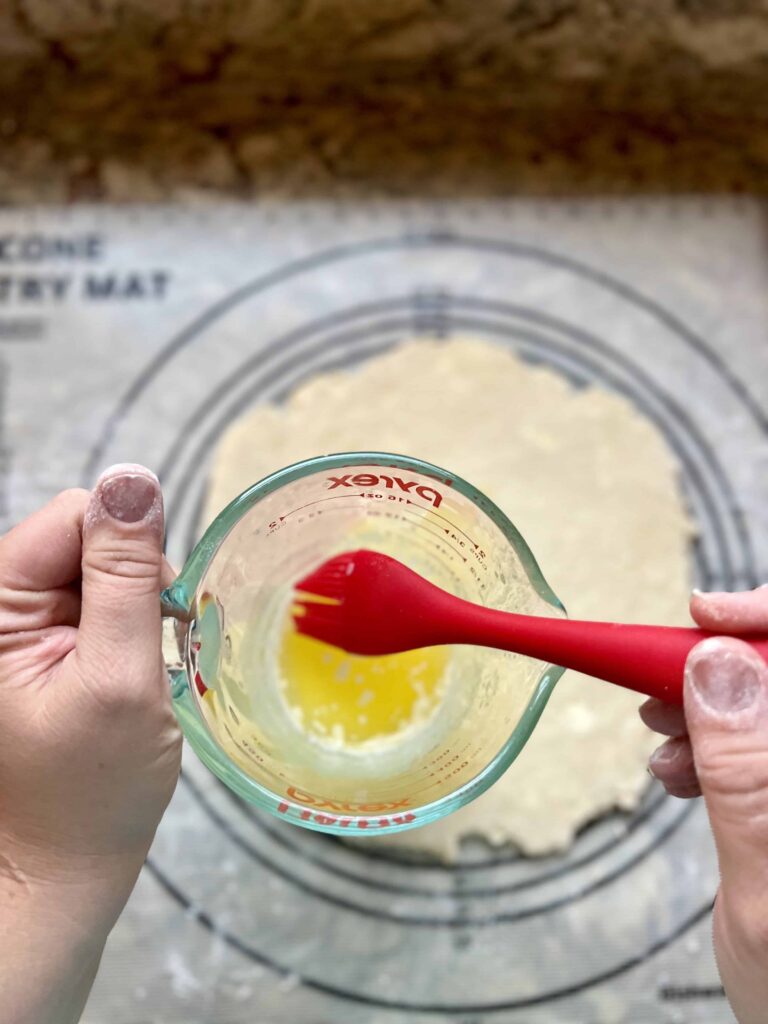
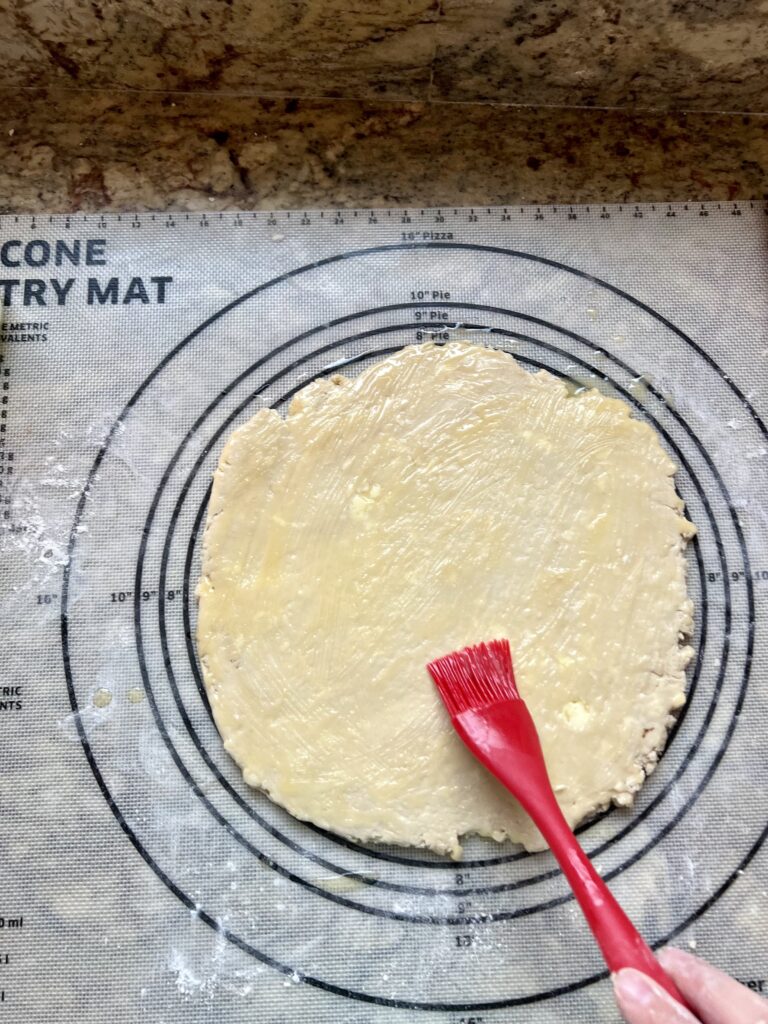
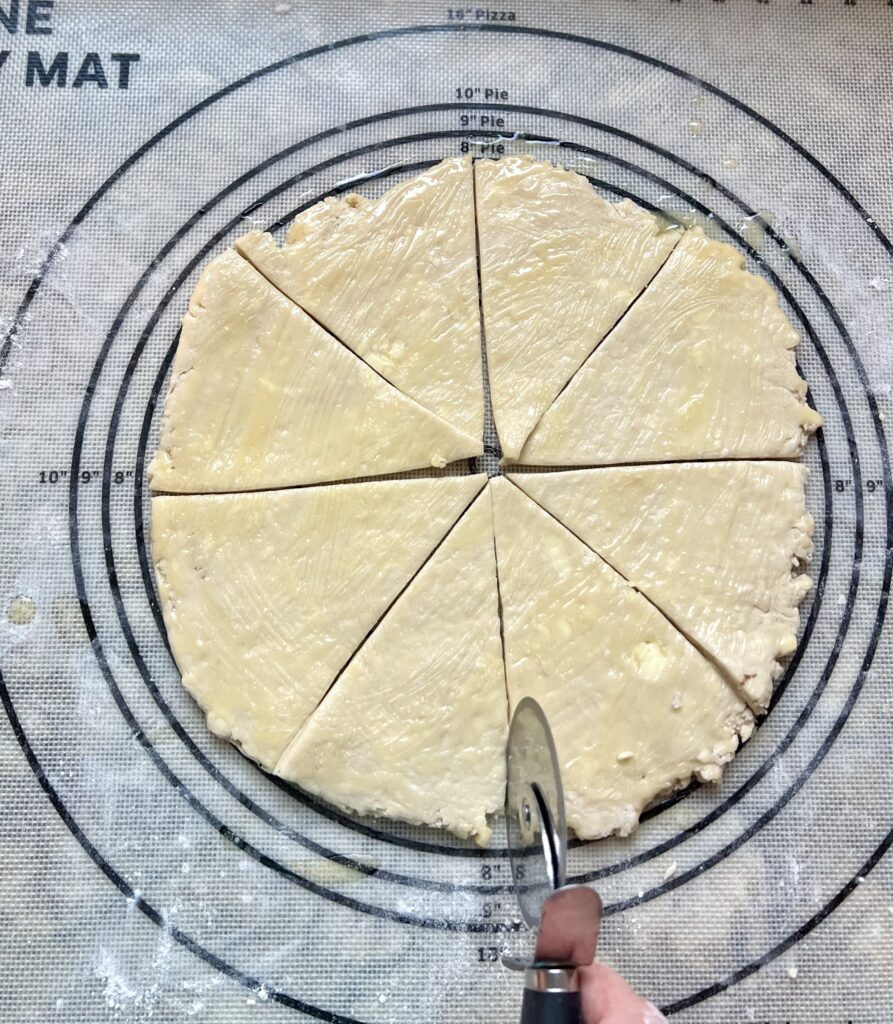
- Spread melted or softened butter on the circle of dough. Use a pizza cutter to slice the dough into 8 pieces.
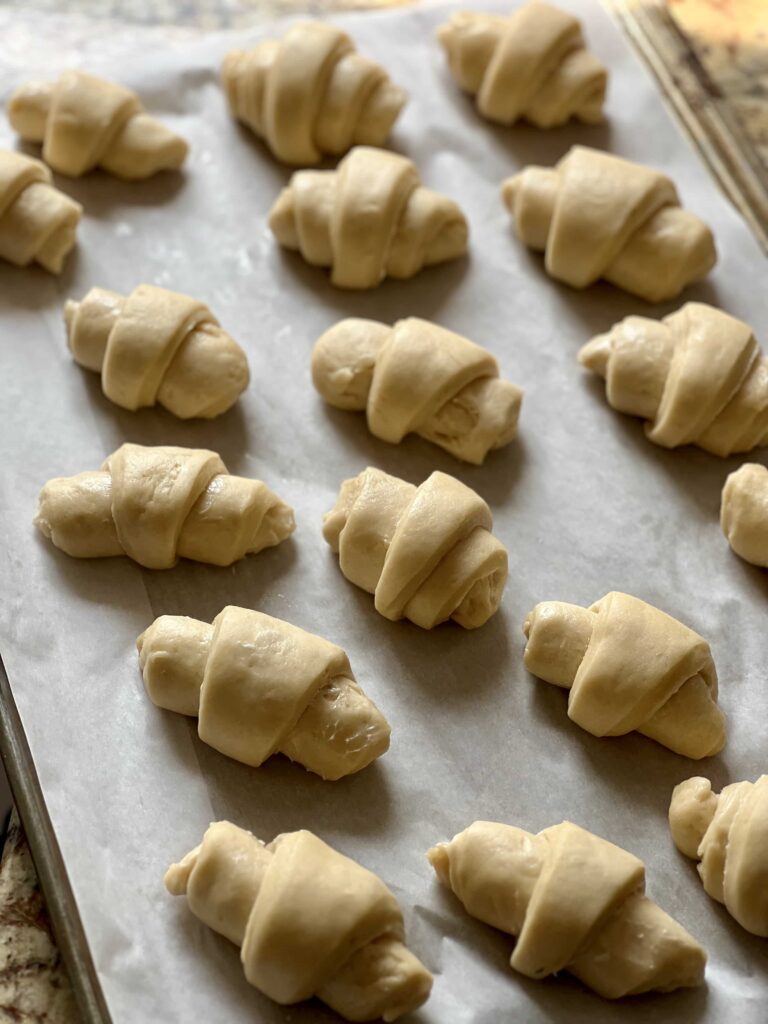
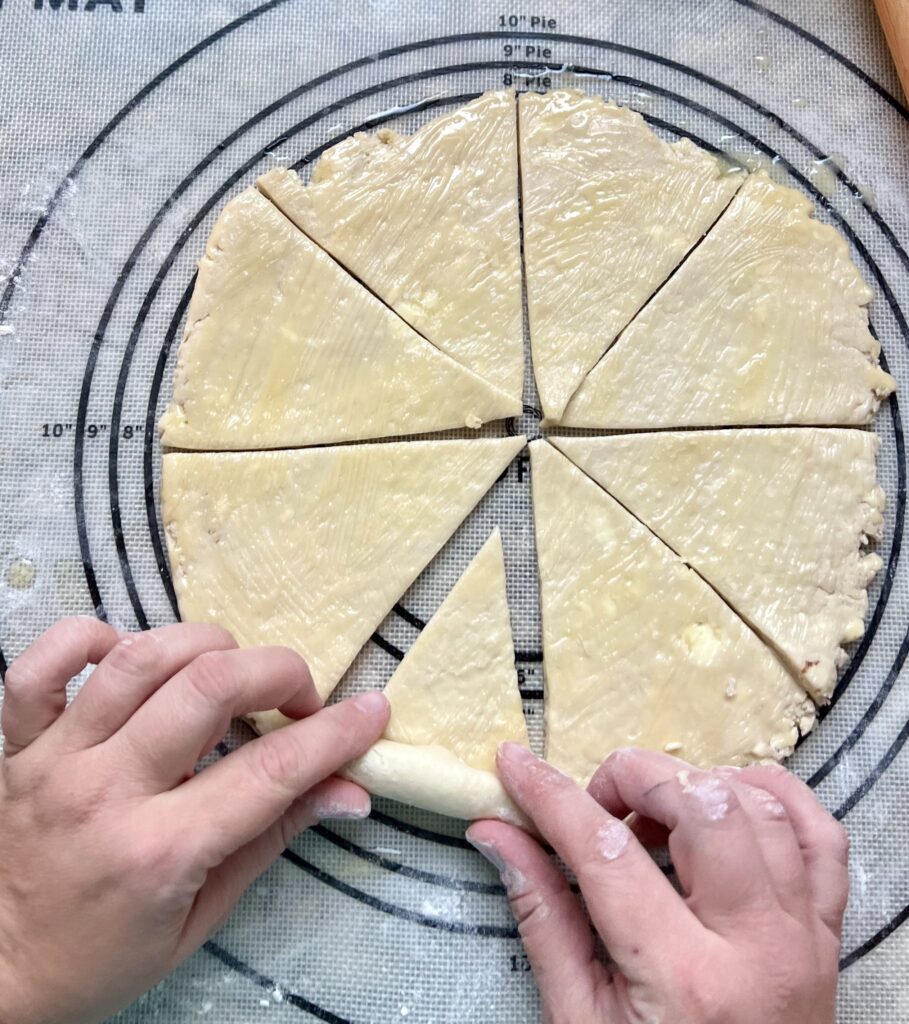
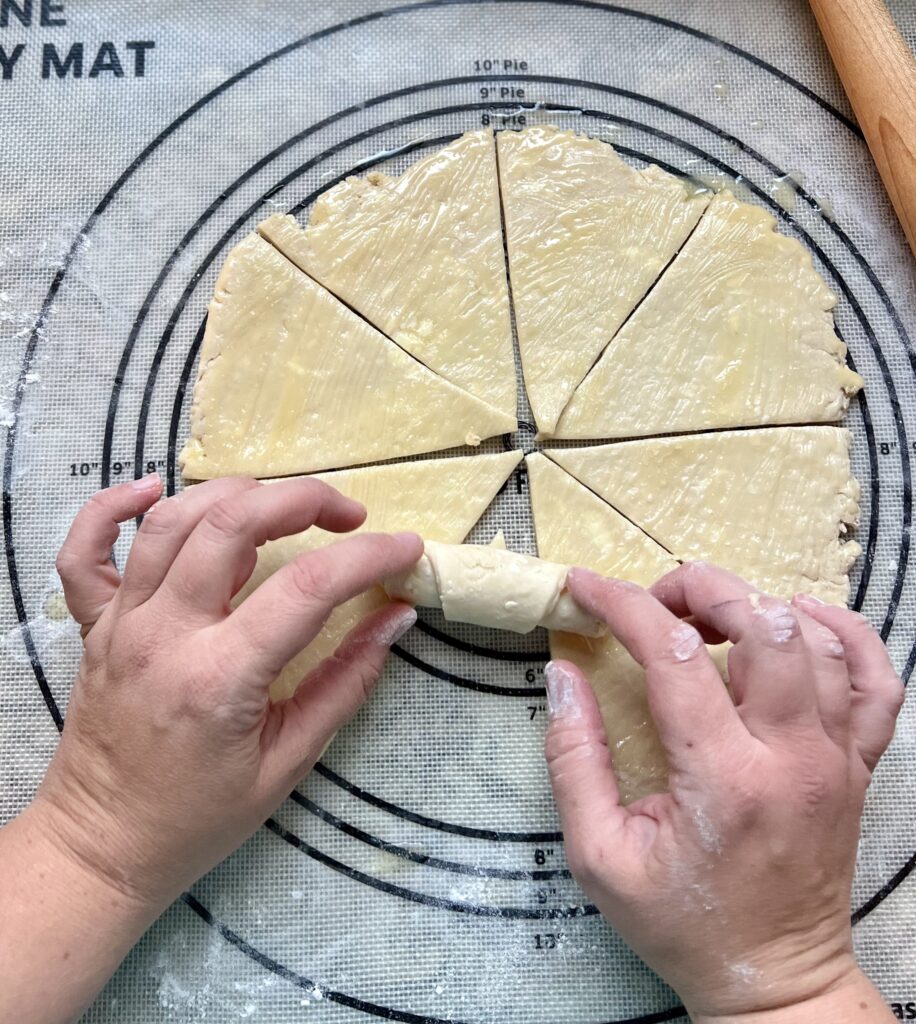
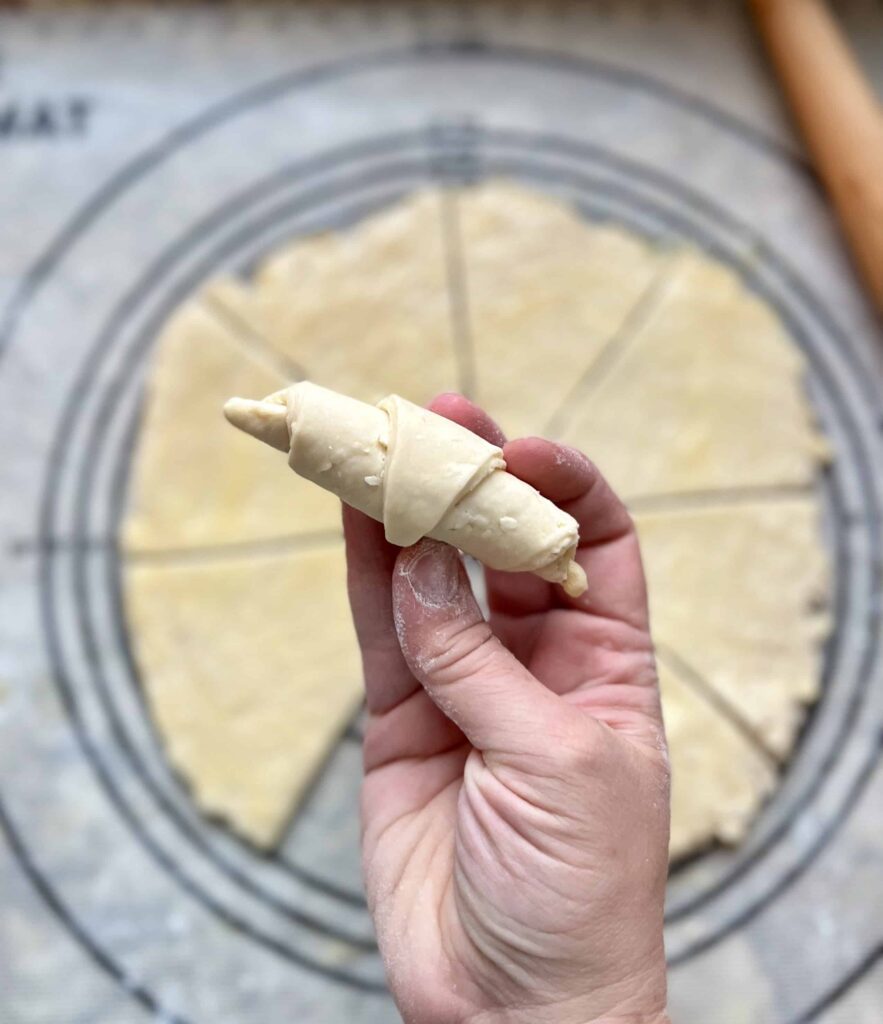
- Starting with the edge, roll the dough up to the center in a crescent roll shape and place the roll on the baking sheet. Repeat with the other balls of dough until you have 32 rolls.
Long Sourdough Rise
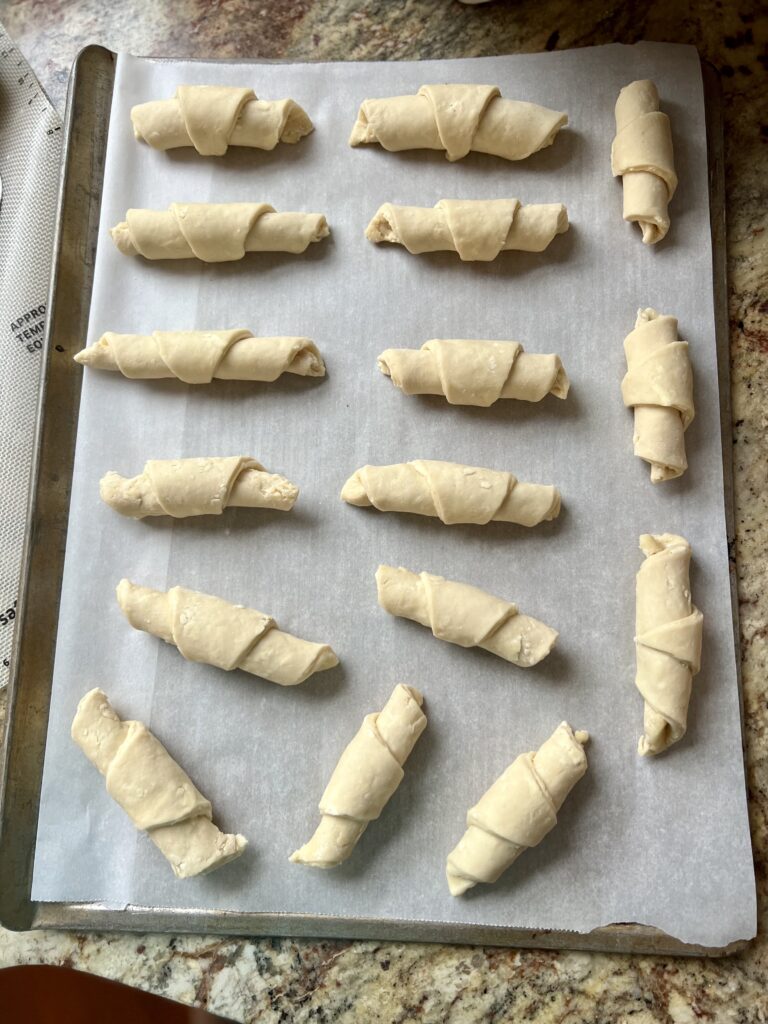
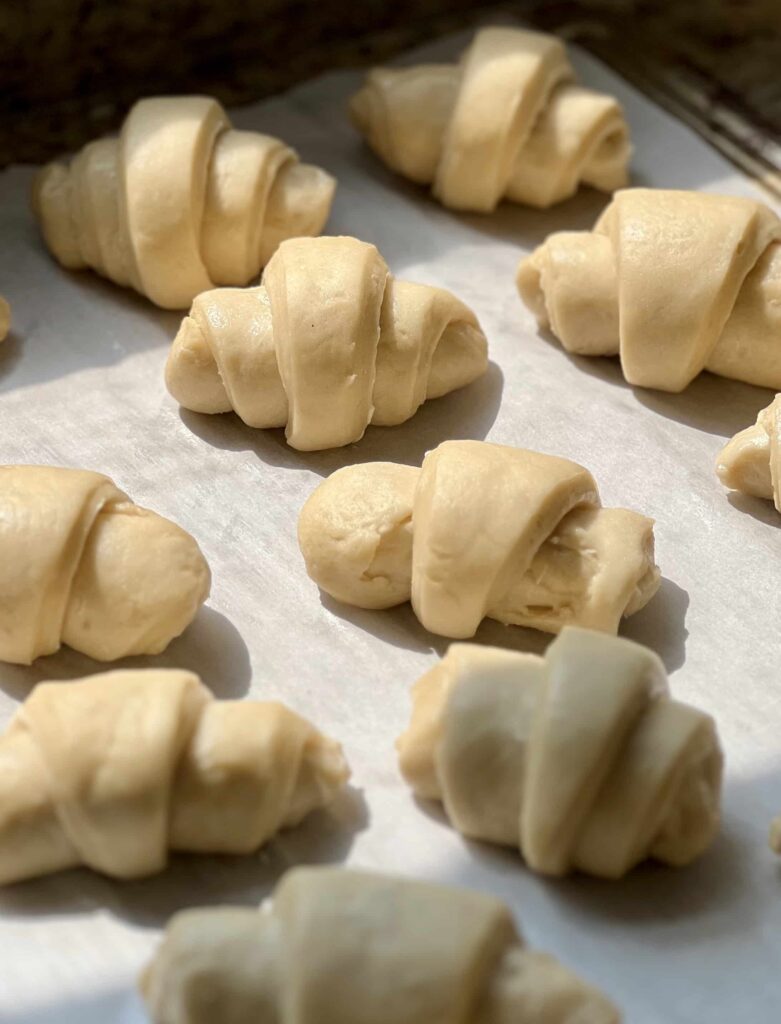
Sourdough takes a longer time to rise than rolls made with instant yeast. Plan for 4-6 hours for these rolls to rise in a 78-80ºF environment. Cover the rolls and let them sit. Don’t bake the rolls until they have puffed up and are aerated. If you picked a roll up off the sheet pan, they should not be at all cold and will feel light and airy. Don’t bake the rolls until they have risen!
Baking Sourdough Crescent Rolls
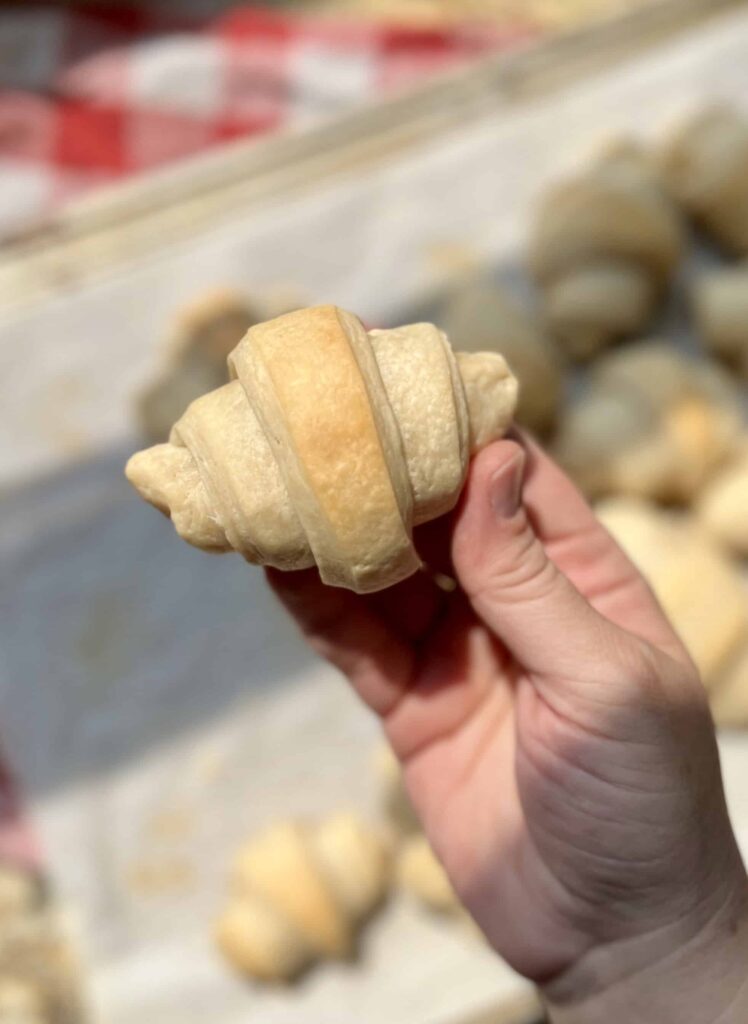
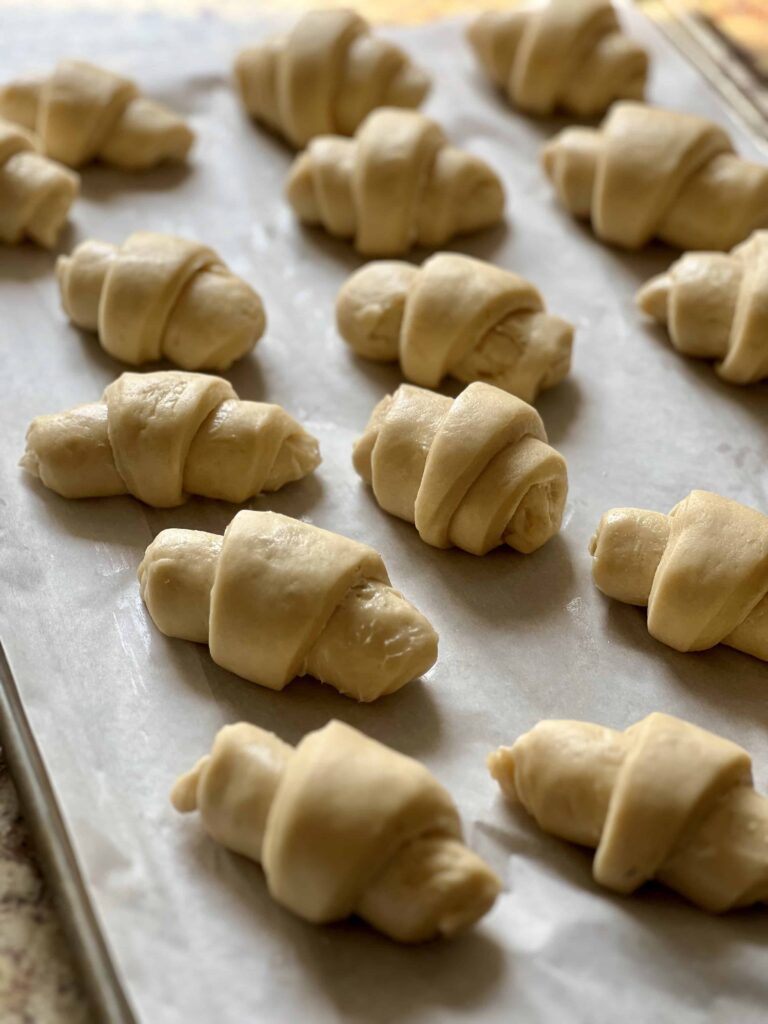
Preheat your oven to 400 degrees. Place a baking stone or baking sheet on bottom rack of your oven. This helps prevent the bottom of the rolls from burning. Take a handful of ice cubes and put them in a pan. Place the pan on the bottom rack of the oven right before adding the baking sheet of crescent rolls. Ice creates a little steam that gives the crescent rolls a beautiful rise. Immediately after adding the ice, pop crescent rolls in the oven for 12-15 minutes. Pull them out and spread some melted butter over the top of the rolls. Serve immediately! These rolls are so delicious warm out of the oven and make the best little side for a weekend dinner or Thanksgiving meal. We love these rolls anytime, but especially for those special occasion meals. They are the perfect size that I don’t even mind when the kids grab two or three.
If you loved this recipe, you’ll also love…
- Parker House Sourdough Rolls
- Sourdough Dinner Rolls
- Sourdough Discard Soft White Rolls
- Honey Whole Wheat Sourdough Rolls
- Honey Butter Sourdough Discard Rolls
- Super Soft Sourdough Dinner Rolls
Frequently Asked Questions
This recipe has been tested using evaporated milk. If you’d like to substitute milk, I recommend scalding or boiling whole milk (or 1%-2%) and letting it reduce by about half. Let it cool before using in the recipe. You could also substitute half and half for the evaporated milk in this recipe.
If your rolls didn’t rise when baking, you may not have let them proof long enough at room temperature. The rolls should be left to rise for about 4-6 hours at 78-80ºF. If your temperature is not consistent, that’s okay, but it’s going to take longer for your rolls to rise. Warm up your environment with a dough mat or proofing box, but be careful not going too much over 80ºF or the butter tends to melt in the dough. Give the rolls more time to rise
Also double check that your sourdough starter is active, doubling in size and very bubbly before using it. Sometimes a sourdough starter needs a few feeds before becoming active if it’s been sitting in the refrigerator for awhile. Consistent feeding will give you better results.
Store leftovers in a ziplock bag at room temperature for 24 hours. Then freeze the leftovers for up to 3 months. To eat (even from room temperature), re-heat for just a few seconds in the microwave–they are delicious warm!
Sometimes that will happen with these rolls. To help, I make sure to place the point side down on the baking sheet so it’s underneath the roll. This works most of the time, but sometimes you’ll have a few that pop. That’s okay! It’s just part of working with yeast bread. They will still taste delicious!
No. This dough is not the same as a croissant dough, though it is does have a similar shape when rolled up. This dough is buttery and creates a very soft and tender roll in a croissant shape.
Yes! If you prefer to make these rolls with sourdough discard instead of bubbly/active sourdough, you can substitute discard for bubbly active starter and add 1 Tablespoon (10 grams) of instant yeast to the roll dough. Stick the dough immediately in the fridge after mixing. Shape the rolls the next day. They will only need an hour or two to rise before being baked.
Sure! The timings won’t change, but you can divide all the ingredients in half and make 16 rolls instead of 32.

Sourdough Crescent Rolls
Save this for later!
Equipment
- pizza cutter
Ingredients
Levain (1:1:1, ready in 3-4 hours at 78 degrees F)
- 70 grams sourdough starter, about 5 Tablespoons
- 70 grams water, about 5 Tablespoons
- 70 grams flour, heaping 1/2 cup
Sourdough No Knead Crescent Rolls
- 200 grams levain, 3/4 cup, see recipe notes
- 190 grams evaporated milk, 3/4 cup, see recipe notes
- 140 grams warm water, a little less than 2/3 cup
- 1 large egg, about 50 grams
- 70 grams granulated sugar, about 1/3 cup
- 16 grams salt, about 2 teaspoons
- 60 grams melted unsalted butter, about 1/4 cup
- 710 grams all purpose flour (140 grams plus 570 grams separated), 5 cups (1 cup plus 4 cups separated)
- 113 grams unsalted butter, chilled and grated, 1/2 cup
- 60 grams softened or melted butter reserved for shaping rolls, about 1/4 cup
Instructions
Day 1
Levain (1:1:1, about 3-4 hours at 78ºF)
- About 4 hours before mixing the roll dough, make the levain. Mix together 70 grams of ripe sourdough starter with 70 grams room temperature water and 70 grams flour. Stir together, mark your jar so you can watch the levain double in size and put it in a warm (78 degree) place to ferment.
- Once the levain has doubled in size and is bubbly, active and starting to round at the top (this should take about 3-4 hours), you are ready to mix the roll dough.
Crescent Roll Dough
- To a bowl, mix together the levain, evaporated milk, water, egg, sugar, salt, melted butter and 140 grams of the flour. Whisk together until completely combined.
- Add the rest of the flour on top of the liquid mixture but DON'T MIX (alternatively you can do this in a separate bowl but I don't like washing dishes). Grate the cold butter on top of the flour and use your hands to mix it in with the flour on top of the liquid mixture. If a little liquid gets into the flour, don't worry, just continue spreading it throughout the flour as best you can. Once the butter chunks are evenly spread throughout the flour, use a spoon to mix the flour/butter mixture in with the liquid at the bottom of the bowl. Mix until you form a ball of dough.
- Cover the dough and set at 78-80 degrees F, warm room temperature for about 4 hours until the dough looks just a little bit puffy. It won't rise much, but the fermentation process will be starting and activating throughout the dough.
- Cover the bowl and place it in the refrigerator overnight. This dough can be left in the refrigerator for up to 3 days to ferment before rolling out and shaping. It needs to sit in the refrigerator for a minimum of 8 hours.Note: If you want to shape the dough, roll out the crescent rolls and proof at this time, you don't have to stick the dough in the fridge. Proceed with the recipe and let rise for 3-4 hours until puffed up and almost doubled in size. Bake right away.
Day 2
- Pull the dough out of the refrigerator. Separate the dough into 4 pieces and roll each piece out into a 10 inch circle. Spread melted or softened butter over each circle and then slice each circle into 8 pieces with a pizza cutter. Starting at the edge, tightly roll each piece of dough all the way in until you have a crescent roll shape. Repeat with the other 7 rolls.
- Place each roll on a parchment lined baking sheet. Repeat with the other 3 pieces of dough, rolling them into circles, spreading softened or melted butter and then rolling up each roll. You should have a total of 32 rolls or about 16 rolls per baking sheet.
- Cover the rolls and set them in a warm place (about 75 degrees) to rise. This rise should take about 5-6 hours depending on the temperature. Once the rolls have puffed up a bit and it has been over 5 hours (in the winter you'll most likely need closer to 6 or 7 hours), preheat the oven to 400 degrees and place a baking stone or baking sheet on the bottom rack of the oven.
- Once the oven has preheated, place a pan with a handful of ice cubes on the bottom rack of the oven. Immediately place a pan of rolls into the oven and bake crescent rolls for about 12-15 minutes until baked through. Brush with melted butter as they come out of the oven. Enjoy warm!
Notes
Nutrition
Nutrition information is automatically calculated, so should only be used as an approximation.


If I use discard it is the 200grams, and quick dry yeast, right?
Yes! If you prefer to make these rolls with sourdough discard instead of bubbly/active sourdough, you can substitute discard for bubbly active starter and add 1 Tablespoon (10 grams) of instant dry yeast to the roll dough. Stick the dough immediately in the fridge after mixing. Shape the rolls the next day. They will only need an hour or two to rise before being baked.
Hi Amy,
These look delicious. Want to make for Thanksgiving. When can I come ferment to bake on Thanksgiving? After second full rise and they are shaped can they go I’m in the fridge and pull out and bake cold from fridge?
After pulling them out of the fridge, I would probably let them rise and puff before baking. I would pull them out on Thanksgiving morning and give them a bit of time to rise before baking. Hope that helps!
Doing a trial run of these for thanksgiving and the dough dried out during the first rise. I covered with a tea cloth. Should I cover with plastic?
Was the dough refrigerated? That can happen. You can try with plastic instead to see if it helps!
After rolling the rolls out and letting them rise for 5-6 hours can I put them in the freezer? I want to freeze some for thanksgiving but not sure when to put them in freezer. Thank you!
Yes – I would freeze after they are shaped. You may want to add a little commercial yeast if freezing sourdough, as the natural levain can die off in the freezer. Check out this guide to making rolls ahead of time! Happy Baking!
How to reheat in oven?
Great recipe as always from Amy’s site. Going to experiment with add ins.
This recipe is so good! I’ll be making this again for Easter lunch. After I shape the rolls and they do the second rise could I refrigerate overnight and then bake straight from the fridge?
You could do that!