
Affiliate disclosure: This post may contain affiliate links. Please see our disclosure policy.
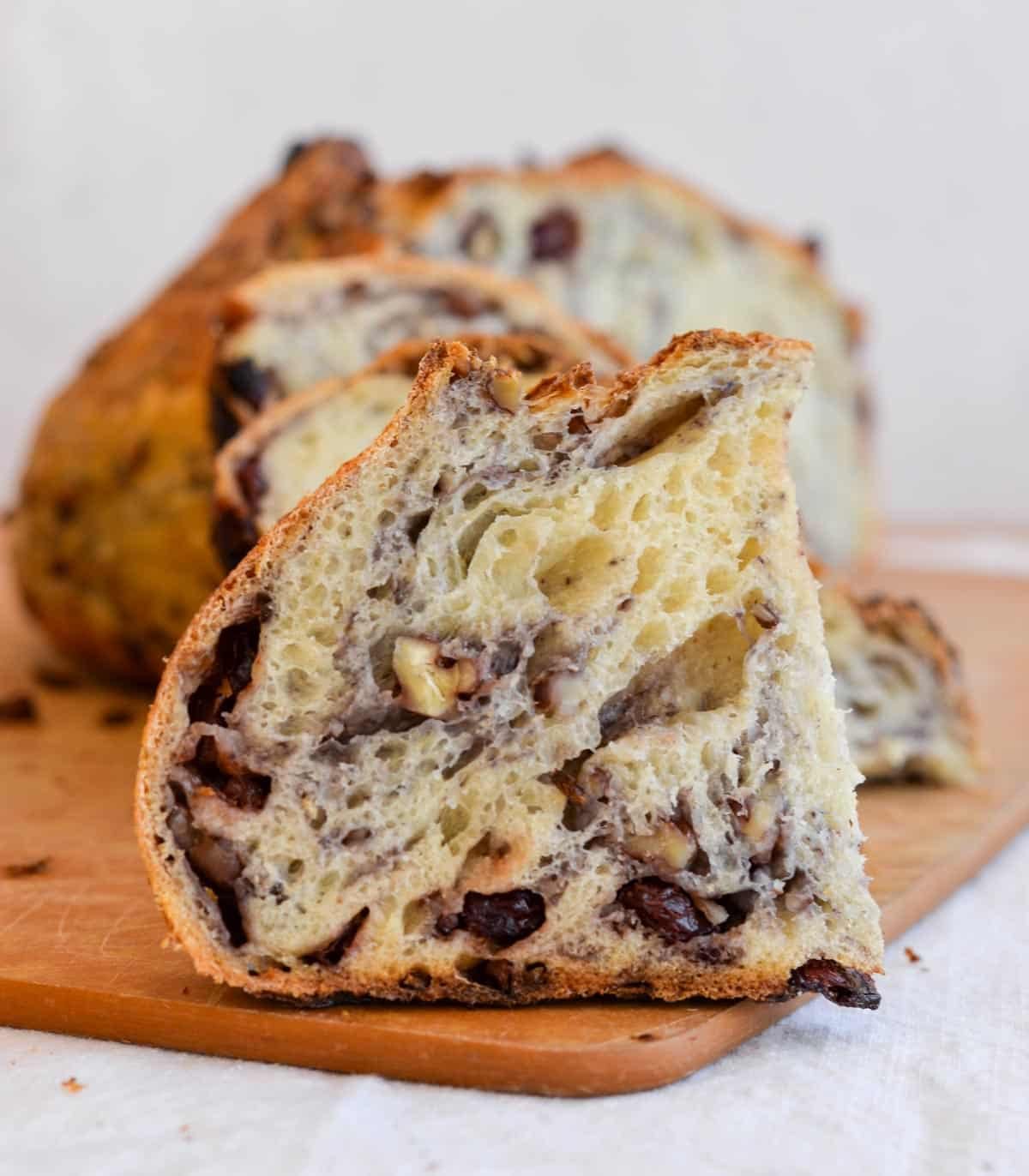
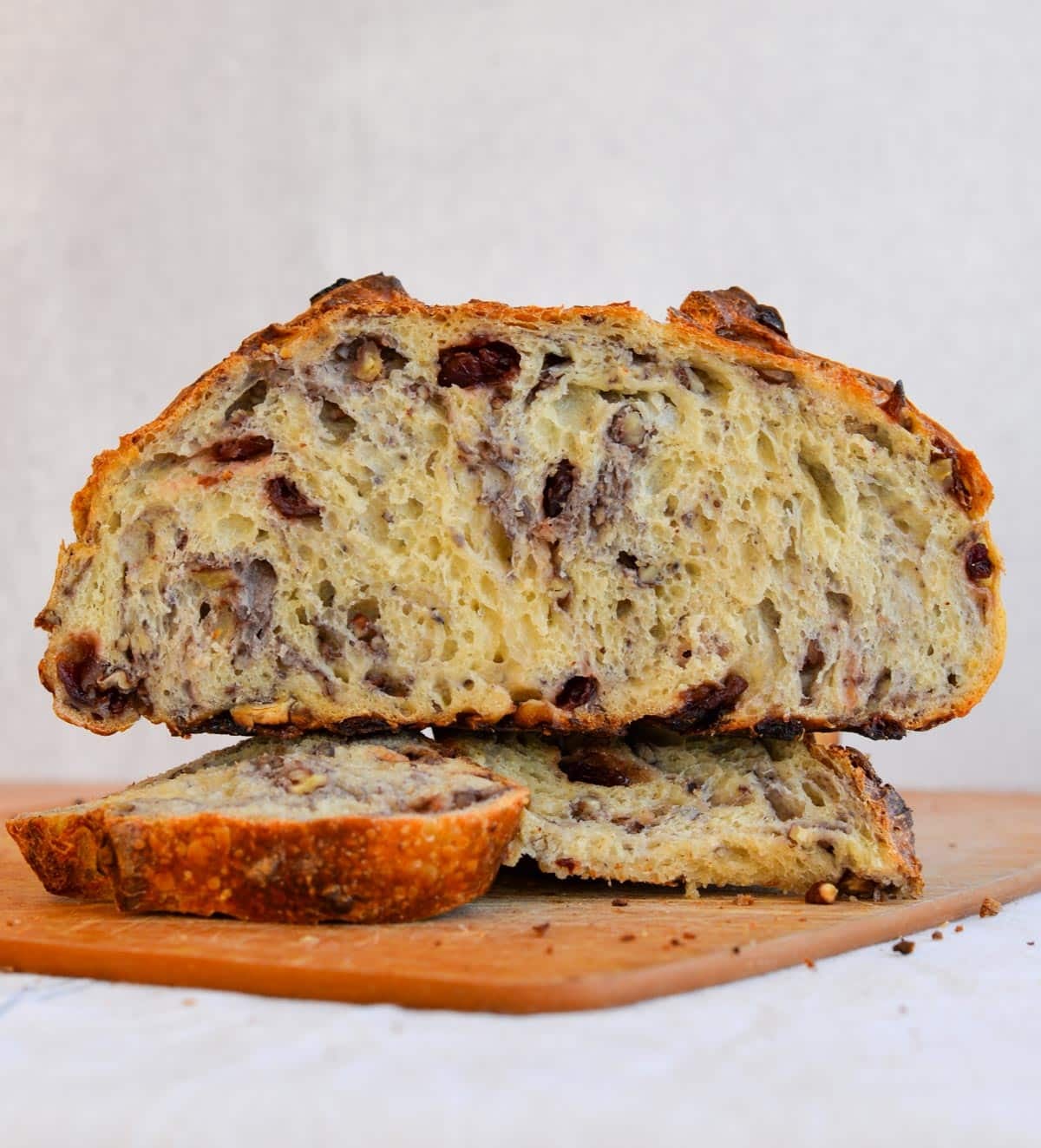
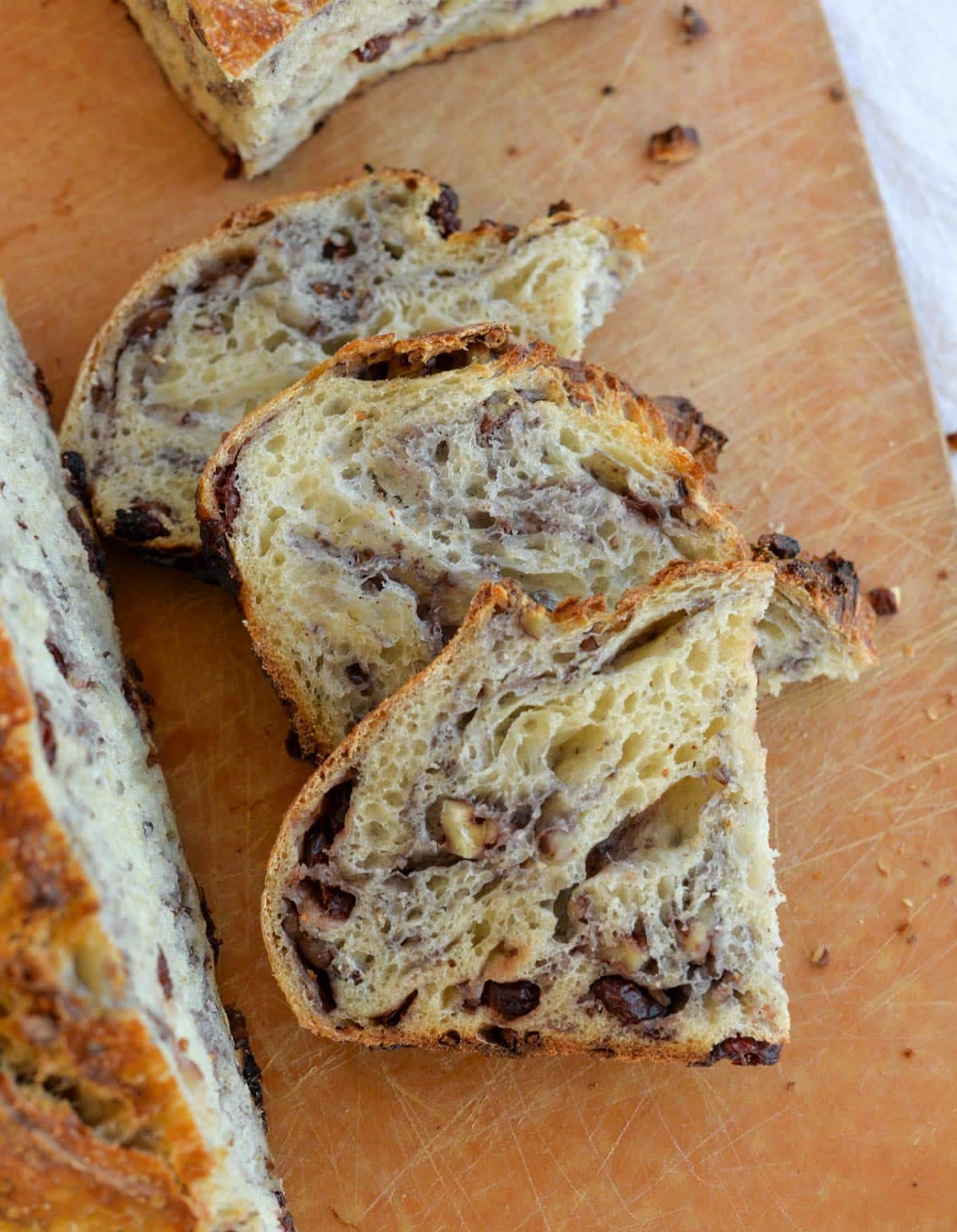
I created this Cranberry Pecan Sourdough Bread because my mom used to love buying cranberry walnut bread from the grocery store, but I knew I could make something even better at home. I swapped in buttery pecans (my favorite!) and added tart, dried cranberries for a loaf that’s perfectly sweet, nutty, and full of flavor.
This hearty sourdough cranberry pecan bread has become one of my all-time favorites. It’s delicious toasted with butter, served alongside a holiday meal, or enjoyed fresh from the oven. I even used to bake it for my in-person sourdough classes, and it was always a crowd favorite.
Save this for later!
Why You’ll Love Cranberry Pecan Sourdough
- Tasty Mix-Ins – I love adding nuts and dried fruit to sourdough. The cranberries and pecans pair perfectly, adding flavor and texture to every bite. You can also try my Blueberry Lemon Sourdough Bread for another fruit-filled favorite.
- Nostalgic Flavor – This Cranberry Pecan Sourdough Bread reminds me of the cranberry walnut loaves my mom used to buy, only better. It’s comforting, homey, and so good warm with butter, just like my Cinnamon Raisin Sourdough Bread.
- Perfect for the Season – Bake this Cranberry Pecan Sourdough Bread all fall and winter long, or anytime you’re craving something homemade and special. It’s one of my favorite holiday sourdough recipes.
- Freezer Friendly- This bread freezes beautifully, making it perfect for holiday baking or meal prep. It’s based on my classic sourdough bread recipe and keeps that same soft, fresh texture even after freezing. Slice and freeze individual pieces for easy breakfasts. I love to toast them up, and they taste just like they came out of the oven.
New to Sourdough? If you are new to sourdough, learn how to make a sourdough starter from scratch and check out my Free Sourdough Beginner Guide. Using naturally fermented sourdough will take much longer, but you will love the fermentation benefits and the flavor!
Important Ingredients
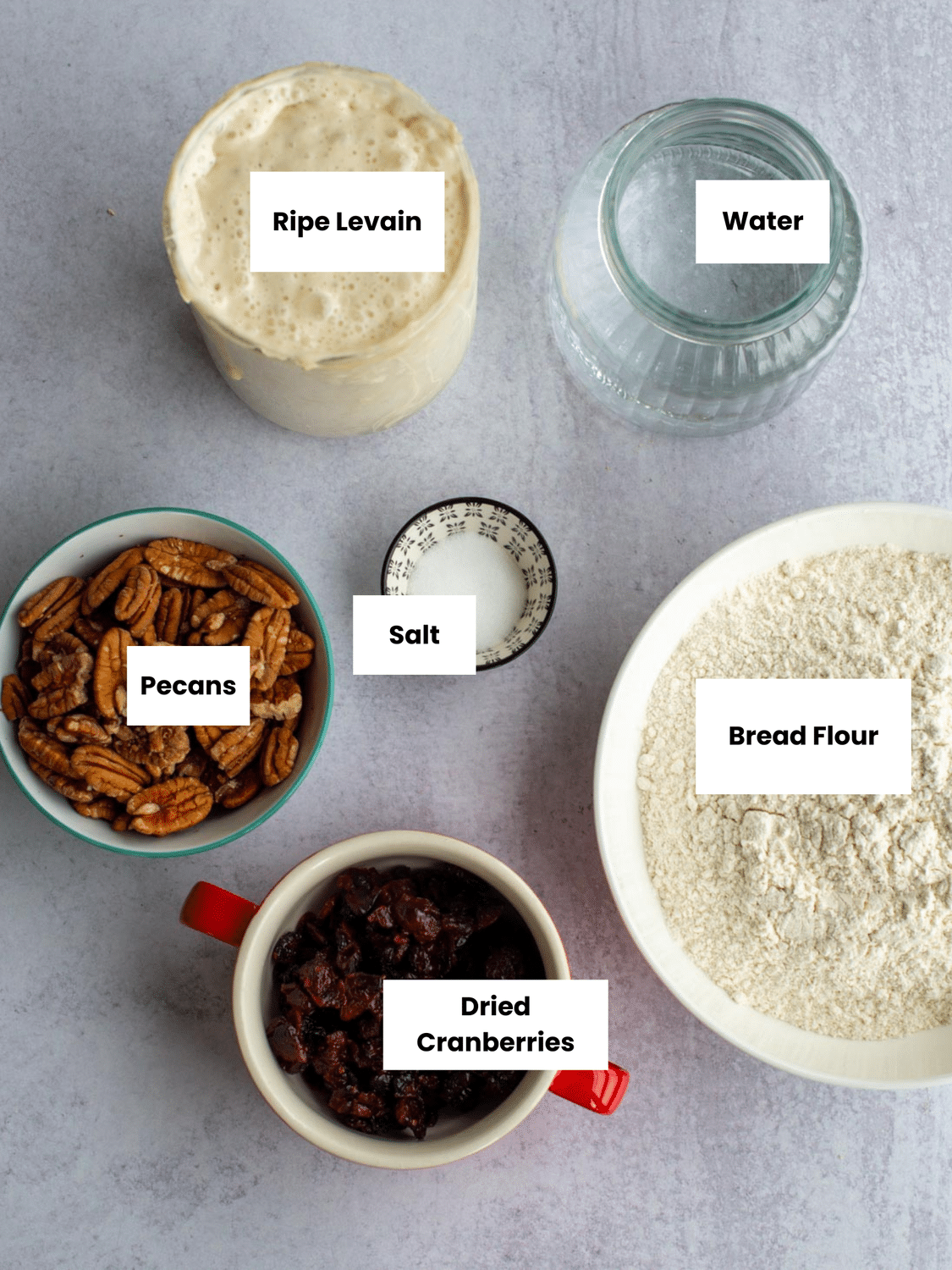
- Sourdough Starter – Make your own, get some from a friend (if you’re local I’m happy to share) or purchase one. Use ripe and active sourdough starter to mix the levain.
- White Bread Flour – Choose a good-quality bread flour with 12–12.5% protein content. I buy mine from our local mill, but King Arthur Bread Flour is another great option.
- Water – Water temperature plays an important role in fermentation. Depending on your kitchen’s ambient temperature, adjust the water temperature as needed. You can read more about how temperature affects sourdough here.
- Salt – Salt enhances flavor and strengthens the dough. Be sure to add it after the fermentolyse — and don’t forget it!
- Craisins – I use dried craisins for this recipe. I haven’t tested it with fresh cranberries yet, but if you have some on hand, try my Cranberry Orange Sourdough Bread. It’s a delicious way to bake with fresh cranberries.
- Pecans – I love the texture and flavor of chopped pecans in this loaf, but you can substitute any favorite roughly chopped nut. Walnuts are popular too.
See the recipe card for full information on ingredients and quantities
Substitutions
- Levain: Equal amounts of ripe, bubbly, active sourdough starter can be substituted for the levain in this recipe.
- Whole Wheat Flour: Either leave it out and substitute with bread flour or add extra whole wheat. Swap up to 25% of the bread flour with whole wheat flour for a slightly heartier texture and deeper flavor. You may need a touch more water to keep the dough smooth.
- Nuts: Use walnuts, almonds, or hazelnuts instead of pecans — or skip the nuts entirely for a nut-free version. Toasting the nuts before adding them can bring out even more flavor.
- Dried Fruit: Swap craisins for dried cherries, apricots, raisins, or chopped dates. Each one adds a slightly different sweetness and texture that works beautifully in sourdough.
Sourdough Baker’s Timeline
Because sourdough takes much longer than bread made with commercial yeast, a sourdough schedule helps me plan my bake. This sample schedule assumes you are using a ripe/active sourdough starter and keeping your dough at a temperature of 78-80º Fahrenheit.
| Day 1 | |
| 7:00AM -10:30 AM | Mix Levain, let rest at 78ºF Temperature |
| 10:30 AM – 11:00 AM | Fermentolyse |
| 11:00 AM | Add salt and water |
| 11:30 AM | Stretch and Fold #1 |
| 12:00 PM | Stretch and Fold #2 Add pecans & craisins |
| 12:30 PM | Stretch and Fold #3 |
| 12:30 PM – 2:30 PM | Finish Bulk Fermentation |
| 2:30- 3:00 PM | Pre-shape dough/bench rest |
| 3:00 PM | Shape Begin Cold Fermentation |
| Day 2 | Bake |
| 8:00 AM | Pre-heat Dutch Oven |
| 8:30 AM | Bake |
How to Make Cranberry Pecan Sourdough Bread
Mix the Levain
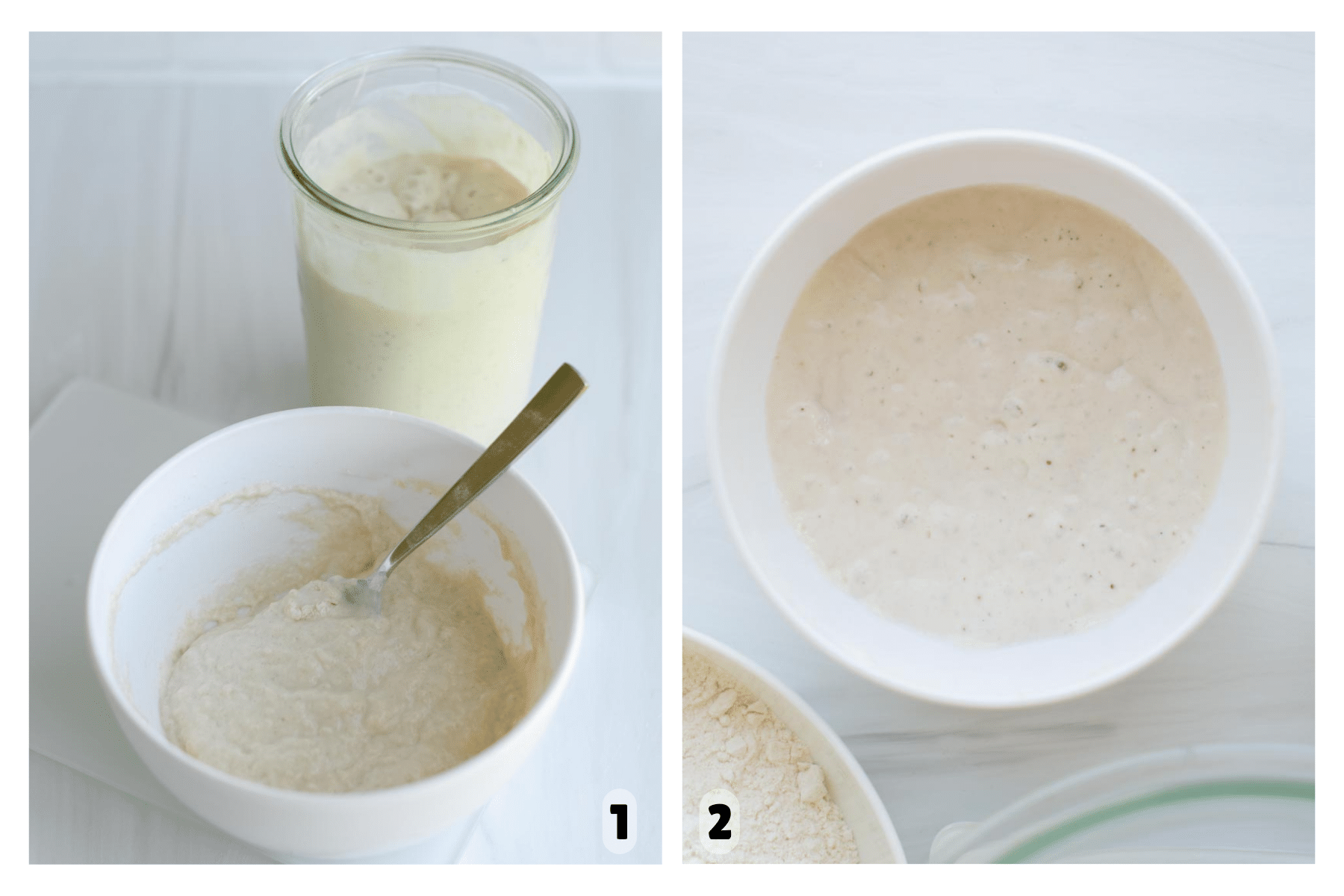
Step 1: Mix Levain. Combine ripe sourdough starter with water and flour to build your levain (Image 1). Let it rise until bubbly and active (Image 2).
This recipe calls for a same-day levain, which typically takes about 3–4 hours to ripen at 78°F (25°C). You’ll know it’s ready when it has doubled in size, is full of bubbles, smells pleasantly sour, and is just starting to fall from its peak.
Do you have to use a levain in this recipe? No. I prefer it for consistently good bakes, but if you have a well-maintained and frequently refreshed sourdough starter, you can use it in place of the levain. You can also adjust the sourdough feeding ratio of your starter or levain so it’s ready when you need it.
Mix the Dough
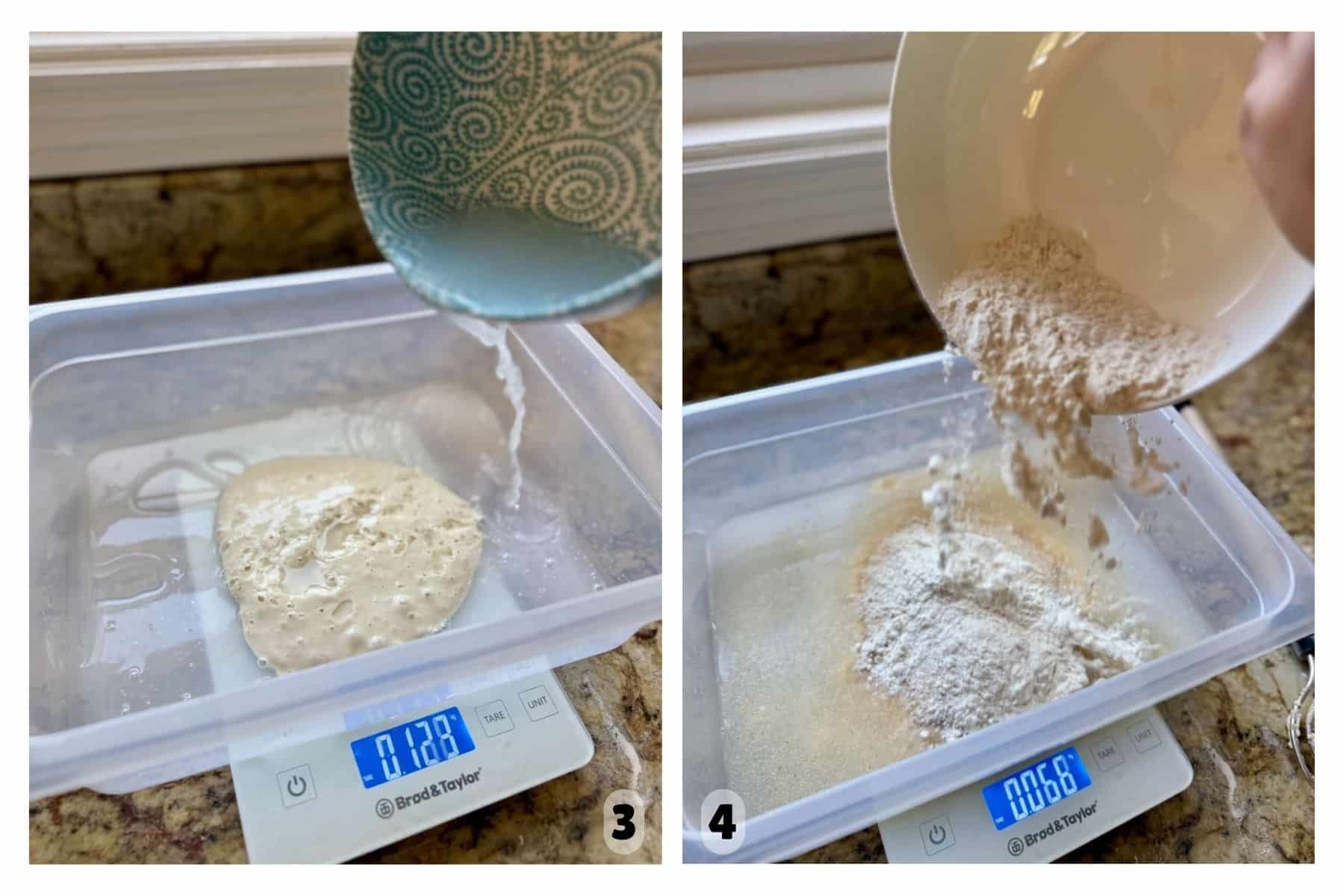
Step 2: Fermentolyse. Begin by mixing the flour, water, and levain together in a large bowl or container and leave it to sit for 30 minutes. This process is called a fermentolyse (Images 3 & 4). The ideal dough temperature at this phase is around 78º Fahrenheit (Image 5).
Do you need to do a fermentolyse? No. You can skip the fermentolyse and add the salt and reserved water during the initial mix. Go straight into the stretch and folds. The crumb may be a little tighter, but the loaf still turns out soft and delicious.
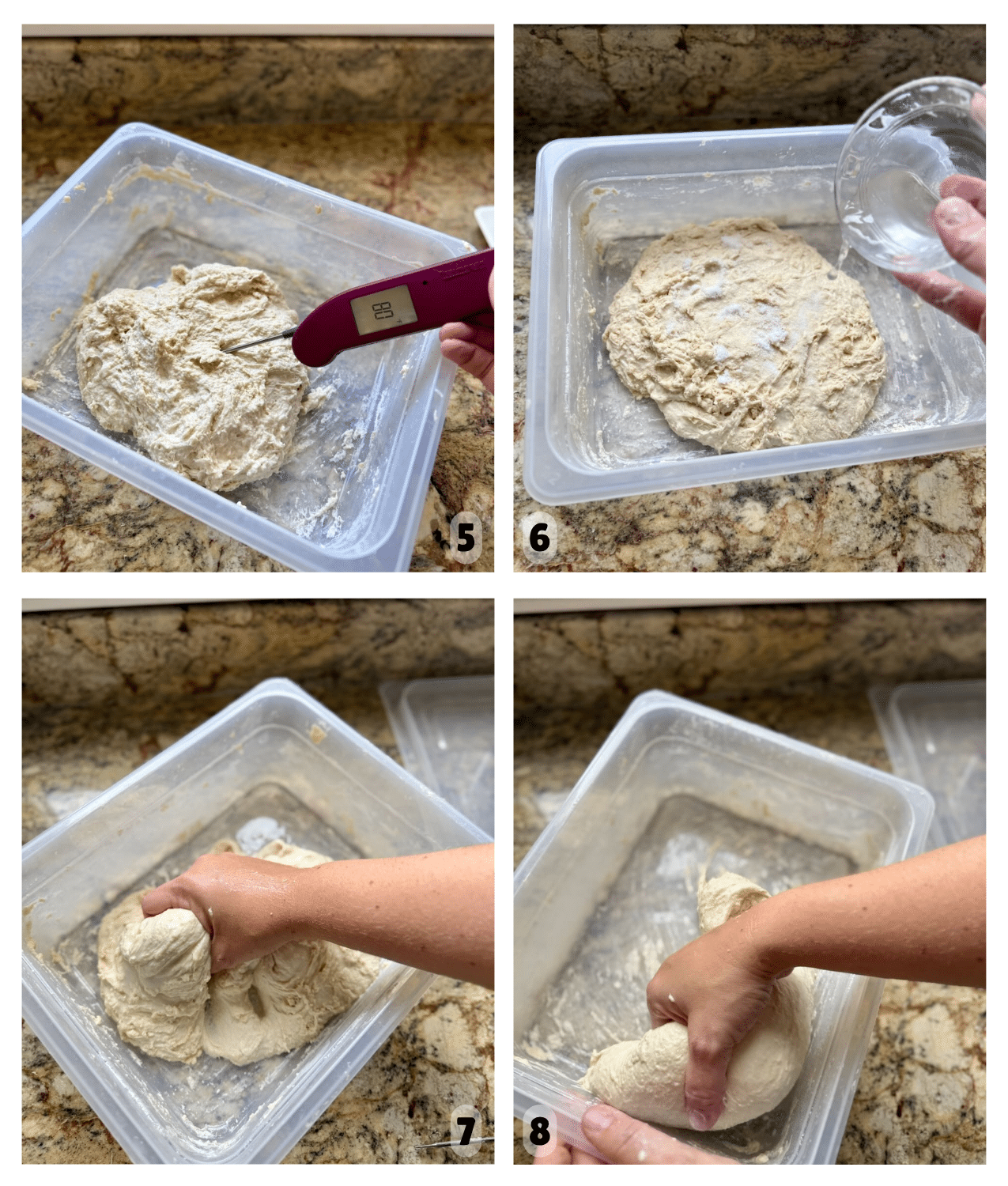
Step 3: Mix Dough. After 30 minutes, add the salt and 25 grams of reserved water (Images 5 & 6). Use your hands to pinch and fold chunks of dough back into the mixture (Image 7). Lift one side of the dough and fold it over itself several times, wetting your hands as needed. Continue kneading, slapping the dough against the sides of the bowl until the dough is cohesive and smooth (Image 8). This usually takes about 3–5 minutes. If you prefer, you can do this step in a stand mixer instead of by hand, mixing for 1-2 minutes. Cover the dough and rest for 30 minutes at 78ºF.
Temperature Note: The temperature of your sourdough matters. Aim to keep your dough around 78ºF (25°C) during mixing and bulk fermentation. Warmer dough ferments faster, while cooler dough will slow things down.
Bulk Fermentation: Stretch and Fold
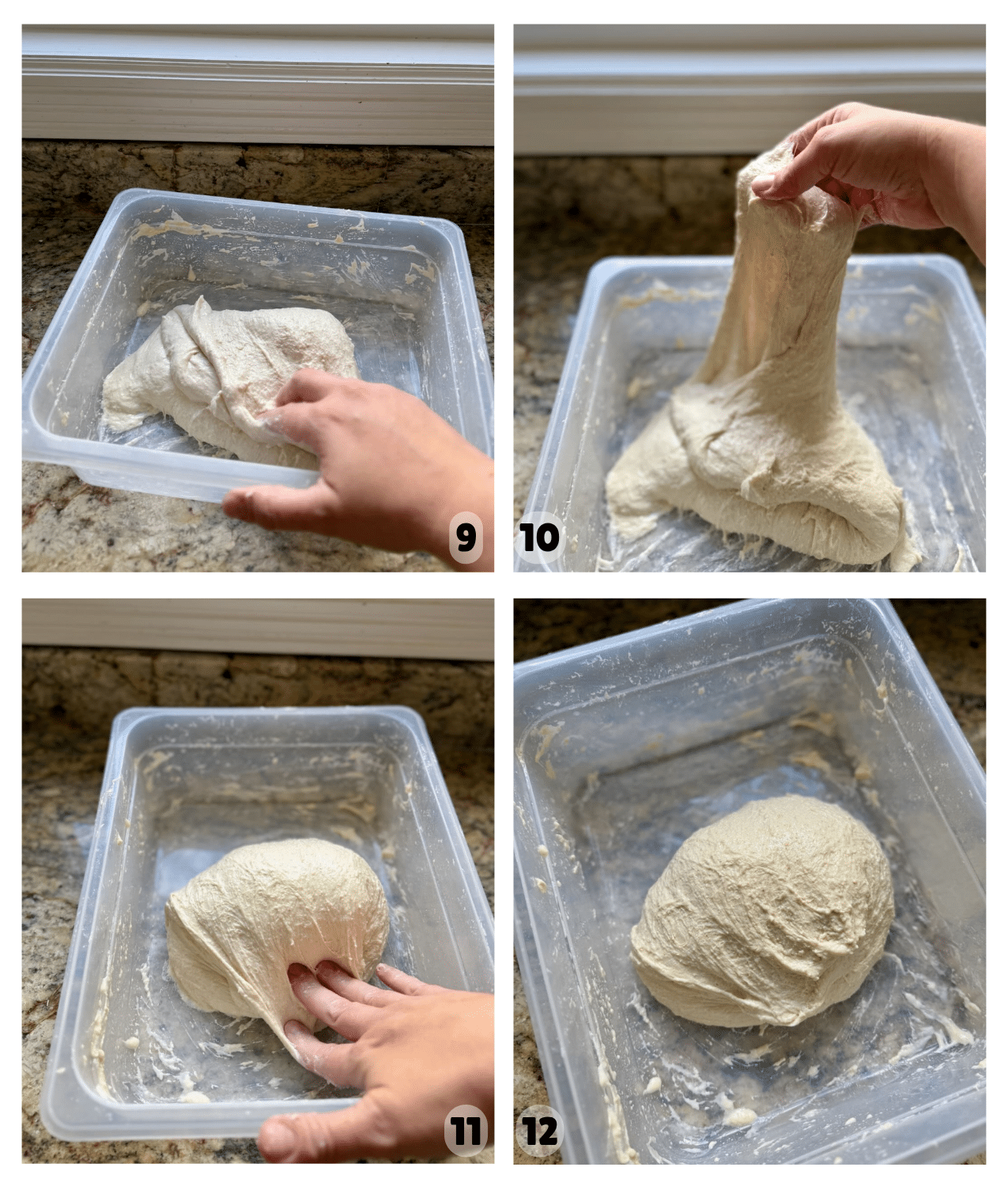
Step 4: Bulk Fermentation. This cranberry pecan sourdough bread is an artisan-style loaf, so instead of traditional kneading, we strengthen the dough with a series of gentle stretch and folds. Plan for 3–4 sets of folds over about 2 hours if your dough stays around 78°F (25°C).
Stretch and Fold: To stretch and fold, wet your hand so it doesn’t stick to the dough. Reach under the dough, grab from the bottom, and pull it up and over the top (Images 9 & 10). Turn the bowl a quarter turn and repeat, doing this a total of four times per set (Images 11 & 12). Cover and rest the dough for 30 minutes between each round of folds.
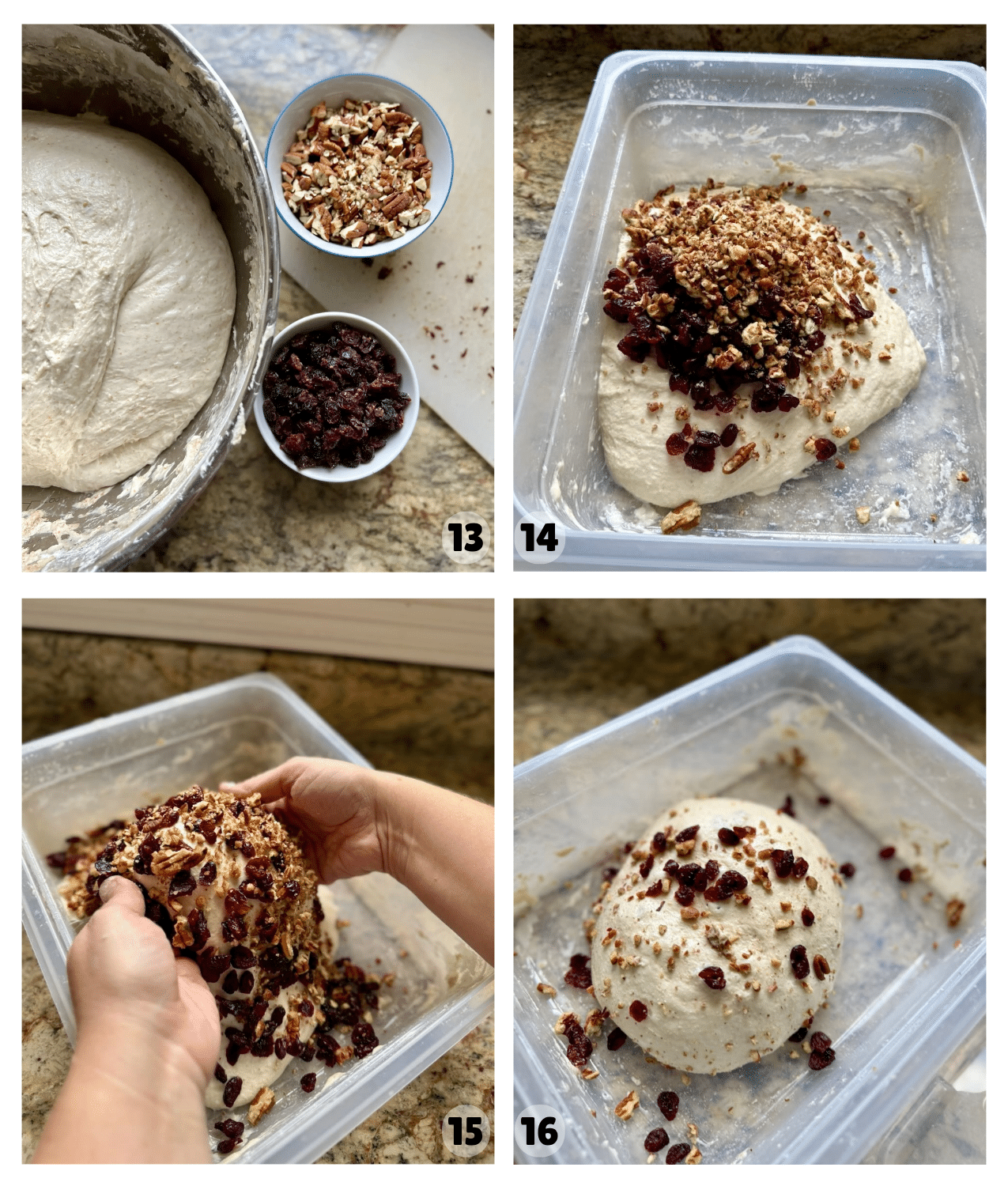
Adding Craisins and Pecans: Before your second set of stretch and folds (Image 13), sprinkle the chopped pecans and Craisins evenly over the top of the dough (Image 14). Stretch and fold or coil fold to begin incorporating them (Image 15). As you continue with your folds, the inclusions will work their way evenly throughout the dough (Image 16). You can also use coil folds if you prefer—both methods help distribute the craisins and pecans while strengthening the dough.
Visual Learner? Watch these quick videos to see the folds in action:
Finish Bulk Fermentation
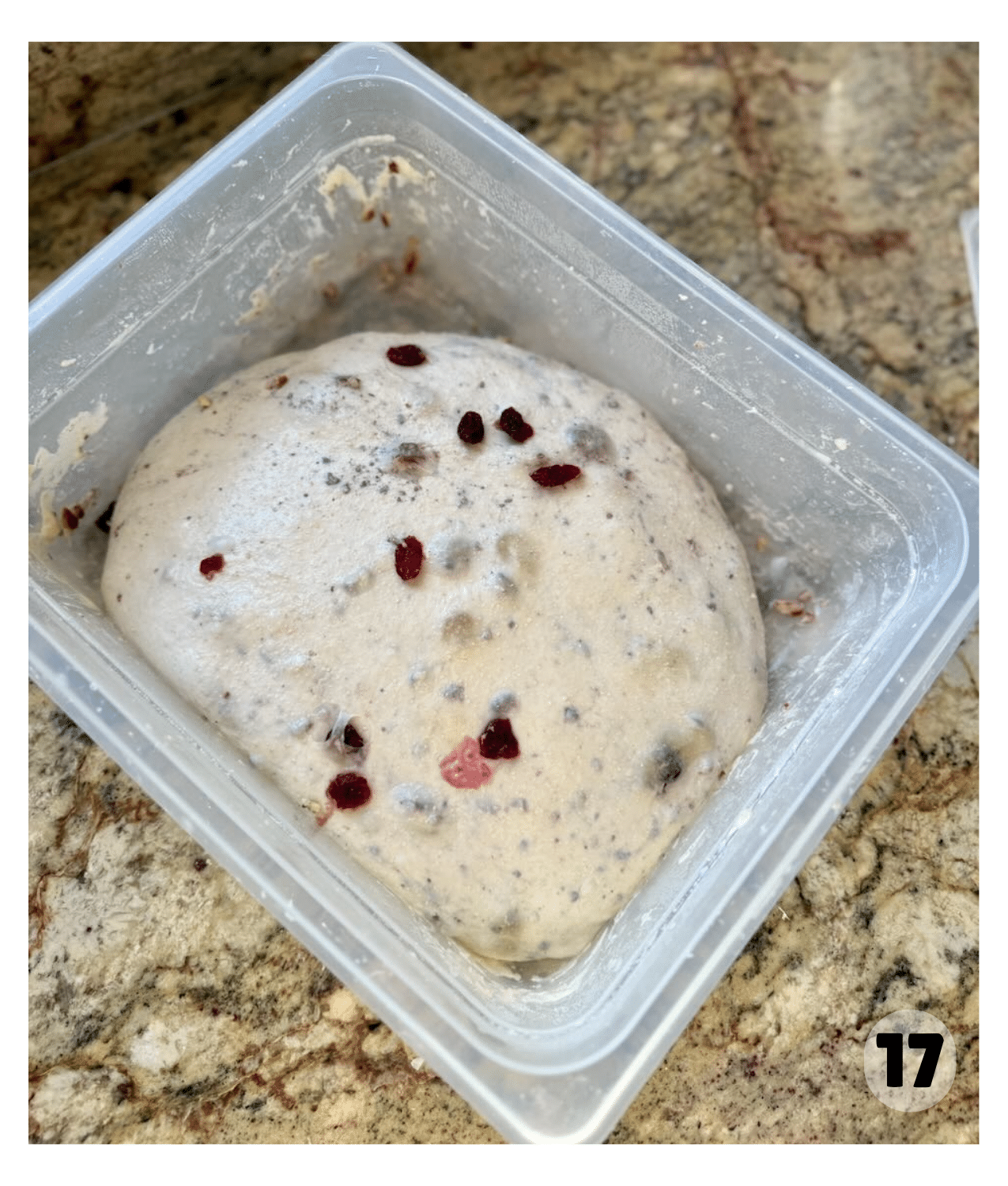
Step 5: Finish Bulk Fermentation. Perform your final set of stretch and folds, then let the dough rest in a warm spot (around 78–80°F / 25–27°C) for about 2 hours. The dough should look puffed about 30-40%, slightly domed in the center, and show a few scattered bubbles on the surface. These are signs that the dough is strong, airy, and ready to shape (Image 17).
Shape the Dough
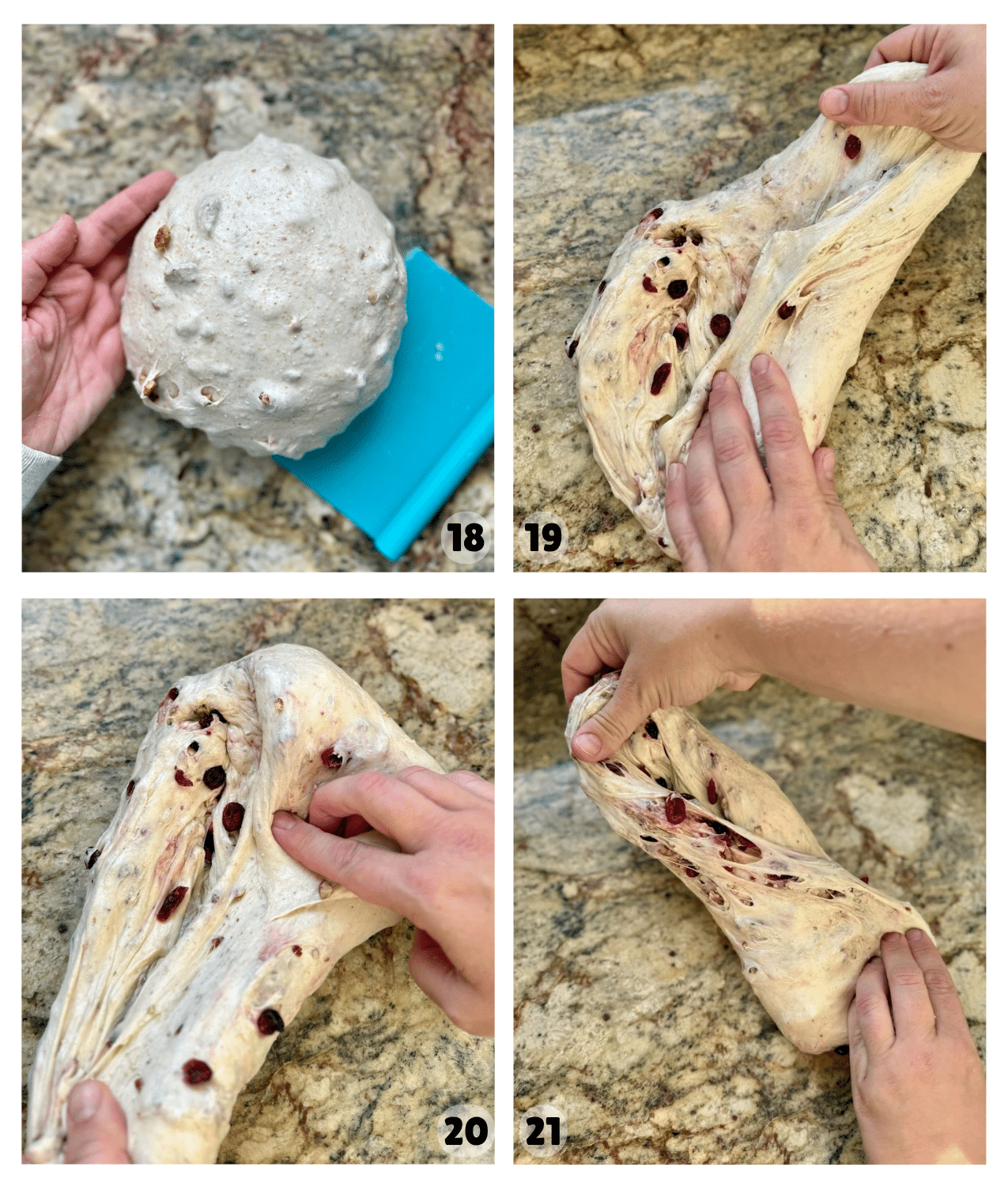
Step 6: Pre-Shape the Dough. Once the dough has finished bulk fermentation and looks puffed and jiggly, gently turn it out onto a lightly floured surface. Use your bench knife to shape it into a loose round, being careful not to deflate it. Let it rest uncovered for 20–30 minutes (Image 18). This short rest, called the bench rest, allows the gluten to relax and makes final shaping easier.
While the dough rests, prepare a banneton or small bowl with a kitchen towel or hair net, then generously flour it to prevent sticking. (If you’re using a hair net, you don’t need to flour it.)
Step 7: Shape the Dough. After the bench rest, the dough will be easier to handle and shape tightly. Lightly dust the top of the dough with flour. Use a bench knife to gently lift the dough off the counter and flip it over so the floured side is now on the bottom—this keeps most of the flour on the outside of the loaf.
Starting with the side closest to you, pull the dough toward you and fold it up over the center, then pull it out to the right side (Image 19). Repeat this motion on the left side, stretching each out slightly before folding it back to the middle (Image 20). Finally, pull the far edge of the dough up and over, tucking it toward you like wrapping a package (Image 21).
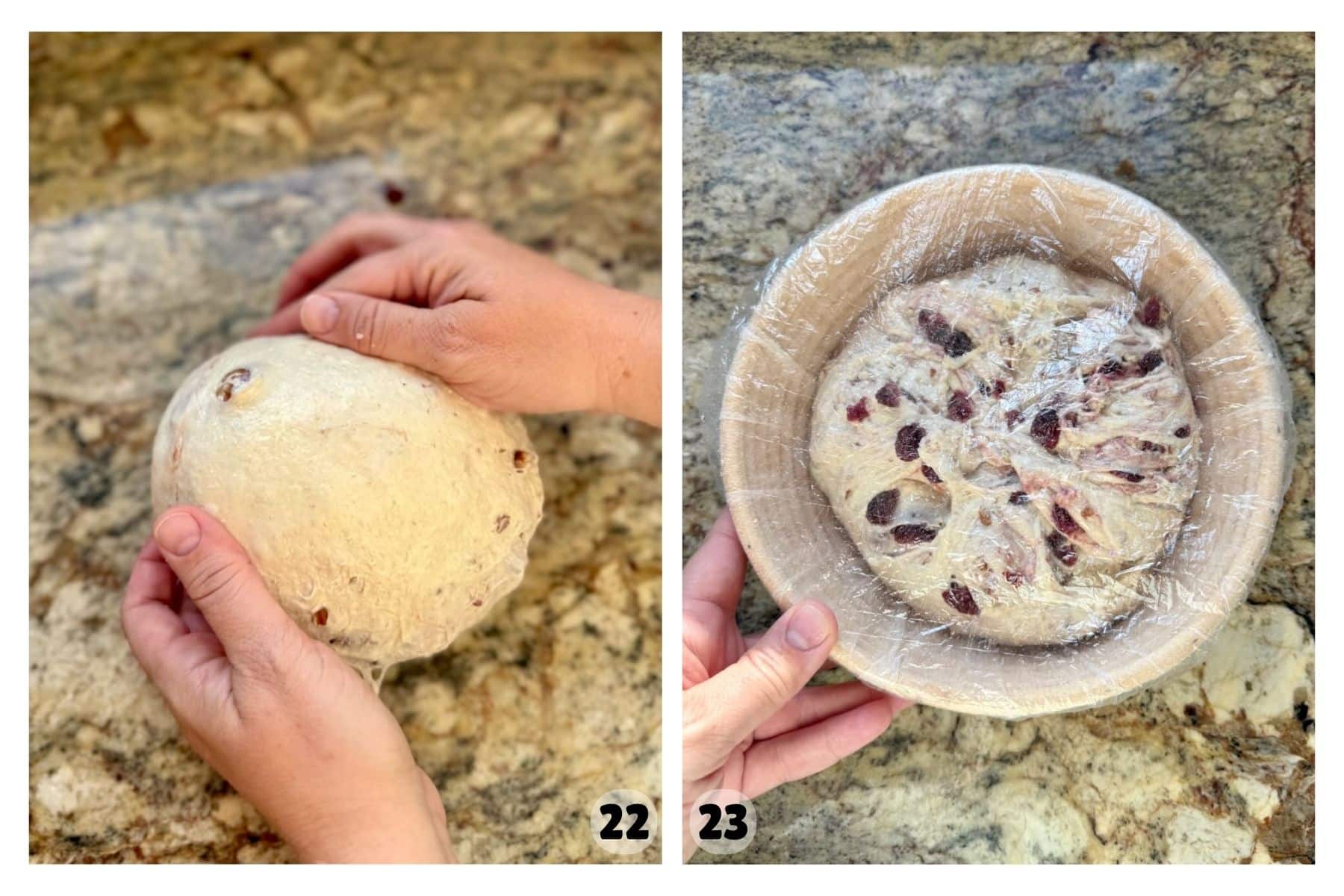
Use your hands and bench knife to gently drag and tighten the dough into a round shape (Image 22). Place the dough seam-side up into the floured basket (Image 23).
Want to bake this Cranberry Pecan Sourdough Bread in a loaf pan instead? Want to bake this sourdough in a loaf pan instead? Check out my full guide on how to bake sourdough in a loaf pan for step-by-step instructions and tips.
Cold Fermentation & Proofing
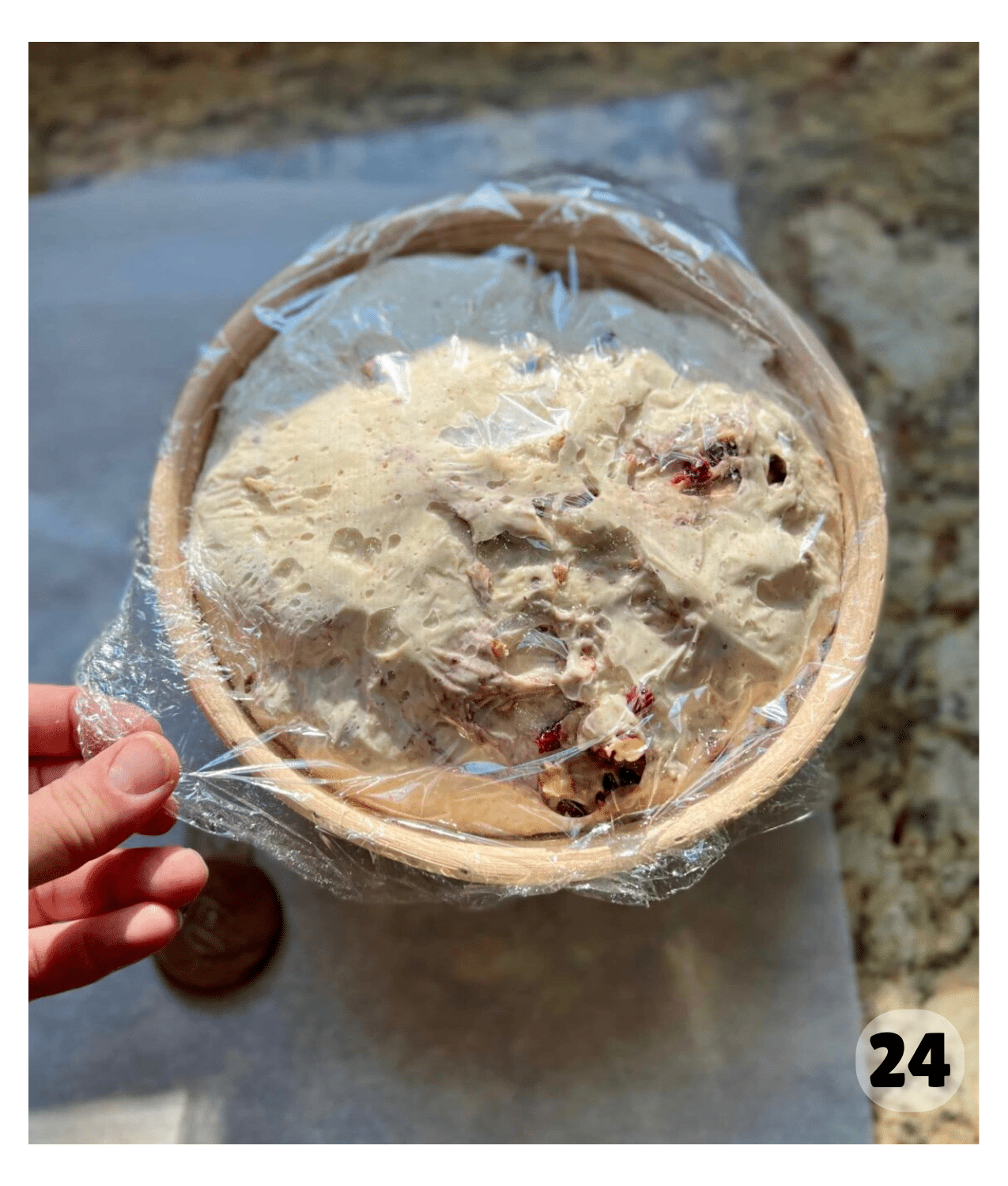
Step 8: Cold Fermentation. Cover the dough and refrigerate overnight or for up to 18–20 hours for a slow, cold fermentation (Image 24). As the dough gradually cools to fridge temperature, it will continue to rise slightly and develop a deeper, more complex flavor.
Want to bake the same day? You can skip the cold fermentation if needed. Simply cover the dough and let it rise in a warm spot (78–80°F / 25–27°C) for 2–3 hours, until it looks puffed, jiggly, and slightly risen. Then preheat your Dutch oven, score the loaf, and bake.
Bake the Loaf
Step 9: Bake Cranberry Pecan Loaf.
Pre-heat the Oven: Put a Dutch oven (top and all) into the oven and preheat to 500°F. Allow the Dutch oven to heat for about 30 minutes to an hour at 500°F. This builds up steam, which is necessary to achieve the beautiful oven spring and crispy crust that artisan bread is known for.
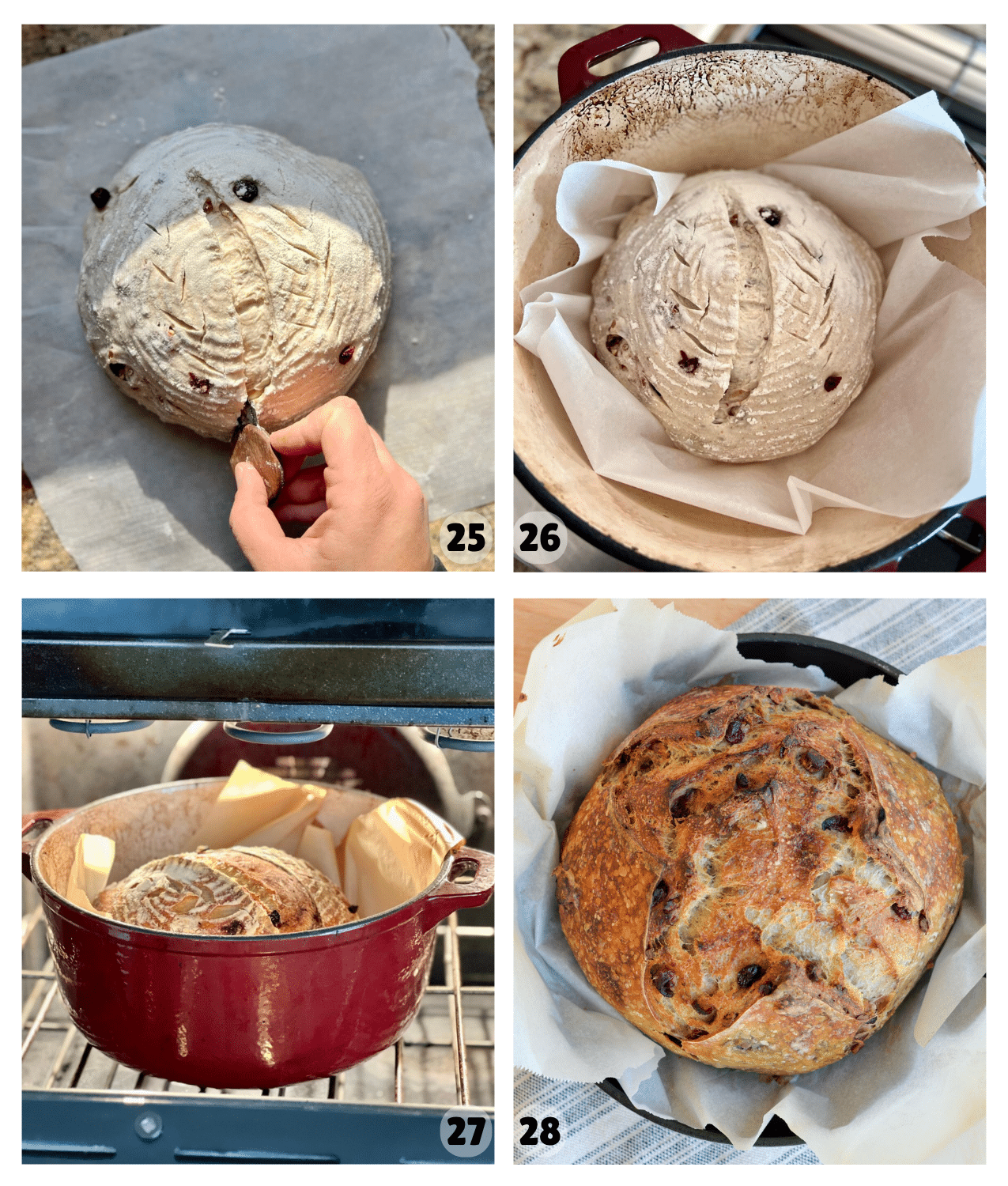
Scoring the Dough: Once the oven is preheated for 30 minutes, pull the loaf out of the refrigerator. Remove the plastic wrap (this is easy to do straight out of the refrigerator if the dough is chilled – not easy if the dough warms up) and place a piece of parchment paper on top of the bread dough. Flip the dough over so that it is now sitting on the parchment paper. Take off the bowl/banneton and kitchen towel. Use a bread lame or a very sharp knife to score the dough (Image 25). I find a simple score, nothing too intricate, is best when working with this dough. If a craisin or pecan pops out, just take it out completely, or else it will burn.
Baking the Bread: Carefully remove the Dutch oven from the 500°F oven with hot pads. Take the top off and place your bread into the Dutch oven (including parchment paper – this helps with the transfer) (Image 26). Be very careful not to touch the sides of the hot Dutch oven. Put your hot pads back on before you pick up the lid of the Dutch oven and place it on top of the bread. Put the whole Dutch oven back into your oven (Image 27). Lower the temperature to 450°F and bake for 25 minutes. Once 25 minutes are up, take the top off the Dutch oven, and continue baking the loaf for 20 minutes until the bread is fully baked, with an internal temperature of about 205ºF (Images 28). Let cool completely on a wire rack before slicing and enjoy!
How to Store Leftovers
After the cranberry pecan sourdough loaf has cooled completely, slice it up into pieces. Place sliced bread in a plastic bag, push air out,, and freeze. This bread toasts up well straight from the freezer into the toaster or defrosts to enjoy a slice later.
Recipe Tip
If a craisin or pecan sticks out while you’re shaping the dough, just press it gently back in. Try to keep the inclusions tucked inside the dough — anything left on the surface can burn during baking.
Frequently Asked Questions
The dough will be rounded at the top and have some bubbles around the sides, showing the fermentation. It will rise a little in the bowl, but won’t necessarily double in size. If you keep your dough temperature at 78º F, it should take about 4-5 hours for the dough to be ready to shape.
You can, but fresh cranberries add extra moisture and tartness. I recommend my Cranberry Orange Sourdough Bread for a version tested specifically with fresh cranberries.
Yes, but your dough will be slightly softer and harder to shape. You may need to reduce the water slightly to prevent it from being too sticky.
Toasted with butter is my favorite, but it’s also perfect for turkey sandwiches, cheese boards, or holiday breakfasts.
Related Recipes



If you tried this Cranberry Pecan Sourdough Bread or any other recipe on my website leave a 🌟 star rating and let me know how it went in the comments below. Happy Baking!

Cranberry Pecan Artisan Sourdough Bread
Save this for later!
Ingredients
Levain
- 35 grams ripe sourdough starter, about 2 Tablepoons
- 35 grams all purpose flour, about 1/4 cup
- 35 grams water, about 2 Tablespoons
Cranberry Pecan Sourdough Bread
- 100 grams ripe levain, scant 1/2 cup
- 375 grams water total , 25 grams reserved for after fermentolyse, about 1 1/2 cups water (plus 1 Tablespoon reserved for after fermentolyse)
- 500 grams white bread flour, about 3 3/4 cups
- 10 grams salt, reserved for after fermentolyse, about 1.5 teaspoons
- 75 grams pecans, roughly chopped, about 2/3 cup, reserved
- 90 grams craisins, about 2/3 cup, reserved
Instructions
Day 1: Levain/Mix/Bulk Fermentation/Shape/Cold Fermentation
- Levain: Mix together 35 grams ripe sourdough starter, 35 grams all-purpose or bread flour and 35 grams water. Set aside to ripen for 3-4 hours, keeping the temperature at 78ºF. Levain is ready when it has doubled in size, is very bubbly, smells milky sweet, and is just about to fall.Note: Equal weights of ripe, bubbly, active sourdough starter can be subsituted for levain in this recipe.
- Fermentolyse: Once the levain is peaked and active, mix 100 grams levain with 350 grams of water in a large bowl. Warm the water if the ingredients are too cold and cool the water if the ingredients are too warm. Add the 500 grams bread flour to the bowl and mix until incorporated and a shaggy dough forms. Let rest for 30 minutes.
- Mixing: After 30 minutes, add the reserved salt and the remaining 25 grams of water. Combine using your hands by squeezing the dough between your fingers, pinching chunks of dough, and reincorporating together. The dough will break apart and then reform in the bowl through this process. Pick up one side of the dough and fold it over on itself. The dough will be sticky. Wet your hands as needed and continue to work with the dough, slapping it against the side of the bowl and stretching it back until all the salt and water have been incorporated and the dough is cohesive and strong.
- Bulk Fermentation: Perform 3 sets of "stretch and folds," adding the craisins and pecans in during the second set. To “stretch and fold,” wet your hand (so it doesn’t stick to the dough). Reach down to the bottom of the bowl of dough and pull the dough up and over the top of the dough. Turn the bowl 1/4 turn and repeat the stretch and fold. Turn another quarter turn and repeat. Perform one more 1/4 turn with stretching and folding the dough. Cover and set aside for 30 minutes. Watch a video of the process here.
- Stretch and Fold #1: 30 minutes later, stretch and fold the dough (1 hour into bulk fermentation).Stretch and Fold #2: 30 minutes later, add craisins and pecans. Stretch and fold again, beginning to incorporate the craisins and pecans into the dough.Stretch and Fold #3: 30 minutes later, stretch and fold again. The craisins and pecans will continue dispersing throughout the dough. You should notice the dough feeling more cohesive and strong during this stretch and fold, and not needing very much folding to come together. If your dough still feels loose, add in another couple of stretch and folds to help strengthen and tighten the gluten strands.
- Bulk Fermentation Continued: Let the dough rest in a warm place, for the rest of bulk fermentation, about 2-3 hours at 78ºF. During this time the dough will puff up about 30-40%, become more aerated, start to pull away from the edges of the bowl and have a few scattered bubbles around the edges/top of the dough. If your dough is not showing these signs, make sure it's warm enough and give it another half an hour or so until it is showing signs that it's ready to shape.
- Pre-Shape: Tip the bowl upside down, allowing the dough to fall onto a clean counter surface. Be gentle to avoid cutting and degassing the dough as much as possible. Use damp hands and push the bench knife under the dough while using your free hand to tuck the dough under itself. Repeat this process going around in a circle until you have a tight ball of dough.
- Bench Rest: Let the dough rest uncovered for about 30 minutes at room temperature. The dough will flatten a bit during this period of time.
- Shaping: After the dough has rested for about 30 minutes it is time to shape the bread into a round. Sprinkle flour on top of the dough. Using the bench knife, lift the dough up off the counter and place it on top of the countertop–floured side down. This ensures that the flour is staying mainly on the outside of the dough. Going around in a circle, pull the dough sideways towards you and then fold up to the top of the round. Move 90 degrees and repeat the same process pulling the dough sideways and then folding up to the top. As you continue this process around the dough, increase the tension as you pull. If a craisin or pecan pops out, remove it from the loaf or stick it on the bottom of hte dough. Gather the bread into a circle and use a bench knife to lift the bread and place into your lined bowl. Watch the process here.
- Stitch the Dough: Let the dough rest and the gluten relax for about 5 minutes before stitching up the dough if desired. This adds a last little bit of tension, but is completely optional.
- Cold Fermentation: Cover the dough with a shower cap, plastic wrap or a reusable cover and store the dough in the refrigerator overnight for 12-18 hours. Alternatively you can let your dough rise outside the fridge for another 2-3 hours, keeping the dough at that 78º F temperature, and then bake your loaves the same day.
Day 2: Score and Bake
- Pre-heat the Oven: Put a dutch oven (top and all) into the oven and preheat to 500ºF. Allow the dutch oven to heat for about 30 minutes at 500ºF.
- Scoring: Once preheated for 30 minutes, pull the loaf out of the refrigerator. Remove the plastic wrap (this is easy to do straight out of the refrigerator if the dough is chilled –not easy if the dough warms up) and place a piece of parchment paper on top of the bread dough. Flip the dough over so that the dough is now sitting on the parchment paper. Take off the bowl/banneton and kitchen towel. Smooth the flour over the top of the dough (add a little extra for more contrast if desired). Use a very sharp knife or bread lame to score the dough. Bread with inclusions typically does not score quite as well as bread without. This is not a loaf for intricate scoring. One large slash, about 1 inch deep is sufficient.
- Bake: Carefully remove the dutch oven from the 500ºF oven with hot pads. Take the top off and place your bread into the dutch oven (including parchment paper – this helps with the transfer). Be very careful not to touch the sides of the dutch oven. Put your hot pads back on before you pick up the lid of the dutch oven and place it on top of the bread. Put the whole dutch oven back into your oven. Lower the temperature to 450ºF and bake for 25 minutes. Once 25 minutes are up, take the top off the dutch oven and continue baking for 20 minutes until the bread is a crackly deep brown.
- Remove the bread to a wire cooling rack. Cool and enjoy!
Video
Notes
Nutrition
Nutrition information is automatically calculated, so should only be used as an approximation.


Hi Amy… thank you for sharing these delicious recipes. I was wondering if could use dried figs and dry cherries in this recipe. If so, how much would I use. TIA
I haven’t tried that, but I think you could sub for the cranberries and pecans. I would keep the inclusions to the same amount and sub some or all of the existing cranberries and pecans.
By far, my best loaf ever, it makes me so happy eating it too! Very tasty, will be perfect to serve as an appetizer on Thanksgiving with a cranberry cream cheese spread!
Thanks for the review. This would be the perfect Thanksgiving appetizer!
Delicious!
Thanks for the review!
Sorry Amy, I just found it!
Great!
I don’t see the quantities listed for your pecan cranberry sourdough bread in the recipe?
If you click the “jump to recipe” button it will take you to the recipe card where all the quantities are listed.
In my opinion the best sourdough bread recipe, its beyond perfect. But I did a Martha Stewart suggestion (I overnight soak my dried cranberries in OJ). Drain well before use. I do this with raisins, currents, cranberries, dates now and am never, ever disappointed. Some dried fruit you mean it.. like dried blueberries.
Yum! Thanks for the tip and review.
Thank you for this wonderful recipe ..it’s so delicious! All your recipes are truly top notch ..and very clear instructions with beautiful photos ❣️
I’m glad you love the recipe! Thanks for the review.
I think i have to bake this bread the same day. It’s running away on me, would that make a different crumb read?
I’m sorry it didn’t turn out – I would definitely try baking the same day and seeing if it comes out the way you like it.
I did bake it the same day,good thing checked on it. Turnd out lovely. I soaked the fruit in water for an hour, before put in. Is that a good option?
That is a good option. Glad it turned out well for you!
Sounds great! I’m glad it turned out great.