
Affiliate disclosure: This post may contain affiliate links. Please see our disclosure policy.
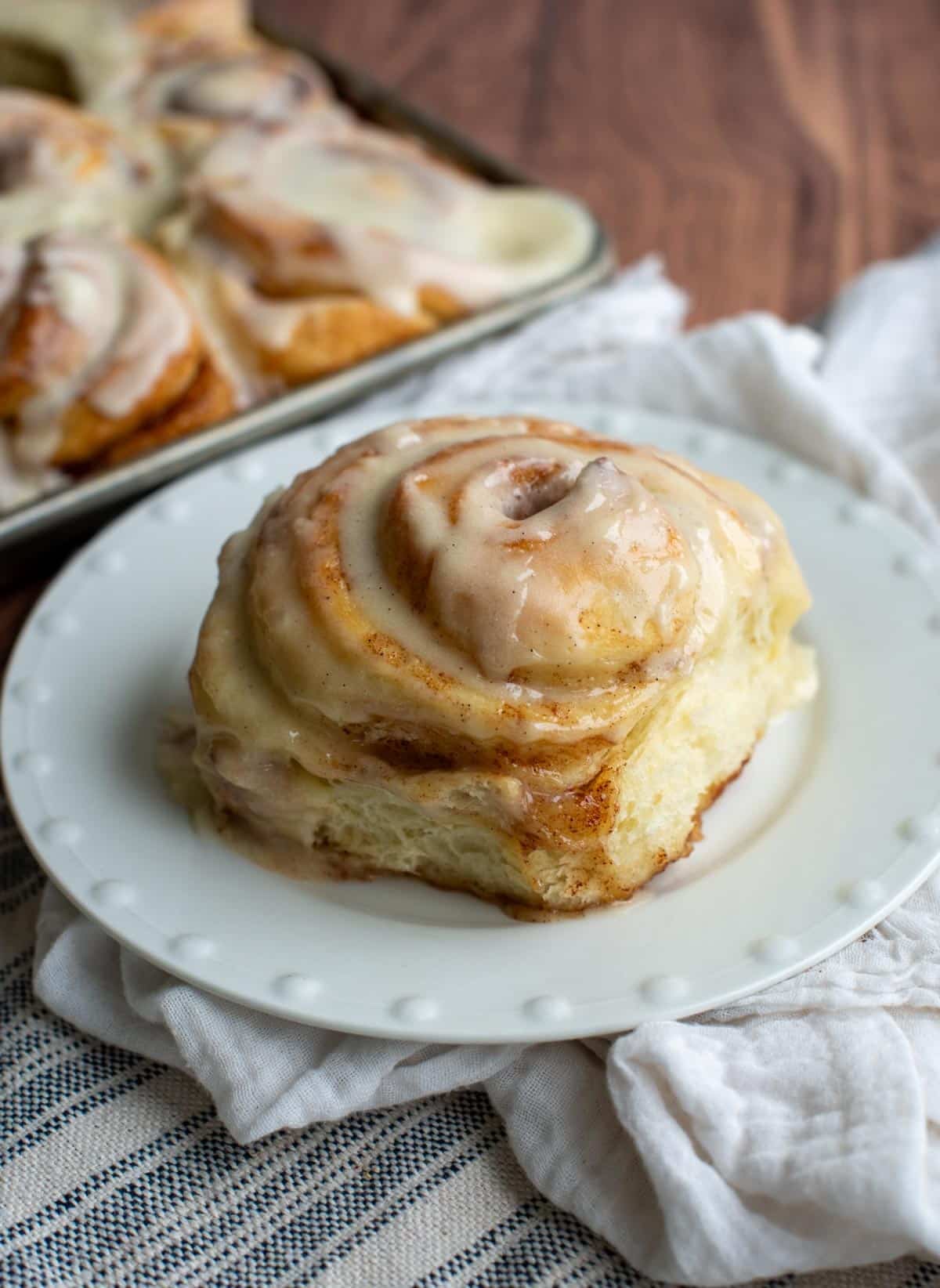
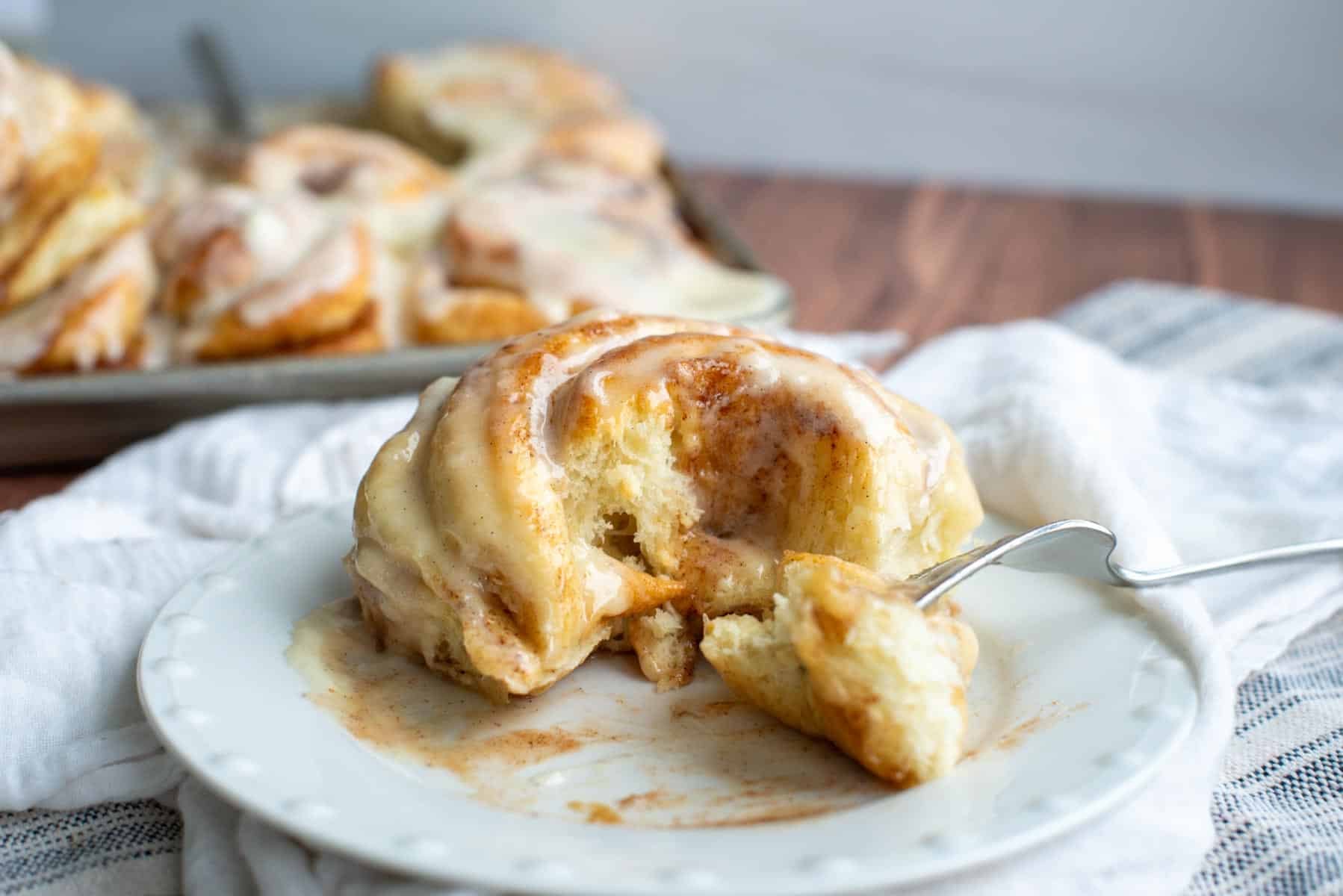
There’s nothing better than the smell of freshly baked Sourdough Cinnamon Rolls filling your kitchen. These soft, gooey sourdough cinnamon rolls are made with 100% naturally leavened dough for incredible flavor and texture — no commercial yeast needed. Something magical happens when you add sourdough to cinnamon rolls. The flavor gets richer, the texture softer, and the whole batch just feels a little extra special. These are truly The Best Sourdough Cinnamon Rolls I’ve ever made.
This sourdough cinnamon roll recipe transforms my family’s longtime favorite homemade cinnamon roll recipe into a soft, fluffy sourdough version with incredible flavor and texture. Each roll is perfectly gooey with just the right amount of sweet cinnamon filling, and the maple cream cheese icing takes them completely over the top. If you’ve been searching for the best sourdough cinnamon roll recipe, this is it. They’re soft, fluffy, and perfectly sweet every single time.

Save this for later!
Table of Contents
Why You’ll Love Sourdough Cinnamon Rolls
- 100% Sourdough – Made entirely with active sourdough starter, this is a 100% sourdough cinnamon roll recipe. These naturally leavened cinnamon rolls rise slowly for a deeper, richer flavor you can’t get from yeast rolls.
- Sweet, Soft, and Cinnamony – You’ll love how these sourdough cinnamon rolls bake up soft, fluffy, and filled with sweet cinnamon-sugar goodness — all with the added flavor and benefits of sourdough. And if you want to try something extra fun, check out my Sourdough Cinnamon Roll Focaccia to see how they compare!
- Versatile – This dough is the perfect base for experimenting with your favorite flavors. I use it as a template for my fall favorite Sticky Pecan Sourdough Rolls and my springtime favorite Sourdough Strawberry Rolls.
- Special Breakfast – Cinnamon rolls make the best breakfast for a holiday, celebration, or brunch. Plus, you can make them ahead of time by freezing your cinnamon roll dough! Whether you bake these overnight or same-day, this sourdough cinnamon roll recipe gives you the flexibility to fit your schedule.
- Want a Quicker Option? – If you’re short on time, try my Sourdough Discard Cinnamon Rolls, which combine sourdough discard and instant yeast for a faster version that’s just as soft and delicious.
Key Cinnamon Roll Ingredients

- Levain – This recipe uses a sweet stiff levain that combines ripe and active sourdough starter, flour, sugar, and room temperature water and is left to rise before using. A strong levain is key to soft sourdough cinnamon rolls that bake up tall and fluffy.
- Bread Flour – I recommend using bread flour with a strong protein content for this dough. I almost always use a 12.5% protein content bread flour for my bread recipes.
- Cinnamon Roll Filling – This recipe uses a cinnamon filling that combines softened butter with brown sugar, cinnamon, and cornstarch. Mix the ingredients together before filling for more even distribution.
- Cinnamon Roll Frosting – Unsalted butter, cream cheese, powdered sugar, heavy cream, and both vanilla and maple extract are whipped together into a luscious frosting. The maple adds a really special flavor to these cinnamon rolls.
See the recipe card for full information on ingredients and quantities
Substitutions
- Bread Flour: This recipe is made and tested with bread flour, which keeps the rolls light, fluffy, and helps them rise tall. If you’d like to substitute all-purpose flour, add a little vital wheat gluten to strengthen the dough and improve the rise. I haven’t tested freshly milled flour, but I think substituting half of the bread flour for a hard white or red wheat would work well in this recipe.
- Whole Milk: Whole milk or 2% both work beautifully in sourdough cinnamon roll dough and help create that soft, melt-in-your-mouth texture. You can substitute 2% milk or even a dairy-free option with great results.
- Unsalted Butter: I always bake with unsalted butter to better control the salt content. If you’re using salted butter, simply reduce the added salt in the recipe.
- Eggs: Eggs enrich the dough, adding structure and softness. If you have an egg allergy, you can omit the egg and hold back some flour, adding more as needed to reach a soft, workable dough.
- Heavy Cream: For extra-soft, gooey rolls, drizzle about 1 tablespoon of warmed heavy cream over the risen rolls right before baking.
- Cornstarch: You can substitute the flour in the filling for cornstarch if needed, or leave it out entirely.
- Raisins and Nuts: Add pecans, walnuts, or raisins on top of the cinnamon filling if desired. They add great texture and flavor variation.
- Flavors: I have several other sourdough cinnamon roll variations that highlight seasonal flavors throughout the year. Don’t be afraid to use this dough as a base and experiment with different flavor combinations.
- Half the Recipe: Cut this recipe in half and make 12 rolls in a 9 by 13 baking pan if you are looking for a smaller amount of cinnamon rolls.
Sourdough Baker’s Timeline
A sample baking schedule helps me when baking with sourdough. Sourdough takes much longer to rise than traditional bread. That’s what gives sourdough cinnamon rolls their signature flavor and texture — the long fermentation time develops both strength and depth. This schedule helps me plan my bake.
Note: This schedule assumes the dough temperature is 78-80ºF throughout the process. If your dough is colder, the process will move slower. If your dough is warmer, the process will move faster.
Also Note – Cinnamon Rolls are typically enjoyed first thing in the morning. This can be a little tricky with sourdough to get just right. Check out my options for morning cinnamon rolls in the recipe notes of the recipe card and choose the option that works best for you!
This sample schedule includes my most-used option, which is to make the rolls through rising, then refrigerate and bake in the morning.
| Day 1 | Levain |
| 8 PM -8 AM | Make Stiff Sweet Levain. Let rise overnight. |
| Day 2 | Mixing/Bulk Fermentation |
| 8 AM | Mix Dough |
| 8:15 AM | Begin Bulk Fermentation |
| 12:15 PM | End Bulk Fermentation |
| 12:15 PM | Shape Cinnamon Rolls |
| 12:30 PM – 8:30 PM | Proof at 78-82ºF |
| 8:30 PM | Refrigerate Risen Rolls Overnight OR Bake right away |
| Day 3 | Bake |
| 8:30 AM | Bake and frost. Serve warm. |
How to Make Sourdough Cinnamon Rolls
Mix a Stiff Sweet Levain
One of the things that sets these sourdough cinnamon rolls apart is the stiff, sweet levain you mix together before making the cinnamon rolls. This takes the place of a traditional sourdough starter. A stiff levain helps temper the tang from sourdough and lets the cinnamon roll flavor really shine in this recipe. I love the tang in a traditional sourdough loaf, but I prefer my cinnamon rolls light, fluffy, and tang-free.

Step 1: Mix a stiff sweet levain. Combine ripe sourdough starter, all-purpose flour, granulated sugar, and water. Knead levain and then allow the cohesive ball to rise for 10-12 hours at 78ºF. (Images 1 & 2)
Active Sourdough Starter: If you really want to use ripe, active starter in place of the stiff levain, you can BUT you will need to add a little extra flour to the dough, and you will have to watch your dough closely as it can more easily overproof.
Mix the Dough and Begin Bulk Fermentation (First “Small” Rise)

Step 2: Mix Dough. Combine warm milk, melted butter, sugar, eggs, salt, and bread flour in the bowl of a stand mixer. Knead until the dough is tacky, but not overly sticky (Images 3 & 4). If you don’t have a stand mixer, knead by hand.
Step 3: Bulk Fermentation. Put the dough in a container and cover. Allow to rise at 78-80ºF place for 4 hours until puffed up, slightly aerated and cohesive. (Images 5 & 6).
Options for Morning Cinnamon Rolls:
- Shape Rolls, Proof and Refrigerate to bake the next morning: This is my favorite way to have sourdough cinnamon rolls ready when I wake up. Go through the entire process of shaping the rolls and then proofing them until just doubled in size. Cover them and stick the risen rolls in the refrigerator overnight. Bake straight from the fridge the next morning.
- Refrigerate the dough for 12-24 hours and shape rolls in the morning: Refrigerate dough, shape and fill the next morning. Rolls rise in a warm (80-85ºF) place for 3-4 hours and are typically ready for brunch.
- Shape and Let Rise Overnight: If you time it right and have consistently lower temperatures (76ºF-78ºF), it can work well to mix the dough in the evening and shape the rolls about 10-12 hours before you want to bake them, giving them time to rise overnight and bake when you wake up.
- Shape Rolls, Proof and Bake: Shape the rolls, proof them and bake the rolls when they are risen, light and airy. Cover with foil. Reheat the next morning in the microwave for 10-20 seconds, top with icing and enjoy.
Shape and Fill the Dough

Step 4: Mix Filling & Shape. Mix cinnamon sugar filling. Dump the dough onto a work surface. Roll the dough into a large 18 by 12-inch rectangle using a rolling pin and spread cinnamon filling all over the dough (Image 7). Roll dough tightly and pinch seam together (Images 8 & 9). With the seam side down, cut the long log into 12 equal slices for large cinnamon rolls (Image 10). I like to use a bench scraper, or shape knife, but you can also use unflavored dental floss for clean slices. Place the slices on a parchment paper-lined baking sheet and cover with plastic wrap or a sheet pan cover to proof.
Amy’s Tip: This recipe makes 12 LARGE bakery-style cinnamon rolls or 24 smaller ones—both sizes fit perfectly on a half sheet baking pan. I usually make the smaller rolls for family breakfasts, but if I really want to impress or am selling rolls, I’ll go for the big, bakery-style rolls.
Bake and Frost Sourdough Cinnamon Rolls

Step 5: Proof Rolls. Place rolls in a warm place to rise. Temperature plays an important part in how long the rolls will need to rise. Rolls kept at a lower temperature (76-78ºF) will often take overnight to rise. Rolls kept at a higher temperature (82-85ºF) can rise in 3-5 hours. Whatever temperature you choose, make sure the rolls have doubled in size and are light, airy, and puffy before baking them (Images 11 &12).
Step 6: Refrigerate and Bake. Place the just risen/doubled rolls in the refrigerator overnight or until you are ready to bake them (within 12-18 hours). Pull rolls out of the refrigerator and bake in a preheated 350ºF oven for 25-30 minutes until the rolls reach an internal temperature of 190º-195ºF (Image 13). The refrigeration step is optional, but it can help you time the rolls to have freshly baked sourdough cinnamon rolls in the morning.
Step 7: Frost. Whip together the maple cream cheese frosting and frost the cinnamon rolls while they are still warm (Image 14).
Extra Gooey Rolls? Want your sourdough cinnamon rolls extra gooey? Drizzle about 1 tablespoon of warmed heavy cream over the top of each roll before baking. The cream bakes down into the dough, creating soft, tender, melt-in-your-mouth cinnamon rolls with an even richer flavor.
How to Store Leftovers
Leftover sourdough cinnamon rolls can be stored for a few hours at room temperature. After that I like to freeze them in an airtight container or ziplock bag. When you want a cinnamon roll, pull it out, defrost it and warm it up just a little bit in the microwave. Enjoy!
Amy’s Recipe Tips
- Mixer: If you don’t have a stand mixer, knead the dough together by hand for 8-10 minutes. The long fermentation/rising of sourdough also helps strengthen the dough just by resting. A stand mixer is convenient, but not necessary.
- Filling: Mix together softened or even slightly melty (but not melted) butter with brown sugar, cinnamon and a little bit of cornstarch before adding it on top of the cinnamon rolls. This keeps the rolls from gaping open
- 12 Large Rolls or 24 “Regular-Sized”: This recipe makes 12 very large cinnamon rolls that will be sure to impress. I often cut the dough into 24 more manageable-sized rolls and fit them on a half-sheet baking sheet with 4 rows of 6.
- Tuck the Ends: If you ever have wispy ends that you wish wouldn’t be “wispy,” tuck the end of the cinnamon roll under itself so they don’t come loose during the bake.
- Make Ahead: Freeze cinnamon roll dough a few days before or use my tips for making rolls ahead of time to plan ahead for a busy morning.
Frequently Asked Questions
You can, BUT, I highly recommend trying out the stiff levain for this recipe. A regular starter doesn’t have the same proofing window (it’s shorter) and can result in more sour-flavored cinnamon rolls that don’t rise quite as high. If you want to substitute it, use the same amount as called for in the recipe but you’ll need to add a little more flour to the dough so it feels tacky – not sticky when mixed.
It is not my preference to freeze sourdough cinnamon roll dough. It doesn’t last as long in the freezer as dough made with commercial yeast. If you do it, leave them in the freezer for less than a week. Or use my sourdough discard cinnamon roll recipe instead.
Yes! Originally when I first started making these rolls, I made them giant – and they are SO good. But, to serve more people and make them a more manageable size, I often cut the dough into 24 cinnamon rolls and bake them on a large baking sheet altogether and they work great! You can also cut this recipe in half and make 12 smaller cinnamon rolls in a 9 by 13 pan.
Yes! You will love my recipe for sourdough discard cinnamon rolls!
This is normal with a long fermentation time or overnight proofing in the refrigerator. Sugar attracts the liquid, and condensation adds more liquid to the dough. Once baked, this just results in gooey cinnamon rolls, so it shouldn’t be an issue. But if you want to sop up some of the liquid before baking with a paper towel, you can.
Dense cinnamon rolls usually mean your dough needs to rise more. Make sure your dough has doubled in size and is light and airy before baking. If it’s not like this, warm them up! The temperature of your sourdough dough has a huge impact on how long it takes for your cinnamon rolls to rise. I use a dough mat and a baking sheet pan cover to help keep the temperature consistent. If your dough hasn’t risen, give it more warmth and time. Also, double-check that you used your sourdough starter and levain when they were ripe and active.
They need to bake longer. Sometimes the outside of the cinnamon roll will be finished baking before the inside. Bake them a little bit longer until the middle of the cinnamon rolls reaches an internal temperature of 190-195ºF. I also like to gently pull up the middle of one of the cinnamon rolls and check if it’s baked through if I’m not taking the temperature (no one notices once it’s covered with icing).
Favorite Sourdough Cinnamon Roll Recipes


If you tried these Sourdough Cinnamon Rolls or any other recipe on my website leave a 🌟 star rating and let me know how it went in the comments below. Happy Baking!

The Best Sourdough Cinnamon Rolls
Save this for later!
Equipment
- stand mixer optional
- 18 by 13 baking sheet
Ingredients
Sweet Stiff Levain (10-12 hours/overnight at 78ºF)
- 20 grams sourdough starter, about 4 teaspoons
- 20 grams granulated sugar, about 2 Tablespoons
- 100 grams all purpose flour, heaping 2/3 cup
- 50 grams water, scant 1/4 cup
Sourdough Cinnamon Rolls
- 180 grams levain, all of the levain
- 440 grams warm whole milk, about 1 3/4 cup, see recipe notes
- 113 grams unsalted butter, melted, about 1/2 cup
- 115 grams granulated sugar, about 1/2 cup
- 2 large eggs, about 100 grams total
- 12 grams salt, about 2 teaspoons
- 950 grams bread flour, about 6-7 cups
Cinnamon Roll Filling
- 113 grams unsalted butter , very soft, 1/2 cup
- 200 grams packed brown sugar, scant 1 cup
- 8 grams ground cinnamon, about 1 Tablespoon
- 10 grams cornstarch, about 1 Tablespoon
Cinnamon Roll Frosting
- 113 grams unsalted butter, softened, 1/2 cup
- 55 grams cream cheese, softened, 1/4 cup
- 250 grams powdered sugar, about 2 cups
- 30 grams heavy cream, about 2 Tablespoons
- 5 grams vanilla extract, about 1 teaspoon
- 2 grams maple extract, about 1/2 teaspoon
- pinch of salt to taste
Instructions
Levain (10-12 hours, overnight at 78ºF)
- Mix together ripe sourdough starter, all purpose flour, granulated sugar and water. Knead the levain until it forms a cohesive ball. Place in a clear jar and set in a warm 78ºF place. Cover and let rise for 10-12 hours until the levain has doubled in size and the top is rounded.
Sourdough Cinnamon Rolls
- Mix the Dough: Warm the milk in the microwave (about 1 1/2 minutes full power) or on the stove. It should be around 90-100 degrees F, no warmer than that. To the bowl of a stand mixer with a dough hook, add the ripe levain, warmed milk and melted butter.
- Add the sugar, eggs, salt and most of the bread flour. Turn on the dough hook and knead for a few minutes. Add the remainder of the bread flour as needed. The dough should be tacky, not overly sticky and should all cling to one side of the bowl (or away from the edges depending on your mixer). Knead for a total of 5-7 minutes until the dough is smooth. Alternatively you can knead this dough by hand if you don't have a stand mixer.
- Bulk Fermentation: Put the dough in a container and cover. Set the dough in a warm, 78-80ºF place for 4 hours. Take the temperature of the dough as needed to make sure the dough temperature stays right around 78-80ºF. This temperature is optimal for fermentation. At the end of about 4 hours, the dough should be puffed up and feel very elastic. If it doesn't feel this way, let it bulk ferment for another half hour and check again. At this point you can refrigerate the dough overnight, shaping and proofing the rolls the following morning if desired.
- Mix up the Filling: Near the end of bulk fermentation, mix up the cinnamon roll filling. To a small bowl, add the softened butter, brown sugar, cinnamon and cornstarch. Mix together. Set aside.
- Shaping: Line a half sheet pan (18 by 13 inches) with parchment paper. Roll the dough out into an approximate 18 by 12 rectangle. Spread the cinnamon filling all over the dough with your fingers, making sure to cover up to the edges of the cinnamon roll. Starting with the dough closest to you, roll up the cinnamon roll and pinch together the seam. Flip the cinnamon roll over, seam side down. Cut the long log of cinnamon roll dough into 12 equal pieces for large cinnamon rolls. Place the cinnamon rolls on the parchment lined pan, snuggling all rolls together on the pan.For 24 smaller rolls, roll the dough into a 24 by 10 inch rectangle. Cut rolls into 24 equal pieces and place in a 6 by 4 grid on the baking sheet.
- Proofing: Cover the pan and let rise in an 80ºF place until puffed up, doubled in size and feel light and airy, about 6-8 hours. Do not bake these rolls if they have not risen. At this point the rolls can be baked right away OR for morning cinnamon rolls, cover them and stick in the refrigerator overnight to be baked straight from the fridge the next morning.
- Baking: Pre-heat the oven to 350º F. Bake for about 22-25 minutes until the center of the cinnamon rolls is 190-195ºF and they are baked all the way through.Note: For extra decadant sourdough cinnamon rolls drizzle about 1 tablespoon of heavy cream over each cinnamon roll before baking for an extra soft, gooey texture.
- Cream Cheese Frosting: Use a hand mixer to whip together softened butter and cream cheese. Add the powdered sugar, heavy whipping cream, vanilla extract, maple extract and salt. Whip together for 2-3 minutes, scraping down the sides of the bowl as needed. The frosting should be light and fluffy.
- Spread frosting over the tops of the cinnamon rolls while they are still warm. Enjoy!
Video
Notes
- Shape Rolls, Proof and Refrigerate to bake the next morning: This is my favorite way to have sourdough cinnamon rolls ready when I wake up. Go through the entire process of shaping the rolls and then proofing them until just doubled in size. Cover them and stick the risen rolls in the refrigerator overnight. Bake straight from the fridge the next morning.
- Refrigerate the dough for 12-24 hours and shape rolls in the morning: Refrigerate dough, shape and fill the next morning. Rolls rise in a warm (80-85ºF) place for 3-4 hours and are typically ready for brunch.
- Shape and Let Rise Overnight: If you time it right and have consistently lower temperatures (76ºF-78ºF), it can work well to mix the dough in the evening and shape the rolls about 10-12 hours before you want to bake them, giving them time to rise overnight and bake when you wake up.
- Shape Rolls, Proof and Bake: Shape the rolls, proof them and bake the rolls when they are risen, light and airy. Cover with foil. Reheat the next morning in the microwave for 10-20 seconds, top with icing and enjoy.
Nutrition
Nutrition information is automatically calculated, so should only be used as an approximation.


The best cinnamon rolls that I have ever made!
They really are the best! Enjoy!
thank you for sharing your recipe.
how much vital wheat gluten can i add if i use an all purpose flour?
Amy’s rule of thumb is to add 1 teaspoon for every cup of flour the recipe calls for. You can check out this post about vital wheat gluten to read more.
Could I just use starter I have on my counter at peak instead of making a levain? I need these by tomorrow afternoon
Yes, you can do that!
These cinnamon rolls are amazing and easy to make. I used swerve brown sugar, swerve powder sugar and swerve granulated sugar to make them sugar free. They turned out so good!!
Thanks for the review! I’m glad the sugar free version worked well for you!
Can I put these in the fridge twice? Once before and again after shaping so I can time it right to bake in the morning? Or would that over proof them? Thank you!
I haven’t tried that, but I think it would work. Let us know if you try it and how it turns out!
Hello,
How long do these rolls stay good for once baked and frosted? Whats the best way to store them after?
Leftover sourdough cinnamon rolls can be stored for a few hours at room temperature. After that I like to freeze them in an airtight container or ziplock bag. When you want a cinnamon roll, pull it out, defrost it and warm it up just a little bit in the microwave. Enjoy!
Hello, I’m just wondering if I need to let the dough get to room temperature before shaping into rolls, since I am placing my dough in the fridge overnight after the bulk fermentation?
Thank you
You can shape cold and then let them proof after shaping. Alternatively, you can shape before the placing in the fridge overnight and then bake straight from the fridge the next morning.