
Affiliate disclosure: This post may contain affiliate links. Please see our disclosure policy.
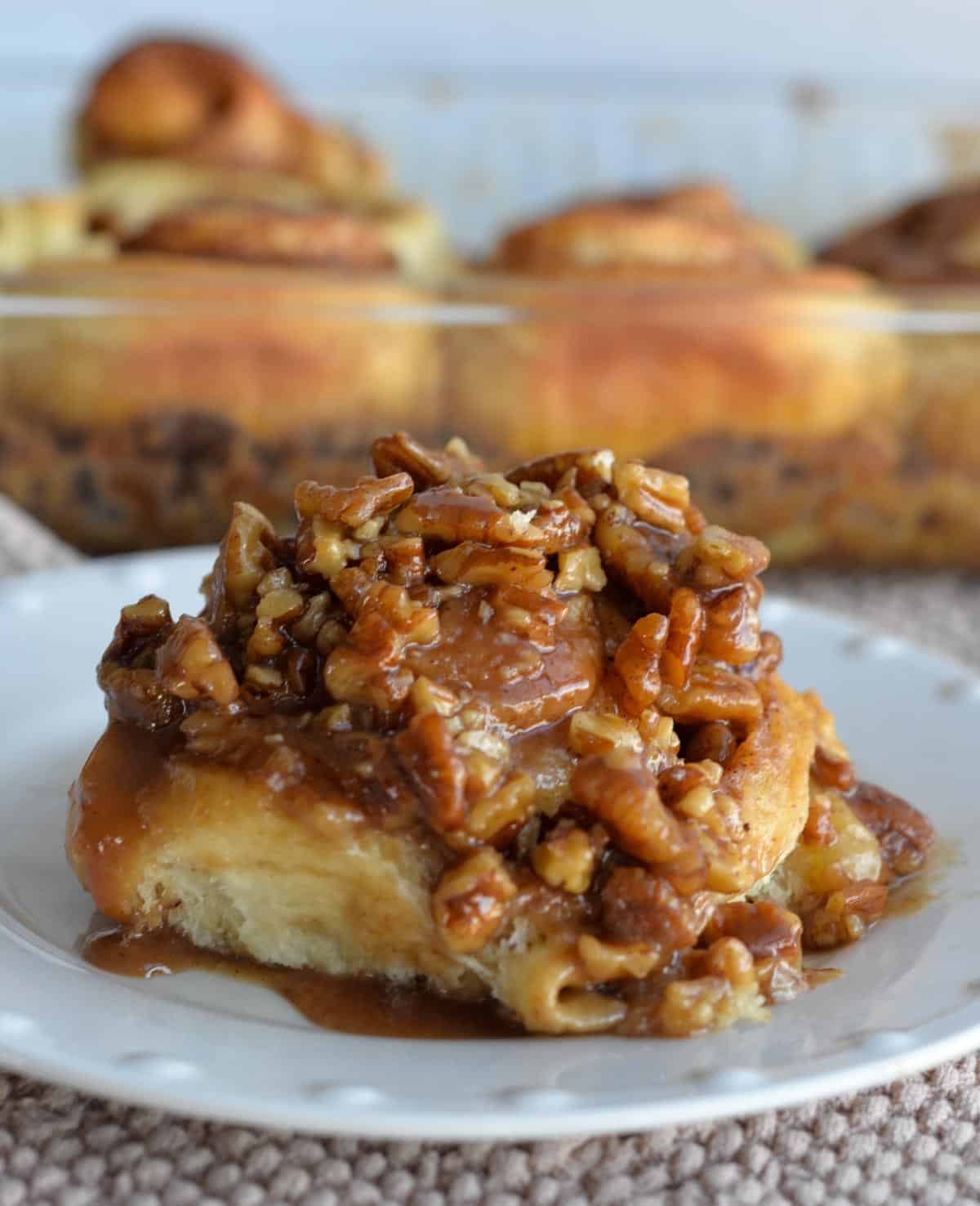
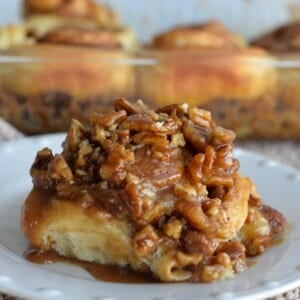
Move over, sourdough cinnamon rolls, we’ve got a new favorite in the house! These ooey, gooey, Sourdough Sticky Buns are everything you love about cinnamon rolls, but richer, softer, and drenched in buttery, rich caramel topping and toasted pecans.
Made with real maple syrup instead of corn syrup, this naturally leavened, 100% sourdough sticky bun recipe has the perfect depth of flavor — sweet, nutty, and irresistibly sticky. I made them over Thanksgiving for my extended family, and they were gone before I even got seconds. If you love pecans (and gooey rolls), you’re going to love this sourdough sticky bun recipe.
Save this for later!
Table of Contents
Why You’ll Love Sourdough Sticky Pecan Rolls
- Baking Season Favorite – These sticky buns are the ultimate baking-season favorite, packed with warm cinnamon and rich caramelized pecans. They’re right up there with my Caramel Apple Sourdough Cinnamon Rolls for must-make bakes this season!
- Pecan Lovers’ Dream – Pecans shine in these rolls, adding the perfect crunch and nutty flavor to every bite, just like in my Sourdough Pecan Pie and Maple Pecan Sourdough Bread.
- Dessert for Breakfast – Sweet, sticky, and full of flavor, these sourdough sticky buns can double as a decadent breakfast or a show-stopping dessert. Try them alongside my Sourdough Pumpkin Cinnamon Rolls for the perfect festive brunch spread.
New to Sourdough? If you are new to sourdough, learn how to make a sourdough starter from scratch and check out my Free Sourdough Beginner Guide. Using naturally fermented sourdough will take much longer, but you will love the fermentation benefits and the flavor!
Important Ingredients in Sourdough Sticky Buns
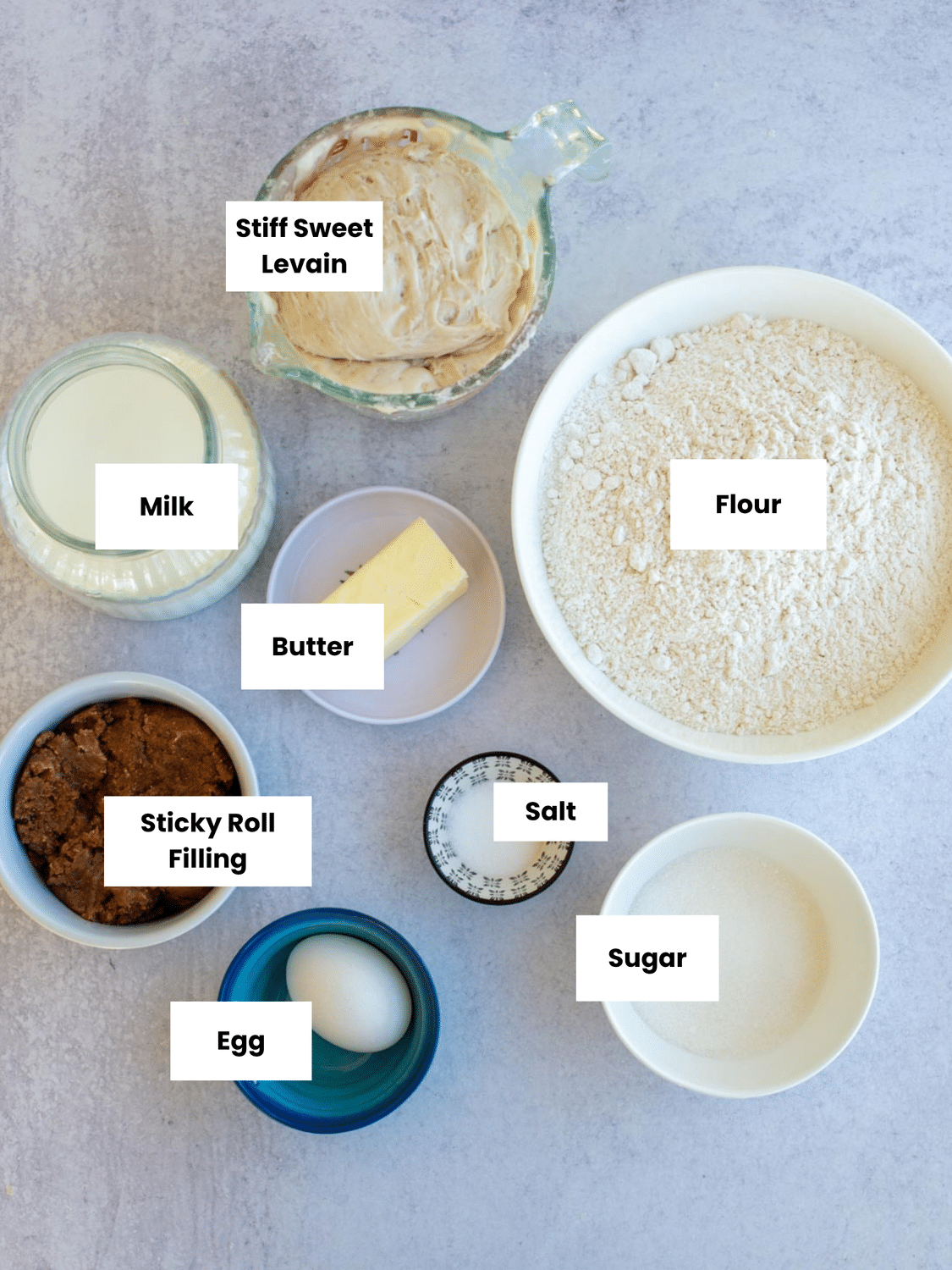
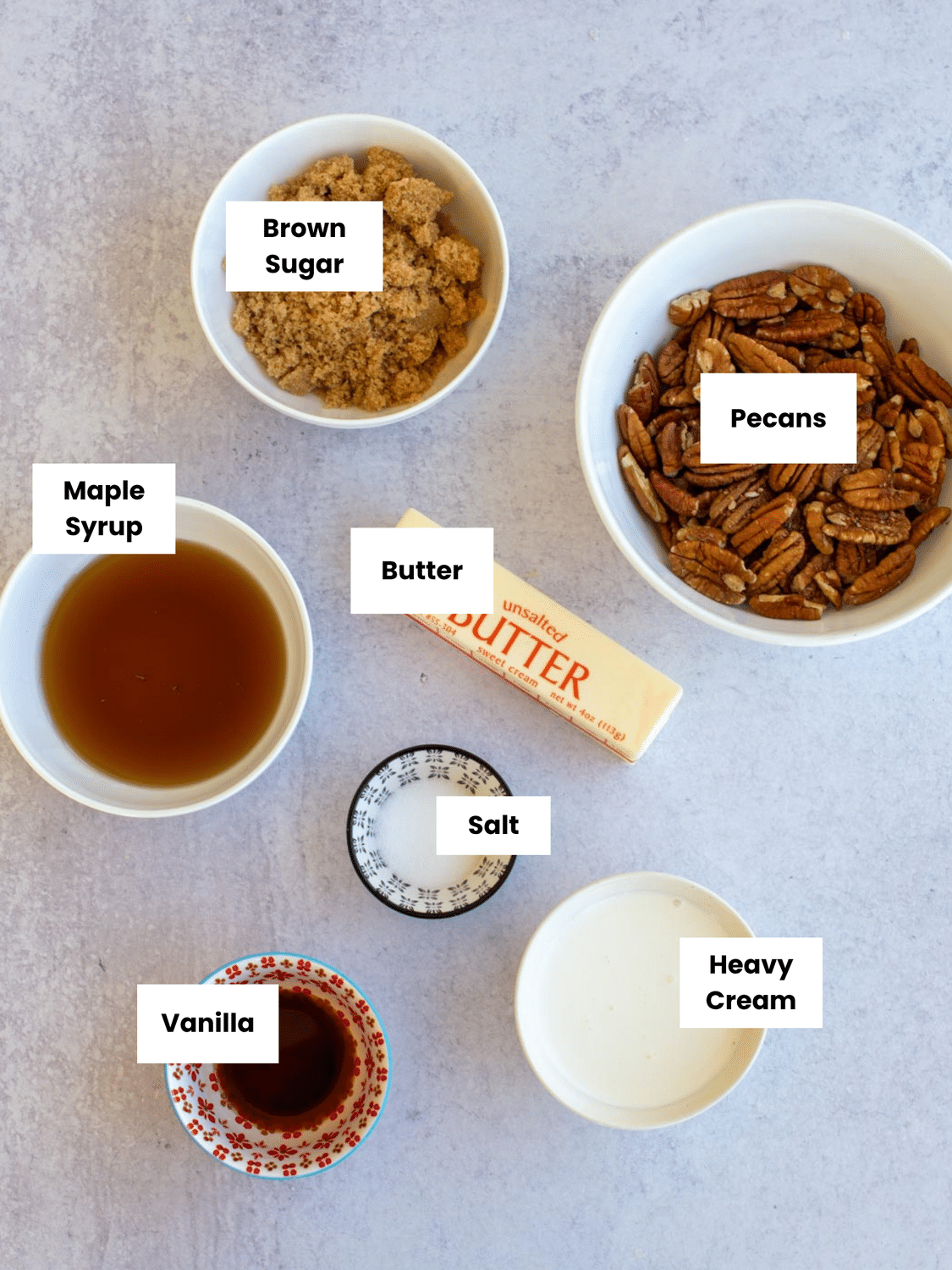
- Sourdough Starter – Use a ripe & active sourdough starter to make a stiff sweet levain. This is what will leaven your sticky pecan rolls.
- Cinnamon Roll Dough – This sticky pecan sourdough dough is based on my favorite Sourdough Cinnamon Rolls. Use bread flour, whole milk, melted butter, egg, sugar, salt, and a stiff sweet levain.
- Sticky Bun Filling: The rolls are stuffed with my favorite brown sugar filling, the same one I use for my sourdough discard cinnamon rolls.
- Sticky Bun Topping – This sticky pecan topping is next-level delicious. Instead of using corn syrup like many traditional recipes, I swap in real maple syrup for a rich, deep flavor that makes these rolls truly special. Warm the ingredients together until smooth and glossy, then pour into the bottom of the baking pan — just like my Sourdough Focaccia Sticky Buns.
See the recipe card for full information on ingredients and quantities
Substitutions
- Bread Flour: I always recommend using bread flour for the best results. Its higher protein content gives the dough elasticity and structure, creating that soft, chewy texture that makes these rolls so good. If you don’t have bread flour, all-purpose flour works too — you may just need to add a little extra, or substitute part of the flour with a tablespoon of vital wheat gluten for similar results.
- Whole Milk: Whole milk adds richness and flavor, but 2% milk or a non-dairy alternative can be substituted with good results.
- Egg: You can leave the egg out of the dough; just hold back a bit of flour when mixing to maintain the right consistency.
- Unsalted Butter: Unsalted butter gives you more control over the salt in the dough, but salted butter or even coconut oil can be used for soft, flavorful rolls.
- Pecans: Pecans add the perfect crunch and nutty flavor, but you can substitute another favorite nut. Walnuts are especially delicious here.
Sourdough Baker’s Schedule
A sample baking schedule helps me when baking with sourdough. Sourdough takes much longer to rise than commercial yeast dough. This sample schedule helps me plan how long my sourdough sticky buns will take to make.
Note: This schedule assumes the dough temperature is 78-80ºF throughout the process. If your dough is colder, the process will move slower. If your dough is warmer, the process will move faster.
| Day 1 | Mix Levain |
| 8 PM – 8AM | Make Stiff Sweet Levain. Let rise overnight. |
| Day 2 | Mixing/Bulk Fermentation |
| 8 AM | Mix Dough |
| 8:15 AM | Begin Bulk Fermentation |
| 1:00 PM | End Bulk Fermentation Option 1: Refrigerate the dough for 12-24 hours and shape rolls the next morning Option 2: Shape rolls and continue with the recipe, rising and baking OR rising and refrigerating to bake the following morning. |
| 1:00 PM – 7:00 AM | Cold Bulk Fermentation |
| Day 3 | Shaping/Baking |
| 7:00 AM | Mix up Topping Shape Sourdough Sticky Pecan Rolls |
| 10:00 AM | Rise in a warm (80ºF) place for 3-4 hours until puffed up and touching. Do not bake unless the dough has puffed up and risen. |
| 10:30 AM | Bake and Enjoy! |
Options for Morning Sticky Buns:
- Refrigerate the dough for 12-24 hours and shape rolls in the morning: Refrigerate the dough, shape and fill the next morning. Rolls rise in a warm (80-85ºF) place for 3-4 hours and are typically ready for brunch.
- Shape Rolls, Proof, and Refrigerate to bake the next morning: Go through the entire process of shaping the rolls and then proofing them until just doubled in size. Cover and stick the risen rolls in the refrigerator overnight. Bake straight from the fridge the next morning. The rolls may need a few extra minutes of baking time.
- Shape and Let Rise Overnight: If you time it right and have consistently lower temperatures (76ºF-78ºF), it can work well to mix the dough in the evening and shape the rolls about 10-12 hours before you want to bake them, giving them time to rise overnight and bake when you wake up.
- Shape Rolls, Proof and Bake: Shape the rolls, proof them and bake the rolls when they are risen, light and airy. Cover with foil. Reheat the next morning in the microwave for 10-20 seconds and enjoy warm.
How to Make Sourdough Sticky Pecan Rolls
Mix the Levain
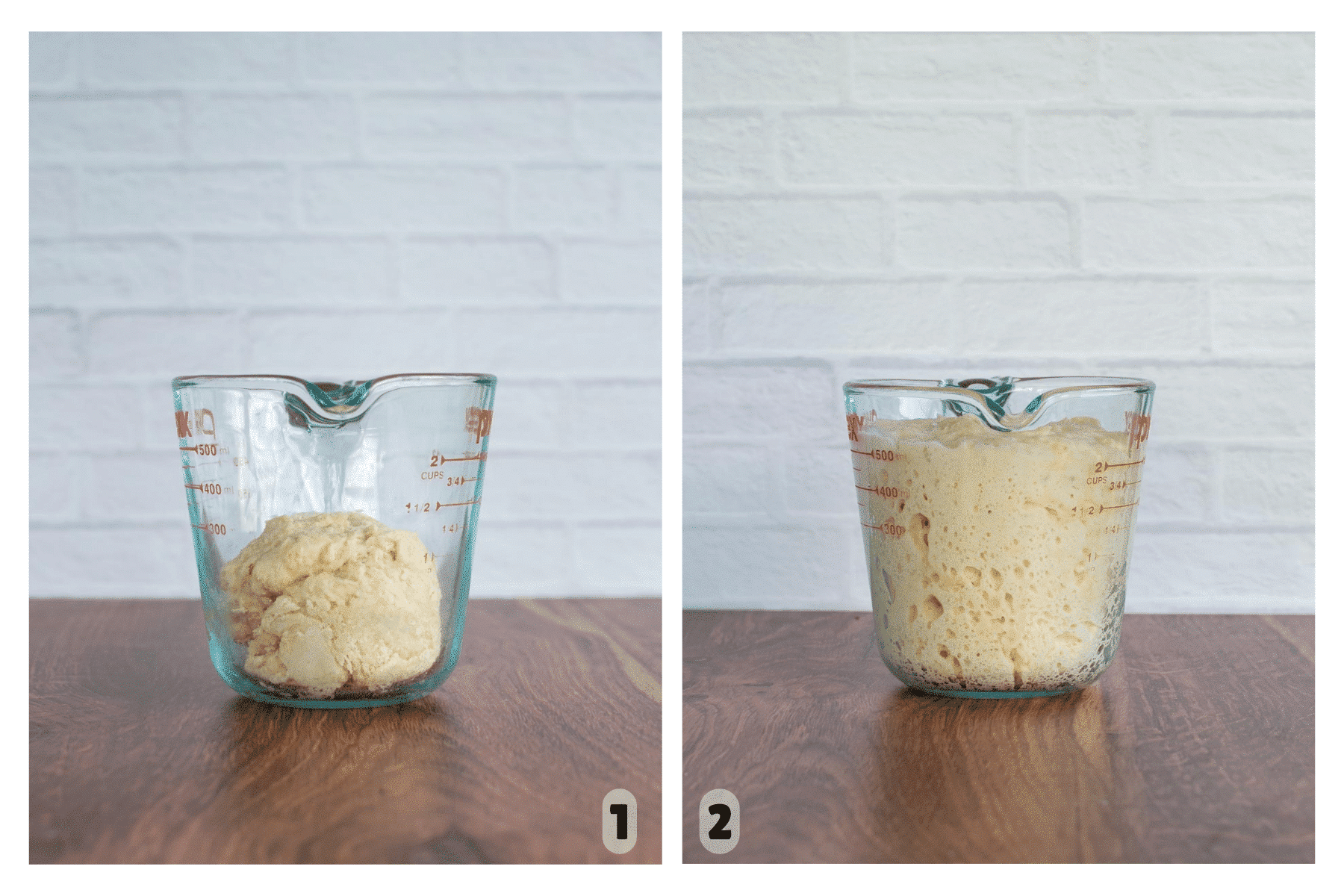
Step 1: Mix Levain. To make a stiff sweet levain, mix ripe sourdough starter with flour, water, and sugar, then knead it into a smooth dough ball. Let it rest somewhere warm until it doubles and gets a nice rounded top. Using it at its peak will give you the best flavor without too much acidity (Images 1 & 2).
Stiff Levain: One of the reasons I like to make a levain instead of using straight sourdough starter is for recipes like these sticky pecan rolls. A stiff levain (about 50–65% hydration) mixes up to a firm consistency, adding elasticity to the dough and tempering the acidity of the sourdough. This gives you all the benefits of sourdough fermentation without the tang. The added sugar in the levain also helps balance the acidity for a milder flavor — something my sometimes-picky kids especially appreciate!
Mixing the Dough
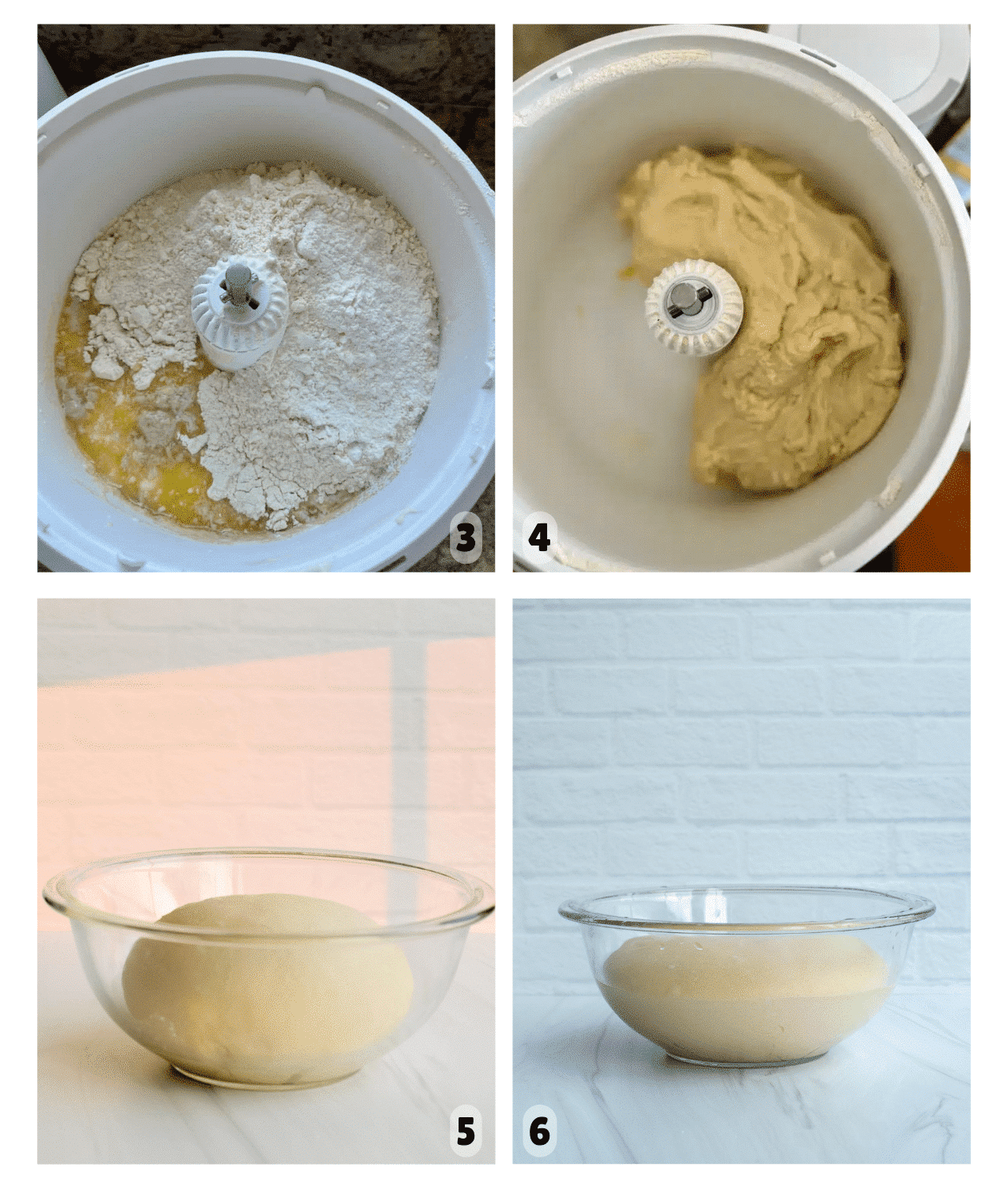
Step 2: Mix Dough. I use a stand mixer to mix this dough. If you don’t have a stand mixer, you can knead the dough by hand, though it will take longer. Add all the dough ingredients to the bowl of a stand mixer fitted with a dough hook attachment (Images 3 & 4). Reserve a little bit of the flour to add toward the end of mixing the dough as needed. Mix the dough on low speed for about 3-5 minutes. Add the reserved flour as needed. The dough should be tacky, but not overly sticky. Continue kneading for about 5 more minutes until smooth and elastic. Place in a container or bowl for bulk fermentation (Images 5 & 6).
Adding Flour Tip: Weight measurements are always more accurate than volume, but I always like to reserve a bit of flour (about a half cup) so I don’t over-flour my dough. Varieties of flour and weight/size of the egg can impact the amount of flour added to the dough, so I play it safe. It’s easier to add more flour than to fix over-floured dough.
Bulk Fermentation Or First Rise
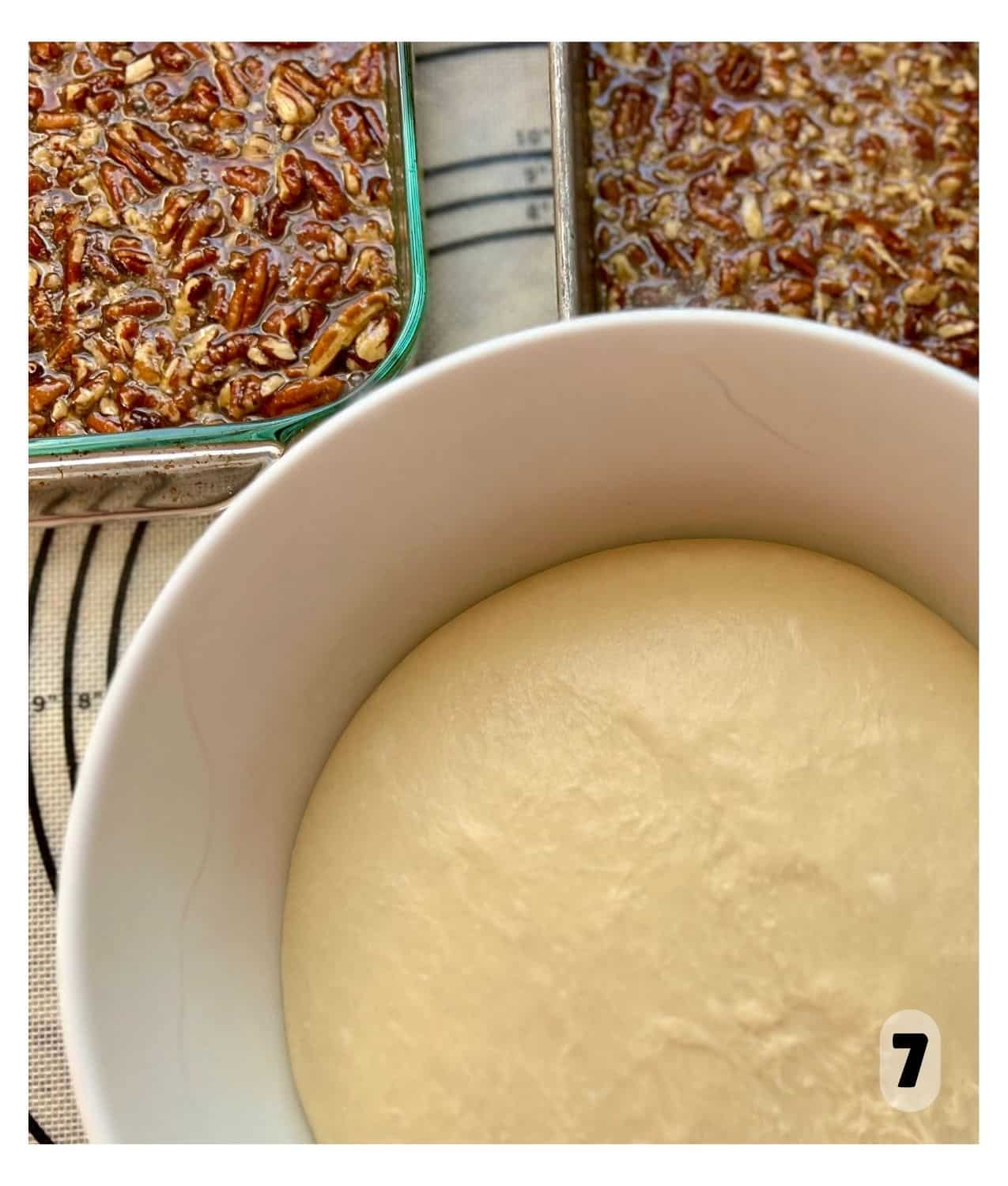
Step 3: Bulk Fermentation. Bulk fermentation is the name for when the dough ferments in one big mass. Put the dough in a container and cover it (I like using these shower caps as covers). Let the dough sit for 4-5 hours in that warm place. By the end of 4-5 hours the dough should have puffed up and risen a bit.
Note: The entire bulk fermentation should take about 4-5 hours at 78ºF. Take the temperature of the dough with a thermometer. It should be between 78-80ºF (Image 7). If your dough is significantly colder, bulk fermentation will take longer. If it’s warmer, the bulk fermentation will be a bit shorter. I use a dough proofer, dough proofing mat, or the inside of my oven with the light turned on (don’t turn the oven on!) to keep my dough warm.
After the initial 4-5 hour bulk fermentation is finished, you have a couple of options:
Refrigerate the dough for 12-24 hours and shape rolls the next morning: This is the schedule I’ve followed for years. I refrigerate the dough and then roll up the sticky pecan rolls the next morning. They rise in a warm, 80ºF place and are ready in time for brunch. I also sometimes refrigerate the dough until late in the evening when I mix up the fillings and assemble the rolls – then let them rise for about 8 hours overnight at around 76-78ºF.
Shape Rolls, Proof, and Refrigerate to bake the next morning: This has become my new favorite way to mix up sourdough sticky pecan rolls. Go through the entire process of shaping the rolls, putting them in the sticky pecan topping and then proofing them until just doubled in size. Once they have just doubled, cover them and stick in the refrigerator overnight. Bake straight from the fridge the next morning. Freshly baked rolls and not having to wake up early! I call that a win!
Shape Rolls, Proof and Bake: If you don’t mind baking the sticky pecan rolls the night before, this option works well. Shape the rolls, proof them and then bake the rolls when they are risen, light and airy. Cover with foil and reheat the next morning in the microwave for 10-20 seconds and enjoy.
Prepare the Sticky Pecan Topping
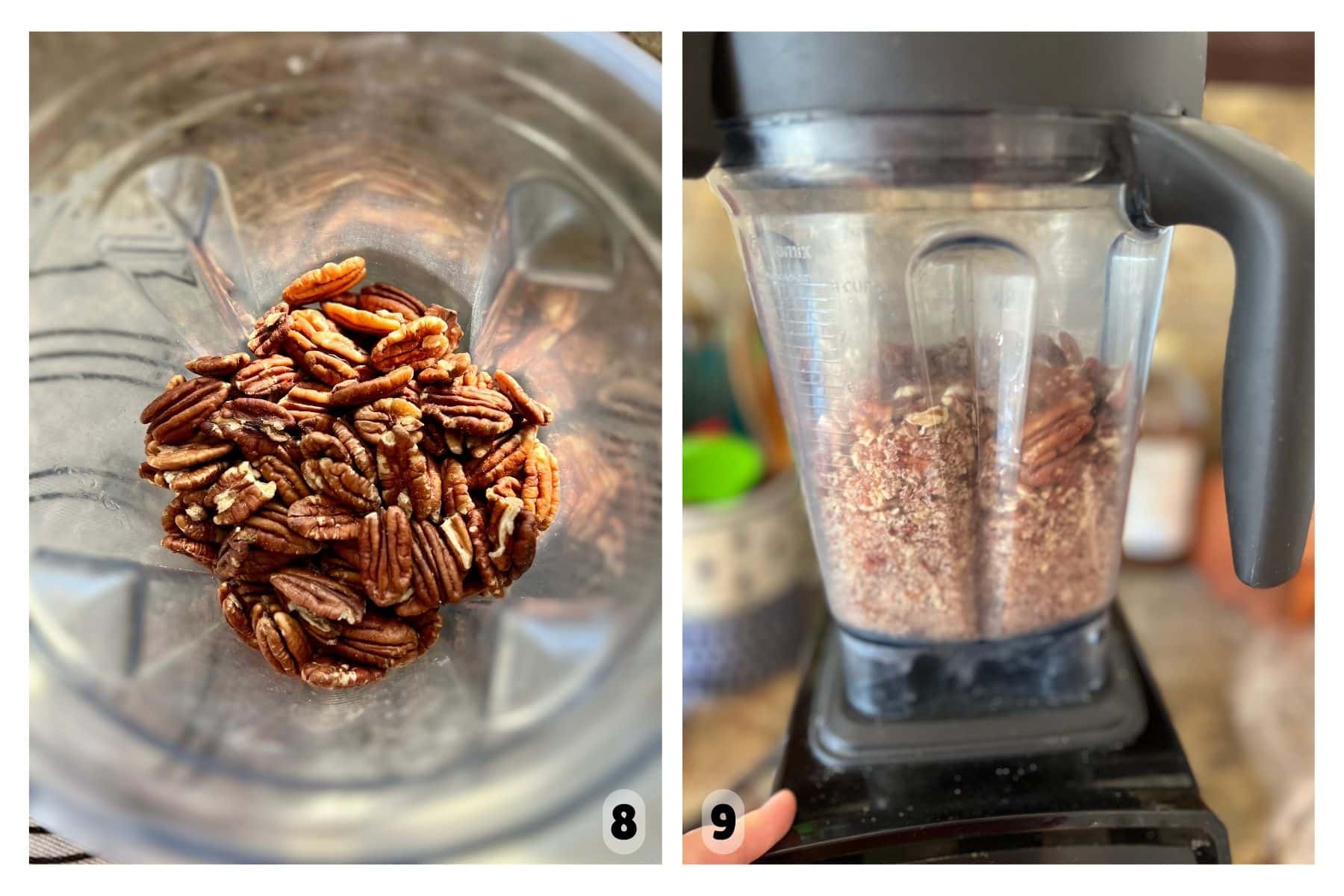
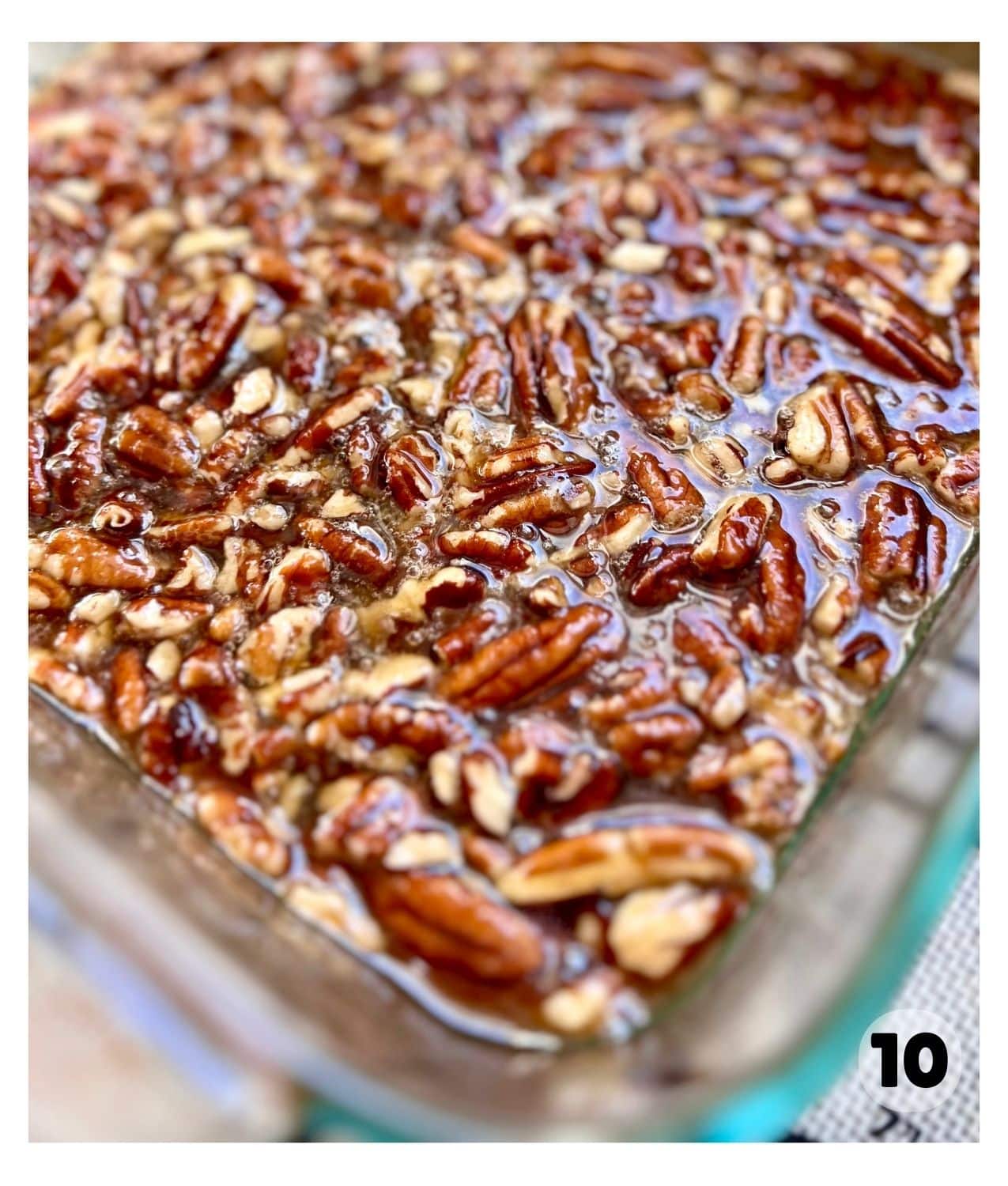
Step 4: Prepare Topping. Chop the pecans and pour them in the bottom of a 9 by 13 baking dish (Images 8 & 9). To a small saucepan over medium heat, add the butter, brown sugar, maple syrup, heavy cream, and salt. Let simmer for about 2 minutes. Then remove from the heat and stir in the vanilla extract. Pour this sauce over the pecans in the pan. Let this mixture cool to room temperature before adding the rolls on top (Image 10).
Amy’s Tip: If your pan is prone to sticking, place a piece of parchment on the bottom of the pan before adding the filling.
Step 5: Prepare Cinnamon Sugar Mixture. Mix together soft/melty butter in a bowl with brown sugar, cinnamon, flour, and a pinch of salt until you have a soft and spreadable mixture. Set aside.
Shaping the Dough
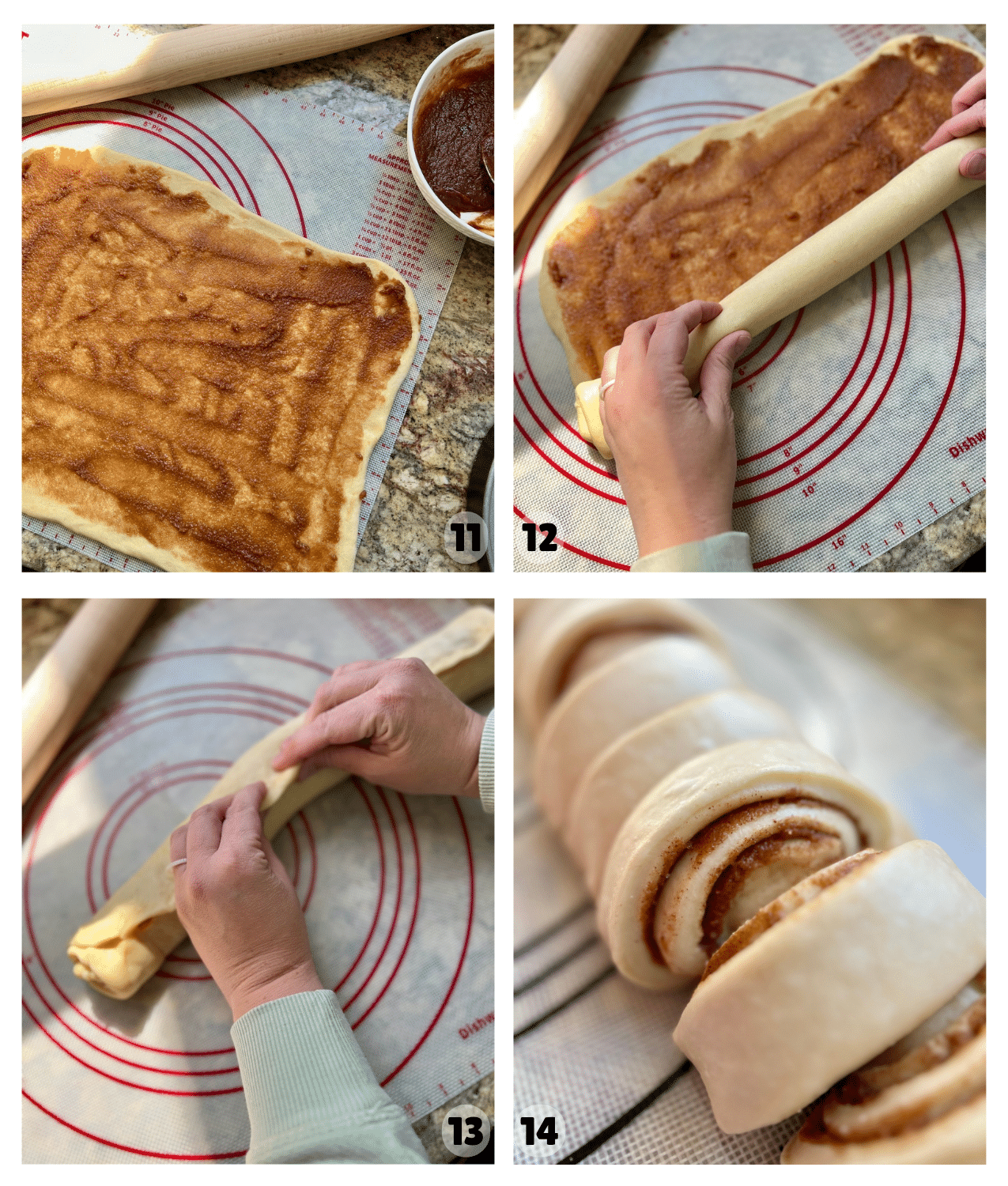
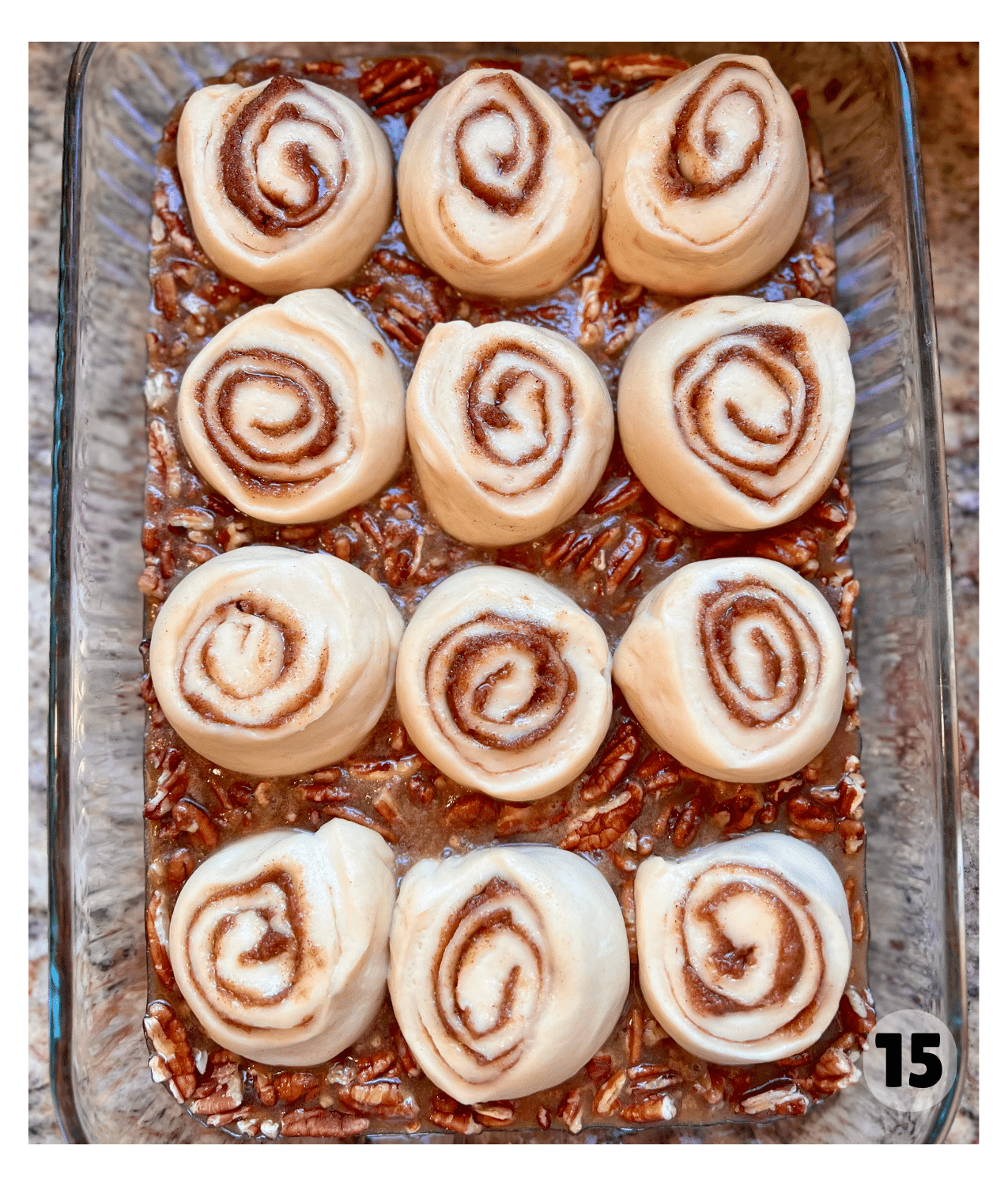
Step 6: Shape Dough. This recipe makes 12 sticky pecan rolls. Use a rolling pin to roll the dough out on a lightly floured surface into an 18-by-12-inch rectangle. Spread the filling on top of the dough (Image 11) and roll up (Image 12), pinching the seam together (Image 13). To cut the rolls, you can use a sharp knife, bench knife or even dental floss. Cut the log in half and then cut six equal-sized rolls from each half (Image 14). Place the rolls on top of the sticky pecan mixture in a 3 by 4 grid (Image 15).
If You Want More Nuts – For extra crunchy pecan texture, sprinkle about 1 cup of chopped nuts over the cinnamon-sugar filling before rolling up the dough.
Proofing The Rolls Or Second Rise
Step 7: Proof the Dough. Sourdough sticky pecan rolls need more time to rise than commercial yeast rolls, thanks to the sourdough. They also require a warm environment to rise – right around 80 degrees Fahrenheit.
Cover the rolls with plastic wrap and make sure that you put your pan of shaped rolls in a warm spot. I often use the oven with the light turned on. Let the rolls rise and get puffed up. Lightly touch the rolls and they will feel soft and airy. If they feel dense – do not bake them yet! Let them rise.
This final rise is a very important step in the process. Take a finger and gently press into the side of the roll. If it springs back right away, you need to let the dough rise longer. If it stays indented with just a little bit of spring, they are ready to bake.
Baking the Sticky Pecan Rolls
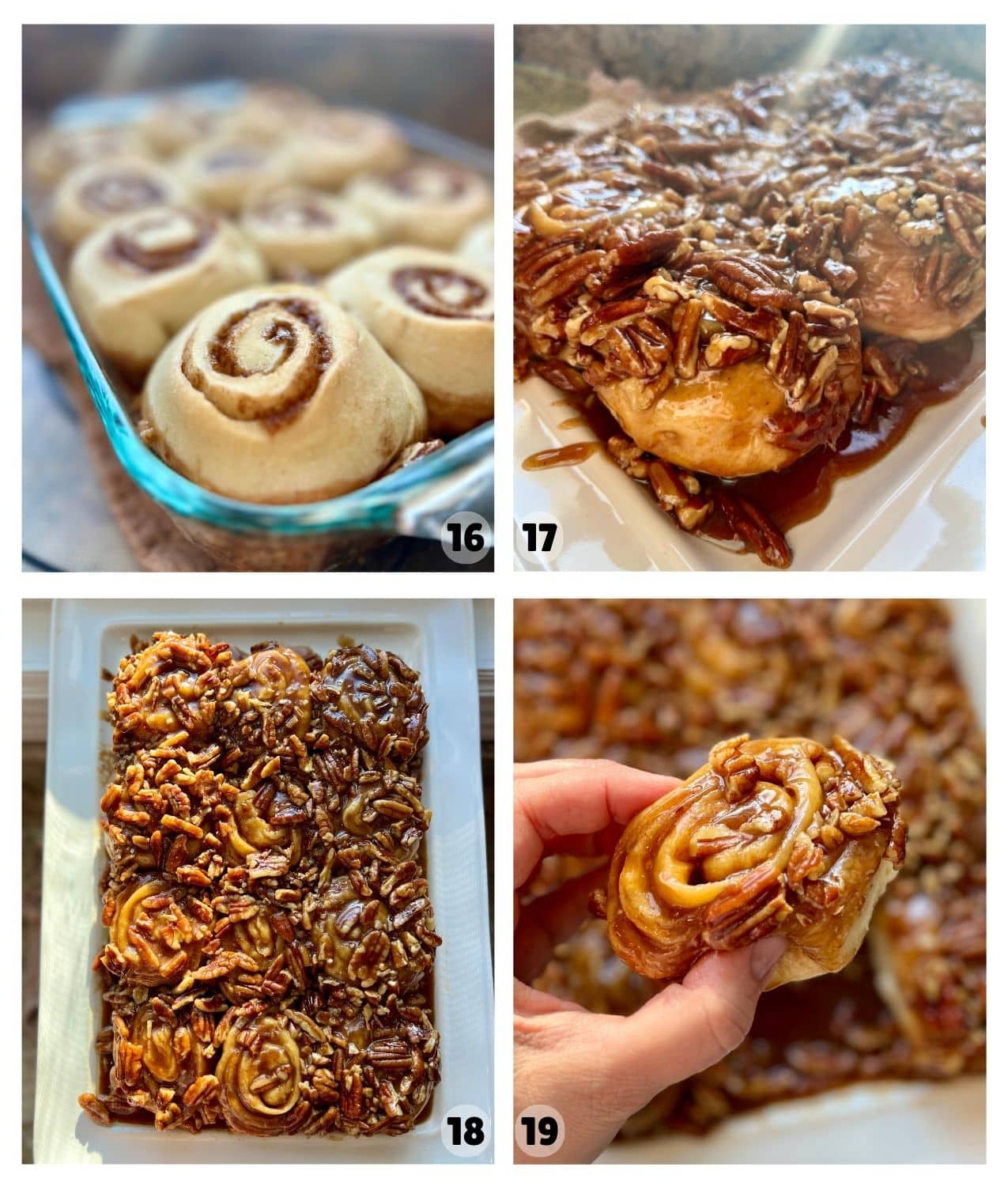
Step 8: Bake Sticky Rolls. Preheat your oven to 350ºF (make sure you take the risen rolls out if you are using your oven as a proofing box). Bake the rolls for about 30-35 minutes. Ovens all bake differently. Some ovens bake hotter in the back and cooler in the front. If you want an even bake on your rolls, rotate your pan 180º after the first 10-15 minutes of baking. This will keep half of your rolls from getting too dark or the other half from being too light. Check the center of one of the pecan rolls after baking to make sure that the middle isn’t raw. The internal temperature of the rolls should be 190-195ºF when baked through. Sometimes you need to let them go a few minutes longer to make sure they are completely baked through (Image 16).
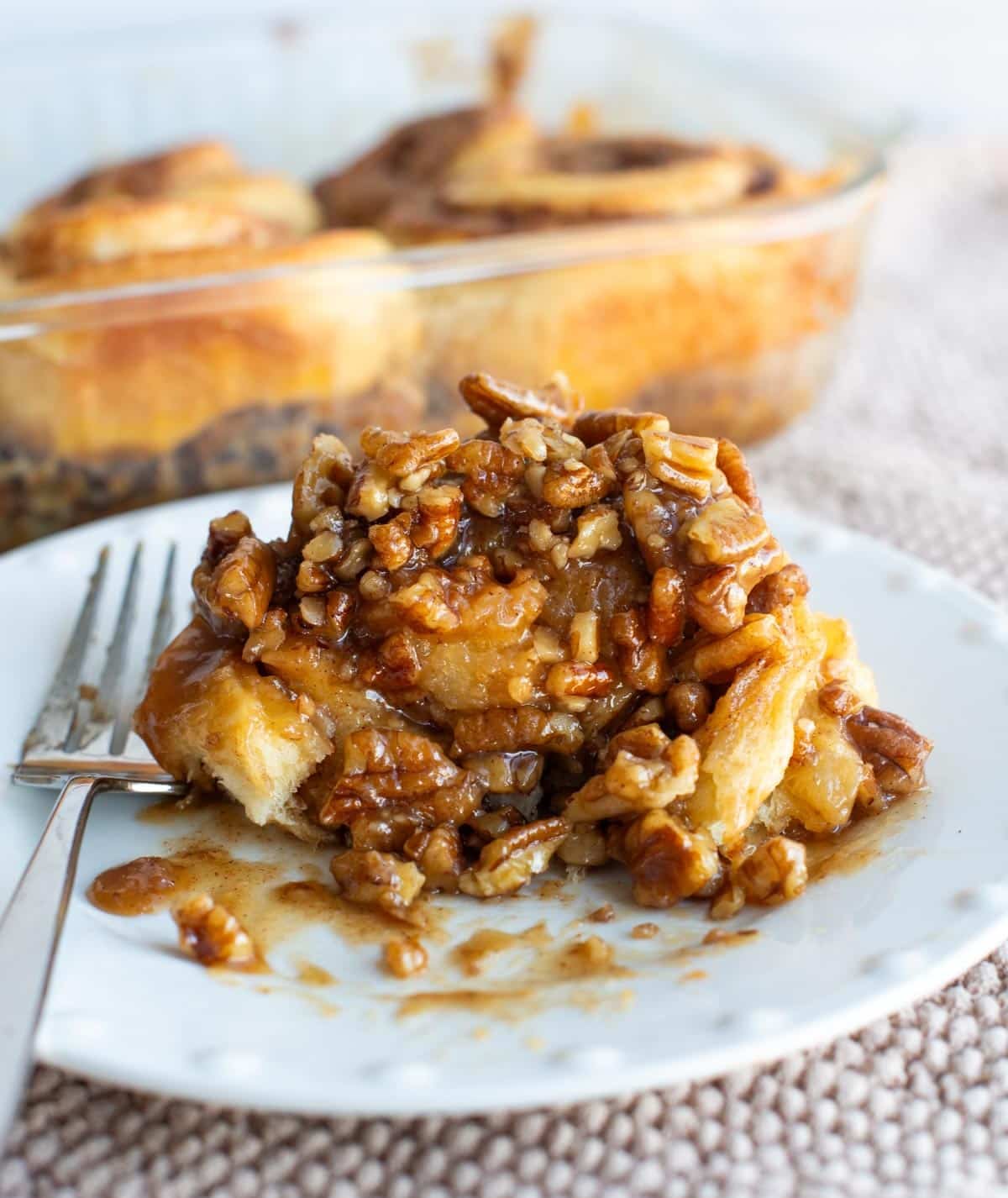
Once the rolls have baked through, pull them out of the oven and let them rest for about 5 minutes. Get a large plate or serving platter and put it upside down on top of the baking dish. Using hot pads, quickly flip the baking dish over so the rolls flip out onto the serving platter (Images 17, 18, & 19). Now the pecan mixture is on top of your rolls! Enjoy them warm!
How to Store Leftovers
Store leftover rolls in an airtight container at room temperature for up to 2 days. Warm them briefly in the microwave or oven before serving to bring back that soft, gooey texture.
Freezing Instructions – This is my preferred method of storing leftovers. Once the rolls have cooled, place them in an airtight container or freezer bag and freeze for up to 2 months. Reheat individual rolls as needed for a fresh-from-the-oven taste.
Amy’s Recipe Tips
1. Don’t Rush the Rise
Sourdough dough rises more slowly than yeasted dough. Be patient and let the rolls fully puff up before baking — that’s the key to getting soft, airy layers instead of dense centers.
2. Use a Warm Spot for Proofing
The ideal proofing temperature is around 78–80ºF. If your kitchen runs cool, try placing the covered rolls in your oven with just the light on, or in a Brod & Taylor proofing box if you have one.
3. Flip While Warm, Not Hot
Let the baked rolls rest for about 5 minutes before inverting. Flipping too soon can cause the topping to run, but waiting too long makes it stick to the pan.
Frequently Asked Questions
Yes! You can substitute walnuts, almonds, or even skip the nuts altogether — though the topping won’t cling quite as well without them. If you don’t like nuts, I would make my favorite sourdough cinnamon rolls instead.
This recipe is written for an active sourdough starter that makes a stiff sweet levain. Sourdough discard won’t have enough leavening power on its own, but you can try my Sourdough Discard Cinnamon Rolls for a quicker version.
No — a stand mixer makes it easier, but hand kneading works just fine. Knead for about 10-12 minutes until the dough is smooth and elastic.
Yes, you can! Use your active sourdough starter in place of the levain. You may need to add a bit more flour to achieve the right dough consistency since starter is usually more hydrated than a stiff sweet levain. The dough won’t necessarily rise faster, but you’ll have a shorter window to bake it once it’s fully proofed — and the rolls may have a slightly more pronounced sour flavor.
Sourdough Cinnamon Roll Recipes


If you tried this Sourdough Sticky Bun Recipe or any other recipe on my website leave a 🌟 star rating and let me know how it went in the comments below. Happy Baking!
Sourdough Sticky Bun Recipe
Save this for later!
Equipment
- 9 by 13 glass baking pan
Ingredients
Sweet Stiff Levain (10-12 hours/overnight at 78 degrees F)
- 10 grams ripe/active sourdough starter, about 2 teaspoons
- 10 grams granulated sugar, about 1 Tablespoon
- 50 grams all-purpose flour, about 1/3 cup
- 25 grams water, about 1.5 Tablespoons
Sticky Pecan Roll Dough
- 90 grams levain , all of it, about 1/3 cup
- 220 grams warm whole milk, about 3/4 cup plus 2 Tablespoons
- 55 grams unsalted butter, melted, about 1/4 cup
- 60 grams granulated sugar, about 1/4 cup
- 1 large egg, about 50 grams
- 6 grams salt, about 3/4 teaspoon
- 475 grams bread flour, about 3-4 cups
Filling
- 55 grams unsalted butter, very soft or melted, 1/4 cup
- 100 grams brown sugar, about 1/2 cup
- 4 grams ground cinnamon, about 1/2 Tablespoon
- 5 grams all-purpose flour, about 1/2 Tablespoon
Sticky Pecan Topping
- 225 grams pecans, roughly chopped, about 1.5 cups
- 113 grams unsalted butter, about 1/2 cup
- 200 grams brown sugar, about 1 cup
- 100 grams real maple syrup, about 1/3 cup
- 55 grams heavy cream, about 1/4 cup
- 2 grams salt, about 1/4 teaspoon
- 4 grams vanilla extract, about 1 teaspoon, reserved
Instructions
Levain (10-12 hours, overnight)
- Mix together ripe sourdough starter, all-purpose flour, granulated sugar and water. Knead the levain until it forms a cohesive ball. Set in a clear container and cover for 10-12 hours until the levain has doubled in size and the top is rounded.
Sticky Pecan Roll Dough
- Warm the milk in the microwave (about 1 1/2 minutes full power) or on the stove. It should be around 90-100 degrees F, no warmer than that. To the bowl of a stand mixer with a dough hook, add the ripe levain, warmed milk and melted butter.
- Add the sugar, egg, salt and most of the bread flour. Turn on the dough hook and knead for a few minutes. Add the remainder of the bread flour as needed. The dough should be tacky, not overly sticky and should all cling to one side of the bowl (or away from the edges depending on your mixer). Knead for a total of 8-10 minutes until the dough is smooth.
- At the end of about 4 hours, the dough should be puffed up and feel very elastic. If it doesn't feel this way, let it bulk ferment for another half hour and check again.
- Overnight Refrigeration: At this point, after the bulk fermentation has finished, cover the dough and put it in the refrigerator. Proceed with the recipe the next day, shaping and proofing the rolls before baking. This allows you to time the sticky pecan rolls for breakfast or brunch if desired. If you prefer to shape the rolls and bake them the same day, skip the overnight refrigeration and proceed with the recipe.
- Mix up the Filling: Near the end of bulk fermentation, mix up the cinnamon roll filling. To a small bowl, add the melted butter, brown sugar, cinnamon and flour. Mix together. Set aside.
- Prepare the Pan with Sticky Pecan Topping: Pour the chopped pecans (I like to give them a few pulses in the blender) in the bottom of a 9 by 13 glass baking dish. To a small saucepan over medium heat add the butter, brown sugar, maple syrup, heavy cream and salt. Let simmer for about 2 minutes. Then remove from the heat and stir in the vanilla extract. Pour this sauce over the pecans in the pan.
- Shaping: Dump the dough on the counter and roll the dough out into an approximate 18 by 12 rectangle. Mix up the cinnamon filling by mixing softened butter, brown sugar, cinnamon and flour together until it forms a thick paste. Spread the cinnamon filling all over the dough with your fingers, making sure to cover up to the edges of the cinnamon roll. Starting with the dough closest to you, roll up the cinnamon roll and pinch together the seam. Flip the cinnamon roll over, seam side down. Cut the long log of cinnamon roll dough into 12 equal pieces. Place the cinnamon rolls on top of the gooey pecan mixture in a 3 by 4 grid.
- Proofing: Cover the pan and let rise in a 78 degree F place until puffed up and risen, about 3 hours. Do not bake these rolls if they have not risen.
- Baking: Pre-heat the oven to 350º F. Bake risen rolls about 30-35 minutes until baked all the way through and the rolls register 190-195ºF. Let the rolls cool for 5 minutes before flipping the pan over onto a serving platter. Place the serving platter upside down on top of the pan. Use hot pads and flip the pan over. This turn the rolls upside down so the sticky pecan topping is now on top! Enjoy!
Notes
- Refrigerate the dough for 12-24 hours and shape rolls in the morning: Refrigerate the dough, shape and fill the next morning. Rolls rise in a warm (80-85ºF) place for 3-4 hours and are typically ready for brunch.
- Shape Rolls, Proof, and Refrigerate to bake the next morning: Go through the entire process of shaping the rolls and then proofing them until just doubled in size. Cover and stick the risen rolls in the refrigerator overnight. Bake straight from the fridge the next morning. The rolls may need a few extra minutes of baking time.
- Shape and Let Rise Overnight: If you time it right and have consistently lower temperatures (76ºF-78ºF), it can work well to mix the dough in the evening and shape the rolls about 10-12 hours before you want to bake them, giving them time to rise overnight and bake when you wake up.
- Shape Rolls, Proof and Bake: Shape the rolls, proof them and bake the rolls when they are risen, light and airy. Cover with foil. Reheat the next morning in the microwave for 10-20 seconds and enjoy warm.
Nutrition
Nutrition information is automatically calculated, so should only be used as an approximation.


Love your recipes, have made several. All turned out great.
Thanks for the review! I’m glad the recipes have turned out great for you.
Great recipe. A little bit of work hut worth it
So worth it! Enjoy!
I’ve made these multiple times and they are always delicious! One time I used milk instead of heavy cream because that’s what I had on hand—still amazing. Another time I used honey instead of maple syrup—also amazing. I even made them with all-purpose flour when I ran out of bread flour, and they still turned out great.
That said, life got a little chaotic once and I left the dough in the fridge bulk proofing for three days. Not amazing—definitely more dense—but still good. Another time I put them in the fridge after they were rolled and proofed for the three hours. They were less dense than the three-day version, but still not quite as light and fluffy as when I follow the original timing. Still tasty, though.
With my very chaotic life and all the little adaptations I’ve made (and probably a few more I’m forgetting), this has become my go-to recipe because it’s genuinely hard to mess up. They always seem to turn out yummy.
Thanks for sharing the different things you’ve tried and the results! I’m glad they always taste great!