
Affiliate disclosure: This post may contain affiliate links. Please see our disclosure policy.
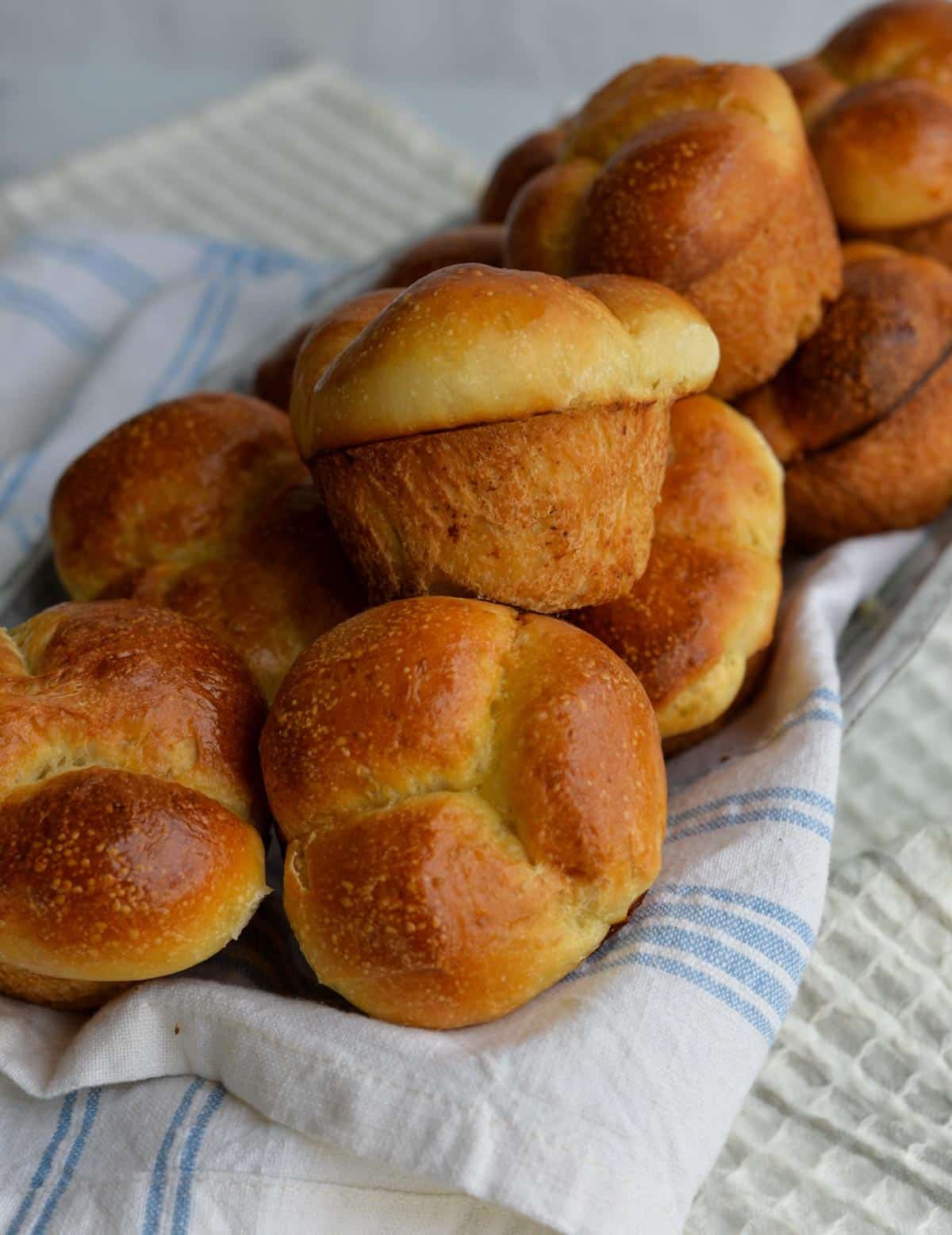
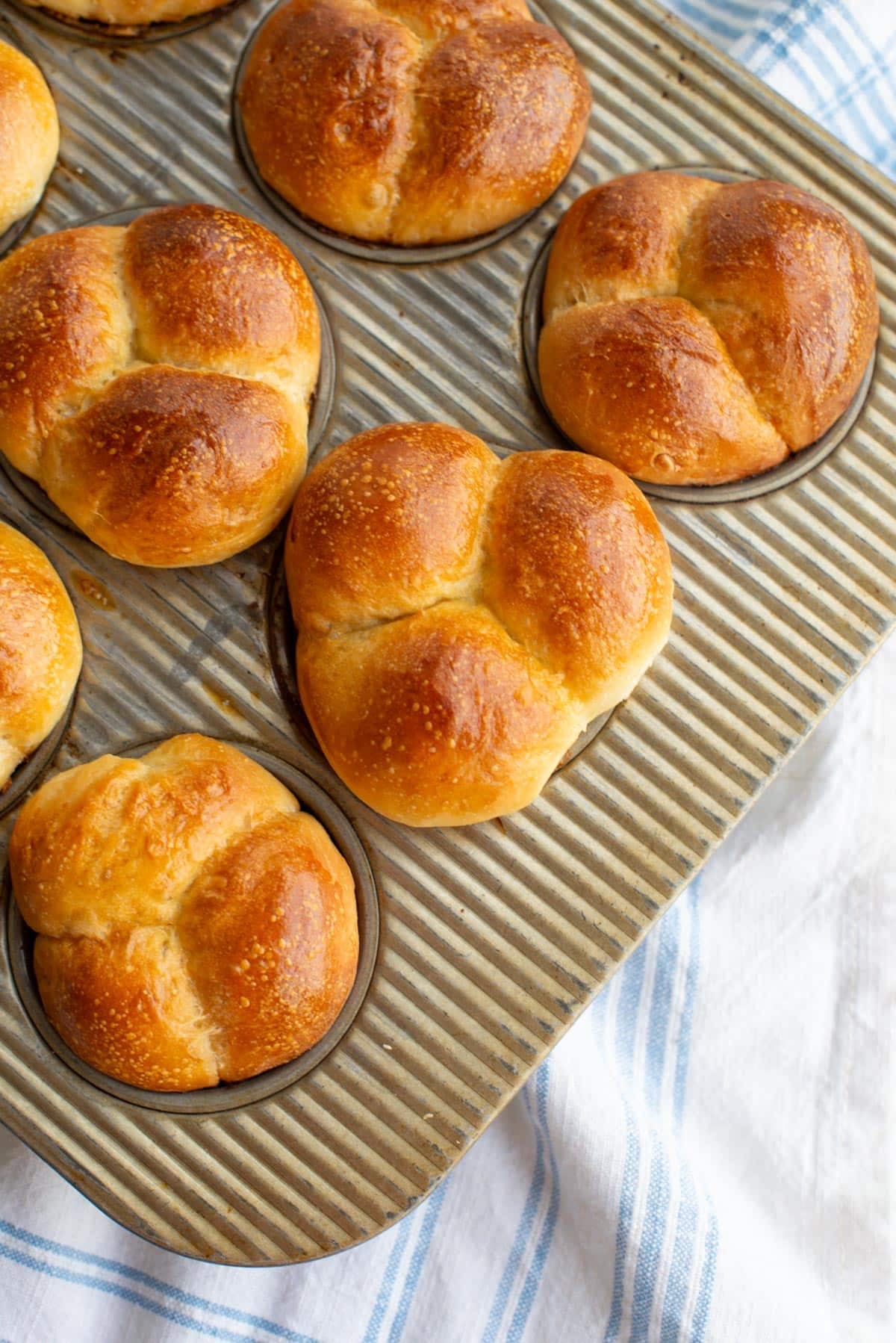
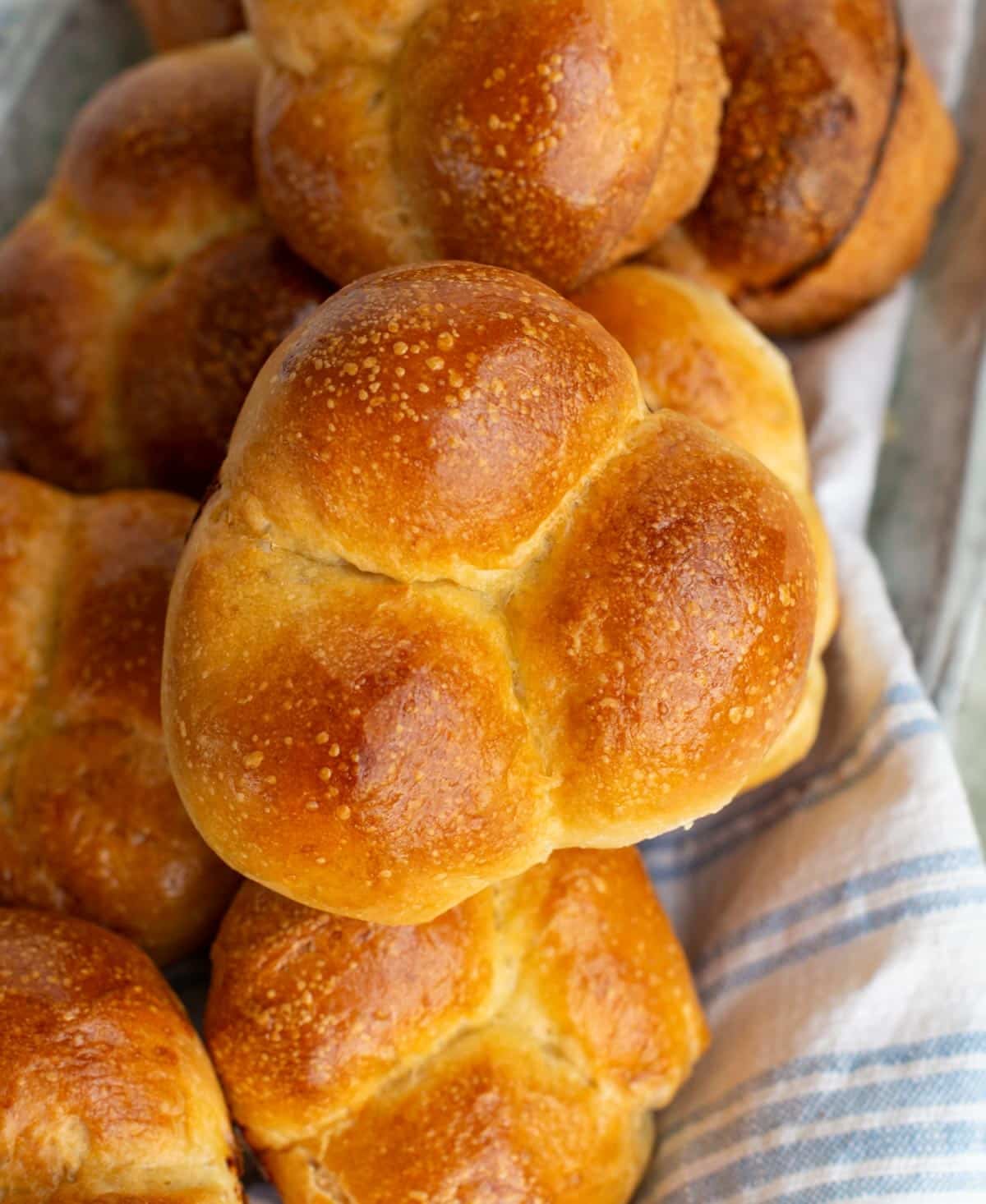
These Cloverleaf Sourdough Rolls are soft, fluffy, and made with 100 percent naturally leavened sourdough. They are shaped into cloverleaf-style pull-apart rolls using three small dough balls in a muffin tin, which makes them beautiful and fun to eat.
The perfect addition for Thanksgiving, holiday meals, or a simple weeknight meal, these sourdough dinner rolls are one of our favorites. My 9-year-old especially loves them, pulling them apart and slathering each warm piece with butter. He even packs them for school lunches!
If you are looking for an easy sourdough dinner roll or something special for a festive meal, this cloverleaf roll recipe is one you will bake again and again.
Save this for later!
Why You’ll Love Cloverleaf Sourdough Rolls
- Easy Sourdough Roll Recipe – Just like my classic Sourdough Dinner Rolls, this is an easy sourdough roll recipe that results in delicious soft sourdough dinner rolls your family will love.
- Pull-Apart – I love how these rolls pull apart easily. They are perfect for sopping up soup or slathering with jam. For another pull-apart favorite, try this Buttery Sourdough Pull-Apart Bread too!
- Incredible Flavor and Texture – I love the flavor and texture of these rolls. They are soft and fluffy, just like my easy One Hour Sourdough Discard Dinner Rolls.
New to Sourdough? If you are new to sourdough, learn how to make a sourdough starter from scratch and check out my Free Sourdough Beginner Guide. Using naturally fermented sourdough will take much longer, but you will love the fermentation benefits and the flavor!
Important Ingredients
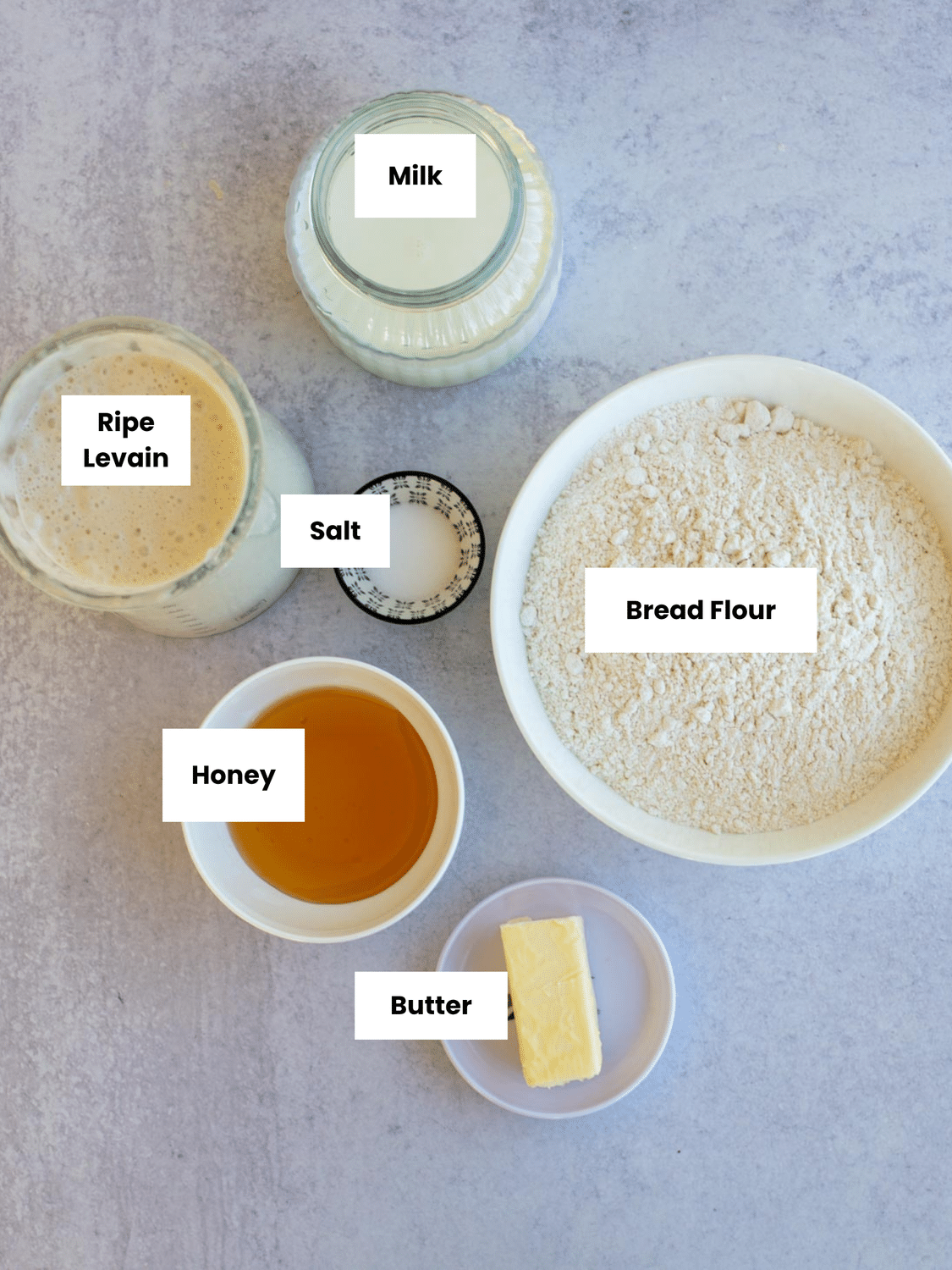
- Sourdough Starter – This recipe uses ripe, bubbly, active sourdough starter to make a levain before mixing the dough. If you prefer to forgo the levain and use a ripe, bubbly, and active sourdough starter, you can substitute that for the levain in the recipe.
- Whole Milk – 2% also works – you can substitute a dairy-free alternative or water, but the rolls may not be quite as soft.
- Honey – Adds a touch of natural sweetness that enhances the flavor and helps create a soft, golden crust.
- Unsalted Butter – Melted and cooled unsalted butter allows you to control the salt content in the dough and gives these rolls rich flavor.
- Salt – Just a little bit of salt tempers the fermentation and brings out the flavor in the rolls. Don’t leave it out.
- Bread Flour – This recipe is made and tested with bread flour. Bread flour keeps the rolls chewy and gives a good rise. If you want to substitute all-purpose flour instead, add a little vital wheat gluten for best results.
See the recipe card for full information on ingredients and quantities
Substitutions
- Sourdough Starter: Substitute 180 grams of bubbly, active sourdough starter for the levain in this recipe. Just make sure your starter is strong and recently fed.
- Honey: Substitute sugar for the honey and hold back a little bit of the flour if needed.
- Whole Milk: You can substitute 2% milk or a dairy-free alternative instead of the whole milk in this recipe. The dough may not be quite as soft, but will still be delicious.
- Butter: Substitute salted butter or a neutral-flavored oil for the butter if desired.
- Whole Wheat Flour: If you’d like to add whole wheat flour to this recipe, substitute up to half of the bread flour with whole wheat flour. The dough may ferment a little faster, and the rolls won’t rise quite as high, but the flavor will be wonderful.
Sourdough Baker’s Timeline
A sample baking schedule helps me when baking with sourdough. Sourdough takes more time to rise than traditional bread. This schedule helps me plan my cloverleaf rolls to be ready in time for dinner.
Note: This schedule assumes the dough temperature is 78-80ºF throughout the process. Colder dough will take longer to rise. Warmer dough will rise faster.
| Day 1 | Mix Levain |
| 8:00 PM – 8:00 AM | Mix Levain, let rest overnight for 10-12 hours at 78-80ºF until bubbly, active and peaked |
| Day 2 | Make Rolls |
| 8:00 AM | Mix Dough |
| 8:15 AM – 2:15 PM | Bulk Fermentation at 78ºF to 80ºF |
| 2:15 PM | Shape the Rolls |
| 2:30 PM – 6:00 PM | Proof Rolls at 80ºF (could take a little longer if proofed at cooler temperature) |
| 6:00 PM | Bake |
How to Make Cloverleaf Sourdough Rolls
Mix the Levain

Step 1: Mix the Levain. Combine ripe, active sourdough starter with water and flour to prepare your levain (Image 1). Let rise until bubbly and active (Image 2).
Note: If you have ripe, bubbly, active sourdough starter on hand, substitute 180 grams for the levain in this recipe.
Mixing the Dough
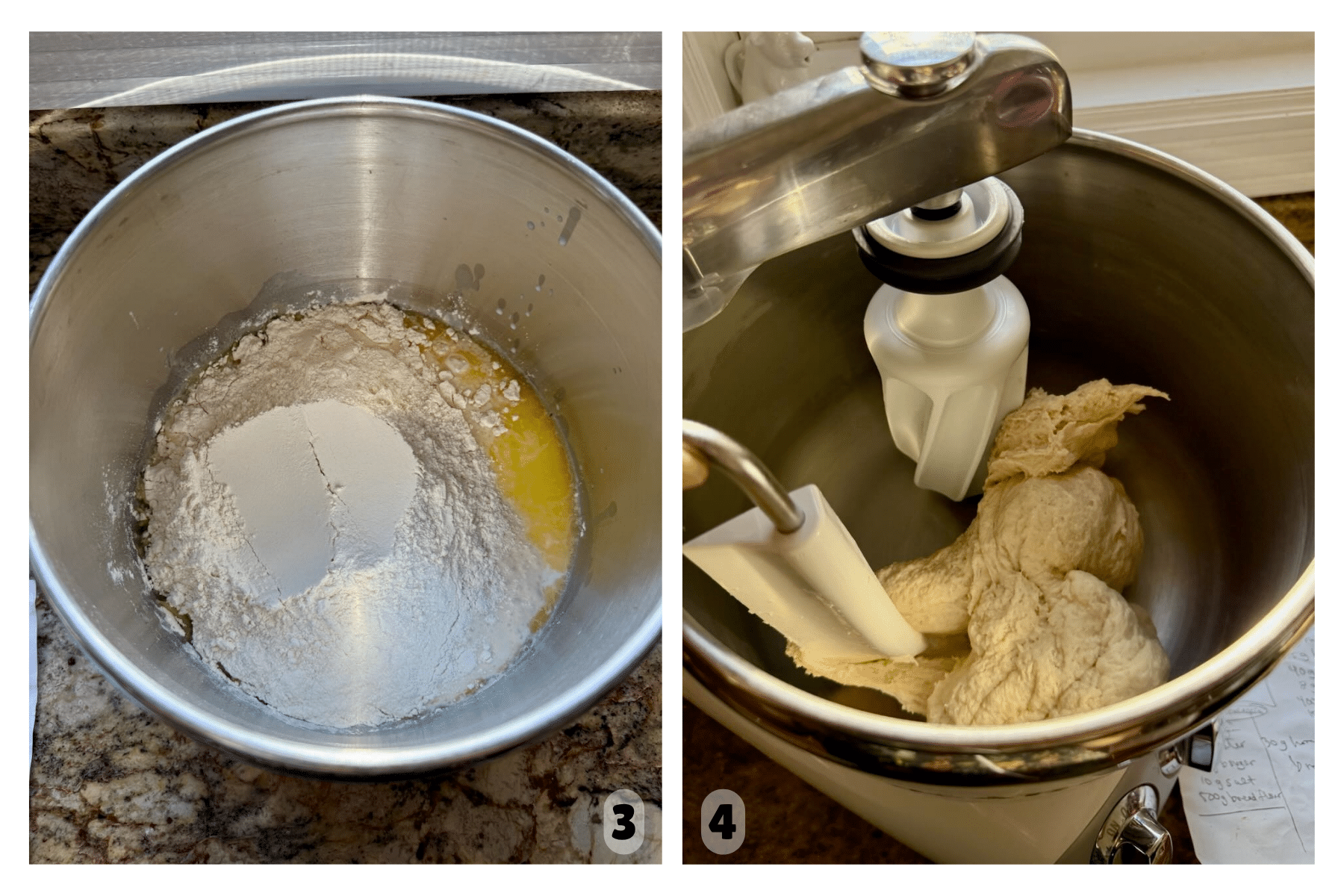
Step 2: Mix Dough. Add the ingredients to the bowl of a stand mixer, including the ripe levain, warm milk, honey, melted butter, salt, and bread flour (Image 3). Begin kneading on low speed with a dough hook attachment. Continue kneading for about eight minutes until the dough pulls away from the edge and is cohesive and strong (Image 4).
No Stand Mixer? Don’t worry! This dough can be kneaded by hand! Mix together in a large bowl and knead by hand for about 10-12 minutes.
Bulk Fermentation or First Rise
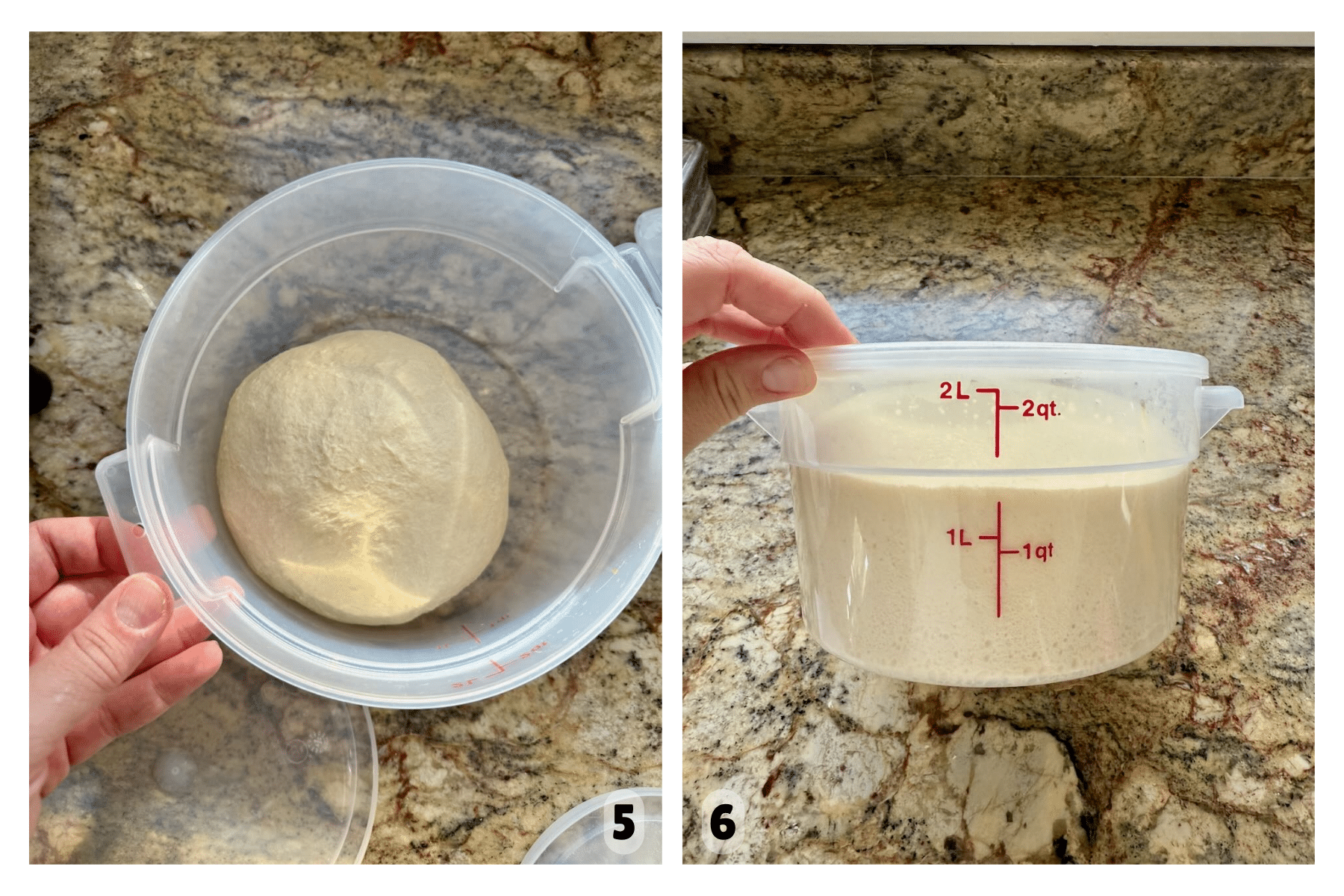
Step 3: Bulk Fermentation. Place the dough in a container (Image 5) and cover with a container cover or plastic wrap. Let rise in a warm place (78-80ºF) over a period of about 6 hours until the dough has almost doubled in size (Image 6).
Note: Temperature plays the biggest role in your dough predictably rising during the rise of the dough. The ideal temperature for sourdough to rise is about 78-80°F. I often use a dough mat or proofing box to achieve this, especially in the cooler winter months.
Shaping the Dough
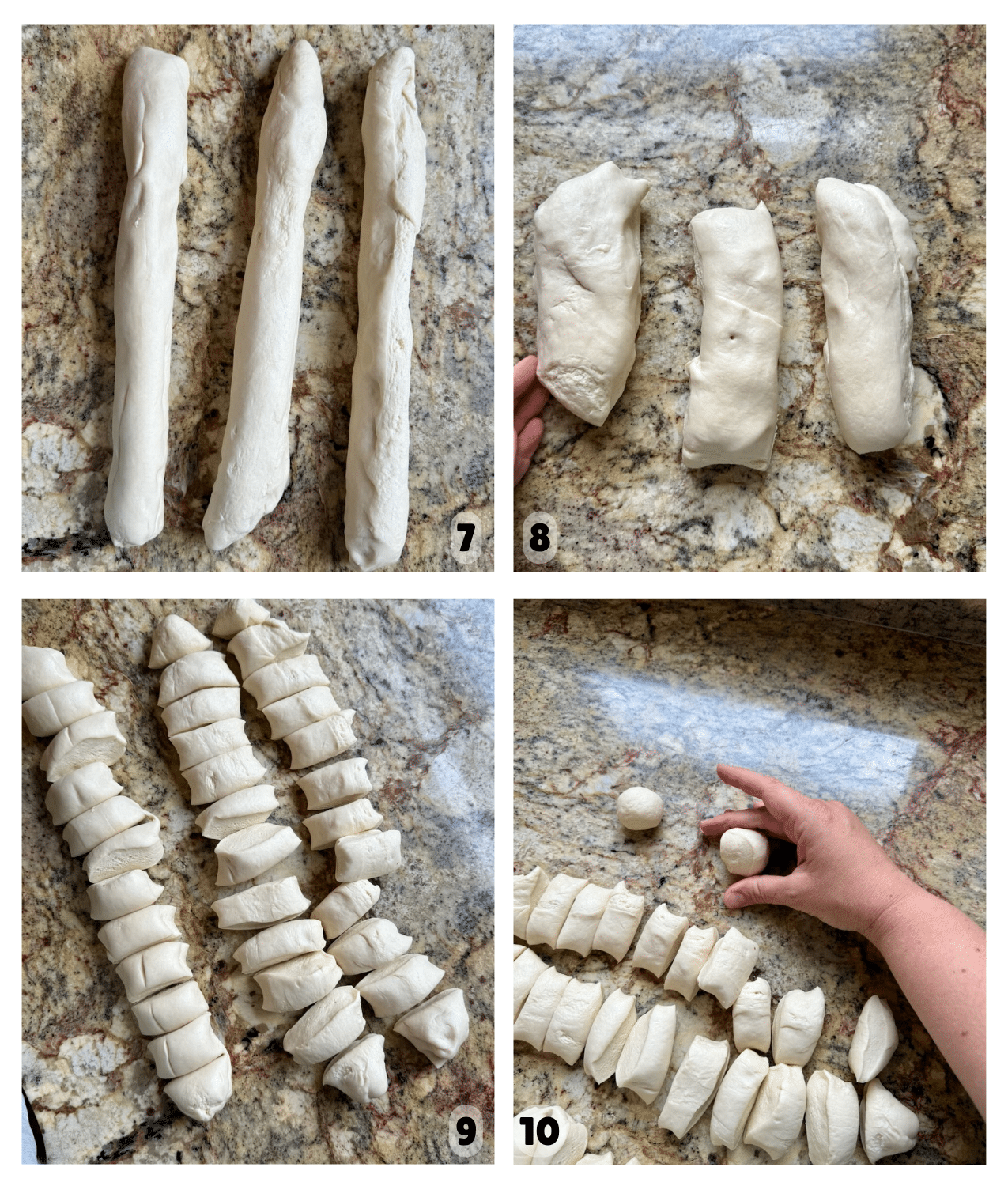
Step 4: Shape Rolls into a Cloverleaf. Once the dough has doubled in size, dump it onto a clean countertop and cut it into 36 equal pieces (Images 7-9). Roll each piece of dough into round, smooth balls (Images 10 & 11). Place three round balls into each of the twelve cups of a greased metal muffin cup (Image 12). I like spraying the muffin tin with non-stick cooking spray so the sourdough rolls don’t stick.
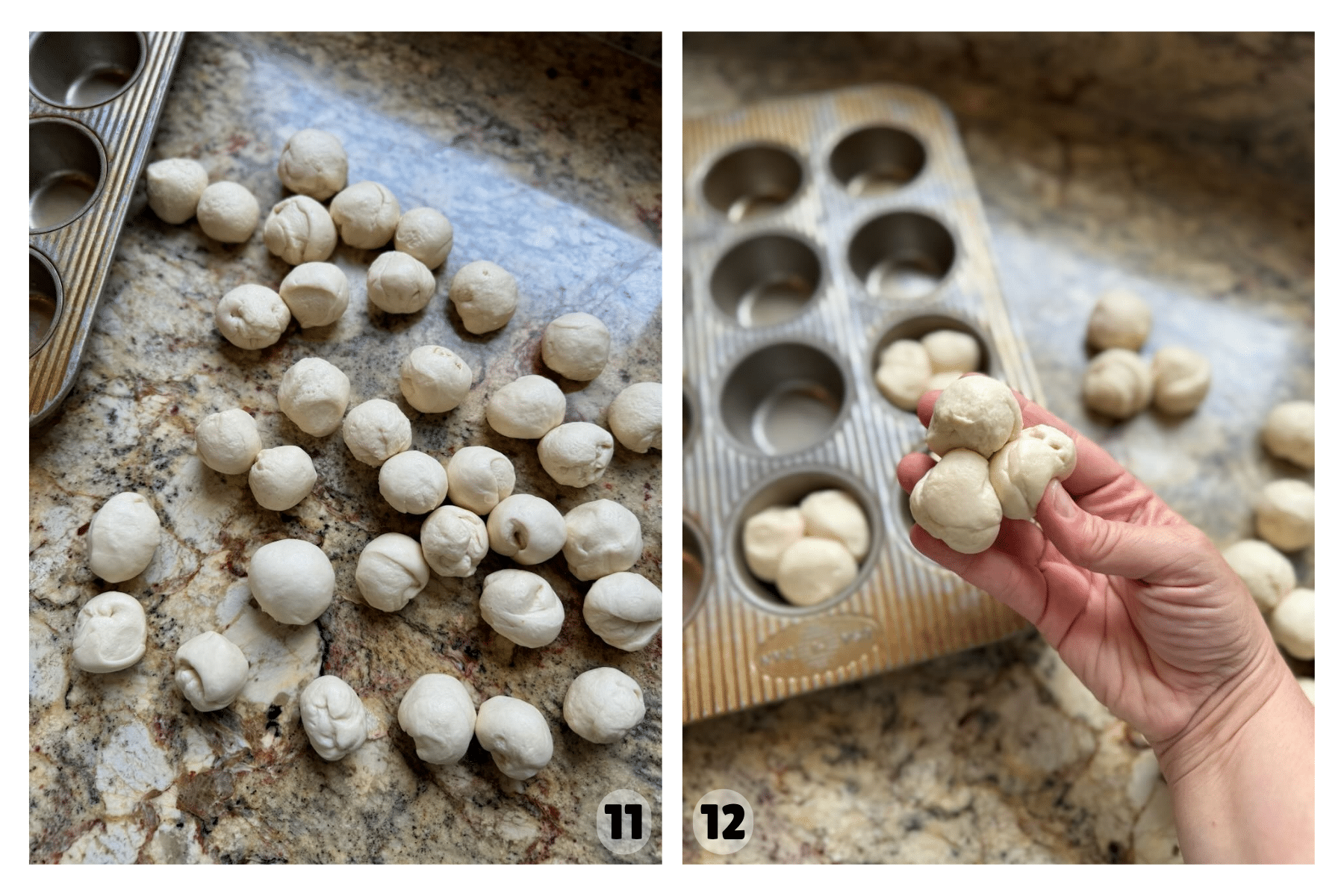
A Note on the Dough Balls: If you want to be precise, each dough ball should weigh about 28–30 grams. I usually eyeball them since there are so many, but you can use a kitchen scale and aim for each finished roll to be roughly 85 grams of total dough.
Proofing or Second Rise
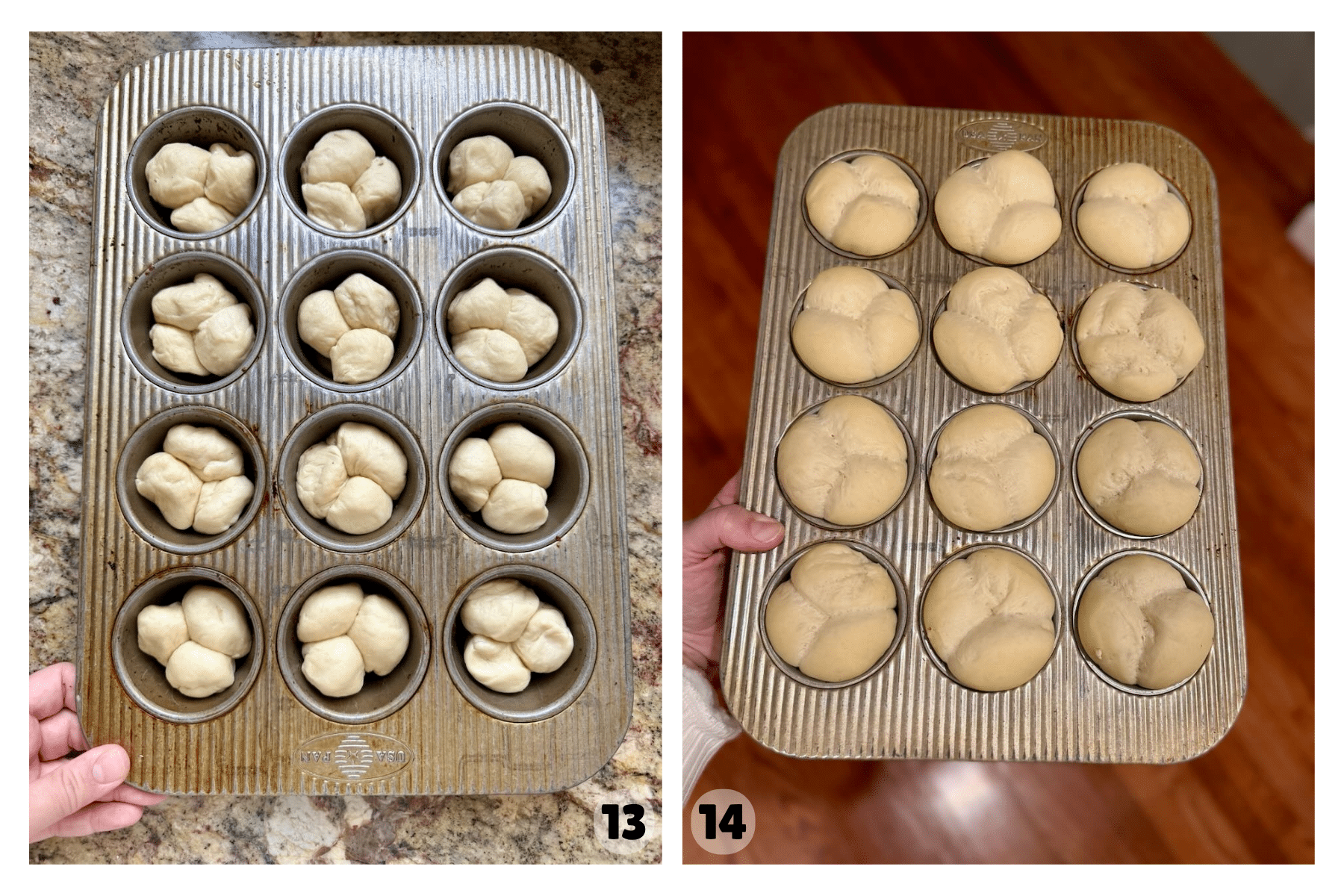
Step 5: Proof the Cloverleaf Sourdough Rolls. Cover the muffin tin of shaped rolls with a kitchen towel and let the dough rise for about 3-4 hours at 80ºF until just about doubled in size (Images 13 & 14).
Note: Don’t bake these rolls until they’ve doubled in size. For that classic cloverleaf look, the dough needs to rise and puff up over the muffin tin. If your dough seems slow or isn’t rising, give it a warmer spot to help it along!
Baking The Cloverleaf Dinner Rolls
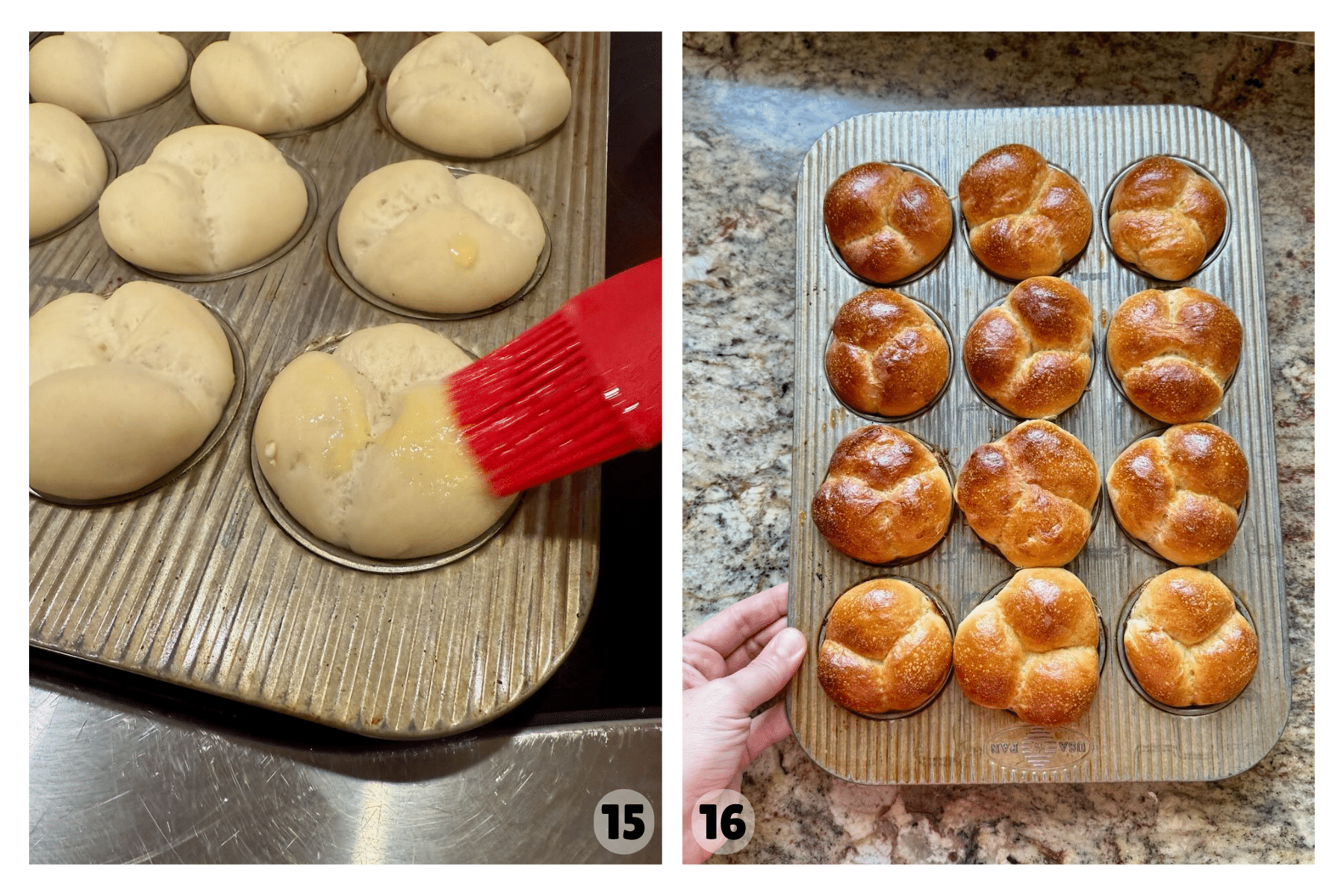
Step 6: Bake. Mix an egg wash by whisking an egg with a splash of water. Brush the egg wash on top of the dough (Image 15). Bake the sourdough cloverleaf rolls in a preheated oven at 375°F for 22-25 minutes until the internal temperature is 195ºF and the rolls are golden brown on top. Let the baked rolls cool for 5-10 minutes before transferring from the pan to a cooling rack (Image 16).
How to Store Leftover Rolls
Once completely cooled, leftover cloverleaf rolls can be stored in an airtight container or zip-top bag. For the best results, I like to store them in the freezer. Warm the rolls in the microwave for 10–30 seconds until soft and heated through. Serve warm for the best texture.
Amy’s Recipe Tip
Amy’s Make Ahead Tips: If you want to prep these rolls ahead of time, mix the dough and place it in the refrigerator after the first rise. It can stay chilled for up to 2 days before shaping, rising again, and baking. You can also follow my tips for par-baking, baking ahead, and even freezing roll dough in my guide on making rolls ahead of time.
Frequently Asked Questions
If you don’t have sourdough on hand, I have a non-sourdough recipe for Cloverleaf Dinner Rolls that you can try instead.
You don’t have to, but the muffin tin is what gives the rolls their classic cloverleaf shape. You can also use this roll recipe and shape the dough into 12 balls, placing them in a 12-inch round or 9 by 13-inch pan to rise and bake.
Yes! Shape the rolls, cover the muffin tin, and refrigerate overnight. Let them warm up and finish rising before baking.
Popular Sourdough Roll Recipes


If you tried this Cloverleaf Sourdough Rolls or any other recipe on my website leave a 🌟 star rating and let me know how it went in the comments below. Happy Baking!

Cloverleaf Sourdough Dinner Rolls
Save this for later!
Equipment
- stand mixer optional
- 12 cup muffin tin non-stick/metal is my preference
Ingredients
Levain (1:10:10, rises in 10-12 hours if kept at 78-80ºF)
- 9 grams sourdough starter, about 2 teaspoons
- 90 grams all-purpose flour, about 2/3 cup
- 90 grams water, about 1/3 cup
Cloverleaf Sourdough Dinner Rolls
- 180 grams ripe, active levain, about 3/4 cup, see recipe notes
- 240 grams milk, whole or 2%, warmed, about 1 cup
- 55 grams honey, about 3 Tablespoons
- 50 grams unsalted butter, melted, melted, about 4 Tablespoons
- 10 grams salt, about 1 1/2 teaspoons
- 500 grams bread flour, about 3 3/4 cups
- 1 egg, reserved for egg wash
- splash of water, reserved for egg wash
Instructions
Mix Levain (1:10:10, rises in 10-12 hours if kept at 78-80ºF)
- Mix together 9 grams of ripe, active sourdough starter with flour and water. Cover and set aside for 10-12 hours at 78-80ºF until doubled, bubbly, active, and peaked – just about to fall back down.Alternatively, 180 grams of ripe, active, bubbly sourdough starter can be substituted for levain in this recipe if that works better for your baking schedule.
Cloverleaf Sourdough Dinner Rolls
- Mix Ingredients: To a stand mixer (or a bowl if you are kneading by hand), add the ripe levain, warm milk, honey, melted butter, salt, and bread flour. Turn the mixer on and begin kneading the dough. If using cup measurements, reserve a little flour to add in during the kneading process – this keeps you from over-flouring your dough. Knead the dough for about 8-10 minutes in the stand mixer or 10-12 minutes by hand. Dough should be smooth and tacky but not overly sticky.
- Bulk Fermentation/First Rise: At this point the dough will be soft and cohesive. Dump the dough into a container and cover. Set the dough in a warm, 78-80ºF place for about 6 hours until the dough has just about doubled in the container. If your dough temperature is cooler than 78-80ºF, it will need to ferment longer than 6 hours.Note: You can place the dough in the refrigerator for a longer cold overnight rise if you prefer. When you are ready to continue, remove the dough from the fridge and follow the instructions to shape it into small balls. The dough may take a little longer to rise because it will be cold from the refrigerator.
- Shape Rolls: Turn the risen dough out onto a clean countertop. Cut the dough into 36 small pieces. I like to divide it into 3 equal sections, then cut each section into 12 pieces. Roll each small piece into a smooth ball. Lightly grease a muffin tin with cooking spray and place three dough balls into each cup to form the classic cloverleaf shape. Repeat with the remaining dough until all the muffin cups are filled.
- Proof: Cover the rolls with a kitchen towel and let them rise in a warm spot (a dough mat or bread proofer works great) for 3 to 4 hours, or until they are puffed up and almost doubled in size. You can also place them in a warm area of your house, or in the oven with the light turned on. Just make sure the oven stays off until you are ready to bake.
- Bake: Preheat the oven to 375°F. In a small bowl, whisk together one egg with a splash of water to make an egg wash. Brush the tops of the rolls lightly with the egg wash. Bake for 22-25 minutes, until rolls register 195ºF and are golden brown. Remove from the oven and let cool for 5–10 minutes before taking them out of the pan. Enjoy warm, or transfer to a cooling rack to cool completely.
Notes
Nutrition
Nutrition information is automatically calculated, so should only be used as an approximation.


We love this recipe. The rolls are so soft and delicious.
Hi! Sooo excited for these! Due to schedule, I’m baking tonight and serving tomorrow. Best recommendation for reheating tomorrow?!?
I would store in an airtight container overnight. If you have reusable bread bags, I would use those.
After the first rise, Can I shape these into the muffin tin clover leaves and then put in fridge and take out to rise the next morning?
Yes, you can do that! Just give them ample time to double in size and proof before baking them.
Super easy and so tasty! I’d like to try to add Parmesan, garlic or other inclusions…and recommendations and tips? 🤗
That would be yummy! You could probably top the rolls with parmesan and garlic like these Parmesan Herb Sourdough Rolls. If adding the inclusions to the dough, I’d probably do it when you shape them. Enjoy!
I just made my dough last night and placed in refrigerator. Do you think it will be ok to let it sit in the fridge for two days—I didn’t quite plan this well for thanksgiving
It will probably be overproofed in that time, but you can try.
I like these clover shaped Rolls.it was easy to make. Only had a hard time figuring how big to make each little balls. They proofed right up nicely. Only that I had some much larger than the others.
Hi Sharon! Glad you enjoyed these. Each dough ball should be about 28-30 grams with a total roll weight around 90 grams. Hope that helps!
Can substitute spelt flour with this recipe?
I haven’t tried it that way, but I think it’s worth a try. I might sub half spelt and half bread flour first to see how that goes, as ancient grains can be a bit stickier to work with. Let me know if you try it.
This recipe looks 👌🏻👌🏻 I would like to use organic spelt flour. Is this possible with this recipe?
I haven’t tried it that way, but I think it’s worth a try. I might sub half spelt and half bread flour first to see how that goes, as ancient grains can be a bit stickier to work with. Let me know if you try it.
My kids love these rolls! They are fun to pull-apart and so soft and delicious.