
Affiliate disclosure: This post may contain affiliate links. Please see our disclosure policy.
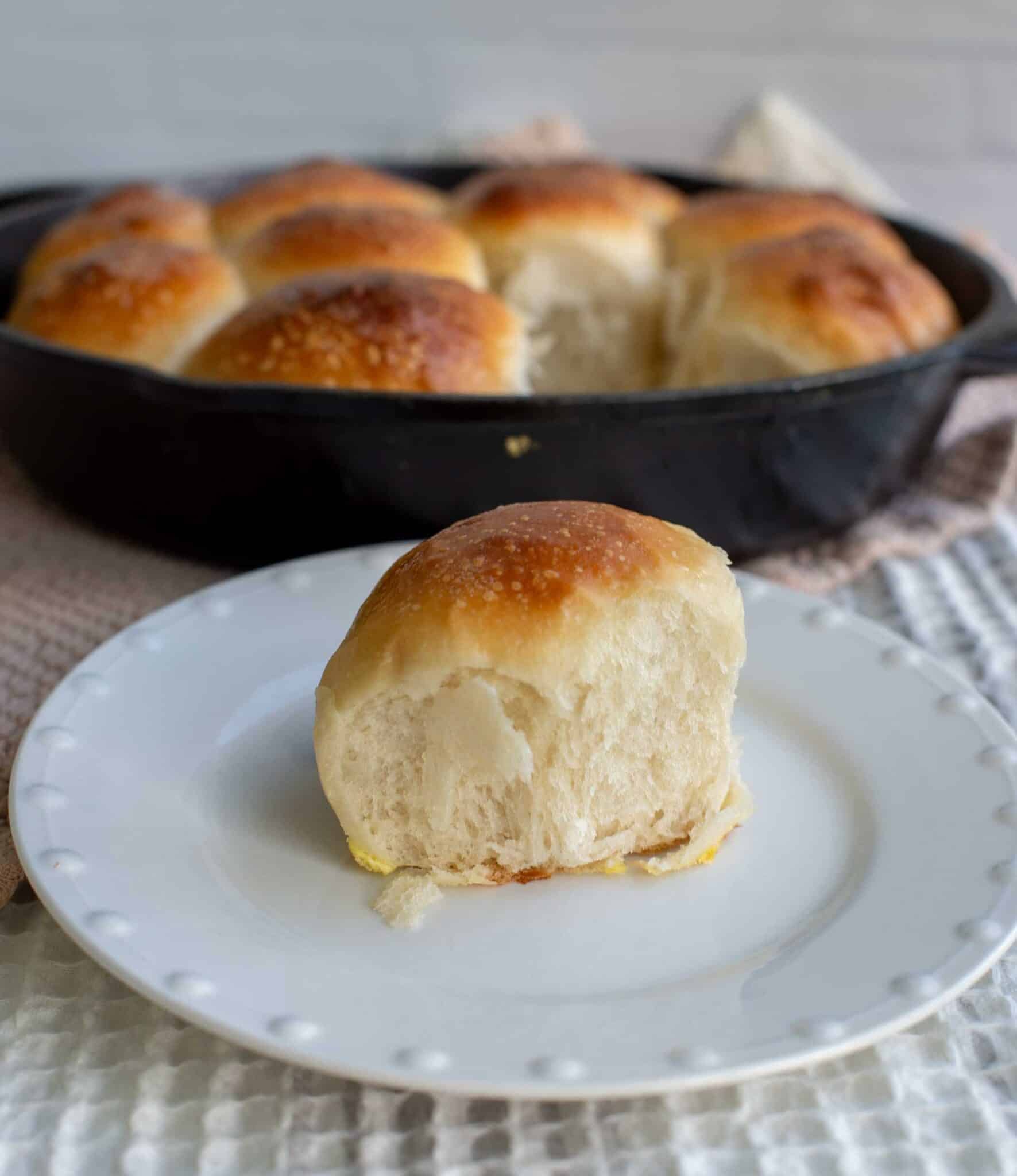
Super soft, 100% sourdough and perfect for your dinner table, you are going to love these Soft Sourdough Potato Rolls. These are some of the softest rolls you will bake thanks to the potato flakes mixed into the dough, which give them an incredibly light and fluffy texture.
This naturally fermented recipe uses active sourdough starter instead of commercial yeast for a slow rise and wonderful flavor. We love serving these rolls warm with melty butter at the dinner table and we never have any extras. If you’re looking for a quicker version made with sourdough discard and instant yeast, try my Sourdough Discard Mashed Potato Rolls made with leftover mashed potatoes.
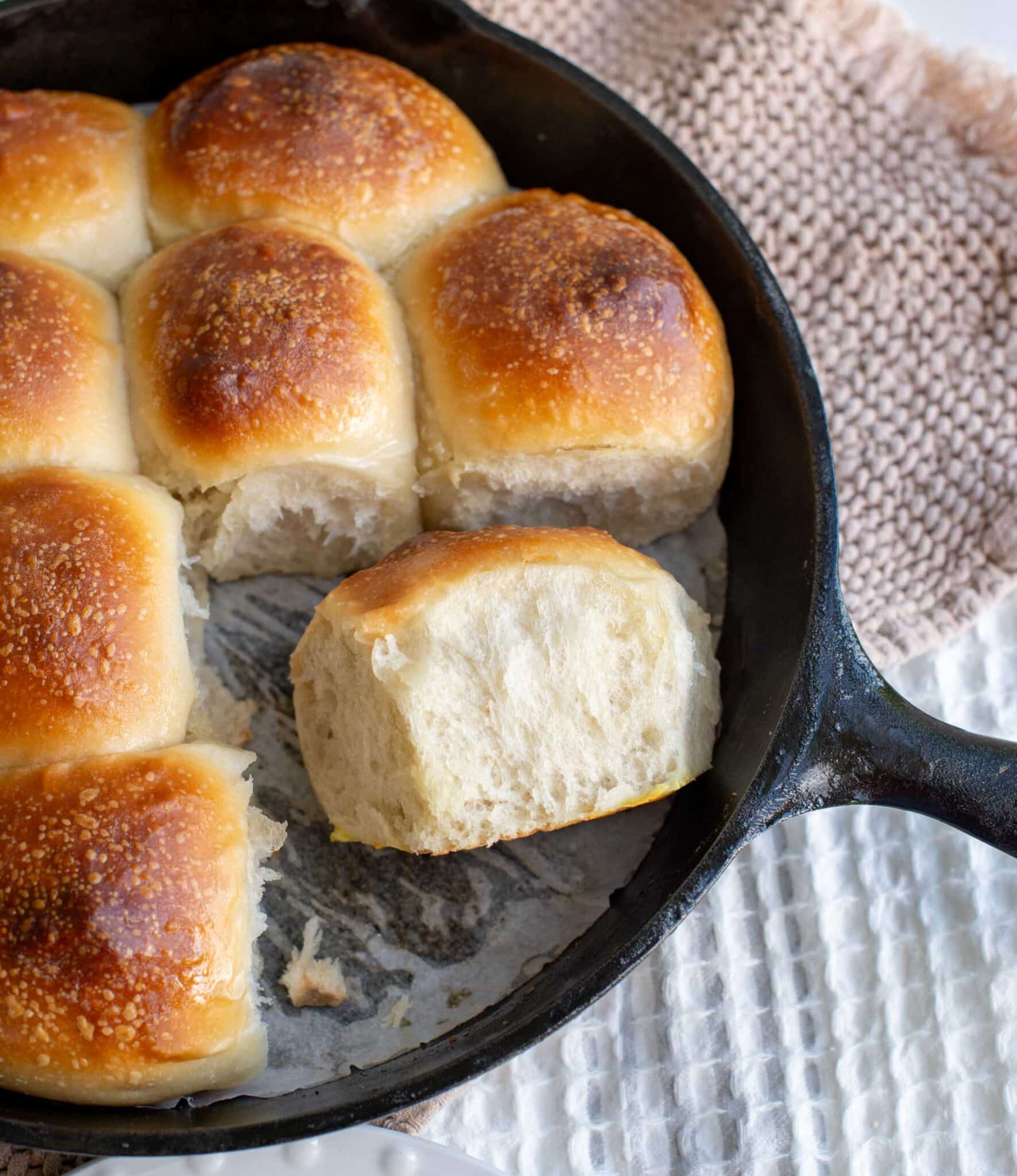
Table of Contents
- Quick Look: Soft Sourdough Potato Rolls
- Why You’ll Love Soft Sourdough Potato Dinner Rolls
- Important Ingredients
- Substitutions
- Sourdough Baker’s Timeline
- How to Make Soft Sourdough Potato Dinner Rolls
- How to Store Leftovers
- Amy’s Recipe Tip
- Frequently Asked Questions
- 100% Sourdough Roll Recipes
- Soft Sourdough Potato Rolls Recipe
Quick Look: Soft Sourdough Potato Rolls
- Prep Time: 30 minutes
- Fermentation Time: 20 hours
- Bake Time: 25 minutes
- Total Time: 21 hours
- Servings: 12 rolls
- Calories: ~211 kcal per roll (based on nutrition panel)
- Cook Method: Baked in a pan.
- Flavor & Texture: Super soft, fluffy rolls with a tender potato-enriched crumb and a mild sourdough tang.
- Difficulty: Moderate – 100% naturally leavened rolls that are simple to mix, but the dough temperature should be managed for the best rise
SUMMARIZE AND SAVE THIS RECIPE CONTENT ON:
Save this for later!
Why You’ll Love Soft Sourdough Potato Dinner Rolls
- Soft and Tender – The potato flakes in the dough give these potato flake sourdough dinner rolls an incredibly soft, tender texture, just like they do in my Sourdough Star Bread where I also use potato flakes for a super soft dough.
- Easy – These rolls take time to rise because they are naturally fermented, but the hands-on time for mixing the dough is simple and straightforward, just like my original Soft Sourdough Dinner Rolls.
- Substantial – These rolls are soft but substantial enough to hold your favorite toppings or sandwich fillings, just like my Soft White Rolls with Sourdough Discard.
New to Sourdough? If you are new to sourdough, learn how to make a sourdough starter from scratch and check out my Free Sourdough Beginner Guide. Using naturally fermented sourdough will take much longer, but you will love the fermentation benefits and the flavor!
Important Ingredients
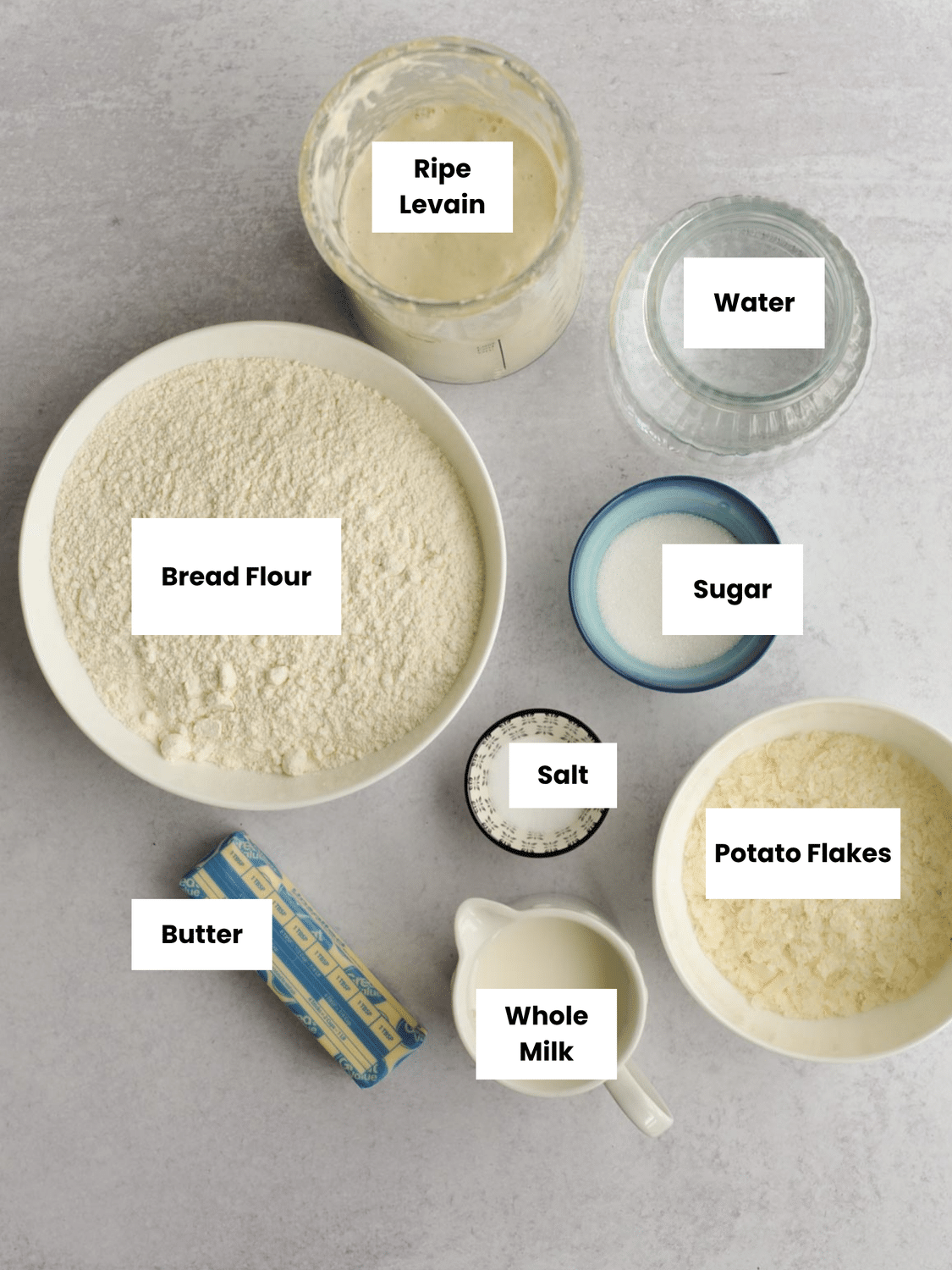
- Sourdough Starter – This recipe uses ripe, bubbly, active sourdough starter to make a levain before mixing the dough. If you prefer to forgo the levain and use a ripe, bubbly and active sourdough starter, you can substitute that for the levain in the recipe.
- Whole Milk – 2% also works – you can substitute a dairy-free alternative or more water – but it may not be quite as soft.
- Water – I use tap water, warmed to about 80ºF.
- Potato Flakes – Including potato flakes is what sets this recipe apart from other dinner rolls—it makes these rolls incredibly fluffy and delicious. I love this brand of potato flakes.
- Sugar – Just a little bit of sugar is added to these rolls to enhance the flavors.
- Unsalted Butter – Melted and cooled unsalted butter allows you to control the salt content in the dough and gives these rolls a rich flavor.
- Salt – Just a little bit of salt tempers the fermentation and brings out the flavor in the rolls. Don’t leave it out.
- Bread Flour – This recipe is made and tested with bread flour. Bread flour keeps the rolls chewy and gives a good rise. If you want to substitute all-purpose flour instead, add a little vital wheat gluten for best results.
See the recipe card for full information on ingredients and quantities
Substitutions
- Potato Flakes: If you want to substitute potato for the potato flakes, boil 150 grams of potato. Remove the skin. Mash and add to the dough in place of the potato flakes. Reduce water in the dough to 100 grams (1/3 cup plus 1 Tbsp).
- Levain: You can substitute bubbly, active sourdough starter for the levain if you already have a mature starter ready to use.
- Bread Flour: You can substitute all-purpose flour for bread flour. The rolls may be slightly less chewy, but they will still bake up soft and tender. You may need a little extra all-purpose flour.
- Milk: Milk can be substituted for any dairy-free alternative or water.
- Overnight Proof: After shaping the rolls, cover the pan and place it in the fridge overnight. The next day, let the rolls come to room temperature and finish proofing before baking.
Sourdough Baker’s Timeline
A sample baking schedule helps me when baking with sourdough. Sourdough takes much longer to rise than commercial yeast bread. This schedule helps me plan my bake. A note: This schedule assumes the dough temperature is 78-80°F throughout the process.
| Day 1 | Mix Levain |
| 8:00 PM – 8:00 AM | Mix Levain, let rest overnight for 10-12 hours at 78-80ºF until bubbly, active and peaked |
| Day 2 | Mix Dough, Bulk Fermentation, Shape, Proof, Bake |
| 8:00 AM | Mix Dough |
| 8:00 AM – 12:00 PM | Bulk Fermentation at 78ºF-80ºF |
| 12:00 PM | Shape Rolls |
| 12:00 PM – 4:00 or 5:00 PM | Proof Rolls (could take a little longer if proofed at cooler temperature) |
| 4:00 or 5:00 PM | Bake |
How to Make Soft Sourdough Potato Dinner Rolls
Mix the Levain
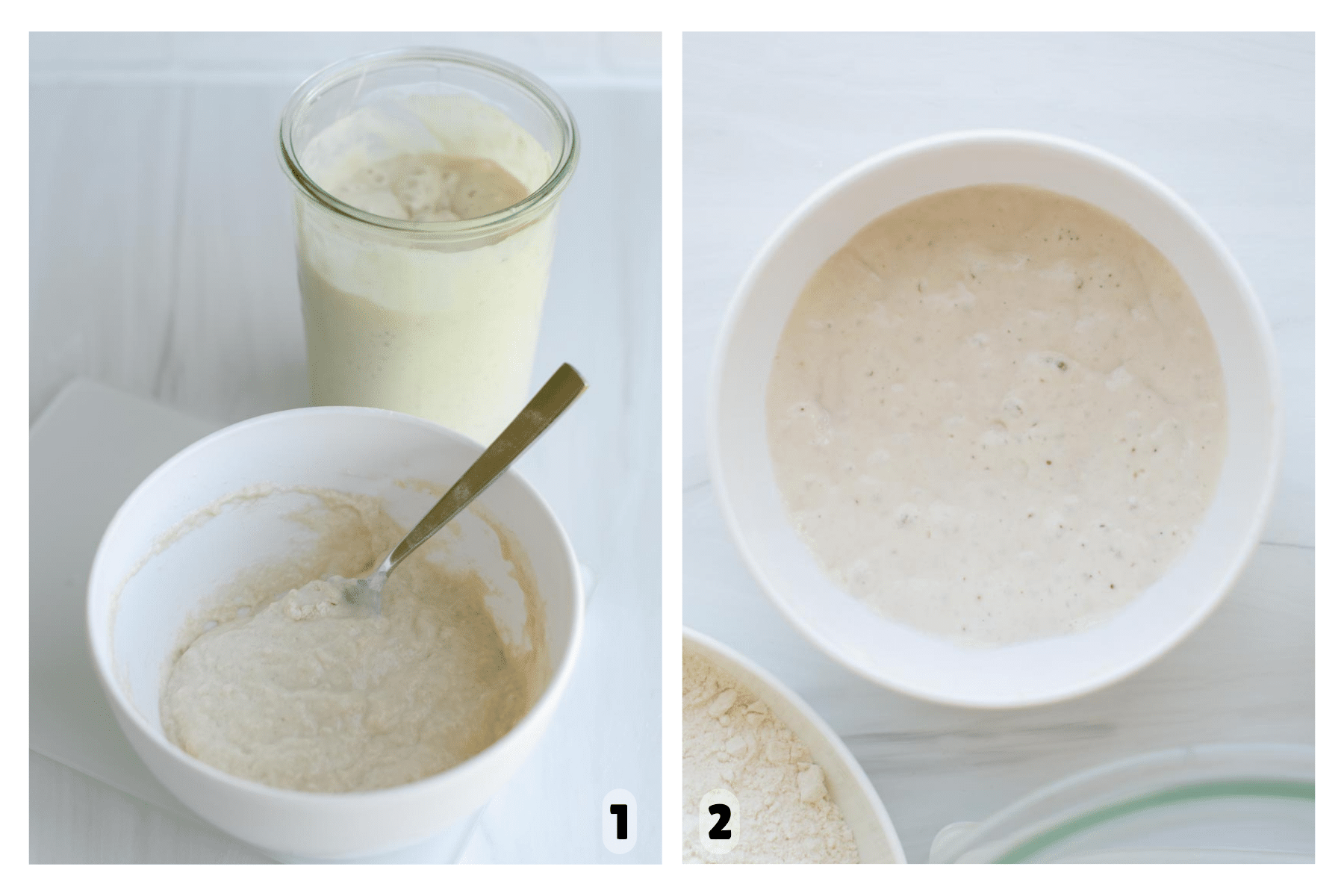
Step 1: Levain. Combine the ripe, active sourdough starter with bread flour and water until completely incorporated (Image 1). Cover and let rise until doubled in size, bubbly and peaked (Image 2). This will take about 10-12 hours (overnight).
Do you have to use a levain in this recipe? No. I prefer it, but if you have a well-maintained and frequently refreshed starter that is large enough, you can substitute that in place of the levain in the recipe.
Mix the Dough
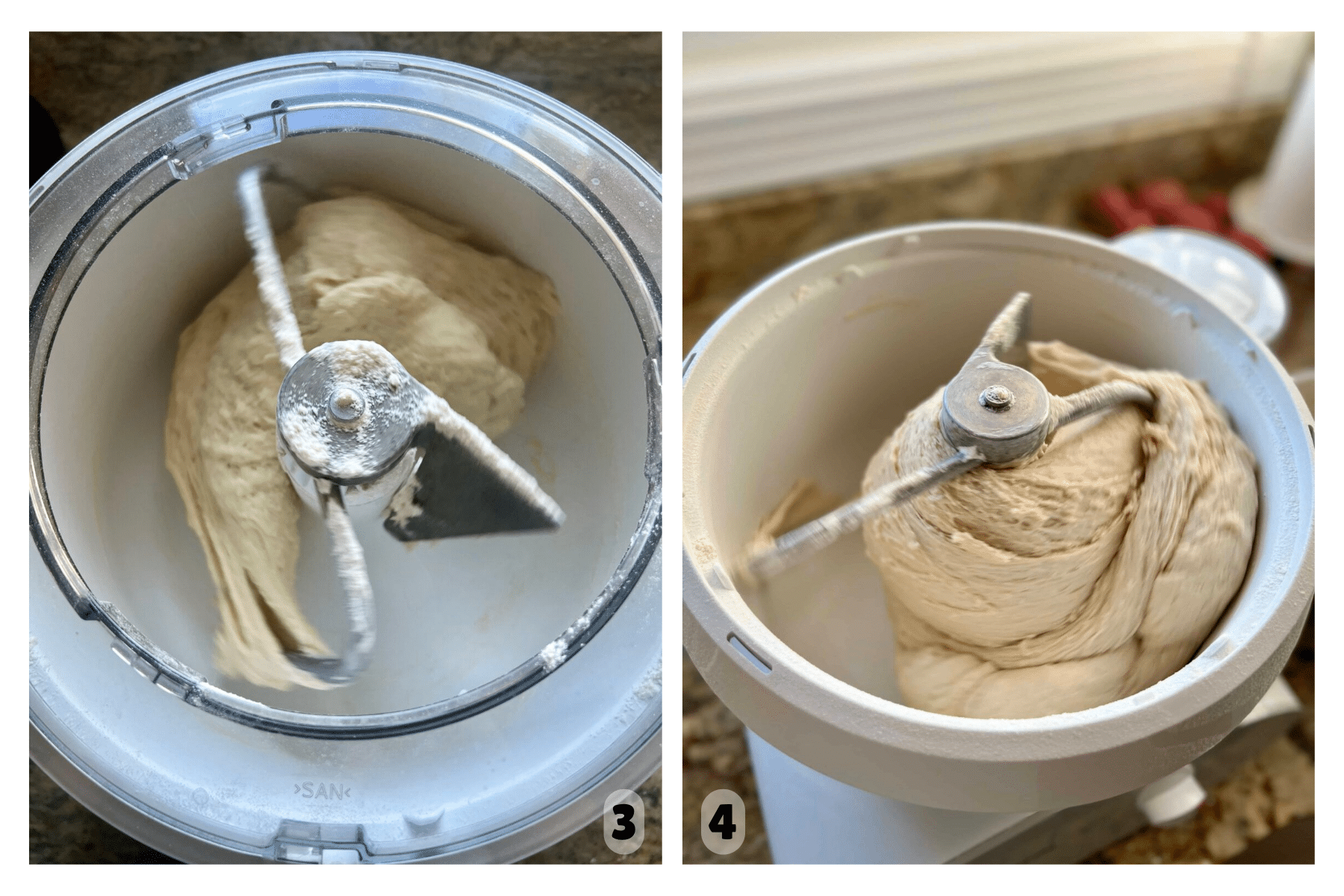
Step 2: Mix the Dough. When your levain is active and bubbly add it to the bowl of a stand mixer with water, milk, potato flakes, melted butter, sugar, salt and bread flour (Image 3). Knead the mixture for about 5-7 minutes until the dough is smooth and all the ingredients are well incorporated (Image 4). The dough should feel tacky but not overly sticky and should pull away from the sides of the bowl.
Alternatively, the dough can also be kneaded by hand for 10-12 minutes if you don’t have access to a stand mixer until smooth and cohesive.
Bulk Fermentation (First Rise)
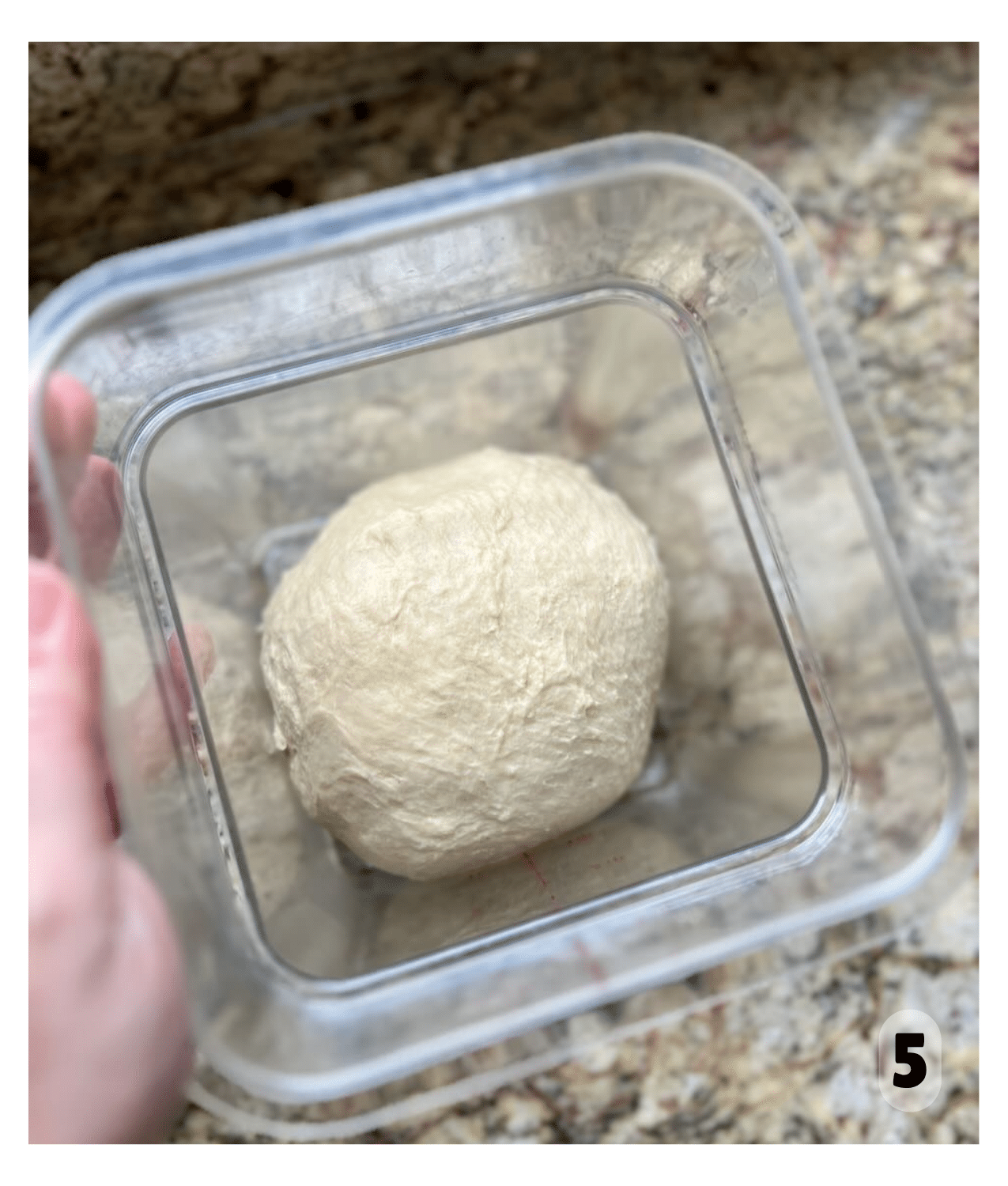
Step 3: Bulk Fermentation. Cover the dough with plastic wrap or a loose-fitting lid and place the dough in a warm, 78-80ºF place for 4 hours (Image 5). Take the temperature of the dough as needed to make sure it stays right around 78-80ºF. If your dough temperature is cooler than 78-80ºF, it will need to ferment longer than 4 hours.
What to Expect: Sourdough dough doesn’t rise as quickly as recipes made with commercial yeast. During bulk fermentation, the dough will fill out the container and puff up slightly, but it will not double in size.
Shape the Dough
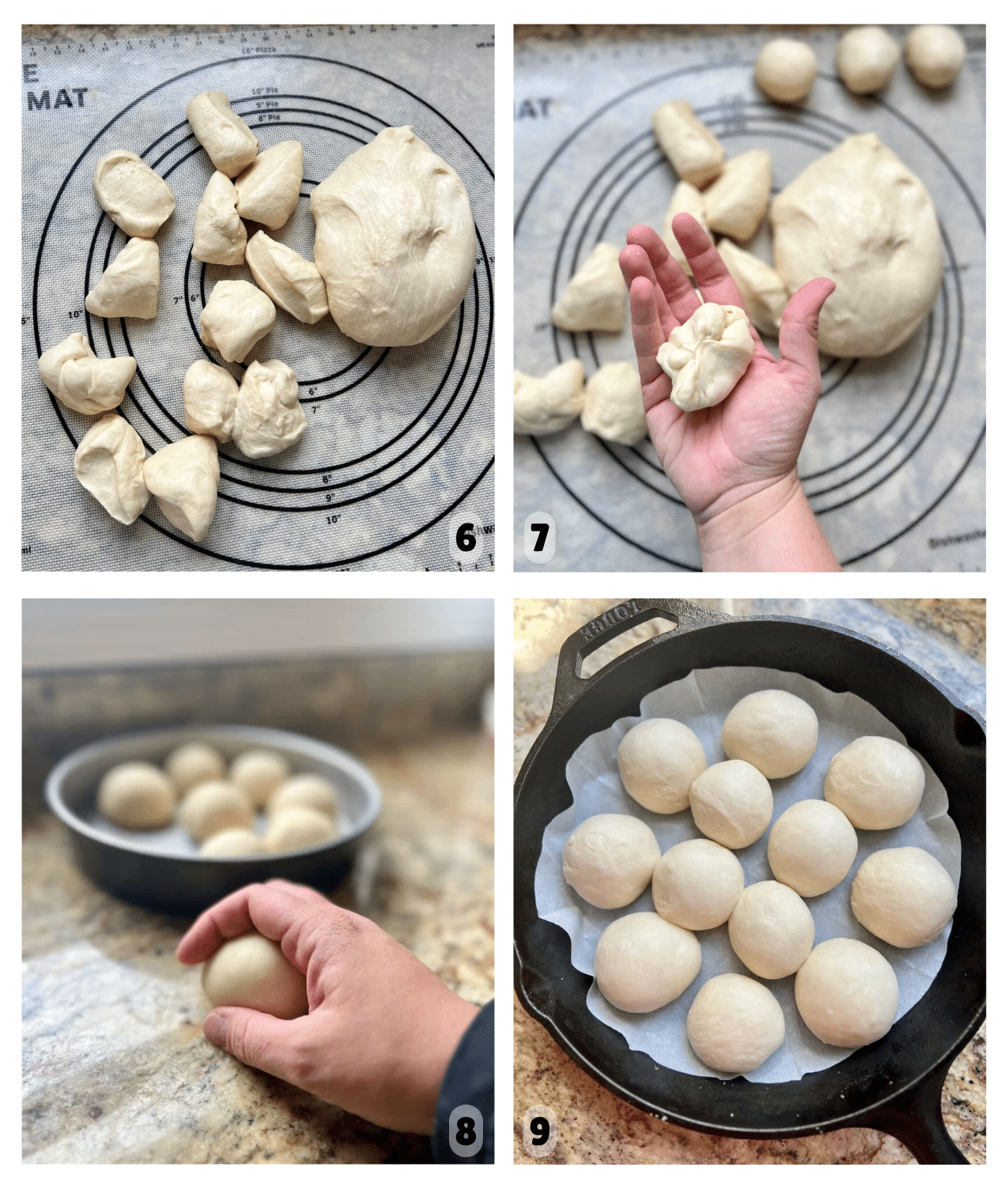
Step 4: Shape Rolls. After your dough has risen (4 hours if kept at 78-80ºF), dump the dough out onto a (clean) countertop. Separate the dough using a bench scraper into 12 equal-sized pieces (Image 6). Take each piece of dough and pull/pinch up the sides until it forms a ball (Images 7 & 8). Roll the ball on the counter using your hand in a cupping shape (see video here) to seal the balls and create tension for the roll to rise. Place the dough balls into a prepared pan, nestled together and just barely touching (Image 9).
Let’s Talk Pans: These rolls bake beautifully in a 10-inch cast iron skillet or round pan. I like to line the pan with parchment paper. They will also work well in a 9×13-inch baking pan.
Proof The Rolls (Second Rise)
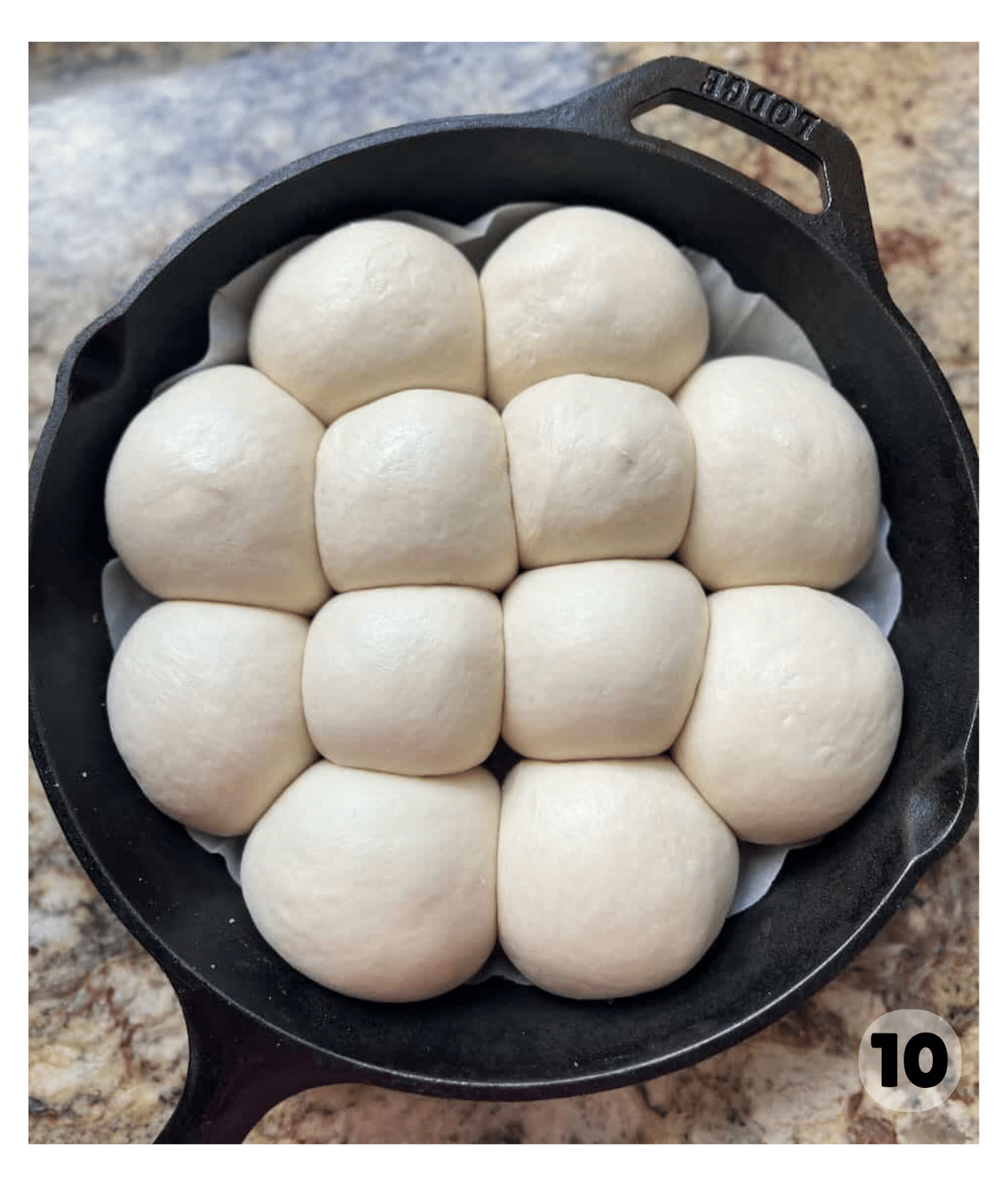
Step 5: Proof Rolls. Nestle rolls together in a parchment-lined 10-inch skillet or a 9×13-inch baking pan. Cover the pan and let the rolls rise again for about 3-4 hours (Image 10). During this time, I like to keep the rolls around 80ºF to encourage a rise in time for dinner. I use a bread proofer to keep the temperature consistent.
Amy’s Tip: Do NOT bake these rolls if they haven’t puffed up and risen. They should just about double in size before baking them.
Bake the Rolls
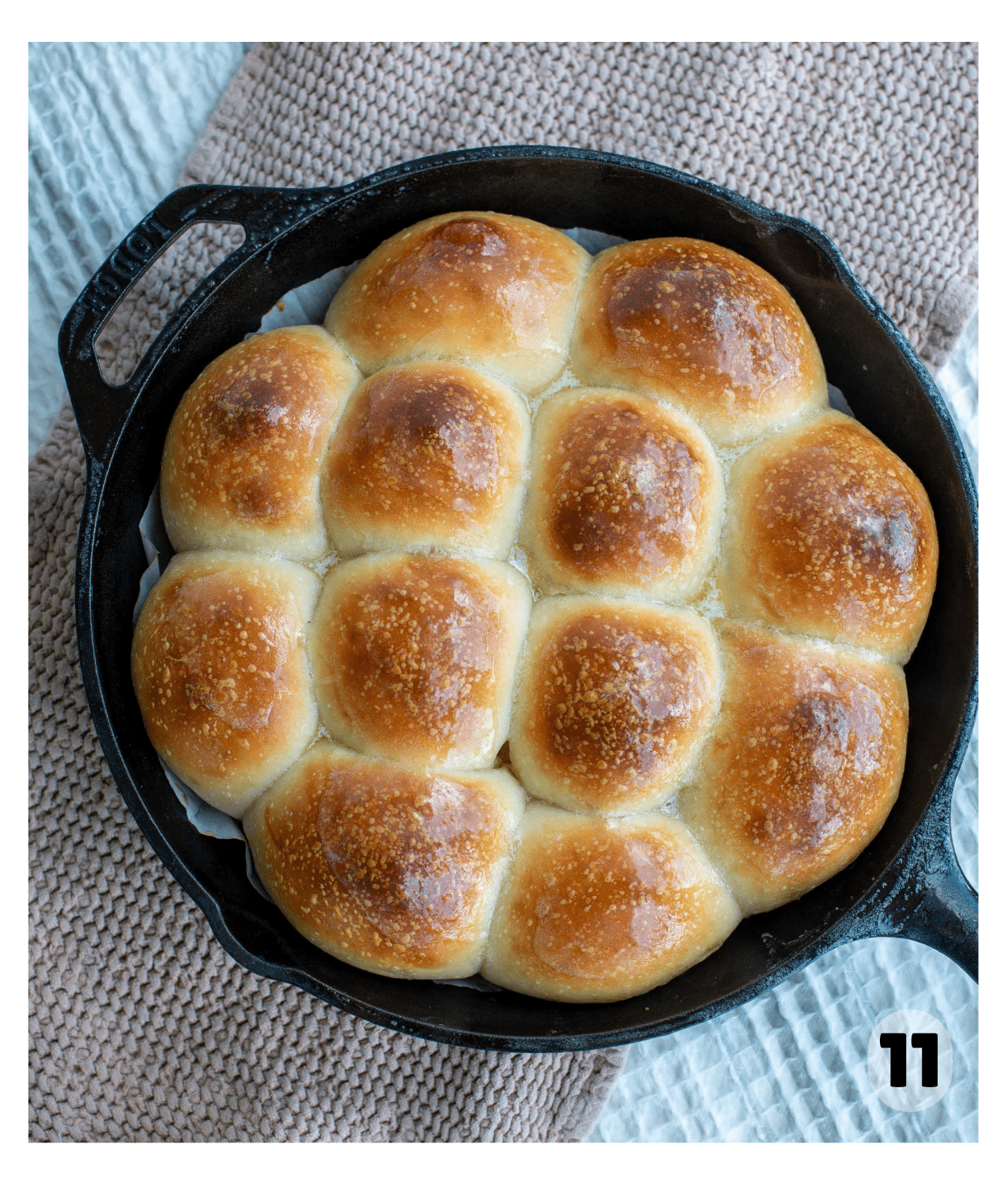
Step 6: Bake Rolls. Once the rolls have risen so that they have doubled in size and are touching each other, preheat oven to 400ºF. Whisk together an egg with a splash of water and brush egg wash on top of the risen rolls. Bake the rolls for about 25-30 minutes until baked all the way through and golden brown (Image 11). The internal temperature of the rolls should register 200ºF.
Rub a stick of butter over the top of hot rolls and enjoy warm!
How to Store Leftovers
Leftover rolls can be stored in an airtight bag or container at room temperature for up to 24 hours. After that, freeze the rolls for best freshness. They will keep well in the freezer for up to 2 months.
To reheat, place a roll in the microwave and warm for about 15–20 seconds until soft and warm. If reheating from frozen, microwave for 30–40 seconds. For extra softness, you can wrap the roll in a slightly damp paper towel before microwaving.
We love using these rolls for turkey sandwiches or breakfast sandwiches if we have leftovers. They stay soft for longer thanks to the potato flakes in the dough, which makes them perfect for sandwiches the next day. They are also delicious served warm with butter, jam, or as a side with dinner.
Amy’s Recipe Tip
If you want to make a discard version instead of a 100% naturally leavened recipe, use sourdough discard in place of the levain and add 2 teaspoons of instant yeast when mixing the dough. This will speed up the recipe and you will have rolls ready in just a few hours.
Frequently Asked Questions
This is usually an issue of your sourdough starter OR temperature.
Sourdough Starter: Make sure you are using bubbly, active, ripe starter that has peaked and is just about to fall back down. Using your starter too early in the fermentation cycle can make this dough take longer to rise.
Temperature: If your dough is not warm enough, it may not rise. Warm the dough up to 78-80ºF. Use a proofing mat, bread proofer, warm appliance or even your oven with the light on.
No, I don’t recommend freezing sourdough dough because the wild yeast tends to die off more quickly in the freezer than commercial yeast. Instead, par-bake the rolls or bake them completely and freeze them. Check out my tips for making rolls ahead of time for more details.
Yes! Divide the dough into 8 pieces instead of 12, shape each piece into a ball, then gently flatten before baking—just like I do in my sourdough hamburger bun recipe.
Yes. Sometimes I mix up the dough around 6 PM, let the dough bulk ferment until 10 PM and then shape and place in a pan to rise overnight – usually baking around 6-8 in the morning. To do this without over-proofing, make sure to use cooler water and keep the dough in a cooler place. Do not bake these rolls if they haven’t risen or they will be dense.
I don’t think they taste very sour, especially if you are using a well-maintained and mild sourdough starter. With that said, they do have a nice flavor to them with a hint of “sour.” Check out these tips for making your sourdough starter more or less sour here.
100% Sourdough Roll Recipes


If you tried these Soft Sourdough Potato Rolls or any other recipe on my website leave a 🌟 star rating and let me know how it went in the comments below. Happy Baking!

Soft Sourdough Potato Rolls
Save this for later!
Equipment
- 10 inch skillet or 9 by 13-inch pan
Ingredients
Levain (1:10:10, ready in 10-12 hours at 78-80ºF)
- 6 grams ripe, active sourdough starter, about 1 teaspoon
- 60 grams all-purpose or bread flour, scant 1/2 cup
- 60 grams water, about 1/4 cup
Soft Sourdough Potato Roll Dough
- 120 grams levain, about 1/2 cup
- 200 grams water, 3/4 cup plus 1 Tablespoon
- 100 grams whole milk, 1/3 cup plus 1 Tablespoon
- 40 grams potato flakes, about 7 Tablespoons
- 45 grams unsalted butter, melted, 3 Tablespoons
- 25 grams granulated sugar, 2 Tablespoons
- 10 grams salt, 1.5 teaspoons
- 500 grams bread flour, about 3.5 cups
Egg Wash
- 1 egg, reserved for egg wash
- 5 grams water, a teaspoon, reserved for egg wash
- butter for topping the warm rolls
Instructions
Levain (1:10:10 ready in 10-12 hours at 78-80ºF)
- Mix together ripe, active sourdough starter with bread, flour and water until completely incorporated. Cover and let rise until doubled in size, bubbly and peaked.
Soft Sourdough Potato Rolls
- Mix the Dough: To the bowl of a stand mixer, add the ripe levain, water, milk, potato flakes, melted butter, sugar, salt and bread flour. Turn on the mixer and knead for about 5-7 minutes until the dough is smooth and all the ingredients are well incorporated – note that this will at first look pretty sticky and messy but as it kneads, it will incorporate together and form a smooth dough. The dough will feel tacky, not overly sticky. If you don't have a stand mixer, dough can also be kneaded by hand for 10-12 minutes until smooth and cohesive.Note: Different brands of potato flakes (or even boiled or mashed potatoes if you use the substitution in the recipe notes) can absorb different amounts of liquid. Add a little more flour if needed during the mixing process so the dough feels tacky to the touch, not sticky.
- Bulk Fermentation: Set the dough in a warm, 78-80ºF place for 4 hours. Take the temperature of the dough as needed to make sure it stays right around 78-80ºF. This temperature is optimal for fermentation. If your dough temperature is cooler than 78-80ºF, it will need to ferment longer than 4 hours.
- Shape Rolls: Dump the dough out onto a (clean) countertop. Cut the dough into 12 equal-sized pieces. Take each piece of dough and pull/pinch up the sides until it forms a ball. Roll the ball on the counter using your hand in a cupping shape (see video here) to seal the balls and create tension for the roll to rise.
- Proof: Nestle rolls together in a parchment-lined 10-inch skillet or a 9 by 13 inch baking pan. Cover the pan and let the rolls rise again for about 3-4 hours. During this time, I like to keep the rolls around 80ºF to encourage a rise in time for dinner. If your temperature is warmer than this, the fermentation will go FASTER. If the temperature is colder than 78ºF, the fermentation will go SLOWER. I use a bread proofer to keep the temperature consistent.
- Bake: Once the rolls have risen, doubled in size, are touching each other and soft, fluffy and airy, preheat oven to 400ºF. Whisk together an egg with a splash of water and brush egg wash on top of the risen rolls. Bake the rolls in the pre-heated oven for about 25-30 minutes until baked all the way through. The internal temperature of the rolls should register 200ºF.
- Top warm rolls with melty butter by rubbing a stick of butter over the top of the hot rolls. Enjoy warm!
Notes
Nutrition
Nutrition information is automatically calculated, so should only be used as an approximation.


Amy,
I love you recipes! Can you use potato flour instead of flakes in these potato dinner rolls?
I think you would need to make some other modifications if subbing for potato flour instead of the potato flakes. I haven’t tried baking with potato flour, so I’m not sure how else to adjust for that in this recipe.
I made these for thanksgiving this year, 2 things, I doubled the recipe and used my scale to measure everything in grams and upon mixing my dough was super tough. I don’t know if it was my potato flakes or my scale acting up but I ended up adding about 3/4 cup more water to get it to the right consistency. Second was that they came out SUPER sour! I mixed the dough in the morning and baked early evening, and I don’t know if people will like them because they’re so sour! They do truly have a lovely texture but the flavor is a bit poignant. I’ll probably bake up some regular yeast rolls in the morning. Has anyone had this experience? I
I’m sorry your rolls turned out sour. I wonder if it is a brand of potato flakes that caused them to need so much extra water? What brand did you use? As far as the sour flavor, how warm were your rolls? How active was your starter? Usually those two things can impact the flavor quite a bit and make them more sour. When I’m making a long fermented recipe that I don’t want a lot of sour tang, I will often feed my starter a couple times to get it really active and less acidic – then keep the temperature 78-80 and not go too much over 80 because the bacteria tend to take over the flavor higher than that. I hope that can help you troubleshoot.
Wow! Excellent fluffy sourdough roll! I had tried Amy’s Cinnamon Roll recipe and it was great, and this one is also a keeper!
So glad you love this recipe! Thanks for your review.
We have a friend that is allergic to commercial yeast but can eat my sourdough, so I’m always looking for recipes like this that I can use my starter for. My starter is super active so I use that instead of the levain which works good. These came out very nice, I actually like the texture, not dense but a bit spongy, very nice. I made them in a cast iron skillet which was a beautiful presentation but my pan picked up a bit of rust during the long second rise. I coated it with butter liberally but still a bit of rust. I’ll just use a 9×13 next time, but it did look great in the cast iron. Thanks for the recipe, will make again.
These came out delish!!! Thank you so much for this recipe. I made into 8 larger rolls and used for hamburger buns. The family loved them.
So glad you loved this! And now I need to try them for burger buns. Yum!
I hate putting in a rating when I make modifications but these are too good to skip the 5 star rating!
I substituted in plant based butter and almond milk. They are amazing. Soft and fluffy. I just made sure they rose really well (Its cold here so for both rises I turned the oven on for a minute, shut it off then put my dough in when it felt like it was around 80 inside.)
I froze half before the second rise so we’ll see how they do next week when I pull them out. Thanks Amy!!
I have made this 2X and my husband loves them. They are a bit dense so I was wondering if adding some yeast to get a little more loft? Or add more flakes/ milk to make the crumb a bit more tender?
I’m glad you are enjoying them. I find that 100% natural yeast recipes tend to be a little more dense when they aren’t proofed completely. I would let them rise a little longer next time. If you want to add a pinch of instant yeast you can – I haven’t tried them that way, so I can’t say for sure what the difference in texture would be like.
Hi Amy! Trying to time these out for Thanksgiving, have you tried doing the bulk ferment the day prior, keeping in fridge overnight, and proofing the next day to cook in the afternoon?
Thanks for any info!
Yes! That works great!
I want to use fresh potatoes vs potato flakes. How much liquid do I use? Thank you!
I have made them with boiled potato instead of potato flakes and they turned out great. Boil 150 grams of potato. Remove the skin. Mash and add to the dough in place of the potato flakes. Reduce water in the dough to 100 grams (1/3 cup plus 1 Tbsp). Hold back a little flour and add it in as you knead so you don’t overflour the dough – it should feel tacky, not overly sticky.
I love how soft and tender these rolls are. They are perfect for leftover mashed potatoes or easy to use potato flakes. These may just be the rolls I bring to Thanksgiving dinner this year!