
Affiliate disclosure: This post may contain affiliate links. Please see our disclosure policy.
Sourdough pumpkin bagels are one of my favorite fall bakes. A slightly sweet pumpkin bagel topped with a sweet cinnamon crunch topping (or just plain pumpkin pie spice if you prefer). They are so versatile and absolutely delicious slathered with cream cheese. My kids love them. My husband loves them. My neighbors love them! These are the perfect sourdough pumpkin bagels for your fall!

Save this for later!
Why You’ll Love Sourdough Pumpkin Bagels
- Pumpkin Flavor – Full of yummy pumpkin flavor (make it more or less depending on which topping you choose) – giving me all the fall feels!
- Easy – Super easy to follow recipe. Mix the dough up, let it rise a little. Shape the bagels and refrigerate them overnight to boil and bake the next morning. Or try this easy sourdough discard bagel recipe if you are short on time.
- 100% sourdough – You’ll love that these use ripe, bubbly, active sourdough starter (or levain – either one works) which gives a nice flavor to these bagels without making them too sour.

Sourdough Baker’s Timeline
A sample baking schedule helps me when baking with sourdough. I’ve been baking sourdough for over a decade and this schedule helps me plan my bake. Please Note: This schedule assumes the dough temperature is 78-80ºF throughout the process. Also note that adding diastatic malt powder can speed up the fermentation a little bit.
| Day 1 | Levain/Mix/Bulk Ferment/Cold Ferment |
| 8:00 AM | Mix Levain |
| 12:00 PM | Mix Bagel Dough |
| 12:00 PM – 4:00 PM | Bulk Fermentation |
| 4:00 PM – 7:00 PM | Shape and Proof |
| 7:00 PM | Refrigerate (or let finish rising and boil and bake) |
| Day 2 | Boil and Bake |
| 8:00 AM | Boil and Bake |
Important Ingredients
- Ripe Sourdough Starter: Use an active/ripe sourdough starter (doubled in size/bubbly/mild sour aroma) to mix the levain
- Pure Maple Syrup: I use pure maple syrup for a little sweetness in these sourdough pumpkin bagels. It pairs so well with the pumpkin flavor.
- Bread Flour: I almost always use bread flour for any bread that I am kneading. In this bagel recipe I chose to use only bread flour instead of the high-protein flour I recommend in my sourdough bagel recipe. If you prefer to use a high-protein flour, you can add a little extra vital wheat gluten to the dough to increase the protein content of the flour – but bread flour works great with these pumpkin bagels.
- Canned Pumpkin: This recipe calls for canned pumpkin. Make sure you aren’t using pumpkin pie filling.
- Diastatic Malt Powder: A small amount of this powder helps encourage fermentation, impart flavor and gives a caramelization color to the bagel dough. I like using it in the bagels, but I have made the dough both ways and leaving it out is also okay.
- Water: Room temperature or slightly warm water helps the dough keep a good temperature during fermentation.
- Salt: Salt is important to balance the flavors. Don’t leave it out.
- Sugar: A mix of brown sugar and granulated sugar makes for a delicious (optional) cinnamon crunch topping. Brown sugar is also an important part of the boil bath.
- Unsalted Butter: I always bake with unsalted butter, as there is no standardized amount of salt in salted butter.
- Pumpkin Pie Spice: Including pumpkin pie spice in the optional cinnamon crunch topping makes for a delicious topping.
- Cornmeal: This is used for sprinkling on a baking sheet before proofing the bagels and keeps the bagels from sticking to the pan.
How to Make Sourdough Pumpkin Bagels
Mix the Levain
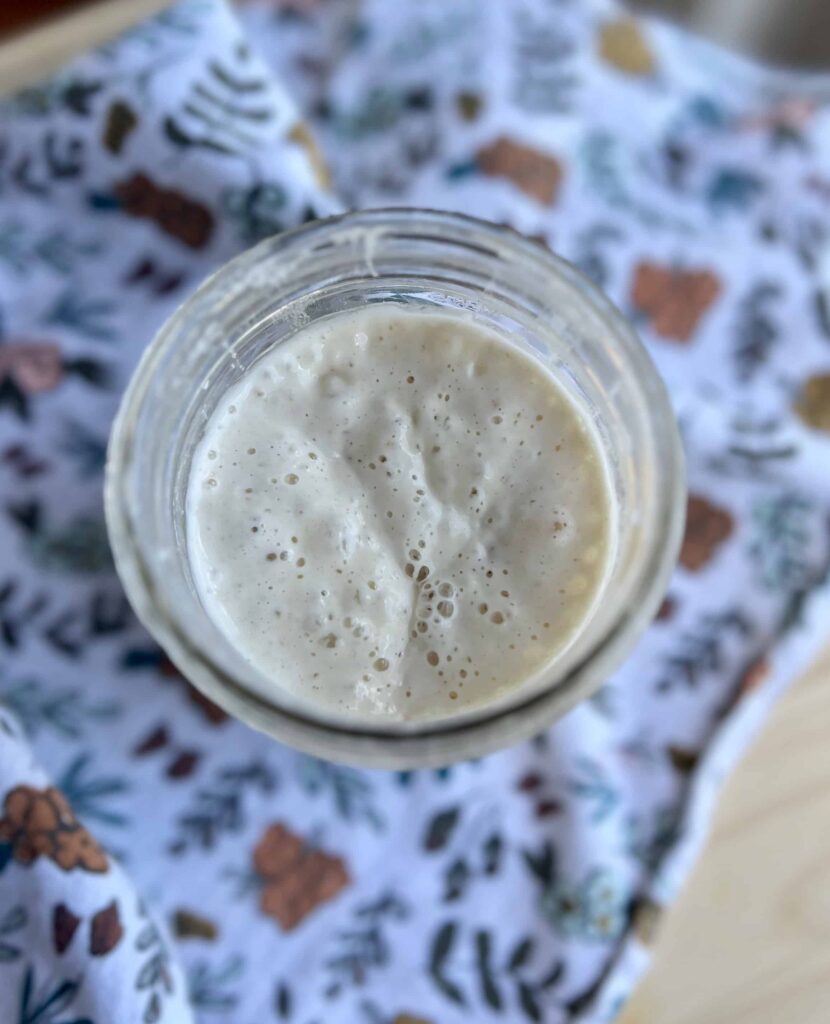
1:1:1 Levain (ready in 3-4 hours/same day): Combine 45 grams ripe active sourdough starter with 45 grams water and 45 grams flour. Cover and set in a warm place to rise. Once your levain is active and bubbly you can proceed. If kept at around 78 degrees Fahrenheit, this will take about 3-4 hours. Alternatively, you can substitute ripe, bubbly active sourdough starter if you prefer.
Do you have to use a levain in this recipe? No. I prefer it, but if you have a well-maintained and frequently refreshed starter that is large enough, you can substitute that in place of the levain in the recipe.
Knead Dough and Bulk Ferment (First “Small” Rise)
Once your levain is bubbly and active, mix your dough in the bowl of a stand mixer on a kitchen scale. Add ripe levain, water, canned pumpkin, maple syrup, bread flour, salt and diastatic malt powder to the bowl. Start the mixer and knead the dough together for about 5-7 minutes until smooth. The dough should feel smooth, tacky to the touch and not sticky. If it is sticky, add a little extra flour to the dough. If you don’t have a stand mixer, this sourdough bagel dough can be kneaded by hand for about 10-15 minutes until smooth.
Once your sourdough bagel dough is smooth and a tacky to the touch, dump the dough in a large container and cover. Your bagel dough will rise best if kept between 78-80ºF. I use a bread proofer in the winter to help the dough develop at the right temperature. The entire bulk fermentation will take about 4 hours. At the end of 4 hours, the dough will feel more cohesive and strong, although it may not have risen very much. You may need to adjust the proofing time if your dough is colder.

Shape the Dough
Prepare to shape your dough by sprinkling some cornmeal on a baking sheet. This will keep your bagels from sticking to the pan. Separate the dough into 8 equal pieces. Take each piece of dough and pull/pinch up the sides until it forms a ball. Roll the ball on the counter using your hand in a cupping shape (see video here) to seal the balls and create tension. Let the balls rest for a minute on the countertop before shaping into bagels.
To form the bagel shape, take your finger and press directly into the center of the ball of dough until it goes through to the other side, creating a hole. Use your fingers to widen the center hole, moving the dough around in a circle as you stretch it. Let the dough relax and repeat with the next bagel. The dough will spread back out a little and the hole will close up a bit, don’t worry. You will have a chance to widen it again before boiling and baking. Place the bagels on the baking sheet and cover.


Proof and Refrigerate (Cold Ferment)
Once all of your sourdough bagels have been shaped, cover the bagels with a kitchen towel or sheet pan cover and let the bagels rise on the baking sheet for about 2-3 hours at 78-80ºF. I use a bread proofer to keep the temperature consistent (the oven the with light on works too, but it may make the process faster or slower depending on the temperature). After about 2-3 hours the bagels will be puffed up and risen. They won’t look completely doubled, but you should notice a change in their texture – from dense to light and airy. If they don’t look this way, let them continue rising for another 30 minutes to an hour and check again.
At this point, you can refrigerate your bagels overnight for a cold fermentation. This develops flavor and makes it easy for you to boil and bake them in the morning. Be careful going over 12-16 hours in the refrigerator as they can more easily over-proof. If you want to bake them the same day, you can skip the refrigeration, let them proof until doubled in size and boil and bake.
Boil the Bagels
The next morning after your cold ferment, prepare to bake your bagels by preheating the oven to 425ºF. Place a pot filled with 8 cups water on the stove and turn the heat to high. Have a slotted spoon and a cooling rack ready. As soon as the water comes to a boil, add brown sugar to the water. Gently widen the hole of the bagel again and place it into the boiling water. The bagel should float within the first 10 seconds or so of placing in the water. Add as many bagels to the pot of water as you can without stacking bagels on top of each other (they should each have a little personal space in the water). Boil for about 40 seconds and then flip. Boil for 40 seconds on the other side. Using the slotted spoon, remove the bagels from the boiling water and place on the cooling rack to drip dry for a minute before placing back on the parchment-lined baking sheet. I recommend using parchment paper to make the cleanup easier.

Top the Bagels
Now you have options! We don’t add pumpkin pie spice or cinnamon directly into the bagel dough because they have anti-microbial properties and can mess with your bagel dough rising. Instead, we get the pumpkin spice flavor from the toppings we add to the bagels. You get to pick – either a pumpkin crunch topping similar to my cinnamon crunch bagels, OR a pumpkin sugar topping. And if you really don’t want any extra sweetness – just sprinkle some pumpkin pie spice on top of the boiled bagels before baking.
To make the pumpkin crunch topping: Mix together brown sugar, granulated sugar, flour, butter and pumpkin pie spice until it forms a thick, crumbly mixture. Top each bagel with the pumpkin crunch topping.
To make the pumpkin sugar topping: Mix together 1 Tablespoon pumpkin pie spice with 1/2 cup granulated sugar. Dunk each bagel in the pumpkin/sugar topping after it comes out of the boiling water.


Bake the Bagels
After adding your desired topping to your sourdough pumpkin bagels, bake for 25– 30 minutes until sourdough bagels are golden and baked all the way through. If your bagels are too dark on the bottom, place a baking stone or baking sheet on the rack underneath the bagels to help.
Let bagels cool for about 20-25 minutes before serving. The cinnamon crunch topping hardens a little (though the bottom can still sometimes be a little gooey) and the pumpkin flavor comes through more as the bagels cool. Top with some cream cheese and enjoy!

Amy’s Recipe Tip
I love making these sourdough pumpkin bagels one day, letting them proof in the refrigerator and then baking them the next morning. If you prefer to mix, boil and bake the bagels all in the same day – you can do that too! This recipe can easily fit into your schedule.
Substitutions
- Levain: Substitute ripe, bubbly, active sourdough starter for the levain in this recipe.
- Canned Pumpkin: Substitute homemade pumpkin puree – but blot it from excess moisture and you will need to add more flour to compensate for the wetter pumpkin.
- Diastatic Malt Powder: Substitute bread flour and give a little extra time to rise.
- Bread Flour: Bread flour is important in this recipe. If you don’t have bread flour, you can use all-purpose flour but will wan to add some vital wheat gluten to the dough (about 3-5 grams per 140 grams of flour).
How to Store Leftovers
Leftover pumpkin bagels can be stored in an air-tight container after cooling for about 12-24 hours. After that freeze for up to 2-3 months.
If you liked this, you’ll also like…
Frequently Asked Questions
Unfortunately most of the spices that we associate with pumpkin have anti-microbial properties that interfere with the fermentation of the dough. To compensate for that, I use a lot of pumpkin pie spice in the crunch topping – or just sprinkle it lightly on top of the bagels after they have boiled for a little extra flavor if you want to leave the pumpkin crunch topping off.
Yes! If you prefer a less sweet pumpkin bagel, mix up some ground cinnamon (or pumpkin pie spice!) with granulated sugar. Dip each bagel into the mixture after boiling and right before baking.
You don’t have to, but I like to. It gives a smoother consistency to the dough and speeds up fermentation just a little bit. Watch carefully that your bagels don’t over-proof when using it. If you don’t want to use it, just substitute bread flour and the bagels will still turn out delicious.
This recipe has pumpkin in it, but I’ve also formatted this recipe to use a traditional 100% hydration levain or even your sourdough starter to make it a little more approachable for a new sourdough baker. Both recipes are delicious, though! Have you tried my original sourdough bagel recipe?

Sourdough Pumpkin Bagels
Save this for later!
Equipment
- large pot for water bath
Ingredients
Levain (1:1:1, about 3-4 hours at 78ºF)
- 45 grams sourdough starter ripe and active, about 3 Tablespoons
- 45 grams all-purpose or bread flour, about 6 Tablespoons
- 45 grams water warm or cool depending on temperature, about 3 Tablespoons
Sourdough Pumpkin Bagels
- 120 grams levain ripe and active, about 1/2 cup
- 150 grams water, scant 2/3 cup
- 180 grams canned pumpkin, about 3/4 cup
- 65 grams maple syrup, about 3 Tablespoons
- 5 grams diastatic malt powder, about 1 teaspoon
- 12 grams salt, about 2 teaspoons
- 600 grams bread flour, about 4 1/4 cups
Cinnamon Crunch Topping (Optional)
- 55 grams brown sugar , 4 Tablespoons
- 55 grams granulated sugar , about 4 Tablespoons
- 20 grams all-purpose or bread flour, about 2 Tablespoons
- 30 grams unsalted butter , melted or very soft
- 6 grams pumpkin pie spice, 2 teaspoons
Boil Bath
- 1800 grams water , 8 cups
- 30 grams brown sugar , about 2 Tablespoons
Instructions
Mix Levain (1:1:1, about 3-4 hours at 78ºF)
- Mix together 45 grams ripe active sourdough starter with 45 grams water and 45 grams flour. Cover and set in a warm place to rise. Once peaked, active and bubbly, it is ready to use.Ripe, bubbly, active sourdough starter can be replaced with the levain in this recipe if desired.
Sourdough Pumpkin Bagels
- Mix the Dough: Set the bowl of a stand mixer on a kitchen scale. Add ripe levain, water, canned pumpkin, maple syrup, bread flour, salt and diastatic malt powder to the bowl. Start the mixer and knead the dough together for about 5-7 minutes until smooth. The dough should feel smooth, tacky to the touch and not sticky. If it is sticky, add a little extra flour to the dough.This dough can also be kneaded by hand for about 10-15 minutes until smooth.
- Bulk Fermentation: Place the dough in a container and cover. Do your best to keep the temperature of the dough at 78-80ºF. I use a bread proofer in the winter to help the dough develop at the right temperature. The entire bulk fermentation will take about 4 hours. At the end of 4 hours, the dough will feel more cohesive and strong, although it may not have risen very much. If your dough is colder, this process will take longer.
- Prepare a baking sheet: Use parchment paper or sprinkle cornmeal on the baking sheet to keep the bagels from sticking. If you are letting the dough cold ferment in the refrigerator, parchment paper is enough. If you are going to let the bagels rise at room temperature without cold proofing, add a little cornmeal on top of the parchment to keep the bagel dough from sticking.
- Shape Bagels: Separate the dough into 8 equal pieces. Take each piece of dough and pull/pinch up the sides until it forms a ball. Roll the ball on the counter using your hand in a cupping shape (see video here) to seal the balls and create tension. Let the balls rest for a minute on the countertop before shaping into bagels. To make the bagel shape, take your finger and press directly into the center of the ball of dough until it goes through to the other side, creating a hole. Use your fingers to widen the center hole, moving the dough around in a circle as you stretch it. Let the dough relax and repeat with the next bagel. The dough will spread back out a little and the hole will close up a bit, don't worry. You will have a chance to widen it again before boiling and baking. Place the bagels on the baking sheet and cover.
- Proof Bagels: Cover the bagels with a kitchen towel or sheet pan cover and let the bagels rise on the baking sheet for about 2-3 hours at 78-80ºF. I use a baking mat to keep the temperature consistent (the oven the with light on works too, but it may make the process faster or slower depending on the temperature). After about 2-3 hours the bagels will be puffed up and risen. They won't look completely doubled, but you should notice a change in their texture – from dense to light and airy. If they don't look this way, let them continue rising for another 30 minutes to an hour and check again.
- Refrigerate: Place the covered bagels in the refrigerator overnight for a cold fermentation. This develops flavor and makes it easy for you to boil and bake them in the morning. Be careful going over 12-16 hours in the refrigerator as they can more easily over-proof. Alternatively: Let the bagels proof until just doubled and proceed with boiling and baking.
- The next morning, preheat the oven to 425ºF.
- Boiling: Place a pot filled with 8 cups water on the stove and turn the heat to high. Have a slotted spoon and a cooling rack ready. As soon as the water comes to a boil, add brown sugar to the water. Gently widen the hole of the bagel again and place it into the boiling water. It should float within the first 10 seconds or so of placing in the water. Add as many bagels to the pot of water as you can without stacking bagels on top of each other (they should each have a little personal space in the water). Boil for about 40 seconds and then flip. Boil for 40 seconds on the other side. Using the slotted spoon, remove the bagels from the boiling water and place on the cooling rack to drip dry for a minute before placing back on the parchment-lined baking sheet.Note: The cinnamon crunch topping can get messy as it bakes, so use parchment paper on your baking pan for easy clean up.
- Topping: Mix together cinnamon crunch topping – brown sugar, granulated sugar, flour, butter and pumpkin pie spice until it forms a thick, crumbly mixture. Top each bagel with the cinnamon crunch topping.A less sweet option: If the cinnamon crunch topping is not for you, sprinkle the tops of the bagels with pumpkin pie spice for a little extra pumpkin flavor. Or mix together 2 teaspoons pumpkin pie spice with 1/2 cup granulated sugar. Dunk each bagel in the pumpkin/sugar topping and bake.
- Baking: Bake for 25– 30 minutes until bagels are golden and baked all the way through. If your bagels are too dark on the bottom, place a baking stone or baking sheet on the rack underneath the bagels to help.
- Cool: Let bagels cool for about 20-25 minutes before serving. The cinnamon crunch topping hardens a little (though the bottom can still sometimes be a little gooey) and the pumpkin flavor comes through more as the bagels cool. Bagels can be stored for 12-24 hours at room temperature and then frozen. Enjoy!
Notes
Nutrition
Nutrition information is automatically calculated, so should only be used as an approximation.


This was my first time making bagels and they are a hit, so delicious! ! I didnt realize how simple they are. I mean there are a lot of steps, but they are simple to follow. I had leftover pumpkin puree and already had diastatic malt powder on hand from making pizza dough, so this was perfect! I baked them in two rounds and I did end up pulling the second batch out after 15 minutes because they were already 210°F in the middle and was afraid of over baking them. Both batches are great but I prefer the texture of the batch I only baked for 15 minutes. It might just be my oven, though. FYI, it is a regular gas oven (not convection) and I had a baking stone below them. Anyway, love this recipe and it will be a regular fall recipe in our home! Thank you!
I’m glad these bagels turned out great for you. It’s a good one to use up that leftover pumpkin. Thanks for your review.
I made these this past weekend. Rave reviews. Very easy recipe. Very high on the yummy scale.
Thanks for the review – I’m glad you love the recipe!
These turned out delicious! I skipped the cold ferment due to time and had no issues with my bagels. Definitely will make again
Thanks for your review! Enjoy!
These were a definite win! I followed the recipe exactly for the same day bake, and we were enjoying them for supper. My malted milk powder had melted into a solid clump so had to leave that out, and I didn’t use any topping to save calories. When I realized that meant no PPS, I folded some in as I shaped the balls, but next time I will add a couple tablespoons into the dough mixture. The shorter fermentation and lack of topping made them less flavorful, but the texture was perfect and they were easy to make. I’ve tried bagels a few times over the years, and these were by far my most successful. Thanks Amy!
I’m glad you found success with this recipe! Enjoy!
Is malted milk powder the same as diastatic malt powder?
They are not the same – the malted milk powder is a flavor and the diastatic malt is an enzyme to improve rise/browning, etc… You can substitute it for flour if you don’t have it.
Hi Amy, I love all of your recipes. I couldn’t wait to try these Pumpkin bagels. What am I doing wrong that no matter what bagel recipe I use the bagels go flat after I boil them? My bagels look beautiful after I let them rise after shaping them, then I refrigerate them and as soon as they come out of the pot from boiling they go flat. They always taste great but they just don’t look like a great bagel. Please help!
Is it possible that your bagels are over-proofed? That is the thing that comes to my mind from what you are describing. I would try proofing/refrigerating for less time and see if that makes a difference. Hope that helps!