
Affiliate disclosure: This post may contain affiliate links. Please see our disclosure policy.
I’ve been making a version of this caprese sourdough focaccia with tomatoes, basil pesto and mozzarella cheese for years. It’s one of our favorites with ripe summer cherry tomatoes, pesto – homemade or store bought – and of course good quality mozzarella. I serve this for company or we all enjoy it on a summer evening. I know you’re going to love it!

Save this for later!
Table of Contents
Why You’ll Love Caprese Sourdough Focaccia
- Cheesy: There’s cheese layered throughout the dough, making this sourdough focaccia extra cheesy and irresistible. For more cheesy bakes, you’ll want to try this Italian Herbs and Cheese Sourdough and my pizza-inspired Pizza Sourdough Bread.
- Simple: This recipe is not too crazy—the steps are very easy to follow.
- 100% Sourdough Recipe: My recipe for caprese sourdough focaccia has a long fermentation because no commercial yeast is used.

Sourdough Baker’s Timeline
A sample baking schedule helps me when baking with sourdough. I’ve been baking sourdough for over a decade and this schedule helps me plan my bake. Please Note: This schedule assumes the dough temperature is 78-80ºF throughout the process.
| Day 1 | Mix Levain |
| 8:00 PM- 8:00 AM | Mix Levain. Let sit at 78º F for about 10-12 hours until doubled/bubbly and ripe. |
| Day 2 | Mixing/Bulk Fermentation/Shaping/Baking |
| 9:00 AM | Mix together dough Begin Bulk Fermentation |
| 9:30 AM | Coil Fold #1 |
| 10:00 AM | Coil Fold #2 Add Half of the Cheese Mixture |
| 10:30 AM | Coil Fold #3 |
| 11:00 AM | Coil Fold #4 |
| 11:00 AM – 1:00 PM | Finish Bulk Fermentation |
| 1:00 PM | Place dough in pan with oil and cover Optional Overnight Refrigeration |
| 1:00 PM -5:00 PM | Let dough rise in a warm 78-80º F place until the dough is doubled, airy, light and jiggly. Top with pesto and cherry tomatoes. |
| 5:00 PM | Bake |
Important Ingredients in Sourdough Caprese Focaccia
- Focaccia Dough: When mixing your focaccia dough, there is no autolyse or fermentolyse. Instead, you’ll mix all of your focaccia dough ingredients together at the same time (including the salt). I also recommend using bread flour with a strong protein content for this dough. I almost always use a 12.5% protein bread flour for my breads. This focaccia with it’s high water content needs to be paired with a strong flour. If you don’t have bread flour and substitute all purpose, you will need to reduce some of the water in the recipe.
- Mozzarella: Shred the mozzarella cheese yourself. Pre-shredded mozzarella is usually coated with an anti-caking agent making it more difficult to melt.
- Pesto: I spread fresh pesto – store bought or homemade – on the focaccia before dimpling and baking it. Choose a pesto that you like the flavor of.
- Tomatoes: Cherry tomatoes give this focaccia deep, delicious, tomato flavor.
- Olive Oil: Good quality olive oil that you like the flavor of is important in this recipe. The dough will take on the flavor of the oil as it bakes. I like using a light olive oil that doesn’t have distinct flavor.

How to Make Caprese Sourdough Focaccia
Mix Levain
1:10:10 levain (ready in 10-12 hours/overnight): This recipe calls for levain mixed the night before you want to mix your dough. Prepare the levain and keep it overnight at 78-80ºF. It will be ready in approximately 10-12 hours (overnight). Mix together:
- 5 grams of ripe/mature sourdough starter
- 55 grams water
- 55 grams all purpose or bread flour
Note: To make it a true 1:10:10 ratio, it would be 5.5 grams of ripe/mature starter and 55 grams bread flour, 55 grams water. Chances are you are going to be somewhere in the ballpark of 5-6 grams of starter, and it will work out just fine. Sourdough doesn’t have to be exact – it’s a method of learning to read your dough and its readiness.
If you prefer to mix the levain the morning you mix the dough, you can mix a 1:1:1 Levain (ready in 3-4 hours/same day): It should take 3-4 hours to rise and peak if kept at 78-80ºF. Levain is ready when it has at least doubled in size, has lots of bubbles, a slightly sour aroma and is just about to start going down from its peak height. Mix together:
- 35 grams ripe/mature starter
- 35 grams warm water
- 35 grams all purpose or bread flour
Mixing the Dough: Begin Bulk Fermentation
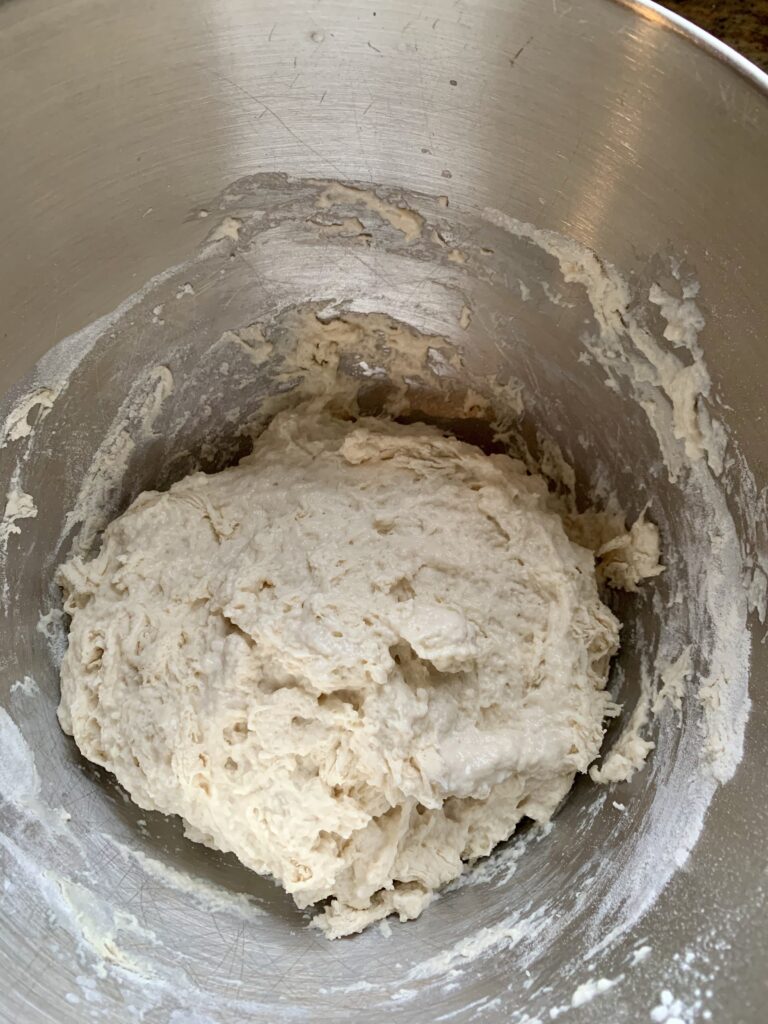
Once the levain is ripe, bubbly, and has doubled in size, it’s time to prepare the dough. Combine the ripe levain, water, salt, and bread flour in a bowl. Mix until a sticky dough forms using a dough whisk or your fingers. This recipe has high hydration (over 80%), resulting in a sticky consistency. It’s designed to rise in a pan with minimal additional kneading. Mixing the ingredients together briefly is sufficient as the gluten will develop during the long fermentation. Cover and let rest for 30 minutes.
Bulk Fermentation: Coil Folds and Adding Cheese
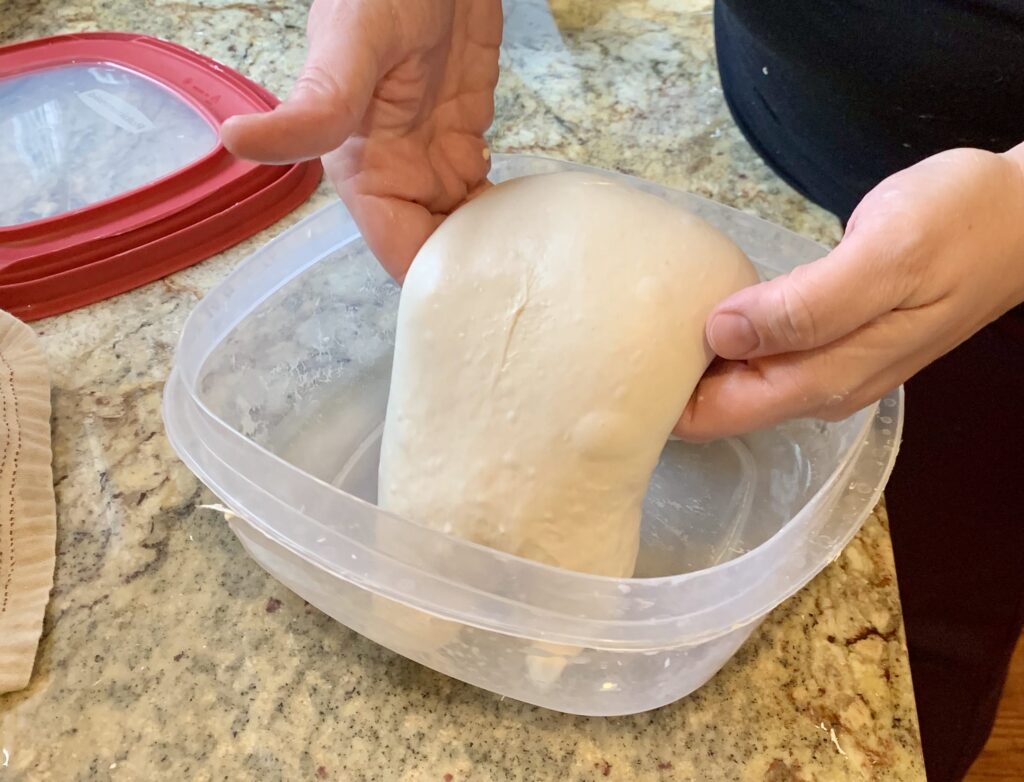
Coil Folds: Over the course of the next 2 hours, perform sets of “coil folds”. Coil folds are a way of aligning gluten stands in high hydration dough instead of kneading it. To perform a coil fold, wet your hands with water. Place your hands under the middle of the dough and pull up. The dough will stretch up (but should not tear) and release from the bottom of the bowl. Once the dough releases, let the dough fall back under itself. Repeat the process for both sides of dough. Then turn the container and repeat the coil fold. Watch a video of the coil fold process here. Perform 4-6 coil folds. The dough will be very sticky for the first set of coil folds, but will strengthen over time. Cover and let rest for 30 minutes. You will repeat this process a total of 4 times over a 2 hour period.
Adding Cheese: After your first set of coil folds, shred mozzarella cheese. During your second set of coil folds, add the mozzarella cheese. Perform the other three coil folds, mixing the cheese into the dough. Your inclusions will become more fully incorporated with the third and fourth set of coil folds.


Bulk Fermentation: Rise and Shape
After your fourth set of coil folds, cover and rest the dough at 78ºF for 1.5-2 hours until the dough has risen, is starting to dome and has a few scattered bubbles around the edges. Note, the dough will not double in size at this point, but it will rise 30-40%.
Prepare a pan by drizzling most of the olive oil into a 9 by 13 metal baking pan or a 12 inch skillet. Reserve about 2 Tablespoons or 30 grams of the oil for later. Tip the pan around to coat the entire bottom of the pan. If your pan has issues with dough sticking put some parchment paper down before the butter/oil.
Turn the dough out into the pan and stretch slowly to fill the edges of the pan. Pull up gently on the underside of the dough to stretch it into place. If it doesn’t want to stretch, let the dough rest for a minute and then try again.
Pour the rest of the oil on top of the dough. Use your fingers to spread the oil over the top of the dough and cover with plastic wrap to proof. At this point you can cover the dough and refrigerate it for up to 48 hours before proceeding with a second proof and baking.
Overnight Option: After the dough has risen about 4 hours at 78ºF, you have the option to cover the dough and place in the refrigerator overnight or up to 48 hours if that works better with your schedule. Proceed with the recipe as outlined and let the dough warm back up and rise before baking. The cold fermentation brings flavor, color and helps you plan your bake. I’ve also found it makes the texture even more soft and fluffy.

Proof the Dough
Place the dough in a warm spot (78-mid 80ºF) and let the dough rise until puffed up, aerated and jiggly. After about 3-5 hours, the dough should have doubled in size. The key to a light, airy and bubbly focaccia is letting the dough rise long enough to have large air bubbles in it. This will take more or less time depending on the temperature of your dough as it’s rising. If the dough doesn’t look like this, warm it up a little more and let it rise longer.
Top, Dimple and Bake
Preheat the oven to 425ºF. After the dough is puffed up, jiggly and aerated with air bubbles, spread pesto over the top of the dough. You can add more or less depending on how much you like the flavor of pesto. Take your fingers and gently dimple the dough. Start at the top and work your way down the dough until the entire focaccia is dimpled and bubbly. Slice the tomatoes in half and add them on top of the dimpled focaccia. Sprinkle with a little shredded mozzarella if desired.
Bake caprese sourdough focaccia for 25-30 minutes until bubbly, crispy and light golden brown on top and the baked focaccia registers 200ºF. Let cool in the pan for 5-10 minutes before removing to a wire rack.


Amy’s Recipe Tip
I love making homemade pesto in the summertime. I don’t usually follow a specific recipe but add about 3/4 cup fresh basil, a handful of nuts (pine nuts/cashews/pecans) to a blender with a few tablespoons parmesan cheese, a fresh clove of garlic and sprinkle of salt. I drizzle in olive oil until it comes together in a thick paste, adding more oil as needed. Blend until smooth and spread on your focaccia dough.
Substitutions
- Pesto: Leave it off and just drizzle your dough with a little more olive oil. Top with chopped basil after baking for a more traditional “caprese” focaccia.
- Cheese: Any mild, melty cheese will work in this recipe. I like mozzarella. You can also leave it out if you don’t want extra cheese.
- Levain: Ripe, bubbly active and well maintained sourdough starter can be substituted for the levain in this recipe.


How to Store Leftovers
Sourdough focaccia can be left out for 24 hours. After that stick in an airtight container and freeze for up to a couple months. Warm it up before serving.
If you liked this, you’ll also like…
Frequently Asked Questions
Make sure you’re use a good quality non-stick metal pan. I’ve been using a lodge cast iron skillet and my favorite USA pans for years and love them. If your pan is not non-stick, try adding some parchment paper to the bottom of your pan. Top the parchment with the olive oil/butter. Then put the focaccia dough on top.
This recipe is my interpretation of a caprese salad on focaccia bread. Traditionally caprese is mozzarella, tomato, olive oil and I always add fresh basil. I like using pesto for the basil on this focaccia. You can also leave the pesto off and just sprinkle the bread with chopped basil when it comes out of the oven if desired.
This can happen from uneven baking and not using the right pan. Make sure you use a metal, non-stick pan and increase the baking time a little.

Caprese Sourdough Focaccia
Save this for later!
Ingredients
Levain (1:10:10, overnight ready in about 10-12 hours)
- 5 grams sourdough starter, ripe, bubbly and active, about 1 teaspoon
- 55 grams flour, all-purpose or bread flour, about 1/2 cup
- 55 grams water, about 1/4 cup
Sourdough Focaccia Dough
- 100 grams levain, ripe, bubbly, active – see recipe notes, scant 1/2 cup
- 425 grams water, about 1 3/4 cup
- 14 grams salt, about 2 teaspoons
- 500 grams bread flour, see recipe notes, about 3.5 cups
- 200 grams mozzarella cheese, shredded, reserved to add in during coil folds, about 1 3/4 cups
Toppings
- 80 grams olive oil, about 1/4 cup plus 2 Tablespoons
- 60 grams pesto, store-bought or homemade, about 1/4 cup
- 15-20 cherry tomatoes, sliced in half
- sprinkle of mozzarella , if desired
Instructions
Levain: 1:10:10, about 10-12 hours at 78ºF
- Mix together 5 grams ripe sourdough starter with 55 grams water and 55 grams flour. Cover and let sit overnight at 78ºF until doubled in size, bubbly and active. You can also substitute 100 grams of bubbly sourdough starter if you prefer.
Caprese Sourdough Focaccia
- Mix: Mix together ripe, bubbly, active levain with water, salt and bread flour. Mix together with a dough whisk or spoon until a sticky dough forms. Cover and let rest for 30 minutes.
- Coil Fold # 1: Take the cover off the dough and perform 4-6 coil folds. The dough will be very sticky for this first set of coil folds but will strengthen over time. Wet your hands with water. Place your hands under the middle of the dough and pull up. The dough will stretch up (but should not tear) and release from the bottom of the bowl. Once the dough releases, let the dough fall back under itself. Repeat the process for both sides of dough. Then turn the container and repeat the coil fold. Watch a video of the coil fold process here. Cover and let rest for 30 minutes.
- Prepare the cheese : Shred mozzarella cheese and set aside.
- Coil Fold #2: Wet your hands. You will notice the dough is stronger than your first set of folds. Add the cheese on top of the dough. Repeat the coil folds, incorporating the cheese as you go. Cover and rest for 30 minutes.
- Coil Fold #3: Wet your hands. Perform 3-4 coil folds, mixing the inclusions into the dough. Don't worry if they aren't all completely incorporated yet. Cover and rest for 30 minutes.
- Coil Fold #4: Repeat the last set of coil folds. Cover and rest the dough at 78ºF for 1.5-2 hours until the dough has risen, is starting to dome and has a few scattered bubbles around the edges. Note, the dough will not double in size at this point, but it will rise 30-40%.
- Prepare the Pan: After the long bulk rest, prepare a 9 by 13 metal baking pan or a 12 inch skillet with most of the olive oilTip the pan around to coat the entire bottom of the pan. If your pan has issues with dough sticking put some parchment paper down before the butter/oil.
- Stretch the Dough: Turn the dough out into the pan and stretch slowly to fill the edges of the pan. Pull up gently on the underside of the dough to stretch it into place. If it doesn't want to stretch, let the dough rest for a minute and then try again. Pour the rest of the olive oil, about 2 Tablespoons or 30 grams, on top of the dough. Use your fingers to spread the oil over the top of the dough and cover with plastic wrap to proof.At this point you can cover the dough and refrigerate it for up to 48 hours before proceeding with a second proof and baking.
- Proof the Dough: Let the dough sit in a warm 78-80ºF place for 3-5 hours until doubled in size, puffed up and very airy. If the dough doesn't look like this, warm it up a little more and let it rise longer.
- Dimple the Dough: After the dough is puffed up, jiggly and aerated with air bubbles, pre-heat the oven to 425ºF. Spread pesto over the top of the dough. You can add more or less depending on how much pesto you like. Take your fingers and gently dimple the dough. Start at the top and work your way down the dough until the entire focaccia is dimpled and bubbly. Slice the tomatoes in half and add them on top of the dimpled focaccia. Sprinkle a little extra shredded mozzarella on top of the focaccia if desired.
- Bake Focaccia: Once the oven is pre-heated to 425ºF, bake for 25-30 minutes until bubbly, crispy and light golden brown on top and the baked focaccia registers 200ºF. Let cool in the pan for 5-10 minutes before removing to a wire rack. Enjoy!
Notes
Nutrition
Nutrition information is automatically calculated, so should only be used as an approximation.


Sometimes with toppings, such as chopped olives, herbs, or garlic, they have a tendency to burn. Does the pesto burn?
Great question—yes, pesto can burn, especially if it’s exposed on top for the full bake. If you are worried about it, you can try adding the pesto partway through baking (about halfway), or dollop it lightly and press it into the dough so it’s not sitting fully exposed on top. Another option is to drizzle a little extra olive oil over it before baking to help protect it or cover the pan with foil if it starts browning too quickly. Done right, it bakes up beautifully without burning.
My first focaccia and my oh my. Delicious. Amy never disappoints with her recipes and guidance. Thank you!!!
Thanks for the review!
What is the best type of mozzarella to use
We always like to shred our own mozzarella as pre-shredded cheeses have anti-caking agents that make them less melty and impact the taste. You can pick your favorite brand.
Holy. Cow. This is baking in my oven right now (minus the tomatoes because my family won’t eat them) and my house smells INCREDIBLE! I can’t wait to dig into this one. Thanks for another great, foolproof recipe!
Enjoy! Thanks for the review.
This recipe is fantastic. I doubled the batch because I was confident it was going to be awesome and it didn’t disappoint! I gave one to my daughter to take to a dinner she was going to and she said it was a hit! Excellent focaccia.
I’m so glad you loved this recipe! Thanks for sharing your review.
Could I put a few tablespoons of olive oil in the dough if I wanted?
You can do that!
The way you have written this recipe is so easy to follow. Sour dough bread making scares me but you have made this so easy to follow! Thank you.
I’m so glad it’s helpful!
I cannot wait to make another one of your amazing recipes! Can you make this in a stone? Can you add mushrooms or other topping to it? Thank you!
This was so good! I just got back into sourdough a couple of weeks ago. I made this and had friends in for a taste test. Only one slice left! Will definitely make again!
So glad you loved this one!
Oh my goodness. Made this earlier in the week and it’s so very tasty. It was a perfect way to use up some of the abundance of cherry tomatoes from the garden. Slices really tasty with a soft boiled egg on top too. Thanks for a great recipe and thanks for the way you include a time schedule as well. That’s super helpful! Cheers!
So glad you enjoyed this one. Thanks for the review!
Can I do almost all the steps but bake it the next morning?
Yes – After the dough has been shaped, you have the option to cover the dough and place in the refrigerator overnight or up to 48 hours if that works better with your schedule. Proceed with the recipe as outlined and let the dough warm back up and rise before baking. The cold fermentation brings flavor, color and helps you plan your bake. I’ve also found it makes the texture even more soft and fluffy.