
Affiliate disclosure: This post may contain affiliate links. Please see our disclosure policy.

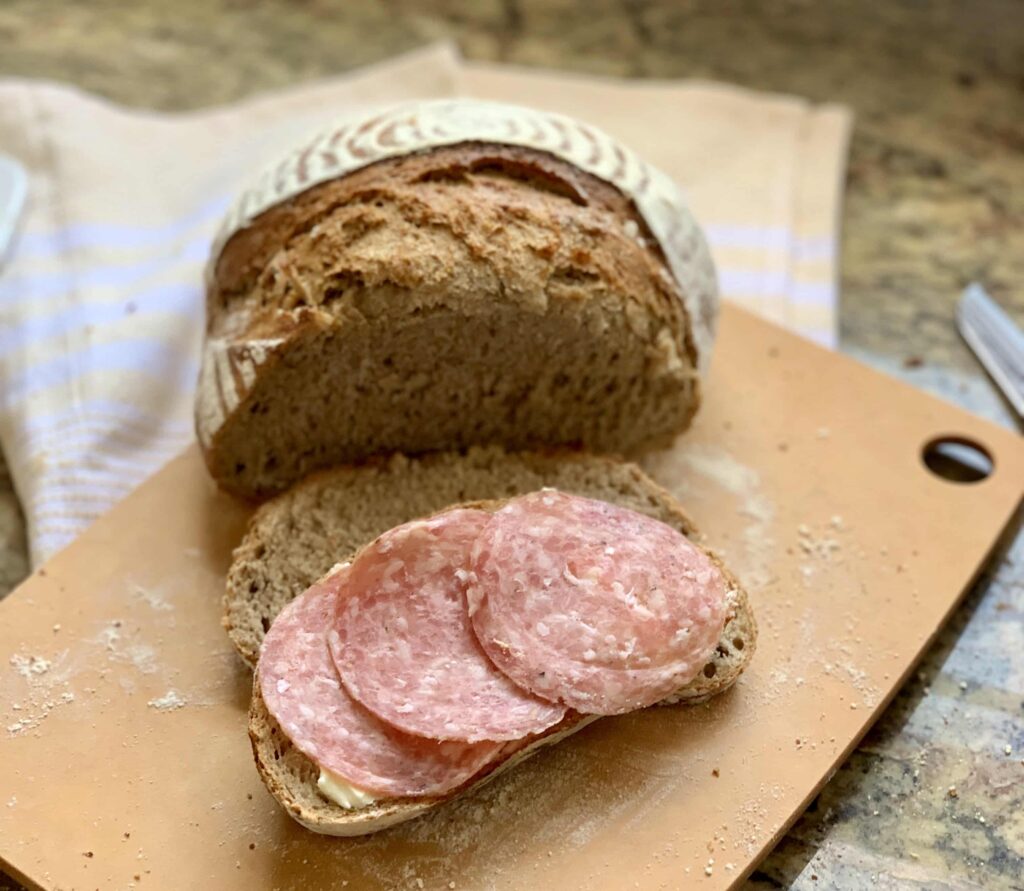
Rye bread is the bread of my childhood. My family lived in the Czech Republic when I was young, and I have fond memories of the loaves of dark, crusty rye bread we would buy at the local Potraviny (neighborhood grocery). They had a subtle flavor of caraway, which I grew to love. My school lunches were made on slices of this delicious bread, usually with a schmear of butter and a slice or two of salami sandwiched in between–a combination I still crave to this day (aren’t childhood memories funny like that?).
As I’ve baked more and more sourdough bread, I realized that I needed to make a delicious loaf of sourdough rye bread that would transport me back. This sourdough rye bread is perfect for sandwiches. It’s perfect for toast. It’s perfect to eat plain with a little bit of butter–unsalted for me please! It also reminds me of my Sourdough Spelt Bread – nutty in flavor and delicious whole grains.

Save this for later!
Table of Contents
- Sourdough Sample Schedule
- Working with Rye Flour
- Temperature and Time
- Adding Caraway Seeds to Rye Bread
- Whole Grain Rye Bread
- Create a Rye Levain
- Mix the Rye Dough
- How to Stretch and Fold Sourdough
- Shaping Sourdough Rye Bread
- Scoring the Bread
- Baking Sourdough Rye Bread
- Wait For The Sourdough Rye Bread to Cool
- Frequently Asked Questions
- Popular Whole Grain sourdough Recipes
- Sourdough Rye Bread Recipe
Sourdough Sample Schedule
A sample schedule is often helpful when making any sourdough bread because it takes more time for the sourdough to ferment and develop. Because sourdough takes time to rise, I include sourdough sample schedules in my sourdough recipes. These schedules are not meant to be followed exactly but rather give you an idea of a timeline – which is very dependent on the temperature of your dough/starter and the activity of your starter.
Note: The schedule assumes a dough temperature of 78-80ºF. I hope it’s helpful to you.
| 9:00 PM | Mix levain |
| 7:00 AM | Mix dough |
| 7:30AM – 9:00 AM | Stretch and Folds every half hour 7:30 AM Stretch and Fold #1 8:00 AM Stretch and Fold #2 8:30 AM Stretch and Fold #3 9:00 AM Stretch and Fold #4 |
| 9:00 AM -12:00 PM | Bulk Rise |
| 12:00 PM | Pre-shape |
| 12:30 PM | Shape (refrigerate at this time for 24-48 hours if desired) |
| 3:30 PM | Pre-heat oven |
| 4:00 PM | Bake |

Working with Rye Flour
Have you worked with rye flour before? If you haven’t, here’s a little bit of information to help when adding in a whole grain flour to sourdough.
- Rye contains a lot of micronutrients that yeast is attracted to. Adding a little rye flour to a sourdough starter can increase its activity.
- Sourdough bread made with rye will often ferment a little faster because micronutrients in rye flour encourage fermentation.
- Rye is most often used in combination with wheat flour to get the best benefits of both flours.
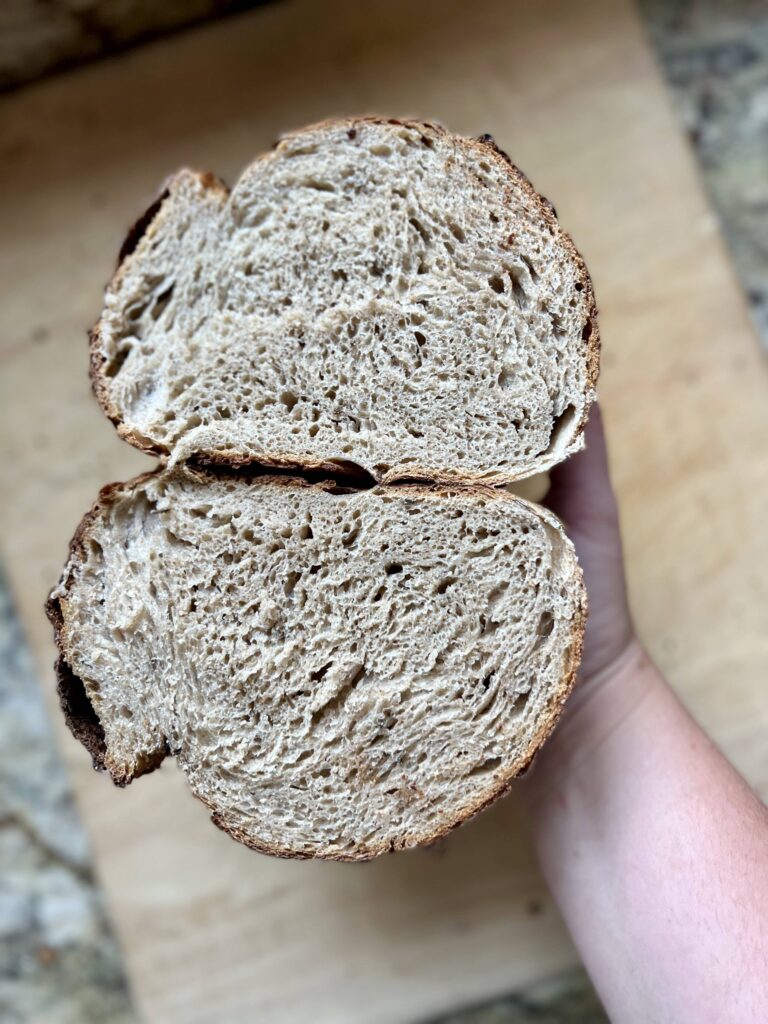
- Bread made with rye flour will typically be a little more dense than bread made with white wheat flour.
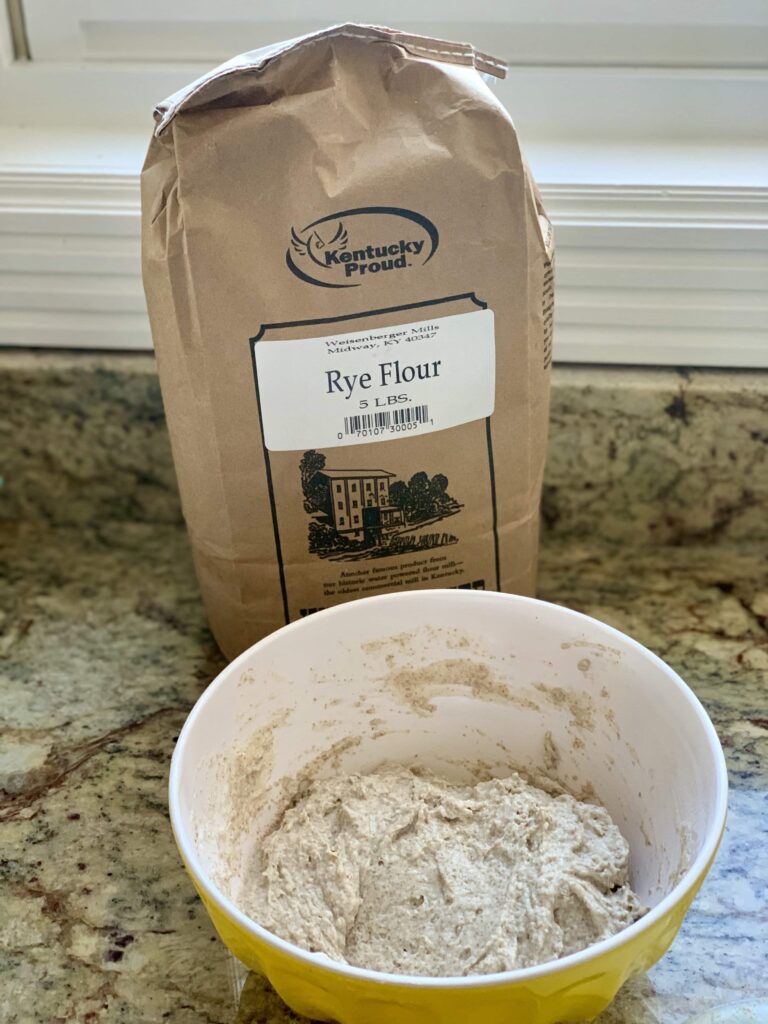
Just like wheat is milled from wheat berries, rye flour is milled from rye berries. It has a nutty flavor and is categorized by how much of the rye kernel is in the ground flour (endosperm, bran and germ). Pumpernickel flour is the darkest type of rye flour that contains all of the ground up rye berry. It will give you the deepest rye flavor in your baked goods. In this recipe, you can choose to use a medium rye or a more coarsely ground pumpernickel flour, depending on how much rye flavor you want.
Temperature and Time
With changing seasons, sourdough can sometimes throw you for a loop. This sourdough rye bread performs best when the dough temperature is 78-80°F. I don’t know about you but my kitchen is not always the perfect temperature for sourdough. I find that in the summer, when my house is humid and warm that sourdough bread takesless time to ferment. In the winter, it can take many more hours!
Do your best to keep your sourdough in that perfect 78-80°F temperature range to see consistent results. On cooler days I let my sourdough proof in my oven or microwave with the light turned on. This acts like a “proofing box” (just don’t turn them on!) and can help give a consistent temperature. I also recently bought this bread proofer that’s been a game changer. All that said, take the time ranges in the recipe as a guide. Before beginning a recipe, check the temperature in your kitchen, and be aware of how that will affect your sourdough resting and rising times.

Adding Caraway Seeds to Rye Bread
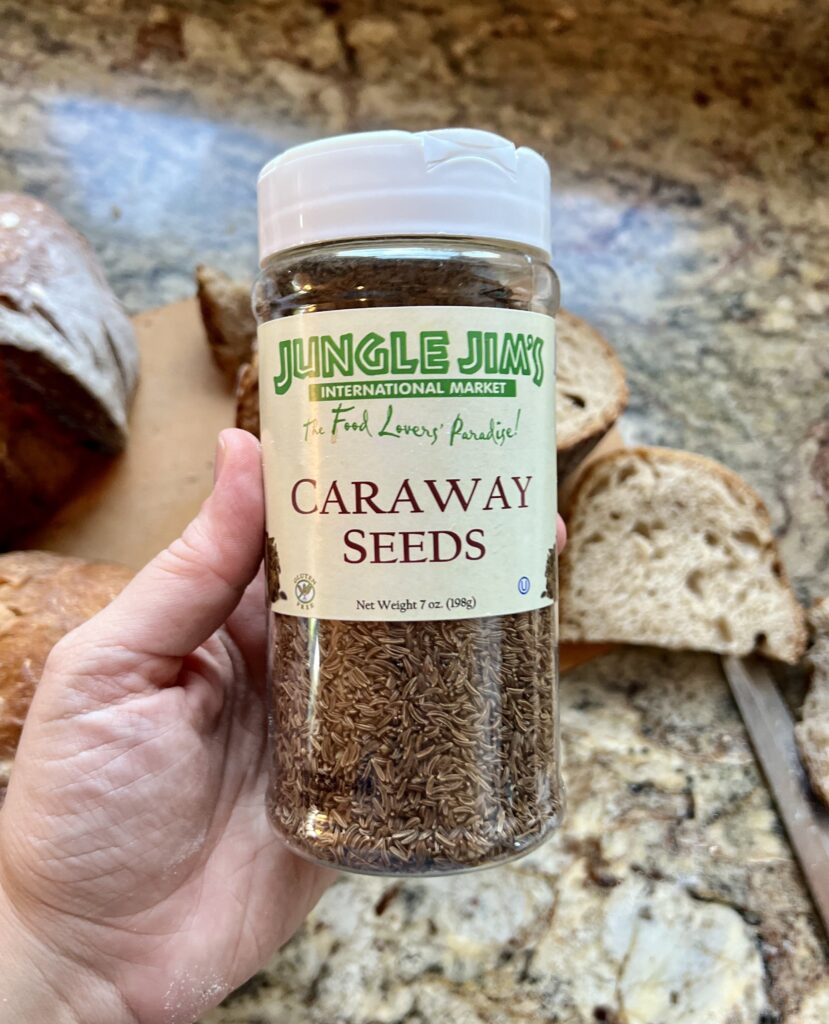
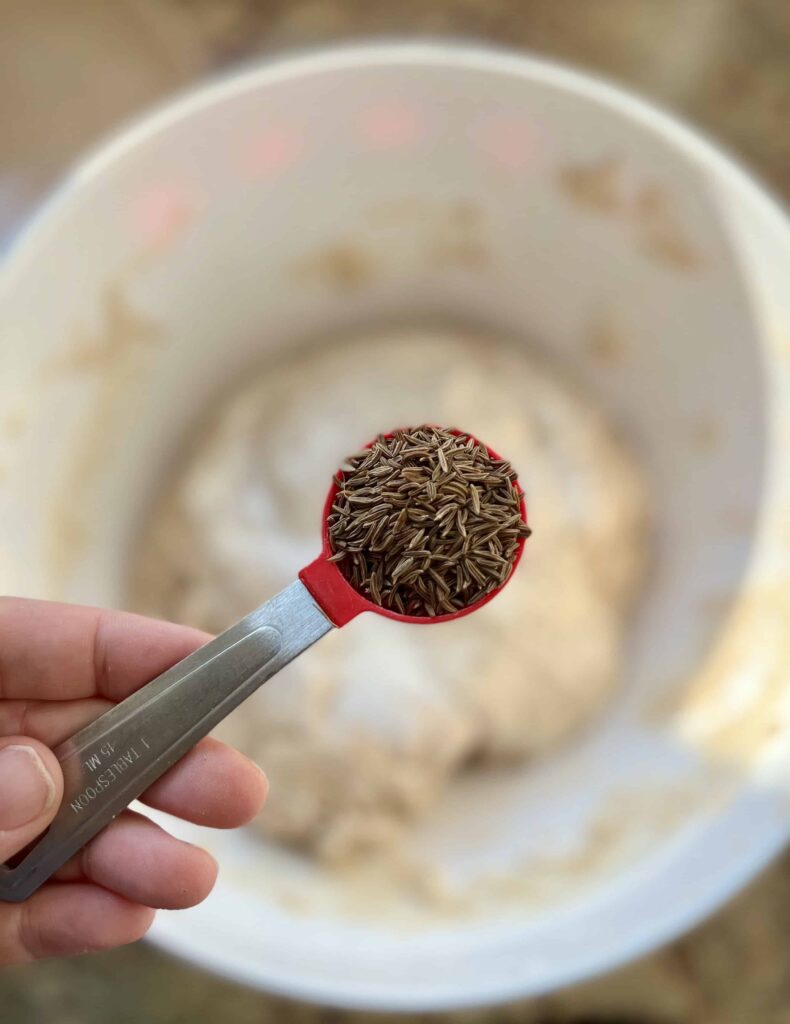
I made many versions of this rye bread while still feeling like something was missing from the flavors of my childhood Czech bread. The bread of my childhood had the most distinct yet subtle flavor. After a little bit of digging, I added caraway seeds to my loaf of bread. The minute I took a bite I was transported back to the packed lunches of my childhood. Caraway seeds add a distinct and mild anise flavor. It is earthy and just delicious in small quantities. If you prefer rye bread without caraway seeds, you can leave it out. I found caraway seeds at my local grocery store in the spice section and add them whole while mixing the dough.
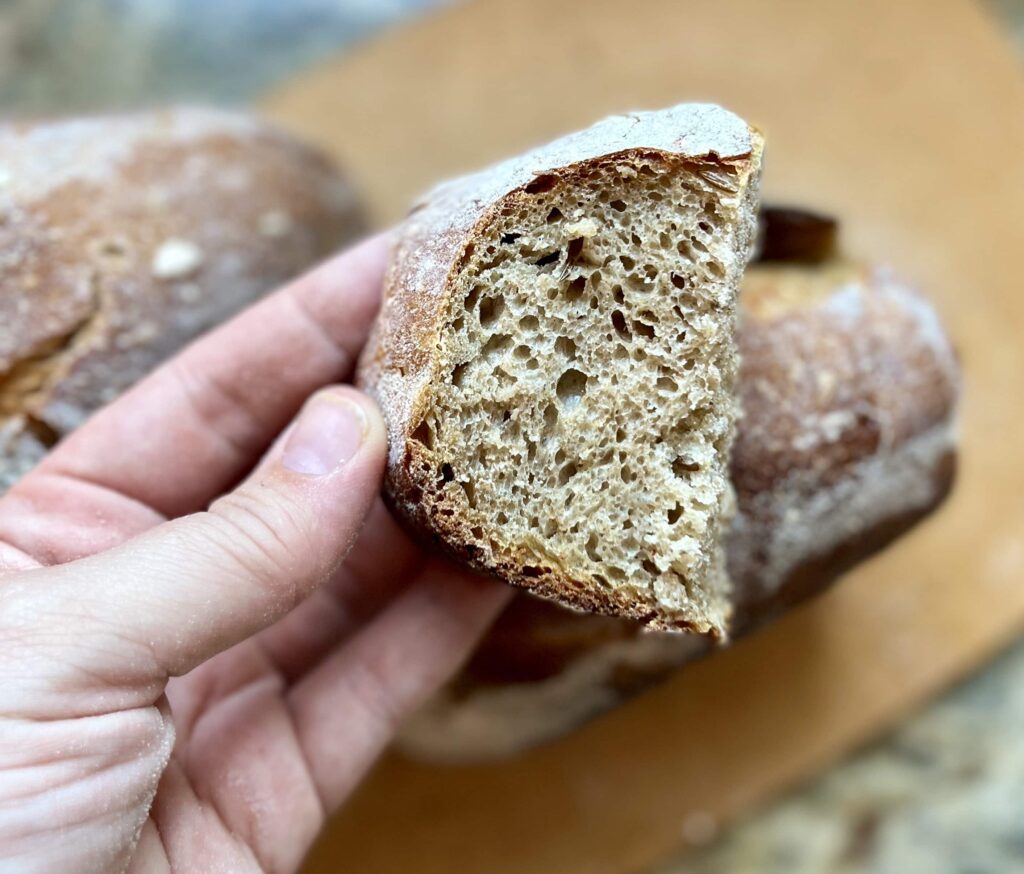
Whole Grain Rye Bread
This recipe for sourdough rye bread calls for three types of flour: rye flour, whole wheat flour and bread flour. A combination of whole grains and white flour makes the bread a little more dense than bread made with only white flour, but it also packs a whole lot of flavor and nutrition in the finished bread. Whole grains can absorb more water, which means they need more water than traditional bread dough, otherwise the bread can end up dry. I purchase my flour primarily from a local mill: Weisenberger Mill. I like using this rye flour or pumpernickel flour in this recipe. This hard whole wheat flour is delicious and I always buy my bread flour from the mill too. Using a high quality bread flour will make a big difference in your bread.

Create a Rye Levain
In almost all of my sourdough recipes, I like to mix a levain specifically to complement the bread I’m making. Some recipes use a stiff sourdough levain like this Sourdough Babka. Other recipes use a 100% hydration levain such as this classic artisan sourdough bread. This allows me to keep my sourdough starter small and build it up for specific recipes.
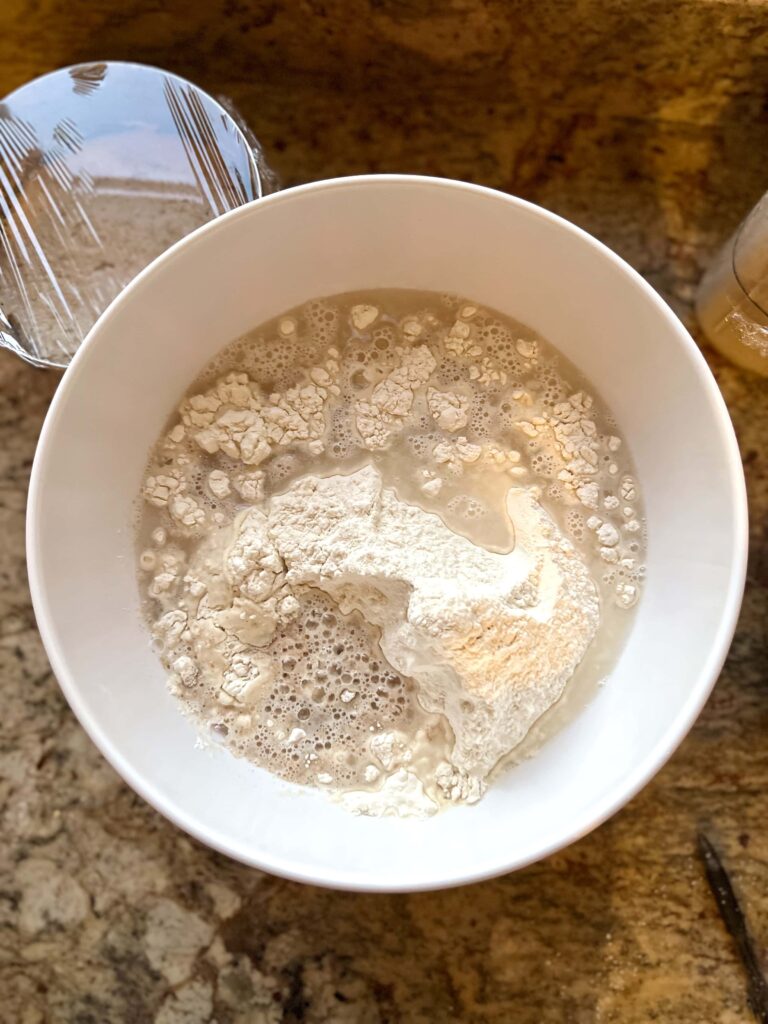
For this rye bread, I use half rye flour and half white flour to mix the levain. Rye flour has a special property of attracting the microorganisms that ferment bread. Using rye flour to build the levain increases the activity and enhances the flavor of the bread. To a small bowl, add the rye flour, white flour, a Tablespoon of sourdough starter and water. Mix together and cover to rest overnight or about 6-10 hours until doubled or tripled in size and bubbly. If you are concerned about the rise, take a little bit of this levain and plop it in a cup of water. The levain should float, which tells you it is ready to use.
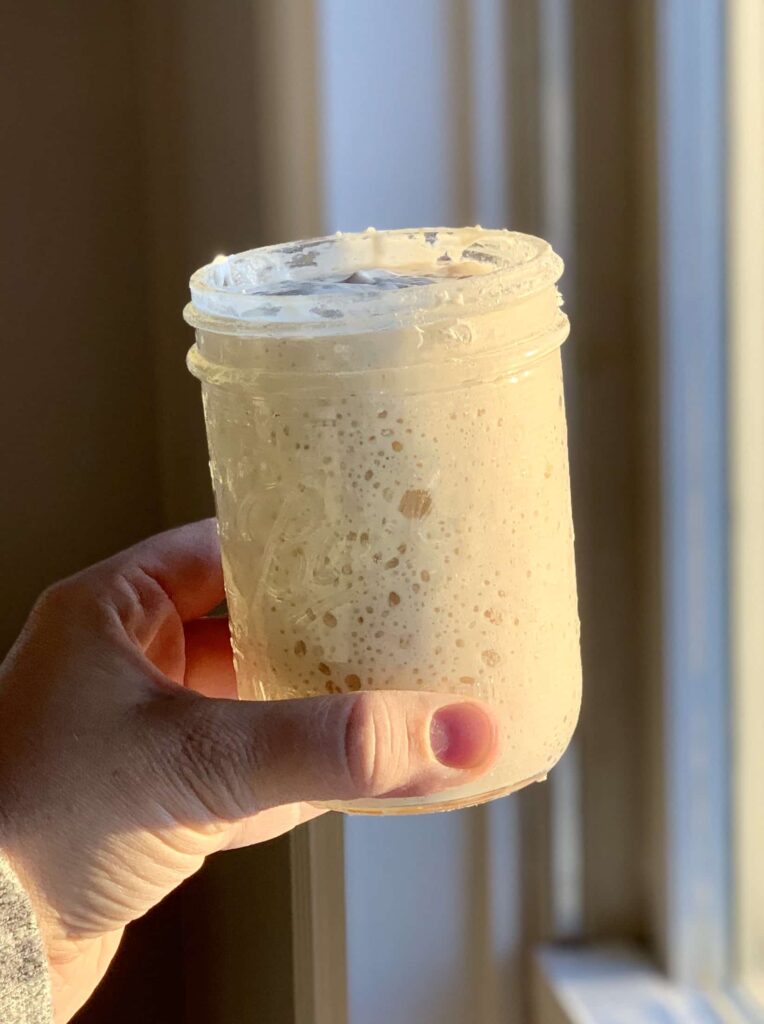
Mix the Rye Dough
When the levain is bubbly, passes the float test and has doubled in size, add the levain, water, rye flour, whole wheat flour, bread flour, salt and caraway seeds to a bowl. Mix together with your hands or a dough whisk until a shaggy dough forms. Set a timer and prepare a set of stretches and folds to the dough every 30 minutes over the course of two hours (4 times total). “Stretch and Fold” is a way for wet dough to develop the gluten strands and strength needed to rise and trap all the air bubbles in the bread as it rises and bakes.

How to Stretch and Fold Sourdough
- Wet your fingers
- Grab a portion of the dough and stretch it upward
- Fold the dough over and into the center of the bowl
- Give the bowl a quarter turn and repeat with the next section of dough
- Repeat this process until you return to the first portion of dough
- Cover and wait 15-30 minutes to stretch and fold again
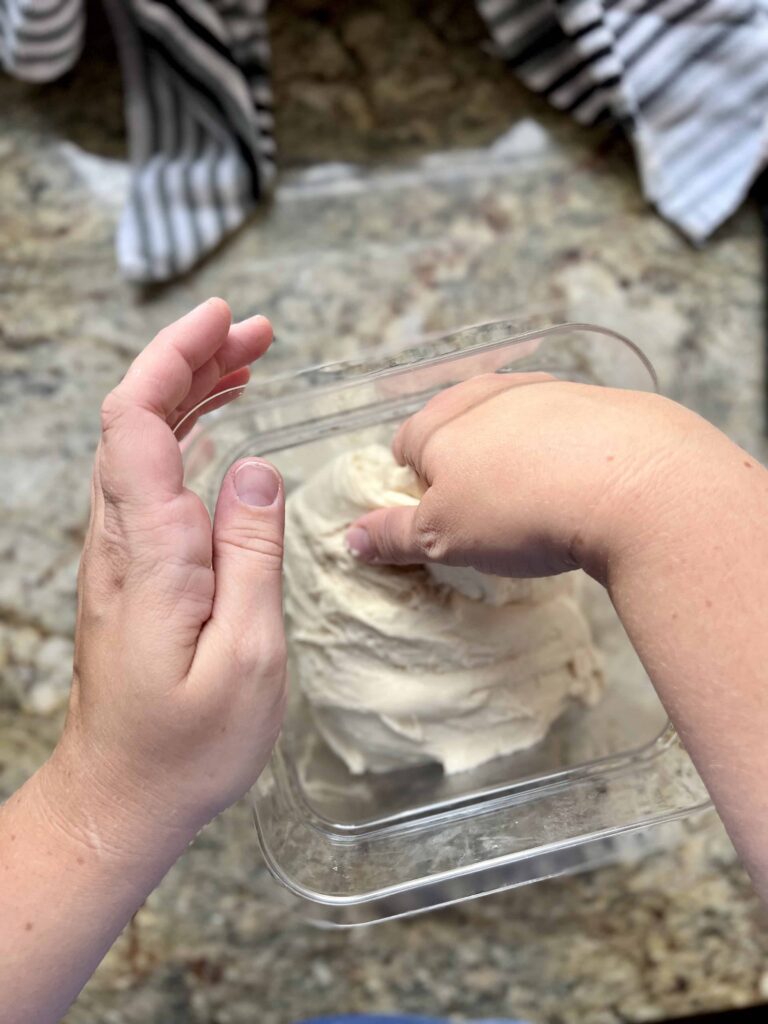
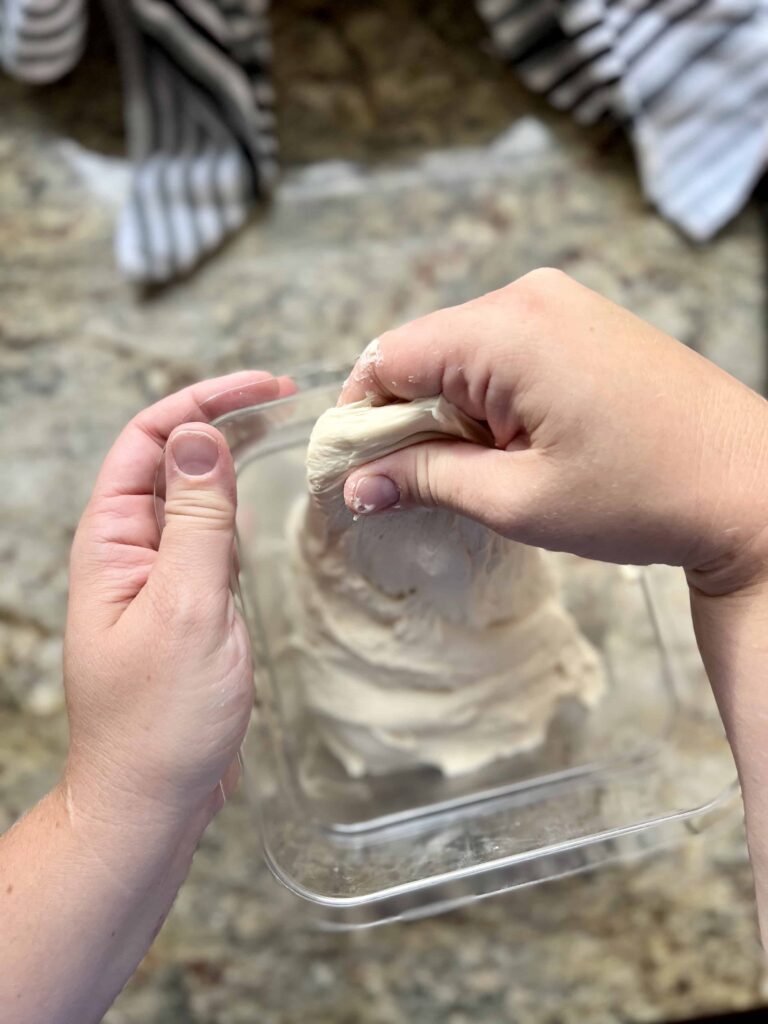
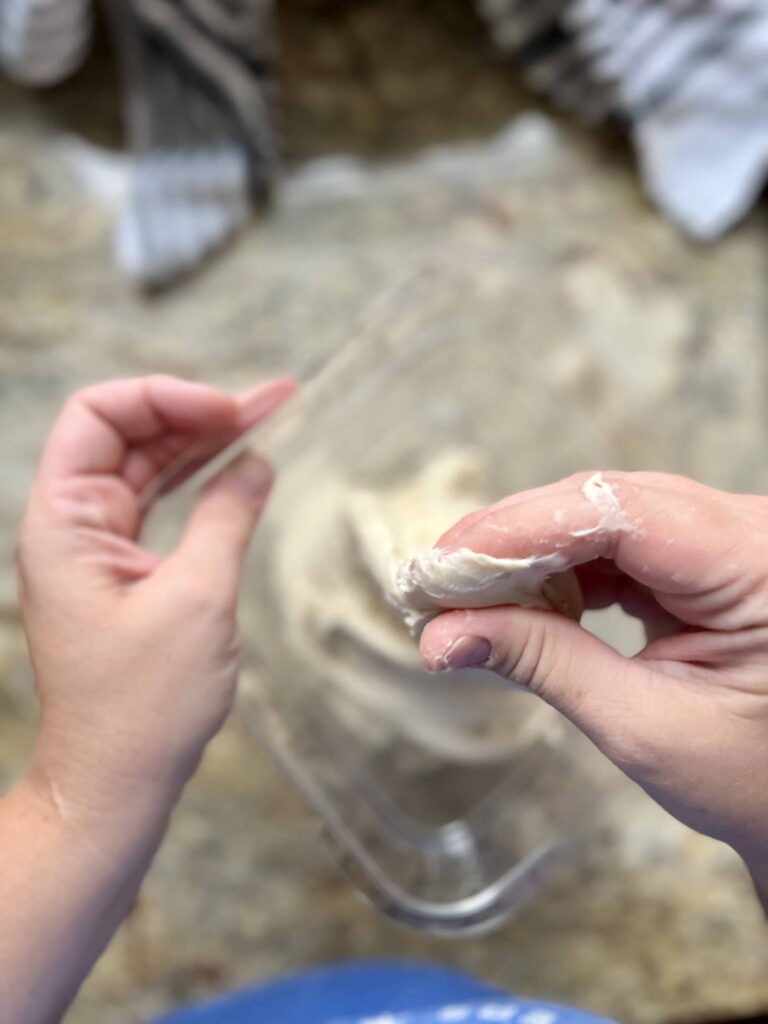
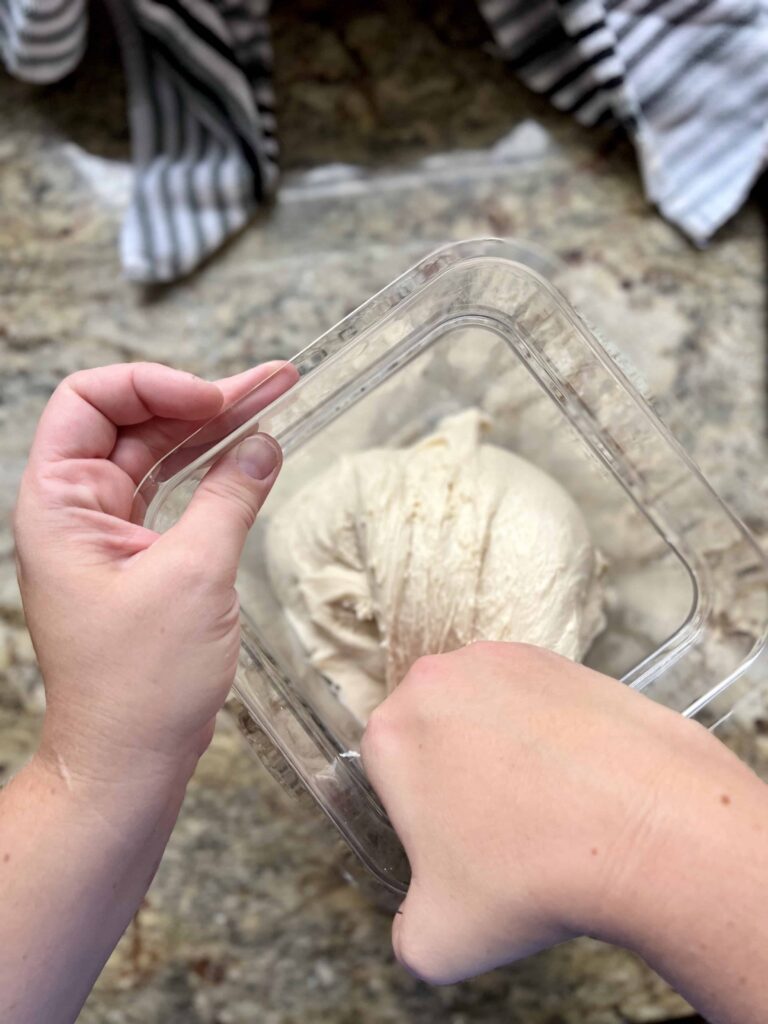
Tip: For your first stretch and fold, the dough will feel elastic and weak. As you continue through the process, the dough with strengthen and tighten up typically by the 3rd or 4th fold. Instead of dense and flat dough, the dough will be smooth and jiggly.

Shaping Sourdough Rye Bread
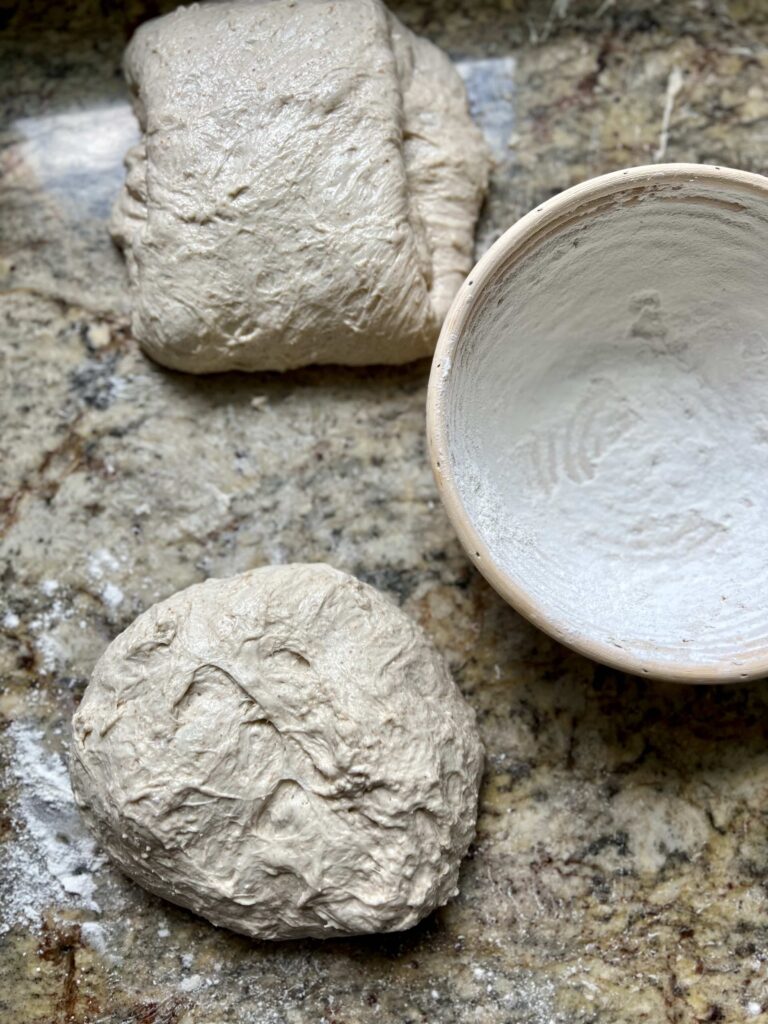
The goal in shaping sourdough bread is to create tension and form the crust that is going to make your beautiful loaf of bread. I usually shape my bread in a circle if using a Dutch oven, or in a rectangular shape if using a baking stone. To shape the bread, gather the edges of the dough and pull them up to the center, creating a circle as you go.
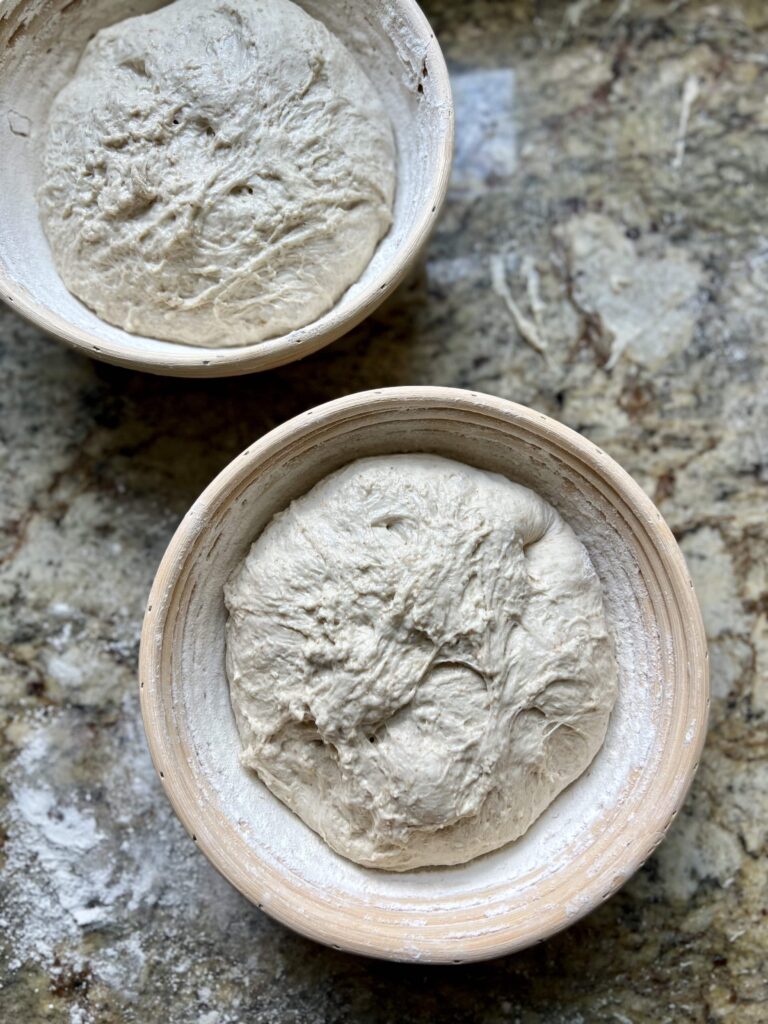
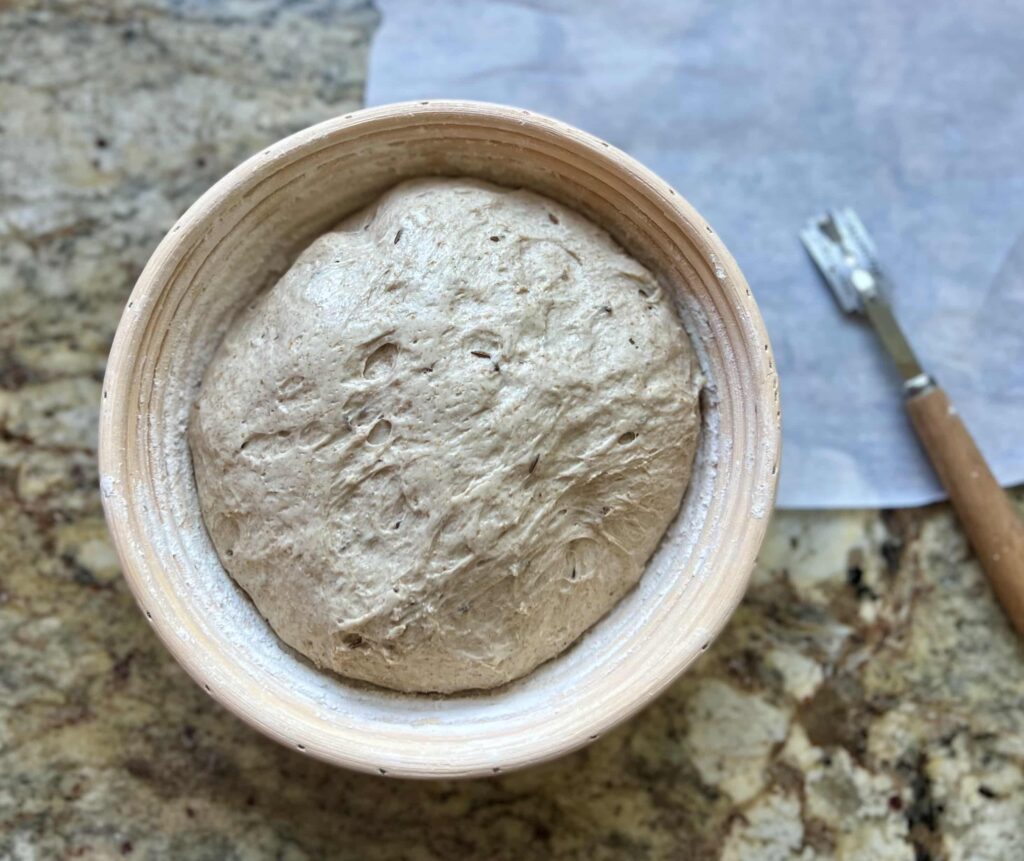
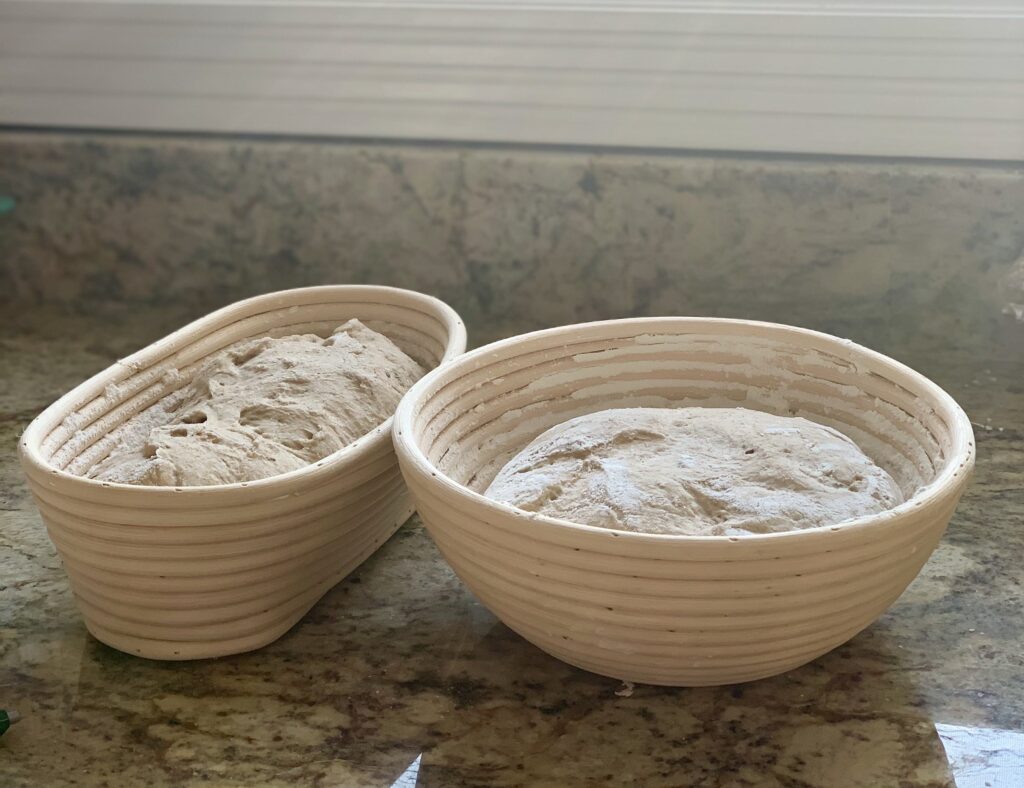
Once the dough forms a ball, turn it over and lightly drag on the countertop while using a circular motion to create tension. Continue this circular motion until the bread is in a tight ball. Place shaped bread in a floured banneton or a floured bowl. At this point you can refrigerate the bread and bake the next day (or up to 48 hours later) or you can cover the bread and allow it to rise at room temperature before baking.
Scoring the Bread
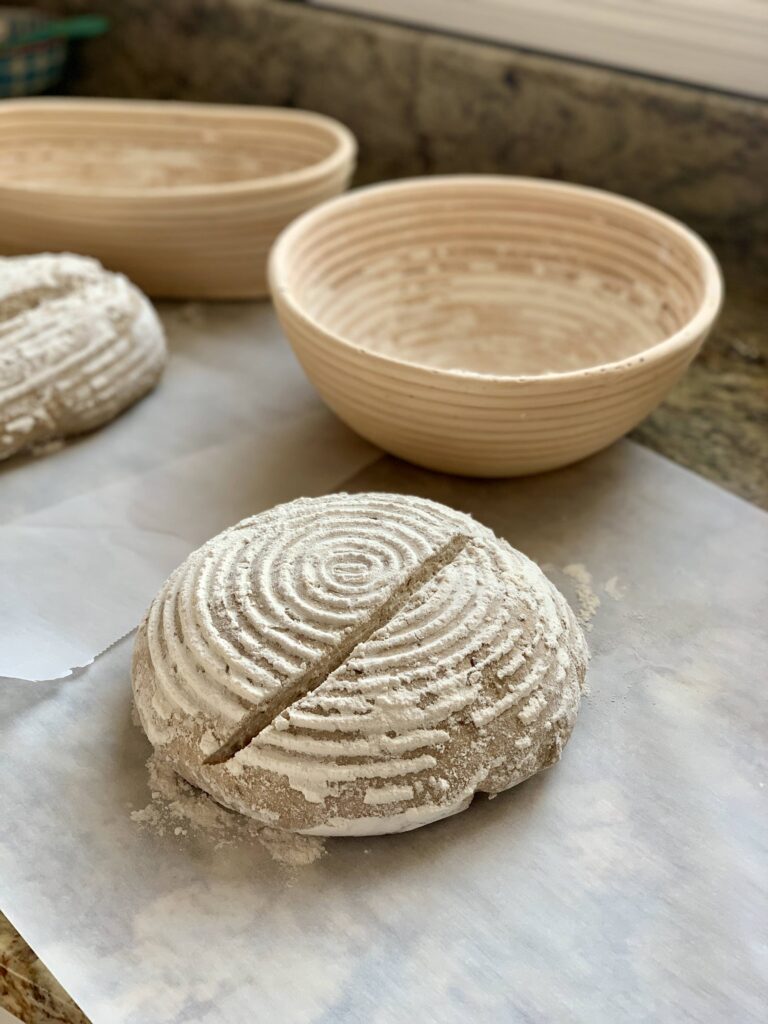
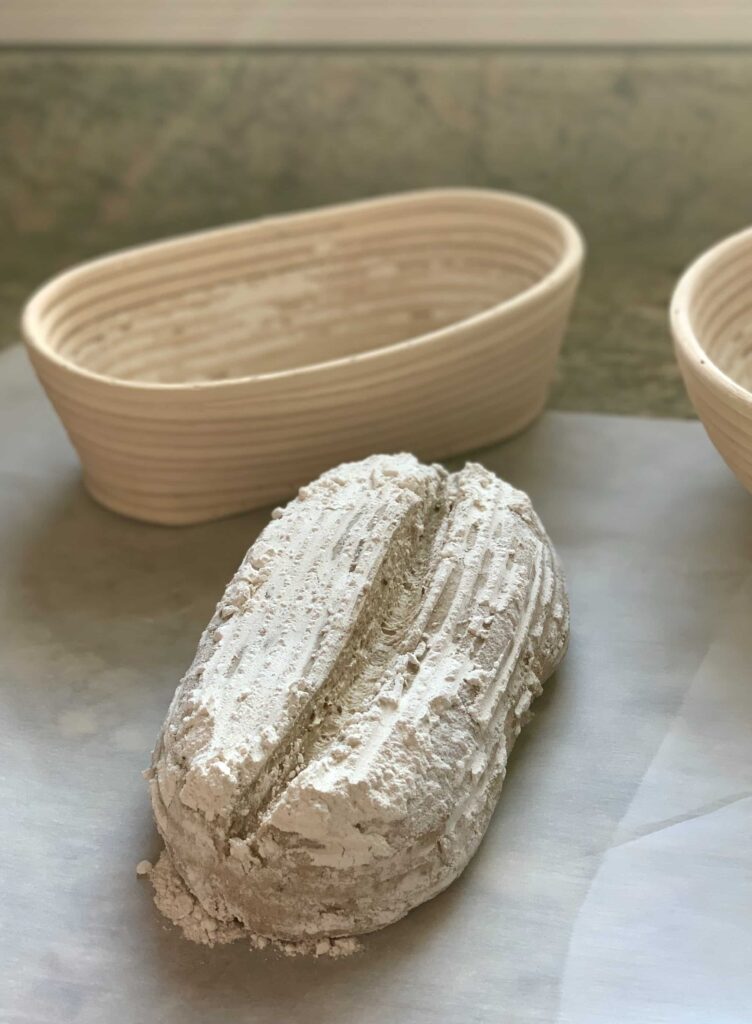
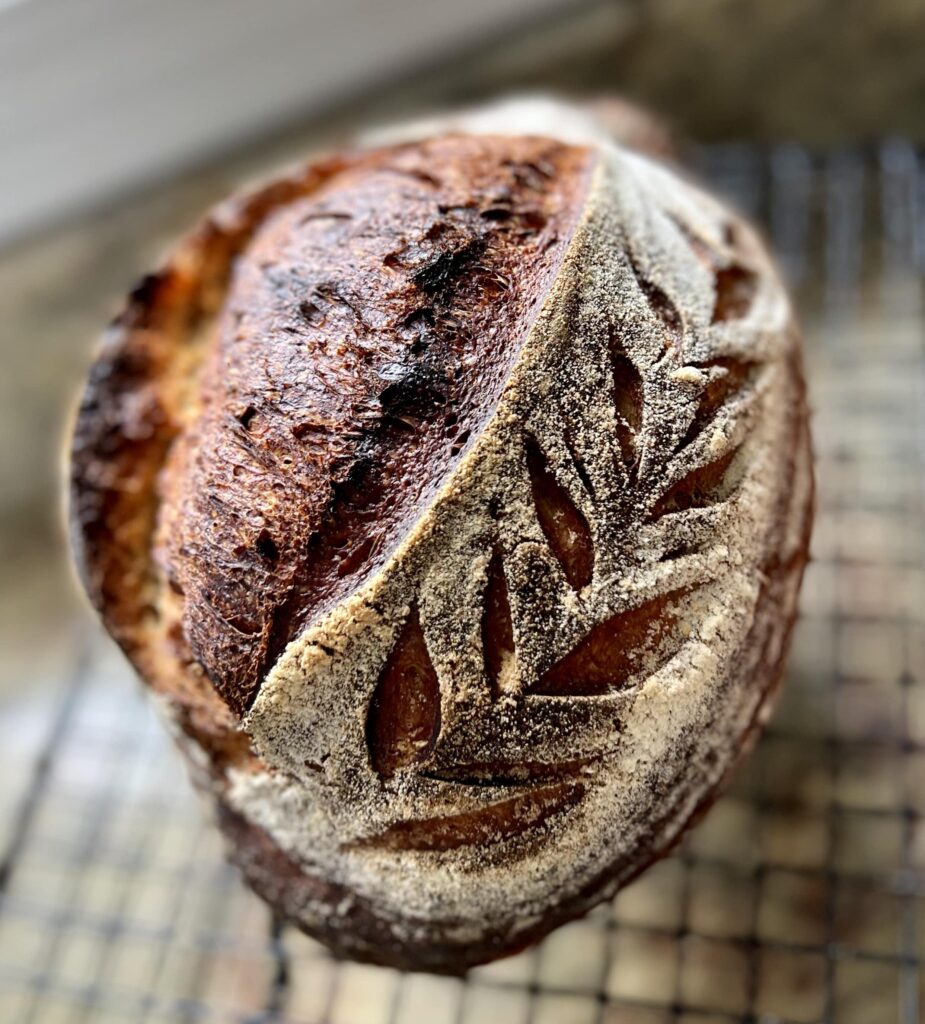
Once the bread is ready to bake, turn it out onto a piece of parchment paper. My favorite parchment paper is from Costco, but you can find it on Amazon too. This bread can be baked after shaping and final rise. For the best score, refrigerate the dough and score it immediately after pulling it out of the refrigerator. Sourdough bread is easier to score if it is chilled and baked cold. I use a bread lame to score sourdough bread. A quick, sharp motion with a sharp lame is the best way to get a beautiful score. You can also use a very sharp knife if you don’t have a bread lame.
Baking Sourdough Rye Bread
This rye bread is only about 65% hydration, which means it is a bit easier to work with than a wetter dough (like this 75% hydration classic sourdough). I have found that this bread gives similar results whether baking on a baking stone or using a Dutch oven or potato pot. Choose which method works best for you:
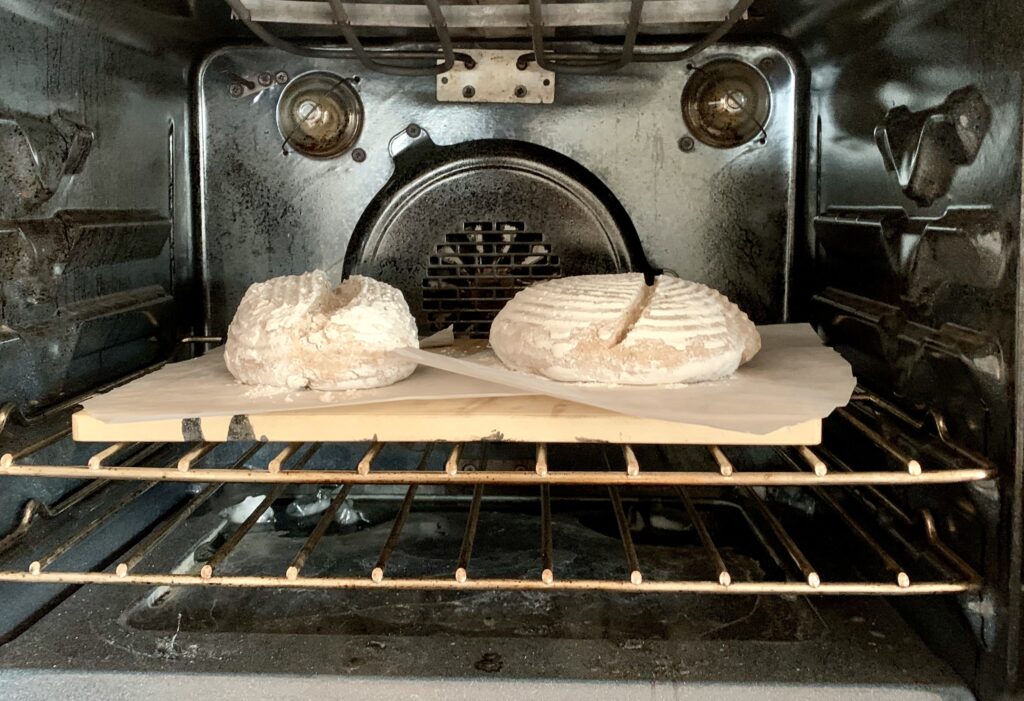
Baking Stone Method: Place a baking stone in the oven and pre-heat the oven to 500°F. Pre-heat for about 30 minutes to let the stone get very hot. Place the scored bread (including the parchment paper) on top of the baking stone, be careful because it’s HOT! Place a handful of ice cubes in a pan and put the pan on the bottom rack of the oven to create steam. Reduce the temperature to 450ºF and let the bread bake for 45 minutes.
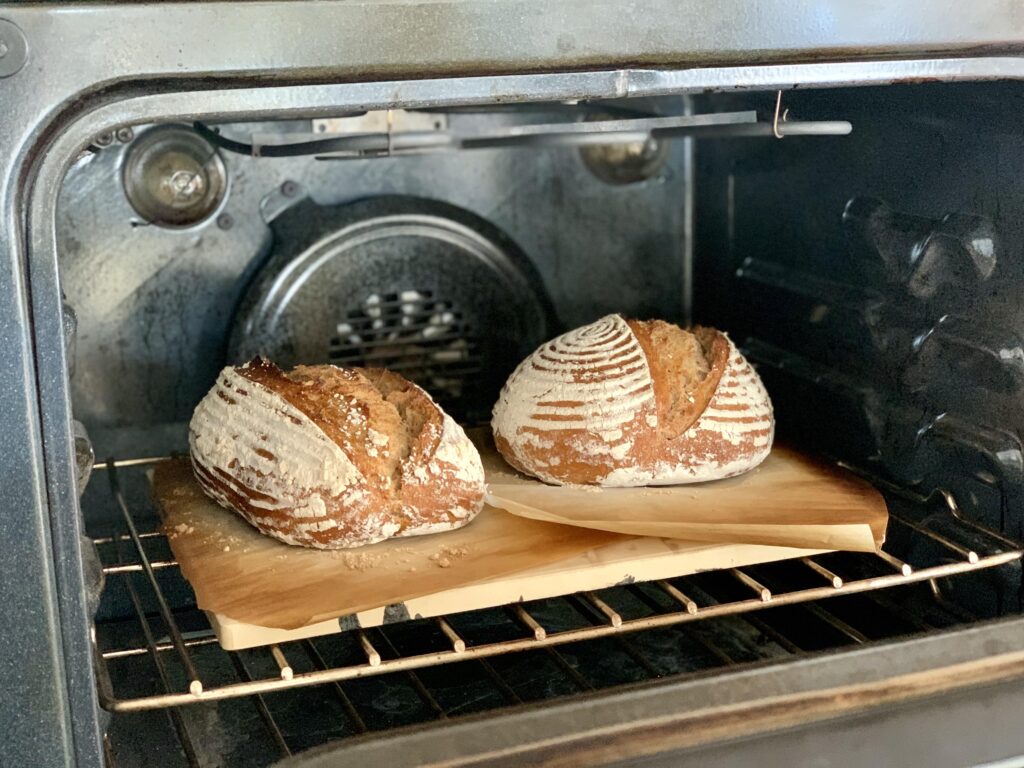
Dutch Oven Method: Pre-heat a Dutch oven or my favorite potato pot in the oven at 500ºF for about 30 minutes. Working quickly, take the pot out of the oven and place the scored bread, parchment paper included, into the pot. Put the lid on the pot and place it back in the oven. Reduce the temperature to 450ºF and bake for 25 minutes. After 25 minutes, take the lid off the pot and bake for another 20 minutes.
Wait For The Sourdough Rye Bread to Cool
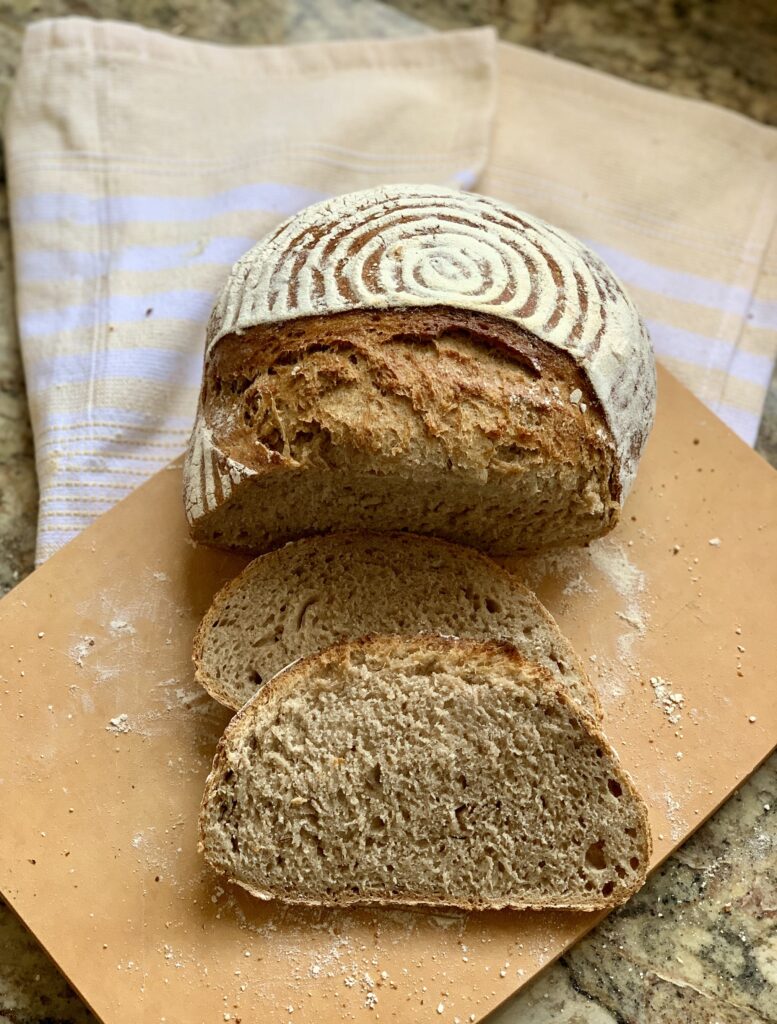
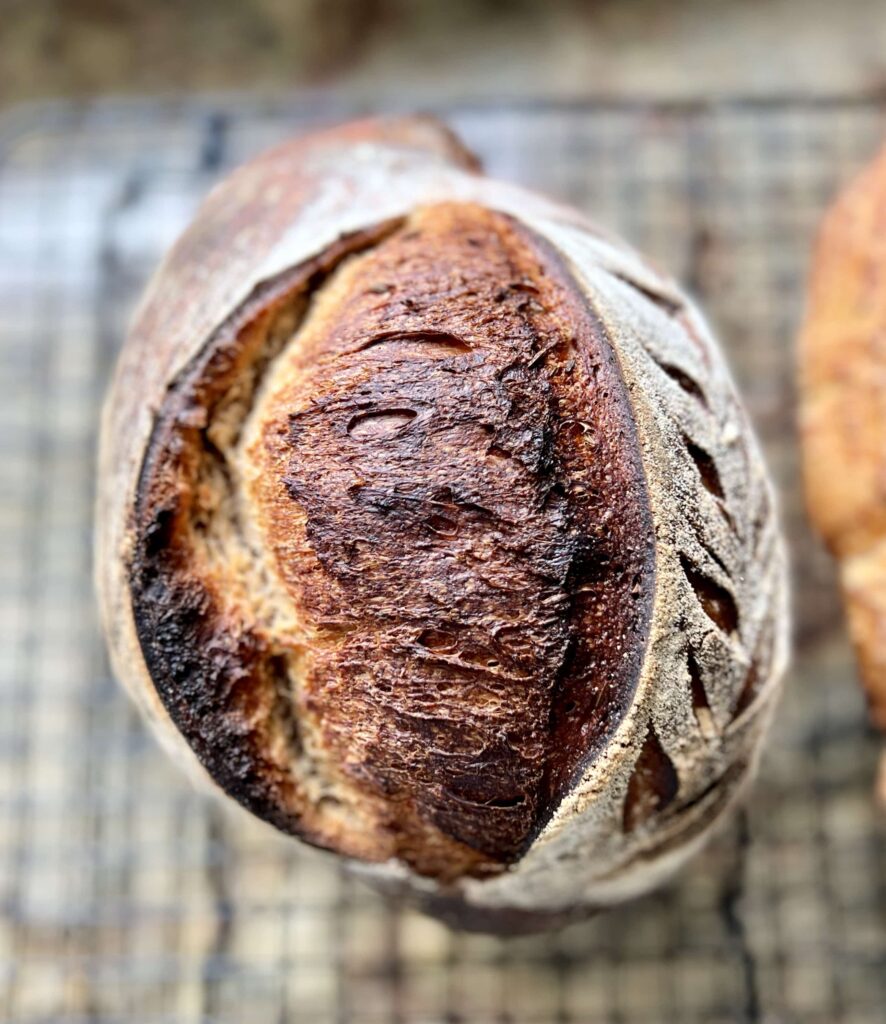
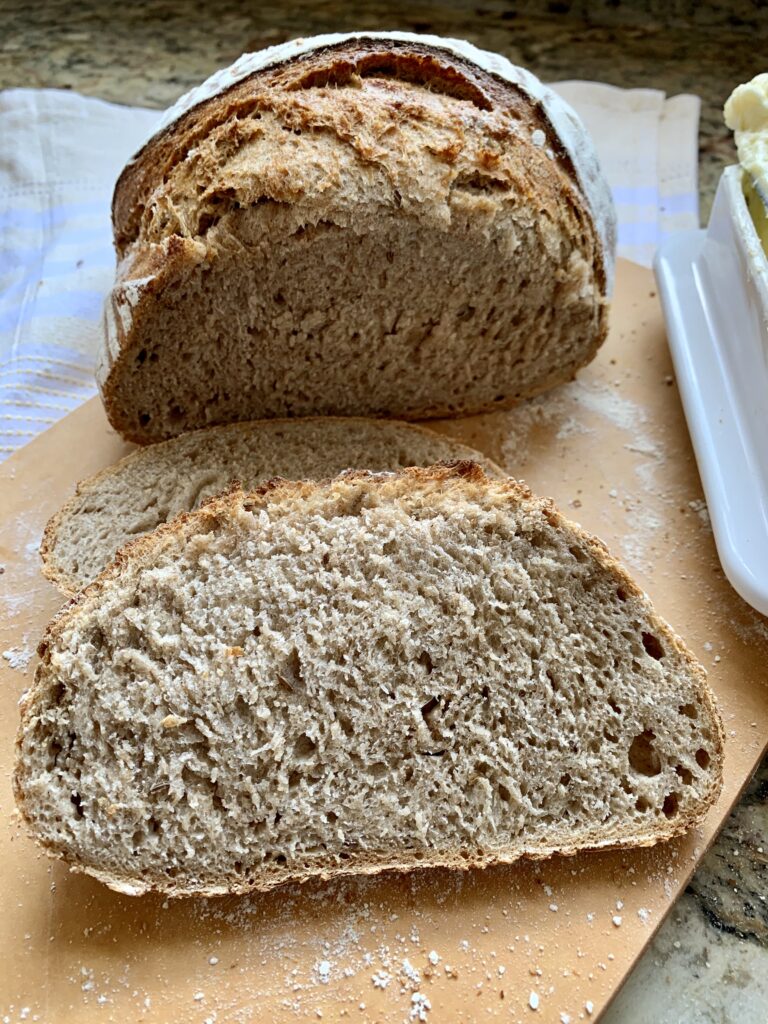
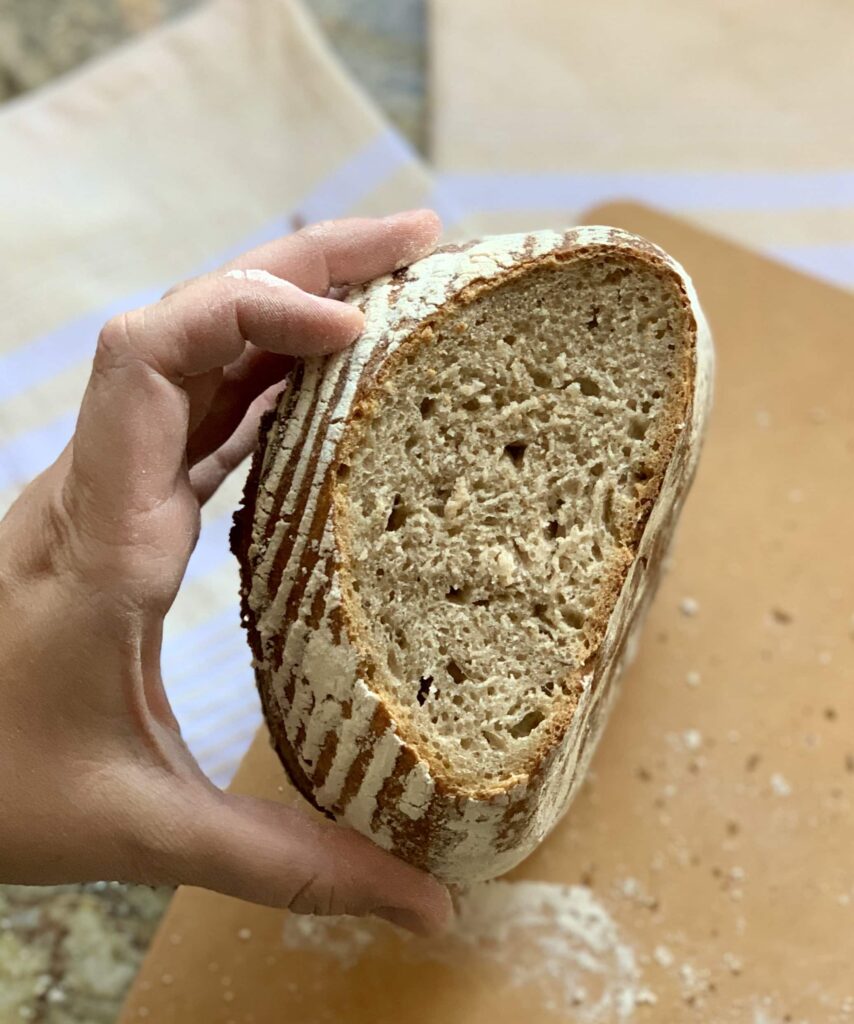
The most difficult part of this whole recipe…waiting for the bread to cool! If you try to slice it right out of the oven the bread will be squishy and difficult to cut. Wait a little bit until the bread has (mostly) cooled to enjoy a slice or two.
Frequently Asked Questions
Rye flour is milled from rye berries (instead of wheat). It has a nutty flavor and is categorized by how much of the rye kernel is in the ground flour (endosperm, bran and germ). Pumpernickel flour is rye flour. It is the darkest type of rye flour, often coarsely ground that contains all of the ground up rye berry. It will give you the deepest rye flavor in your baked goods.
Most sourdough bread can be kept in the refrigerator for 48-72 hours before needing to be baked. The longer it is refrigerated, the more sour flavor you will probably notice. Ideally refrigerating up to 24 hours is going to give the best quality of bread.
I store leftover rye bread on the counter for up to 24 hours. After 24 hours, slice the bread, stick it in a ziplock or bread bag and freeze for 2-3 months. When you’d like a slice, pull it out of the freezer and place it straight into the toaster. Toast from frozen and enjoy. You can also let the bread come to room temperature and then use as desired if you don’t want to toast it.

Popular Whole Grain sourdough Recipes


Sourdough Rye Bread
Save this for later!
Ingredients
Levain (10-12 hours, overnight)
- 10 grams sourdough starter, about 2 teaspoons
- 50 grams rye flour, about 1/3 cup
- 50 grams all-purpose flour, about 1/3 cup
- 100 grams water, about 2/3 cup
Sourdough Rye Dough
- 200 grams levain, all the levain, heaping 2/3 cup
- 650 grams room temperature water, about 2 3/4 cups
- 200 grams rye flour, about 1 1/2 cups
- 200 grams hard whole wheat flour, see note, about 1 1/2 cups
- 600 grams bread flour, see note, about 4 1/4 cups
- 20 grams salt, about 1 Tablespoon
- 10 grams caraway seeds, about 1 Tablespoon, see recipe note
Instructions
Levain (10-12 hours, overnight)
- In a small bowl, mix together starter, rye flour, all-purpose flour and water. Keep the levain around 78-80°F. Cover and let rise about 10-12 hours or overnight until bubbly, peaked and ready to use.
Sourdough Rye Bread (6-10 hours)
- Mix the levain, water, rye flour, whole wheat flour, bread flour, salt and caraway seeds with your hands or a dough whisk (affiliate link).
- Perform a series of stretches and folds every 30 minutes for 2 hours, a total of four times. To do this, pick up the underside of the dough and fold it on top of itself, turning the bowl after each fold and picking up a different section of the dough to fold and turn. An example of this folding technique is found here (halfway through the video).
- After two hours, cover the dough and leave it on the counter for about 2-3 hours until puffed up and risen. The dough temperature should be around 78-80°F. If you are baking in the summer or in a warm kitchen, the dough will rise faster (about 2 hours). If baking in a cold kitchen, the dough will take longer (3-4 hours).
- Once the dough is puffed up, cut the dough in half and shape into two loaves. To shape: Gather the edges of the dough and pull them up to the center, creating a circle as you go. Once the dough forms a ball, turn it over and lightly drag on the countertop while using a circular motion to create tension.
- Place the bread dough in a floured bread banneton (affiliate link) or a floured mixing bowl, circular/taut side down. Cover and let rise again for 2-4 hours (depending on the warmth of your kitchen). See recipe note for refrigerating the dough overnight.
- Place a dutch oven OR baking stone in the oven and preheat to 500°F. Turn the oven on to preheat at least 20 minutes before baking the bread.
- Once the dough has risen, turn it out onto a piece of parchment paper. Score the dough using a bread lame or a sharp knife. Choose one of the following methods to bake your bread.1. Dutch Oven Method: Place the dough in the dutch oven. Put the lid on top and bake for 25 minutes at 450ºF. After 25 minutes, remove the lid and continue baking for another 20 minutes until the loaf is brown and reaches an internal temperature of 205-210ºF.2. Open Bake Method: Place a pan with a handful of ice cubes into the preheated oven on the bottom rack and transfer the scored loaves onto the baking stone. Turn the heat down to 450°F to bake. After 25 minutes, remove the pan of water and continue baking for another 20 minutes until the loaf is brown and reaches an internal temperature of 205-210ºF.
- After 45 minutes, remove the loaves from the oven and let cool before slicing and eating. Enjoy!
Notes
Nutrition
Nutrition information is automatically calculated, so should only be used as an approximation.


This has become our go-to sourdough.
I’m glad it’s a consistent favorite!
Amy, just wondering could you use a stand mixer on this sourdough rye recipe?
I haven’t tried it, but you could probably use a similar method to this stand mixer sourdough and turn on the stand mixer for about 10 seconds in place of each set of stretch and folds. Let us know if you try it and how it turns out!
If I freeze unbaked sourdough rye bread, do I thaw it then bake or bake from frozen? And for how long? Thanks! I’ve mastered regular sourdough bread and am excited to try your sourdough rye with carroway seeds!!
You would want it to thaw before baking and let it puff/finish proofing. Keep in mind that frozen sourdough dough shouldn’t be kept in the freezer for longer than about a week because the freezer will kill off sourdough, which means you won’t get as good of a rise when baking it.
I made this bread several times. I feel I would like to increase the hydration level without creating a grummie bread. What is your recommendation
I would just add a little bit more water the next time you make it – maybe 10-20 grams and see how it does. Then increase it a bit more from there if you want to.
Hi, for the levain, do you use active sourdough starter or sourdough discard?
Excited to try this recipe!
We always use active starter when mixing levain to make sure we have the most active levain.