How and Why to Make Levain

Updated Mar 07, 2024
Affiliate disclosure: This post may contain affiliate links. Please see our disclosure policy.
What is a levain? Do you have to make a levain for sourdough? Can you just use your sourdough starter? This sourdough guide will answer your questions.
Levain is the French method of making sourdough. Levain means leaven in French which refers to sourdough. A levain is simply a part of your sourdough starter that is mixed with flour and water, left to ferment and then used in a sourdough recipe. It’s an offshoot of your sourdough starter.
Save this for later!
Sourdough Starter and Levain Are Inter-Related
Properties of a Sourdough Starter
Sourdough starter is a culture of yeast and bacteria. It is continually maintained in the same way at regular intervals (daily, weekly etc.). A small bit of sourdough starter is fed, ripens (rises/bubbles) and needs to be refreshed in a continual cycle. The fermented starter that doesn’t get refreshed becomes the discard. Some important points to remember:
- Sourdough starter should never be used up entirely in a single bake.
- Sourdough starter can be used indefinitely if maintained properly.
- Sourdough starter is usually refreshed with the same type of flour.
- Sourdough starter is sometimes referred to as the “mother” starter. It is continually refreshed and a small part of it is used to make every levain. This results in the “mother” starter actually being in every loaf of bread you bake.
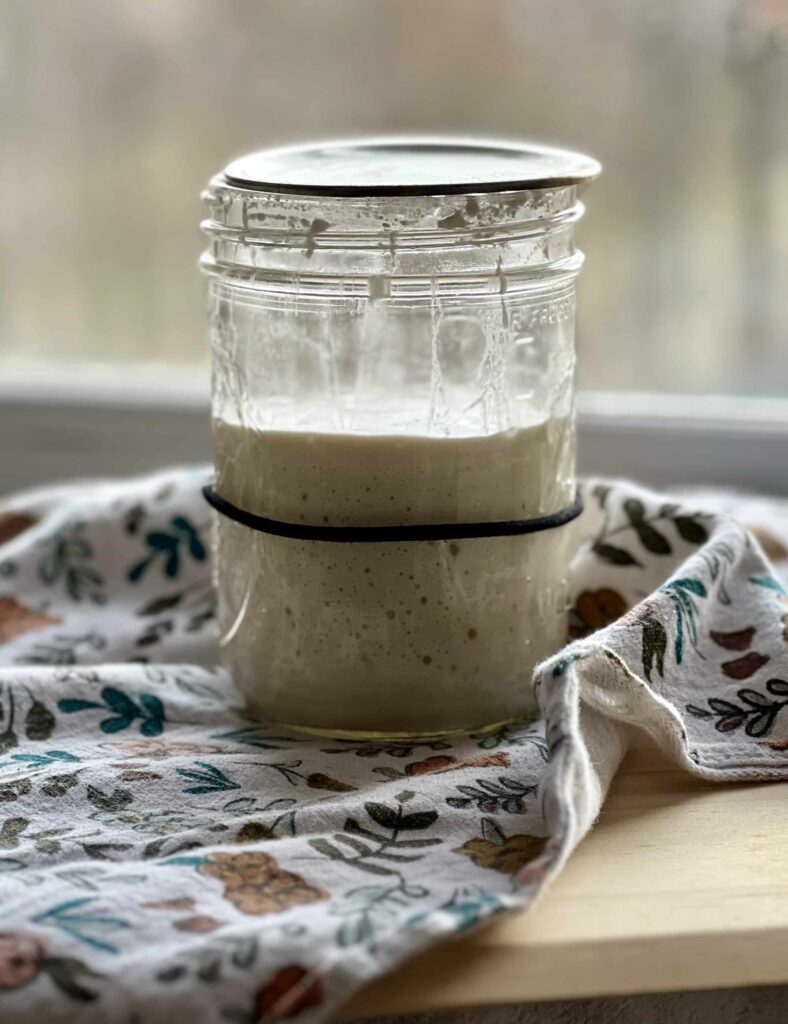
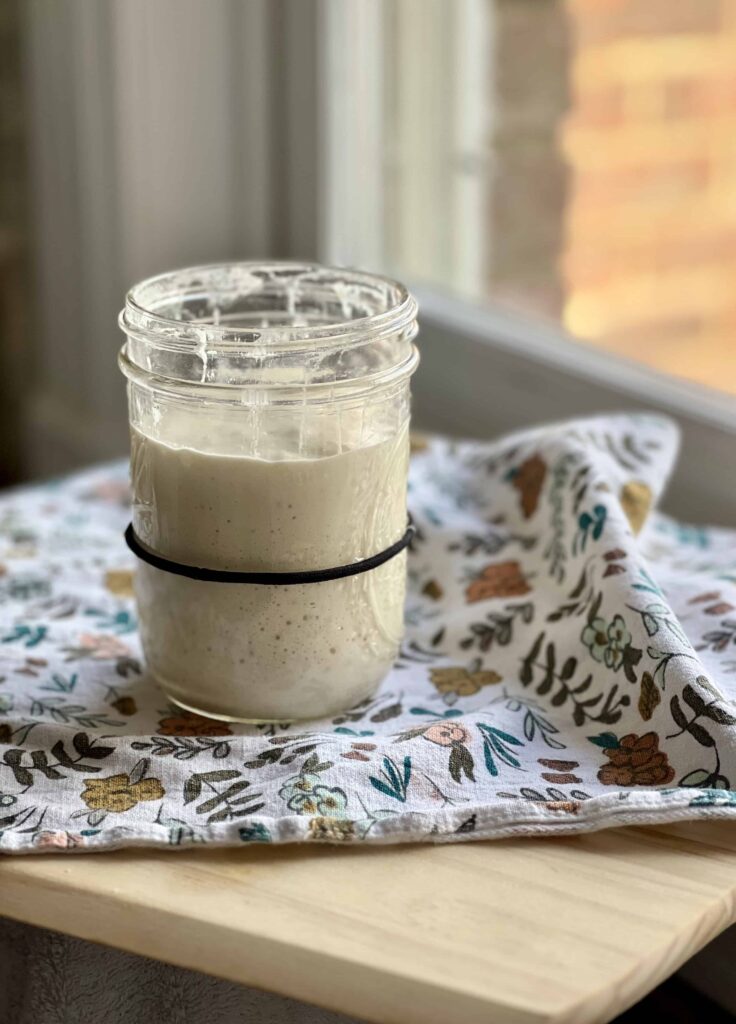
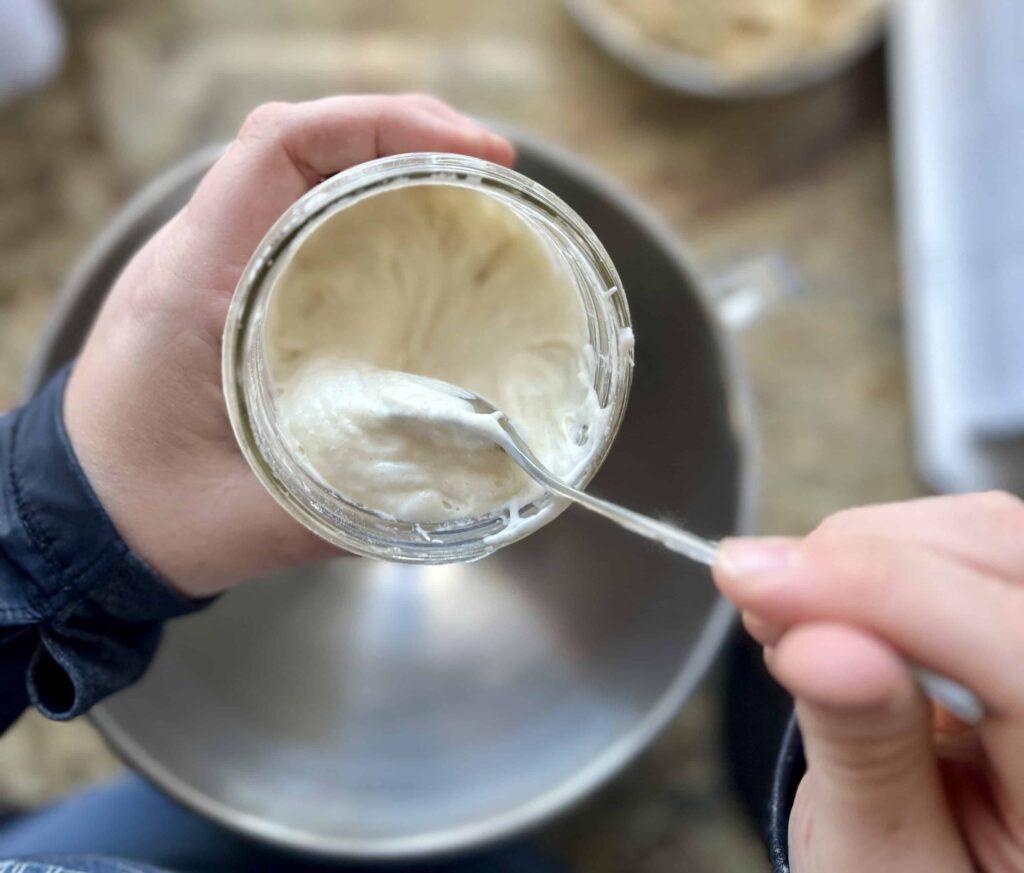
Properties of a Levain
Levain (or leaven) is an offshoot of your sourdough starter. You maintain a sourdough starter and then take some starter when it’s active and ripe to make a levain for a specific recipe. The properties of a levain change based on the recipe you are mixing it for.
- Levain is used up entirely in a single bake. You shouldn’t have much, if any leftover levain after you’ve baked with it.
- Levain can be used to alter the flavor and texture of your final dough with any flour combination.
- For example: When making sourdough rye bread, you may use a combination of rye and bread flour to mix your levain. You don’t necessarily want to keep a rye starter just for rye bread, so you take some ripe/active sourdough starter, feed it a combination of rye/bread flour and let that ferment. Use that to bake your rye bread for better flavor in your overall loaf.
- Another example is my favorite white sandwich bread. Mixing the dough for this soft sourdough sandwich bread, I take ripe/active sourdough starter and mix it with sugar, flour and water. I don’t want to keep a starter that has added sugar in it, so I use a levain that has added sugar for that specific recipe. This keeps my sandwich bread more mild flavored instead of super tangy.
- One More Example: In my sourdough cinnamon rolls or other sweet breads, I’ll make a stiff levain for the dough. Instead of keeping a separate stiff starter, I just use my sourdough starter to make a levain. This helps temper the sour flavor in sweet/enriched doughs and gives a good rise to my sourdough cinnamon rolls.
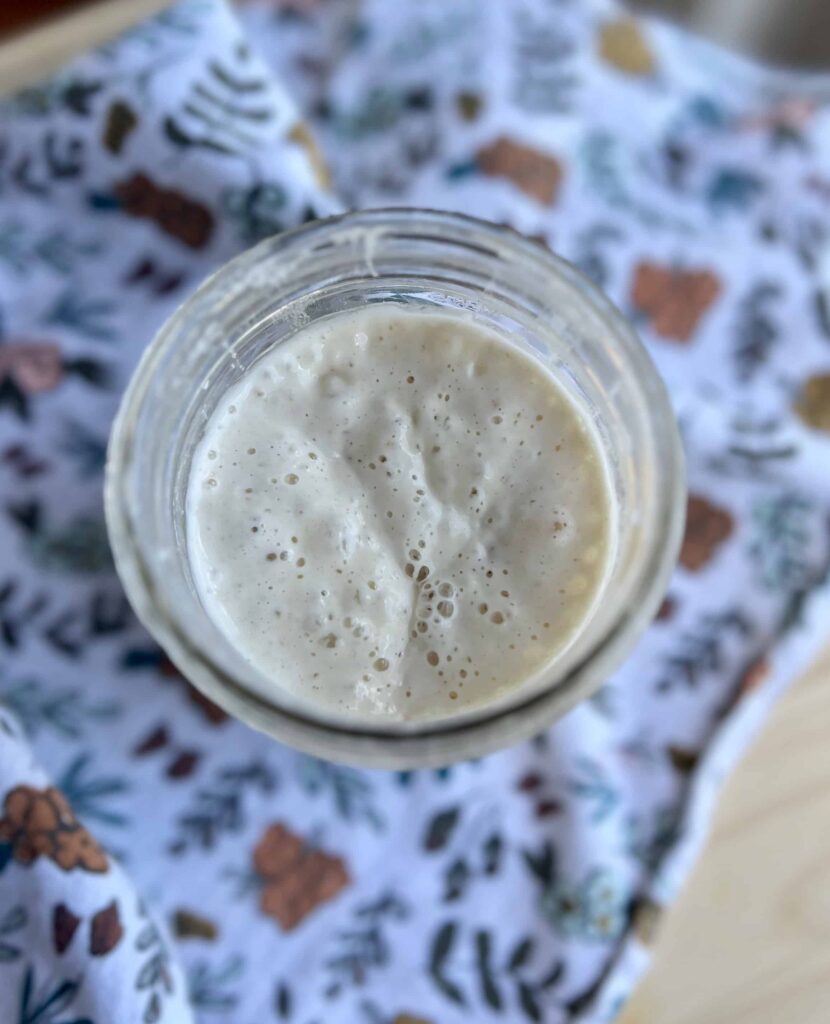
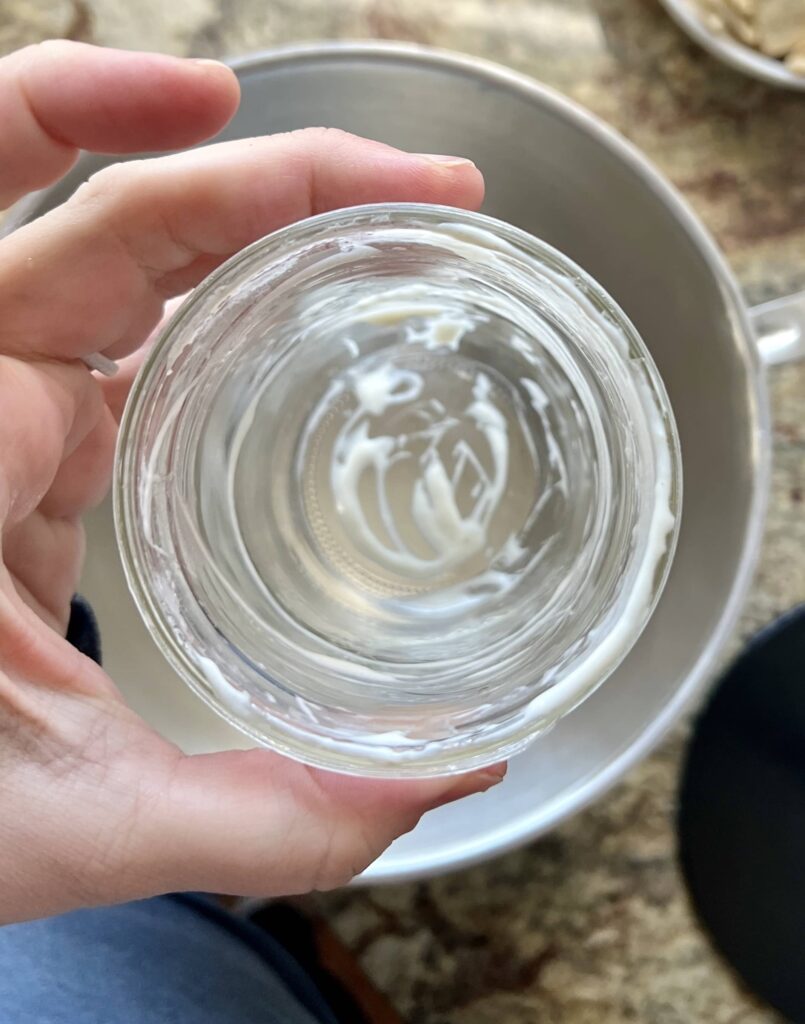
Using Ripe Sourdough Starter instead of a Levain
You definitely can use a ripe/bubbly/active sourdough starter instead of a levain in most recipes, but I definitely prefer making a levain if I can. In my experience it gives you a better loaf of bread.
- A levain allows you to adjust the flour, water and ripening schedule for a specific recipe.
- It acts as a “power-feed” to make sure your starter really is ripe, active and bubbly before adding it to your dough which will give you a better loaf of bread.
How to Use Levain in a Recipe
Levain follows the same fermentation cycle that a sourdough starter does. Based on the recipe’s instructions, take a small amount of your sourdough starter and put it in a small bowl or liquid measuring cup. I like using liquid measuring cups that are clear and well-marked, making it easy to watch the levain rise. Add flour and water to the sourdough starter in a separate bowl. Some recipes will also call for sugar or various quantities/types of flour added into the levain, something you would not add to your sourdough starter. The required amounts will depend on the recipe. Often you will mix your levain the night before you mix your bread but sometimes you can mix your levain the day of. This will depend on the recipe, the temperature your levain ferments at and the ratio you feed your leavin of starter/flour/water. The levain is kept separate from your starter, even though the process of creating levain is almost identical to feeding a starter.
Fermentation Cycle of Levain
Levain follows the same fermentation cycle that sourdough starter does.
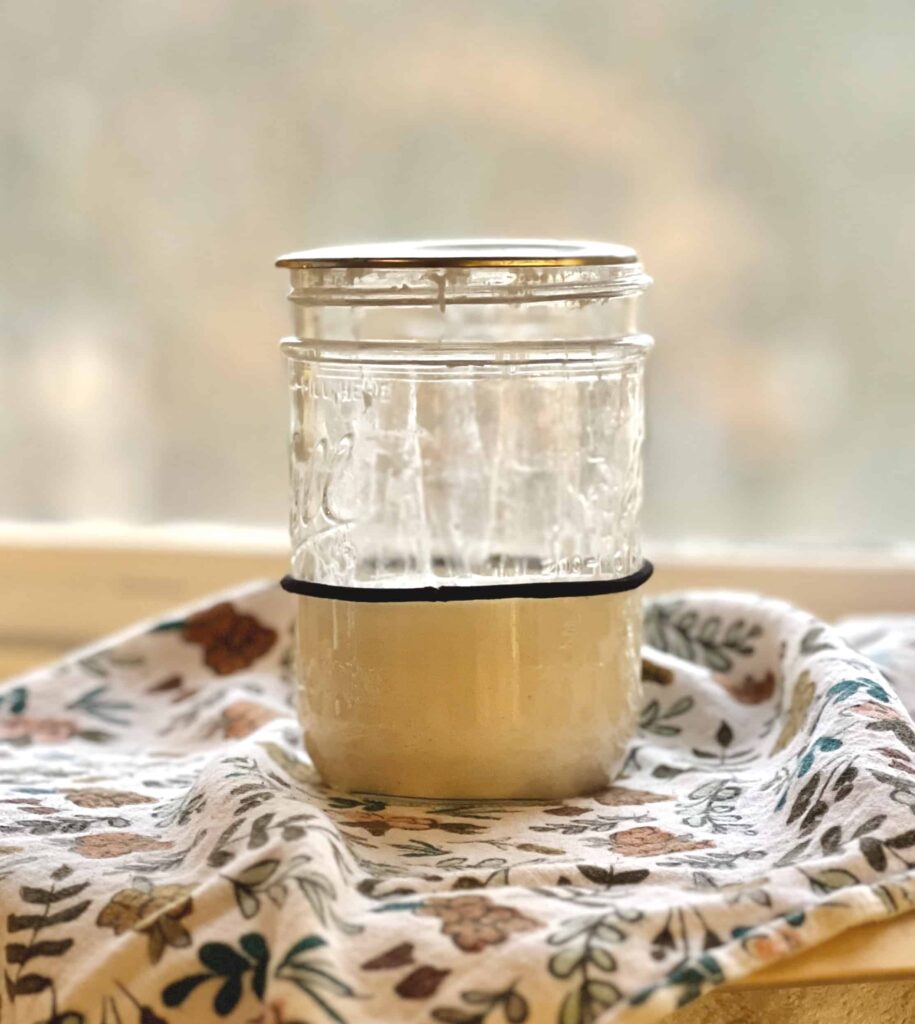
- Just Mixed Levain: fresh smell, no sourness, little to no rise, no bubbles
- Young Levain: sweet with just a touch of sour notes, beginning to rise, scattered bubbles
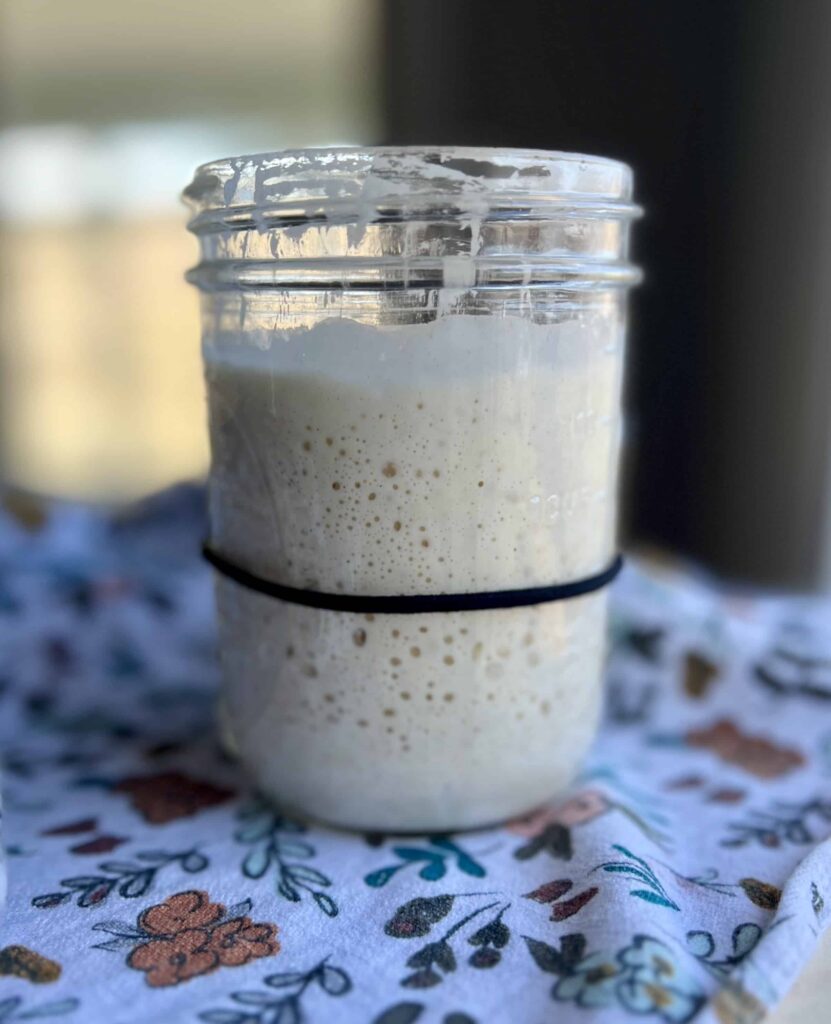
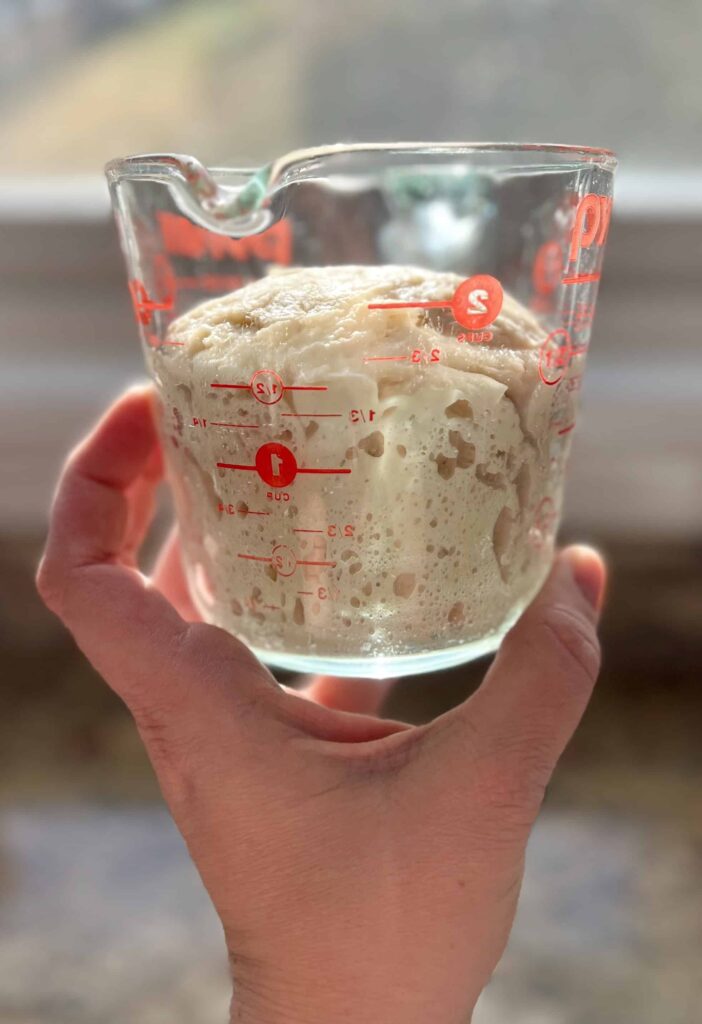
- Ripe Levain: sour undertones, doubled in size, many bubbles, just reached its highest point and is starting to go back down MAKE YOUR BREAD when the levain reaches ripeness
- Overripe levain: bubbly/frothy/liquidy, collapsing in the jar sour smelling/vinegary MAKE YOUR BREAD NOW
- Very overripe starter: layer of “hooch” on top, very liquidy, vinegar/harsh nail-polish type smell Start over, your levain has fermented too long and won’t have enough active yeast to leaven your bake
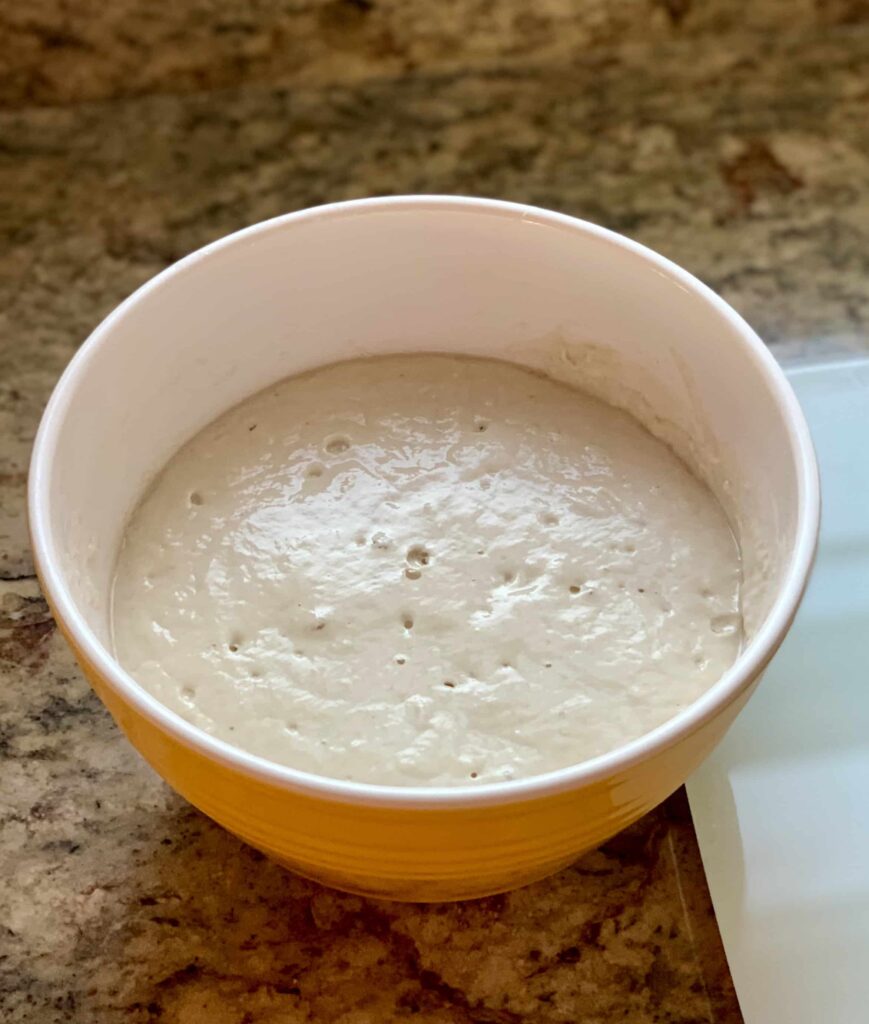
As soon as the levain is ripe (doubled or tripled in size, bubbly, rounded at the top and just starting to come back down), it is time to bake with it. At this ripe stage, levain has the most yeast and best flavor profile for your bake. If you forget about the levain and it becomes over-ripe, you can still bake with it. The bake may be a little more sour than desired but should work fine. If your levain is very overripe with a layer of hooch on top, very liquidy and smells harsh-discard it and start again.
Stiff Levain
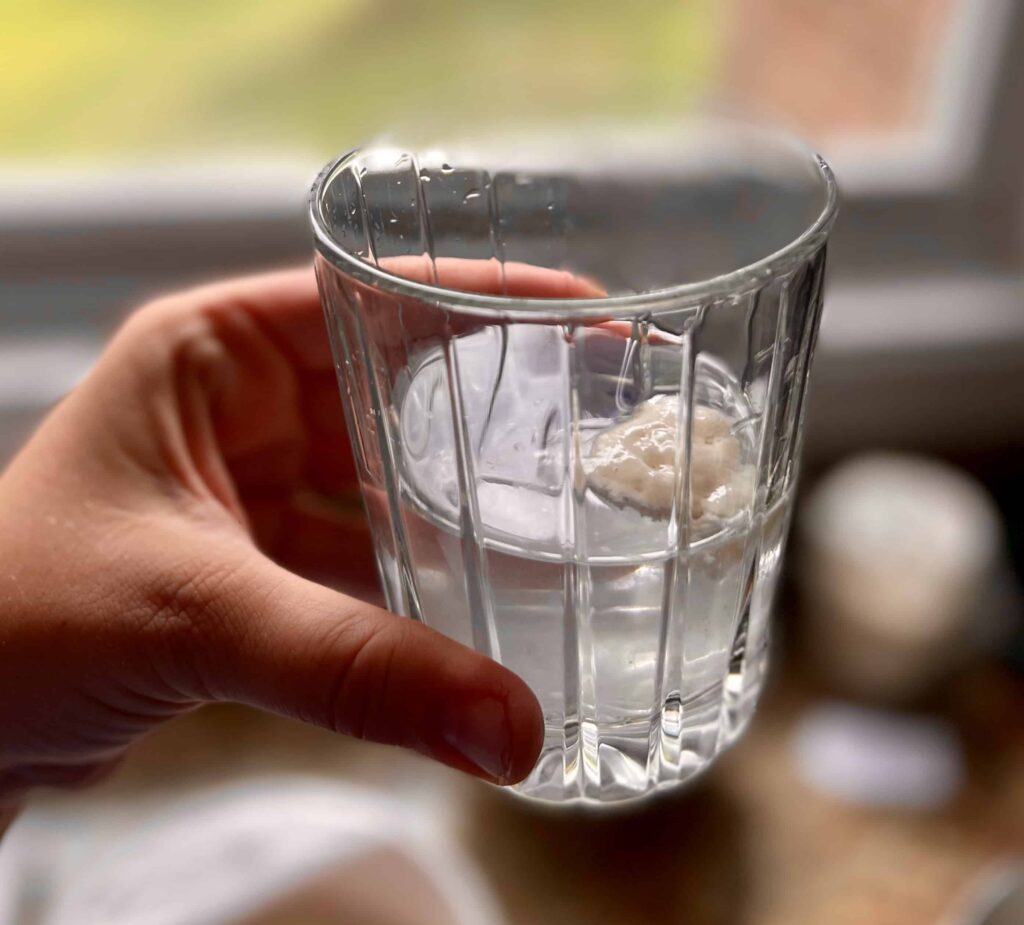
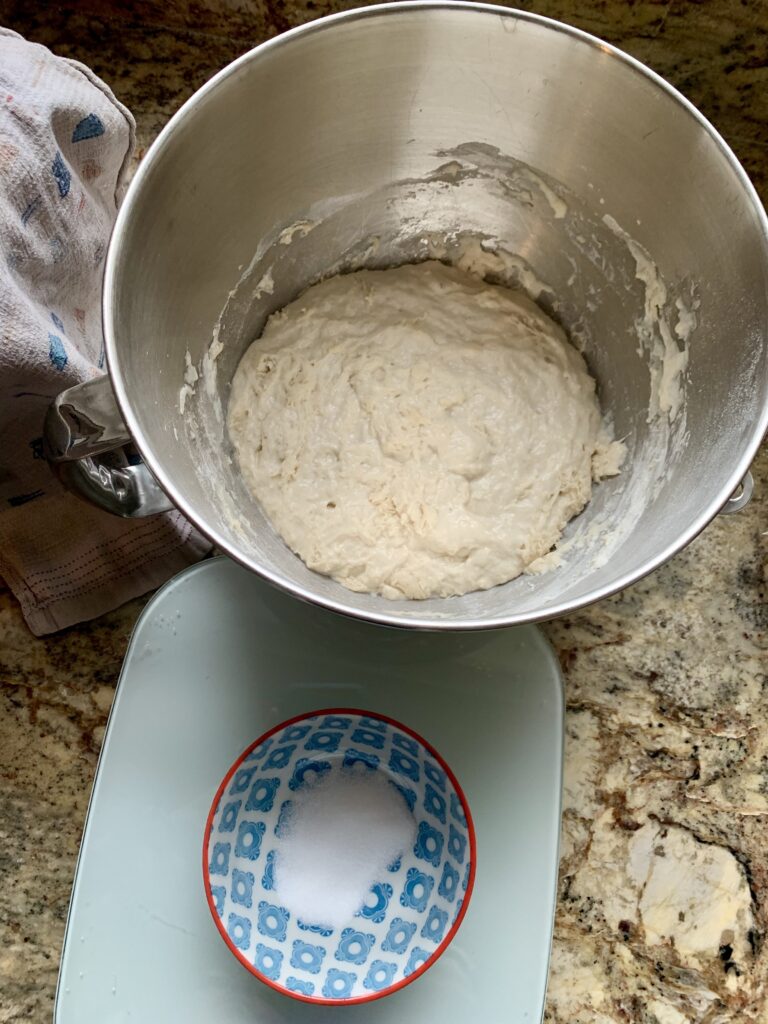
A stiff levain is a levain that mixes up to a firm consistency and is anywhere from 50%-65% hydration. It adds elasticity to dough and helps temper the acid in the sourdough, which gives all the benefit of sourdough fermentation without the tang. I use a stiff levain, often with teh addition of some sugar in it, when I’m making enriched dough (sourdough babka), dough where I want extra strength (sourdough bagels) or dough that I don’t want any sour flavor coming through (sourdough cinnamon rolls). Some people maintain a stiff starter instead of making a stiff levain from a liquid sourdough starter, but I prefer maintaining one starter and taking a portion of it to use in different dough recipes. A few things to keep in mind:
- Use 100% hydration sourdough starter at its peak when mixing your levain.
- Use about 1/2 the amount of water than flour (example: 50 grams water and 100 grams flour).
- The amount of starter you use can vary. I like to make an overnight stiff levain that usually takes about 10-12 hours to peak if kept at 78ºF. This typically looks like: 20 grams starter, 50 grams water and 100 grams flour – Add 10-20 grams sugar for a stiff sweet levain.
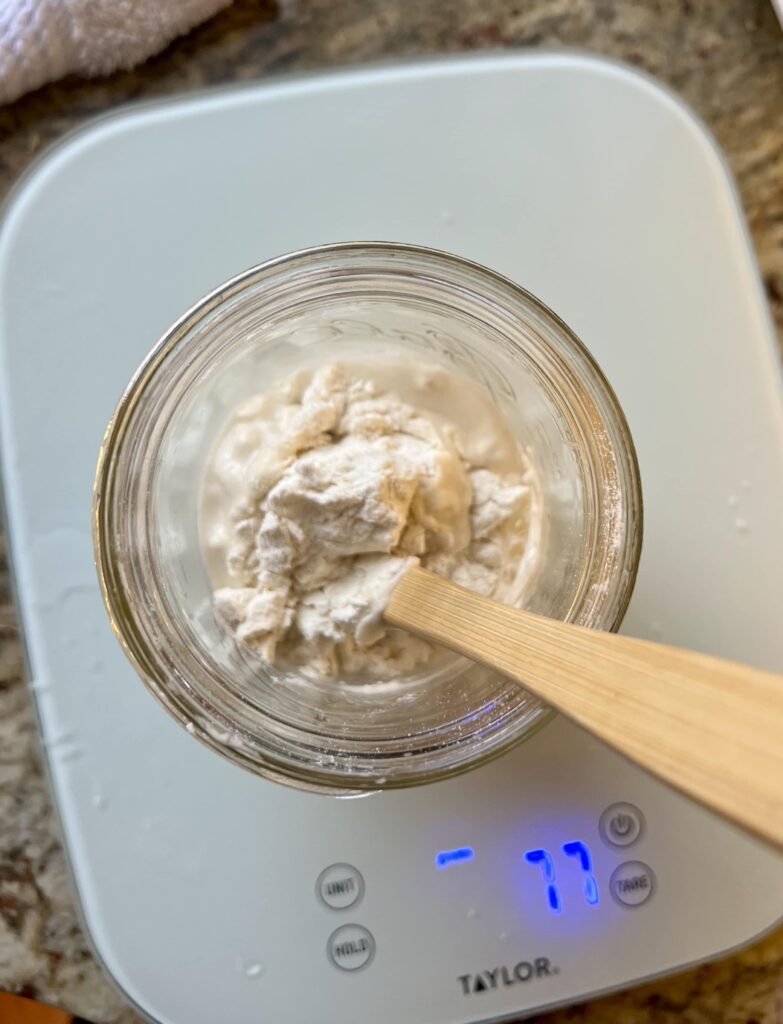
- A stiff levain will be a little more difficult to mix together, because it forms a dough ball instead of a batter. Knead the ball of dough a few times until smooth. Cover and let rest in a warm 78ºF place until peaked and active.
- Stiff Sweet Levain is ready to use when it has doubled in size and has a rounded top. Using it right when it reaches its peak will help decrease the acidity in the dough. You have a longer window of time to use a stiff levain than a liquid levain.
Frequently Asked Questions
Yes! In a pinch, you can use ripe sourdough starter. Just make sure you have some leftover to feed so you replenish your starter and don’t use it all up. You could also build a “fast” levain using a 1:1:1 ratio (100% ripe starter, 100% flour, 100% water) which should be ready in about 3-4 hours if kept at 78 ºF or can go even faster if you keep it at a warmer temperature.
Sourdough has been around for thousands of years. It is the traditional method of leavening and baking bread. Making a levain for your bread is what I consider a “best practice” in sourdough, not necessarily that you can’t make good bread without one. Many recipes will call for “1 cup bubbly sourdough.” I interpret that as 1 cup of ripe levain (or sourdough starter if your starter is active enough). These recipes can also be difficult to understand especially if using volume measurements like cups: How much is exactly one cup of bubbly sourdough? Do I stir it down? Measure it based on height? I much prefer recipes that use metric measurements.
If a recipe calls for bubbly sourdough starter, you can either make a levain from it with your sourdough starter by figuring out how much starter the recipe calls for and dividing that by 3 (one part starter, one part flour, one part water). Alternatively you can substitute ripe, active sourdough starter for the same amount of levain called for in the recipe.
Now that you know the differences between starter and levain, you’re ready to bake some bread!
Get Started with these favorite sourdough recipes:
Sourdough Beginner Guide
 What is Sourdough?
 How to Make a Sourdough Starter
 How to Feed and Maintain a Sourdough Starter
 When Is Sourdough Starter Ready to Use? Easy Signs to Look For
 What is Sourdough Discard?
 How and Why to Make Levain
 Sourdough Timeline for Beginners: How To Fit It Into Your Day
 How Temperature Affects Sourdough
 Sourdough Starter Ratios Explained
 Essential Tools for Baking with SourdoughSourdough Frequently Asked Questions
 How to Dehydrate and Rehydrate Sourdough Starter
 How to Add Sourdough Discard to Any Recipe
 How to Replace Yeast with Sourdough Starter
 Adjusting the Sour Flavor in Sourdough Bread
 Sourdough Artisan Bread Guide
 How to Bake Sourdough in A Loaf Pan
 Adding Inclusions to Sourdough Artisan Bread
Need More Help? Take a Sourdough Class with Amy Bakes Bread
Looking for in-depth Sourdough instruction?
You need my online sourdough course.
- Step by Step Instruction on Beginner and Advanced Recipes
- 2+ hours of pre-recorded video instructions
- Community forum to ask questions and help you troubleshoot
- 15+ PDF recipe downloads
- Make incredible sourdough bread today!


I made a leavin last night and this morning it doesn’t look like it doubled in size but the temp in my kitchen was about 71. Can I still get it to rise more if I put in a warmer spot for a few hours?
Yes – when that happens to me, I will place my levain in the oven (with the oven OFF, but the oven light on). That usually does the trick.
Thank you so very much Amy. I had questions and your article here answer much of what I was wondering about. Thank you very much.
You’re welcome!
Hi! After I make Levain, (and want to put it in the fridge), do I leave to rise first then place in fridge, or immediately after mixing the Levain? Also, how long will it last in the fridge? I’ve just made a few batches for different recipes. After being in the fridge, can the Levain be used immediately in a recipe or should come to room temperature? Thank you!
You leave it to rise until at least doubled, peaked and barely starting to fall back down. At this point you can stick it in the fridge and use it within 24 hours or so in a recipe. You can add it straight to a recipe from the fridge – just use warmer water (or liquid) in your dough to offset the cold levain.
Hi. My sourdough starter is ready – and I want to make Levain… can I keep bubbly starter in the fridge until the morning and then make levain? Or should I make levain now (it’s 4 pm) and put in fridge ? A bit confused !
You can do it either way. Glad your starter is ready to go!
I am working on my third attempt at your starter sourdough bread. The first two have been delicious.
I wrote in my note that the Levain is a 1:1:1 ratio.
I am not sure where I found that. And can’t seem to confirm on your site.
I also had written that I should expect it to be ready in about 3-4 hrs. Again not sure where I got that from.
Please clarify.
I may be up all night getting this ready only to bake tomorrow evening!😄😄
Thank you.
Levain is not always 1:1:1. It can be any ratio. If you do make a 1:1:1 levain and keep it at 78-80ºF then it is typically ready to use in 3-4 hours. If it’s colder it will take longer for the levain to ripen.
Though I love all the insight, I didn’t see the recipe for levain or instructions on how to make with measurements and ingredients.
Everyone gives a video or instruction even on making sour dough starter with measurements etc.
it’s not clear how to make levain.
Thank you!
There isn’t one way to make levain and not really a recipe for it. It’s a power-feed of your existing sourdough starter. If you look at any sourdough recipe on my website that calls for sourdough starter – almost all of them start with making a levain from that sourdough starter. This article is explaining that method. Sorry if it wasn’t more clear. I hope that can help clarify.
Hi Amy
I’m new to the world of sourdough bread. I just finished reading about sourdough starter and levain. I’m a tad confused here? Can you break this info down so I can understand this?
Thanks,
Ann
Levain is an offshoot of a sourdough starter. It is more of a technical/precise way of baking sourdough that ensures a good result every time and puts everyone’s bakes on an even playing field. Some people feed their starter regularly. Others leave it in the fridge and then pull it out to use from time to time. Those two starters are going to react differently in a bake. Making a levain as the first step in a recipe helps make sure the starter is active and has a power-feed before using it in a recipe. Most of the time you can substitute ripe, bubbly, active sourdough starter for levain in a recipe if it is well-maintained.
Awesome explanation of all Sourdough making. I’ve been baking a long time and your explanations are easy to understand and complete. Not to mention lots of useful information. Most don’t explain levain. And other concepts of sourdough making. You explained it beautifully and easy to understand especially for the new baker. Lots of information is very overwhelming. And hard to understand. Thank you so much Amy. I will be forwarding your site to all my family learning to bake a fresh loaf of sourdough bread.
I’m so glad it is helpful to you!
How do I make a stiff sweet levain?
Stiff levain’s vary in water percentage, but you are basically adding more flour than water (I usually do about double) and add a little bit of sugar. You can read more about it in my post on sourdough cinnamon rolls: https://amybakesbread.com/the-best-sourdough-cinnamon-rolls/
Hello!
If peaked starter should be used for a levain, how is this achieved when making a levain in the morning – such as at 7am for your soft sandwich bread? How late in the day before would you practically feed the starter?
Thanks!
Typically I will pull my starter from the fridge the night before and feed it a different ratio https://amybakesbread.com/sourdough-starter-ratios/. Then I’ll use that peaked starter to make the levain that morning.
Thankyou! This is very helpful! I am learning and I think having success with my sourdough journey 😊
Mary