How to Bake Sourdough Bread

Updated Aug 27, 2024
Affiliate disclosure: This post may contain affiliate links. Please see our disclosure policy.
You’ve made the dough and now it’s time to bake the bread. Sourdough Bread is known for its beautiful blistering crust, lacy interior with holes, and perfect oven spring. In this article, learn how to bake sourdough bread using various methods and techniques.
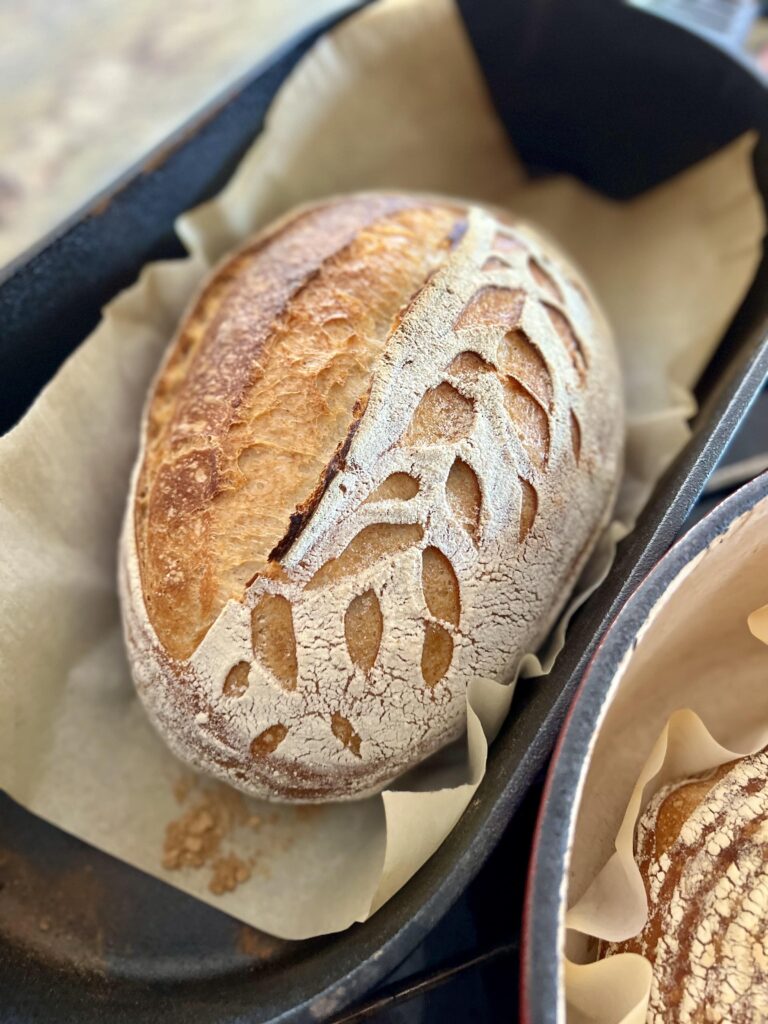
Save this for later!
How to Bake Sourdough Bread
It starts with STEAM
Steam is a crucial element in achieving the best oven spring and bake for your bread. Steam does a few things to bread dough:
- Keeps the skin on the dough stretchy and flexible, which allows the bread to rise to its highest potential before the crust hardens (oven-spring)
- Keeps the crust soft (vent the steam and bake for a crispier crust)
- Dissolves the sugars in the crust: as steam evaporates, the sugars are left creating a glossy crust
Most home ovens are built to vent steam OUT of the oven to keep excessive moisture from building up. When baking sourdough artisan bread, you need steam for the first 20-30 minutes of your bake. This ensures the dough is rising to its top height and the loaf is baking all the way through before the crust hardens and bakes it to crispy perfection.
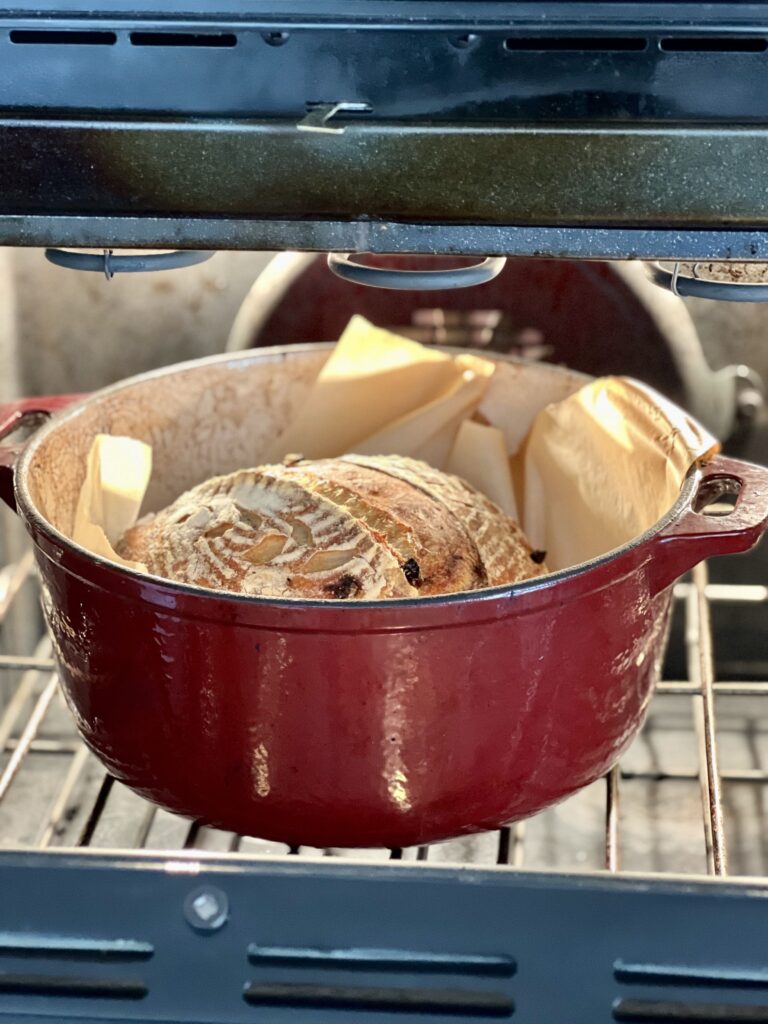
How do you Produce Steam in A Home Oven?
Producing steam in a home oven is the key to a good loaf of sourdough artisan bread. So how do you create steam in an oven that has been made to vent steam OUT? Here are a few of the most popular ways:
- Dutch Oven
- Pan of Water/Ice Cubes
- Kitchen Towels Soaked in Water
- Lava Rocks
Steam Warning: Working with steam is dangerous. It can burn you. Use high quality oven mitts and be careful when you open the oven door and as you monitor the steam in your oven.
Using a Dutch Oven to Bake Sourdough Artisan Bread
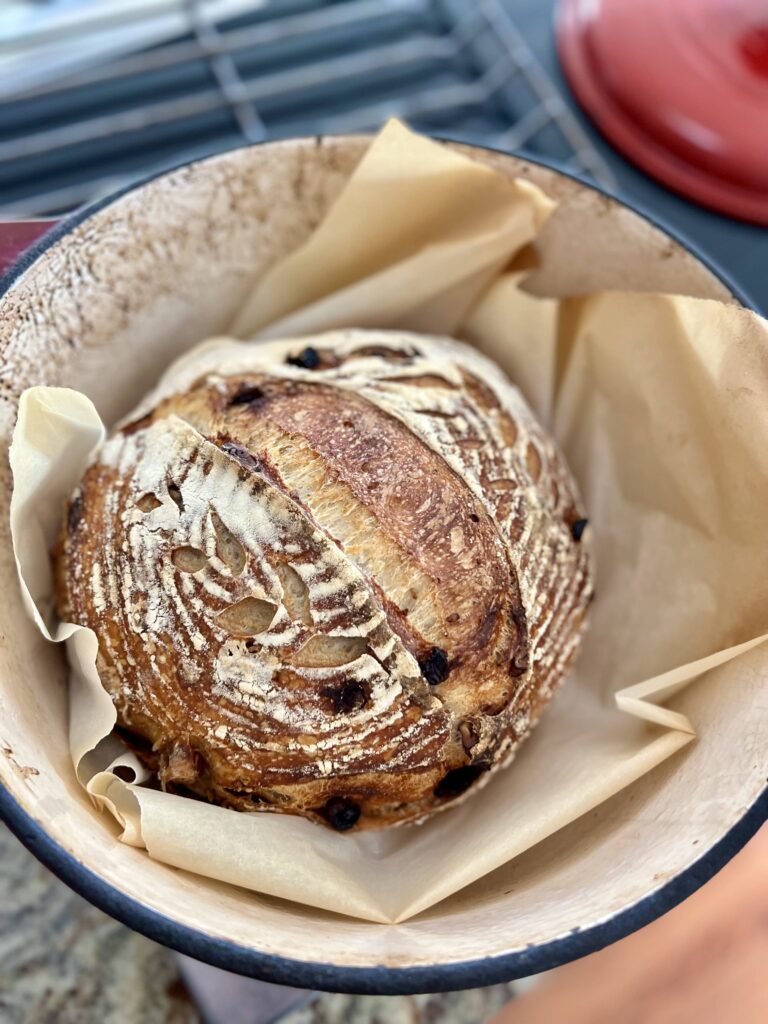
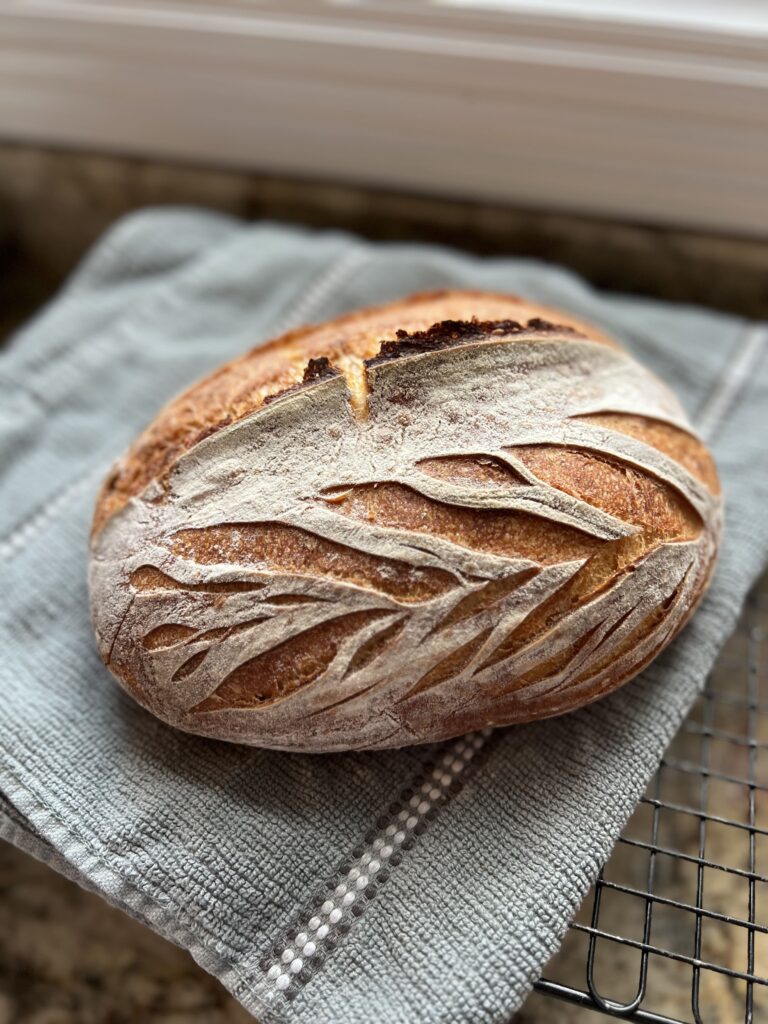
This is the most popular way for a home baker to create the steam needed for sourdough artisan bread–for good reason. It’s simple, easy and fairly straightforward. The drawbacks: you can only bake the shape of the dutch oven you have or purchase, and it’s difficult to bake multiple loaves at a time unless you have multiple dutch ovens that fit your bread. With that said, I recommend this method the most, specifically for high hydration artisan breads. Preheat the dutch oven with the lid on according to the recipe directions for about 30 minutes. Score the bread and quickly place it in the dutch oven with the lid on top. Bake for about 25-30 minutes and then remove the lid to let the crust harden and crisp up.
What Dutch Oven Should I Use?
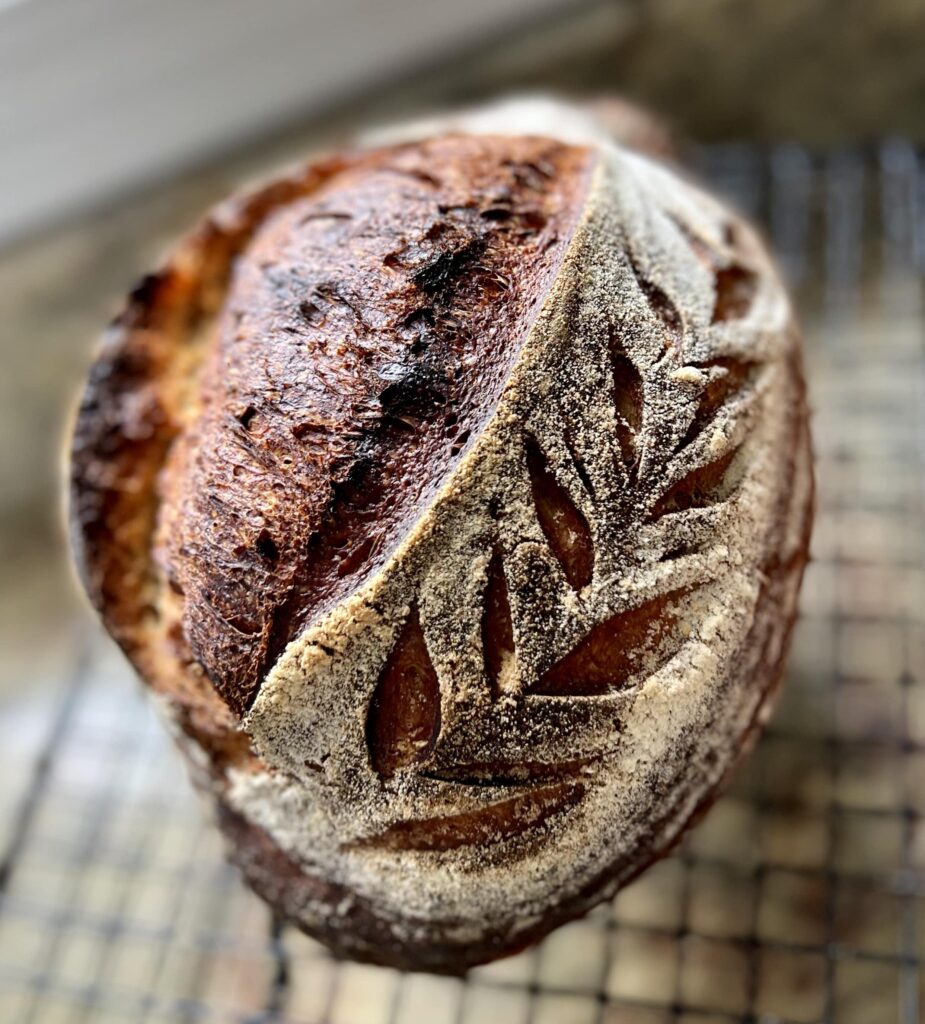
I have a few different dutch ovens that I recommend if you are looking to purchase. Keep in mind that you are looking for a dutch oven that is safe up to 500 degrees F and the darker the bottom of your dutch oven, the darker the loaf can bake:
- Oval Shape: Oval (batard) is my favorite shape to bake artisan loaves. I just love the look of it!
- Round Shape: Round (boule) is the shape I started with. It’s perfect for beginners and makes a beautiful loaf of bread.
- Cast Iron Fryer that fits larger loaves: I can bake one large loaf in this or two smaller loaves at time. I use this fairly frequently.
- Emile Henry Bread and Potato Pot: I love these bread and potato pots. They are a little on the smaller side compared to other dutch ovens and I sometimes have to reduce my dough size, but I love that I can fit two of these in my oven at once. They also bake evenly and produce some of the best tasting bread (and they make incredible potatoes). Definitely a splurge but I really enjoy this pot.
How to Bake Sourdough Bread without a Dutch Oven
Most of the other ways to create steam in your oven will require the bread to be baked on some type of baking stone. A baking stone retains heat and distributes it evenly. It gives the finished product of an artisan loaf.
Pan of water and/or ice cubes variation
Another way to inject steam into your oven is by using a shallow pan of warm water and ice cubes to create steam. Place a baking stone in the oven. You will want to use a baking stone or the even heat and so your crust doesn’t burn. Stick the pan in the lower part of the oven while it is preheating (without the water/ice cubes). Once the oven is preheated, add very hot or boiling water and a handful of ice cubes to the pan. Quickly slide your bread onto the baking stone and shut the oven. Let the bread bake for about 20-30 minutes with the steam (depending on your recipe) and then remove the pan with the water from the oven and finish baking without the steam. Be careful not to let any cold water touch the glass of your oven – this prevents it from cracking.
Kitchen Towels Soaked in Water Variation
Instead of using the shallow pan of water and ice cubes, you can also soak kitchen towels in boiling water, bunch them up together and set them in the oven to steam the dough while it bakes. Preheat the baking stone and once the oven is ready, quickly slide the loaf onto the baking stone. Put the shallow pan with towels covered in boiling water on the bottom rack of the oven and bake for about 20-30 minutes as the recipe directs. Take the steaming water/towels out of the oven to let the crust harden for the last 20 minutes of the bake.
Lava Rocks Variation
I haven’t used this method but I’ve seen it done before. Preheat the oven with a baking stone and place a shallow cast iron or stainless steel pan in the oven with lava rocks. Once the oven is preheated, pour boiling water on the lava rocks and quickly slide the bread into the oven. Bake for 20-30 minutes as the recipe directs. Take the steaming lava rocks out of the oven and let the crust harden for the last 15-20 minutes of the bake.
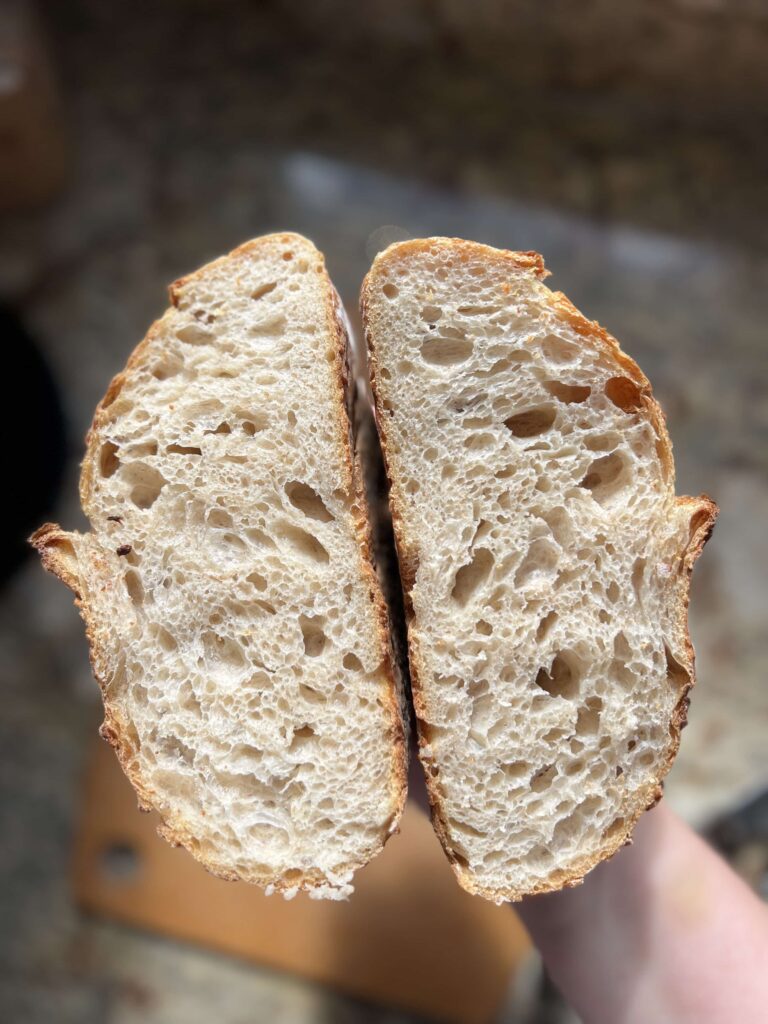
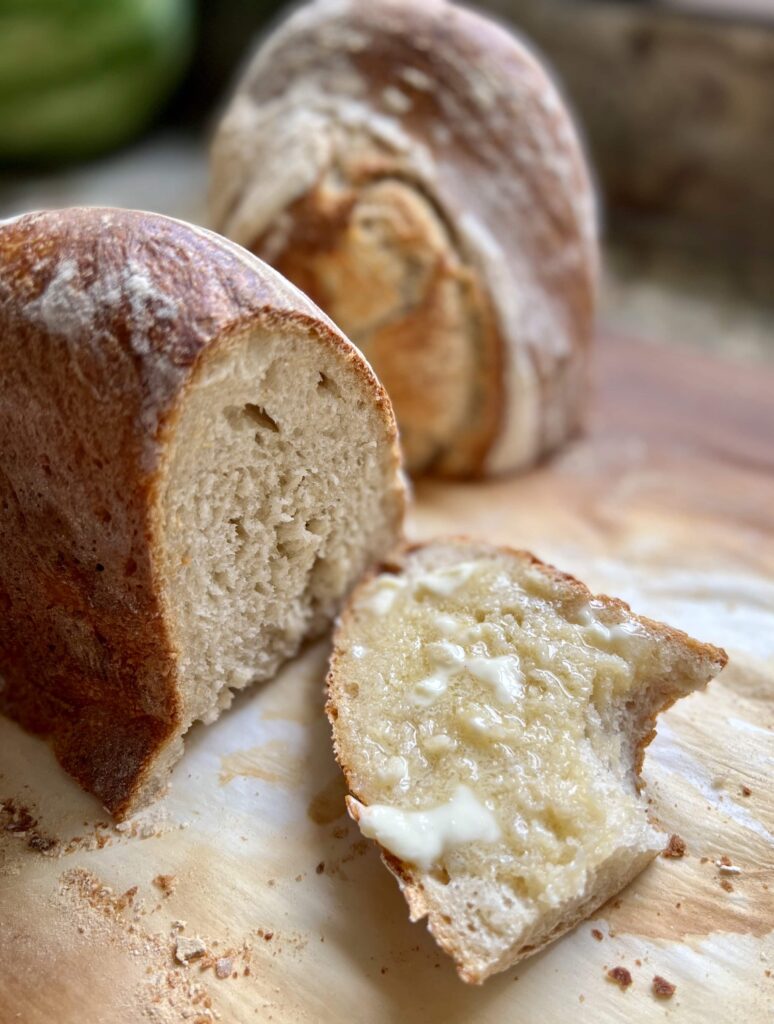
Baking Sourdough in a Loaf Pan
If you would prefer to bypass the Dutch Oven and round or oval shape of traditional sourdough, a loaf pan is a good option. You don’t need to invest in much equipment and it makes delicious bread you can slice. I have an entire article about baking sourdough in a loaf pan here.

Frequently Asked Questions
I find this happens mostly when using a dutch oven. Place a baking stone or baking sheet on the rack below the dutch oven to help disperse the heat more evenly. You can also try baking with the lid on for a longer period of time and then with it off for 10-15 minutes.
Gummy bread is usually a sign of excess moisture in the dough. Try baking the loaf a little longer. It can also be a sign of over-proving the dough when the dough collapses in on itself a little and the result is a denser and gummy bread. Slicing the bread too early can also result in a gummy crumb.
Yes! You can also bake sourdough bread on the grill. Find out how to do that – here!
Sourdough Artisan Bread Guide
Use this FREE Sourdough Artisan Bread Guide to help you make the best high-hydration loaf of sourdough bread. These articles will help you troubleshoot the entire process of baking a loaf of sourdough bread from start to finish in this free guide.
Sourdough Artisan Bread Guide
 Classic Sourdough Bread
 Essential Tools for Baking with Sourdough
 How to Autolyse and Fermentolyse: Sourdough Artisan Bread
 Bulk Fermentation in Sourdough Artisan Bread
 How to Knead Sourdough Artisan Bread
 Adding Inclusions to Sourdough Artisan Bread
 How to Shape Sourdough Artisan Bread
 How to Score Sourdough Artisan Bread
 How to Bake Sourdough Bread
 How to Bake Sourdough in A Loaf Pan
 Sourdough Artisan Bread Videos
 Sourdough Beginner Guide
Looking for in-depth Sourdough instruction?
You need my online sourdough course.
- Step by Step Instruction on Beginner and Advanced Recipes
- 2+ hours of pre-recorded video instructions
- Community forum to ask questions and help you troubleshoot
- 15+ PDF recipe downloads
- Make incredible sourdough bread today!


If I am baking my sourdough bread in a Dutch oven, and I want to make some steam do I keep this when I take the lead off the last 20 minutes of baking? Or do it as soon as I put my dough in the Dutch oven with the lid on
You are a wealth of fabulous information! Thank you so much for sharing you sourdough talents! 😍👩🍳🍞🥖🥐🫓