Sourdough Frequently Asked Questions

Updated Jan 02, 2024
Affiliate disclosure: This post may contain affiliate links. Please see our disclosure policy.
Have a sourdough question? Get it answered here in this Sourdough Frequently Asked Questions Guide (FAQ). All the answers in one place. Leave your sourdough questions in the comments and I’m happy to help answer them.
Save this for later!
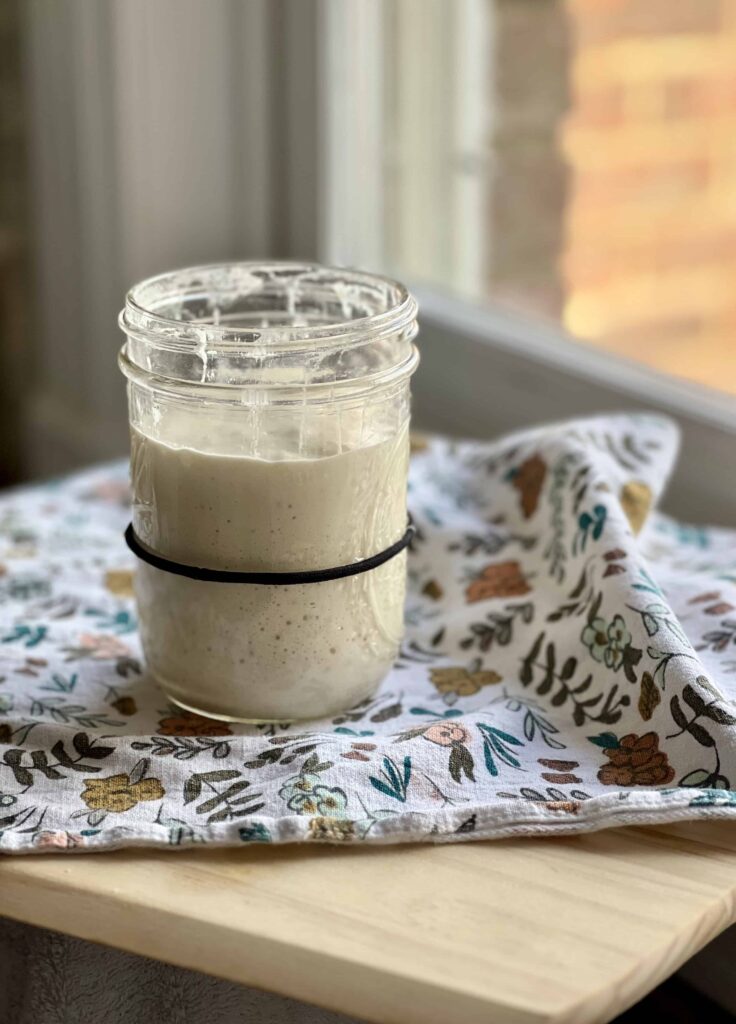
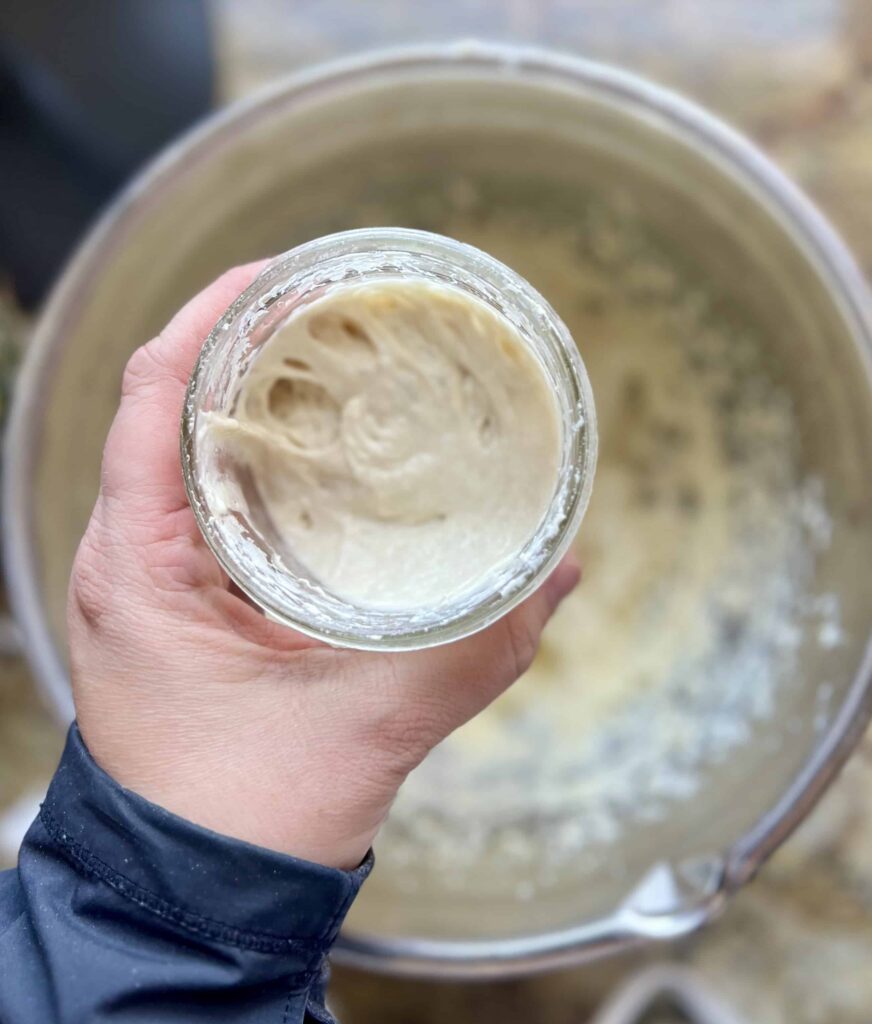
Sourdough is a method of leavening bread. Unlike most store-brought bread, sourdough doesn’t use any commercial yeast to rise. Instead it uses a “starter” of fermented flour and water to raise bread. You can use sourdough to make just about any baked good (breads, pancakes, crepes, biscuits, crackers, rolls, etc…). If you maintain a sourdough starter, you will never run out.
Creating a sourdough starter from scratch can take anywhere from 1 week to 3 weeks. The yeast and bacteria from the flour and your environment need to work together to create a symbiotic relationship. This takes time. Learn all about how to make your own sourdough starter from scratch.
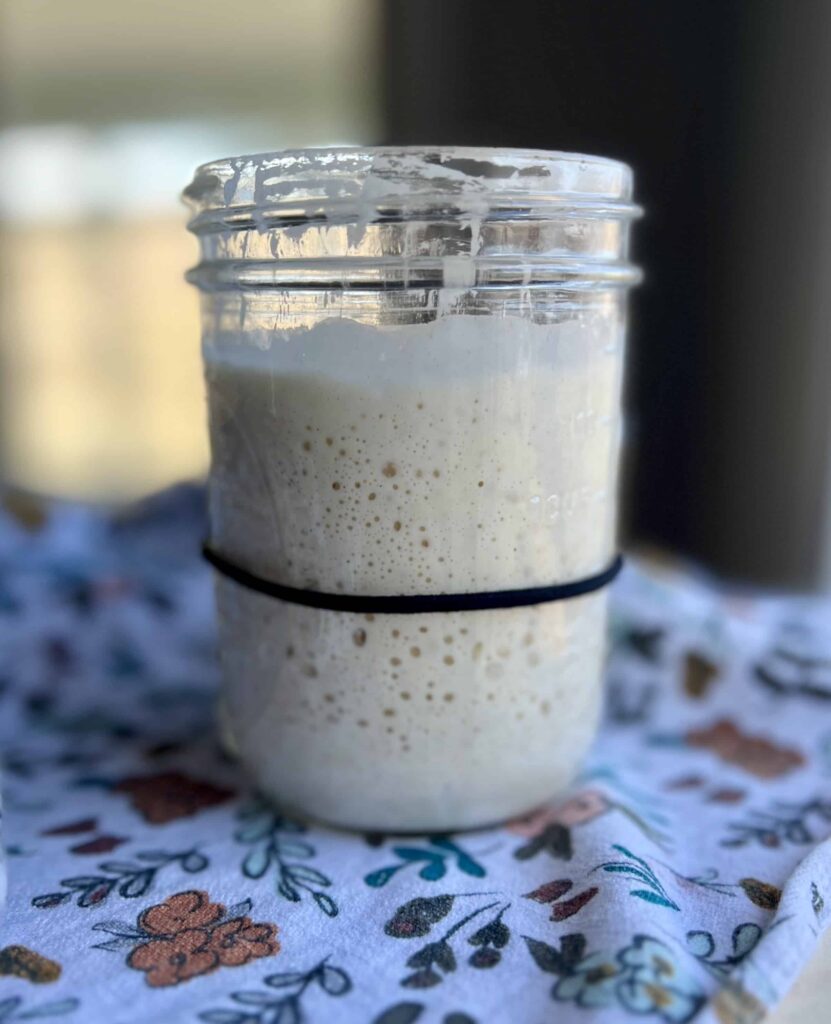
I typically feed my starter once a day, about 10 grams starter, 100 grams flour and 100 grams water. This gives me enough starter to make a levain I want that day or use the discard in a discard recipe.
I am an advocate for using what you have and make do until you know what you want and how often you’ll bake. Check out this post for all the tools I consider essential and ones that you can hold off on purchasing until you know for sure what you want to buy.
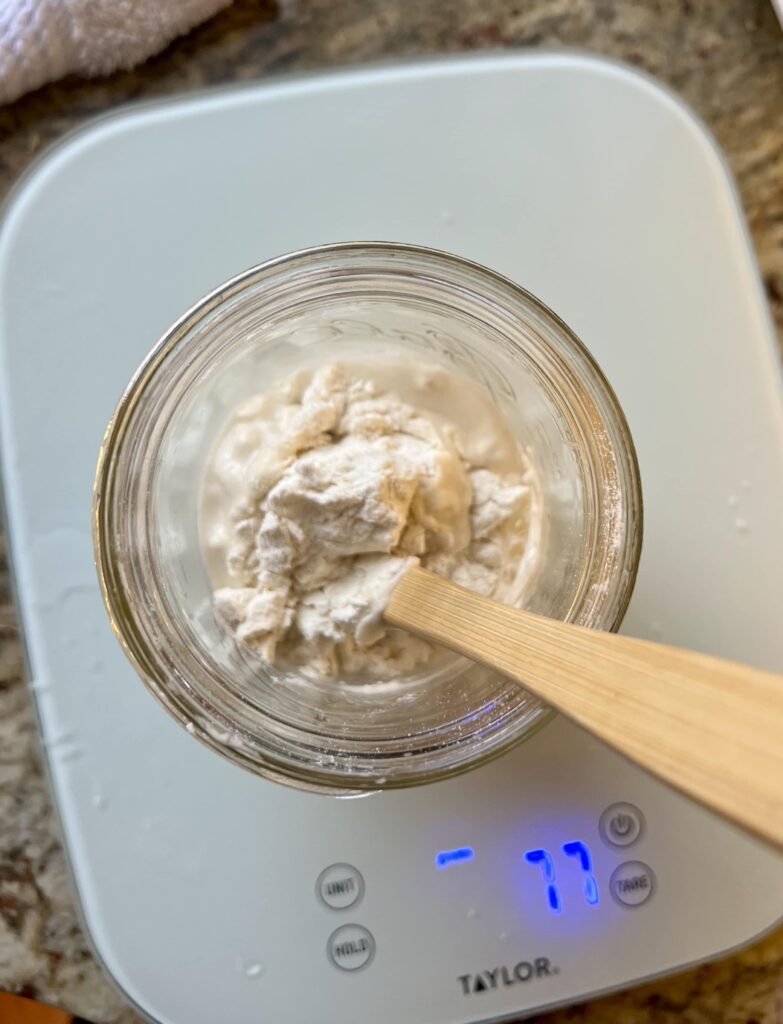
This is normal. Every kitchen is going to have a different environment, different flour and temperatures. There are many variables. Making a sourdough starter from scratch takes time. It can take weeks. Most of the time I’ve created starters from scratch it has taken 10 days to 2 weeks to get it rising and falling predictably. It is normal to have a few bubbles, especially in the first 2-3 days as the wild yeast and bacteria develop a symbiotic relationship with each other. When in doubt, Just. Keep. Feeding. Just keep discarding and feeding and over time the starter will grow.
No. Don’t start over. This is very common. When you add water to flour, you hydrate the wild natural organisms that are found in the flour. When the water hits them, they start dividing and growing. You will often see a spurt of growth in the first few days while the yeast and bacteria are starting to work together and then a few days with nothing appearing to happen–but a lot actually is happening with the yeast and bacteria developing the symbiotic relationship needed to raise bread.
I like to cover my sourdough starter lightly with reusable plastic wrap, cloth or a mason jar lid. This keeps it from drying out and insulates it in all weather. Don’t screw a tight cap on the starter because it is producing carbon dioxide and you don’t want to create a dangerous pressure build-up.
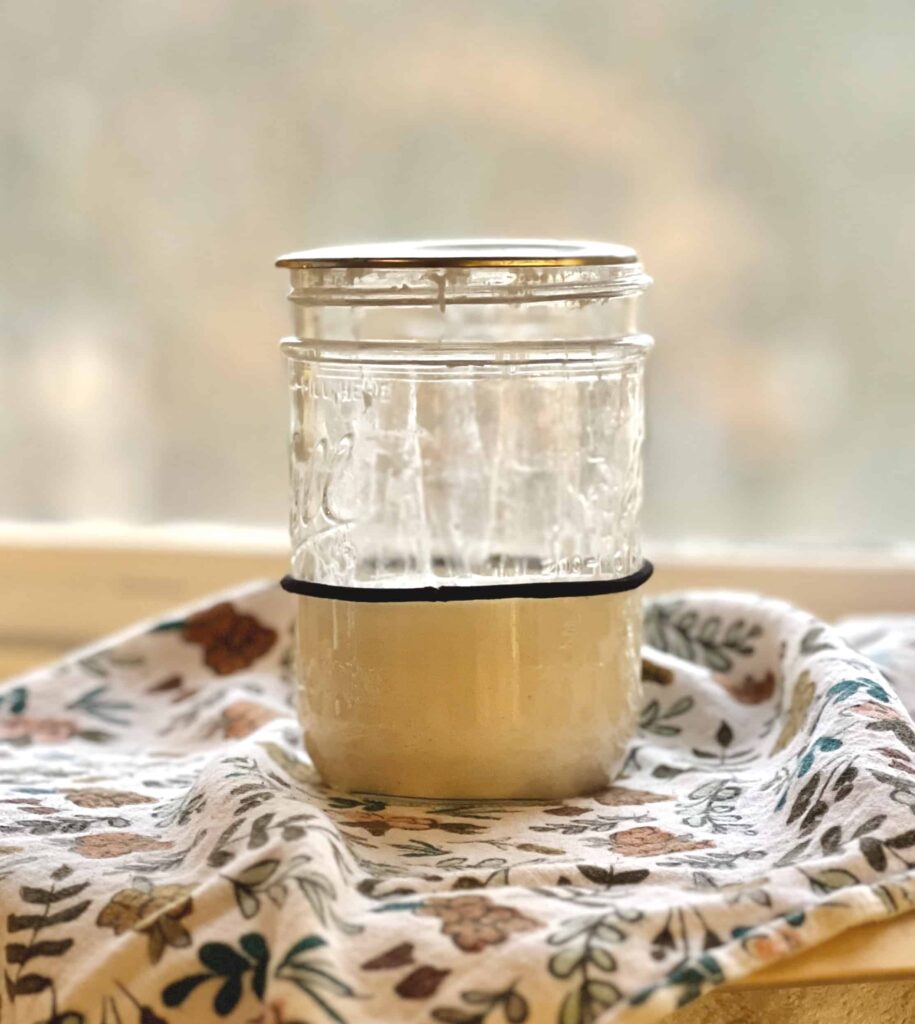
Any clear container should work as long as you can see the bubbles and fermentation taking place. I use a wide mouth Ball glass canning jar because that’s what I have on hand. Many people recommend the Weck jars for sourdough starter. I haven’t felt the need to purchase them yet because I’m happy with what I’m using.
Repeat after me: Just. Keep. Feeding! If you see signs of your starter weakening or not getting bubbly and doubling in size, just keep feeding. Feed it twice a day–once in the morning and once at night. Make sure it is in the right temperature range (76-78 degrees F). Use a thermometer to check the temperature and feed more frequently to get it back on track. I would start feeding a weak starter with equal parts starter, flour and water. Watch it rise (if temperature is 76-78 degrees it should have doubled in size in 3-4 hours). Feed it again just after it reaches its peak with those same measurements. And again as needed until your starter is strong and active again. Learn more about the ratios of feeding a sourdough starter here.
I have a whole guide on sourdough starter, the process and knowing when it’s ready. The condensed version: doubled in size, bubbly, smells “ripe” (sweet/sour smell–not overly acidic), passes float test.
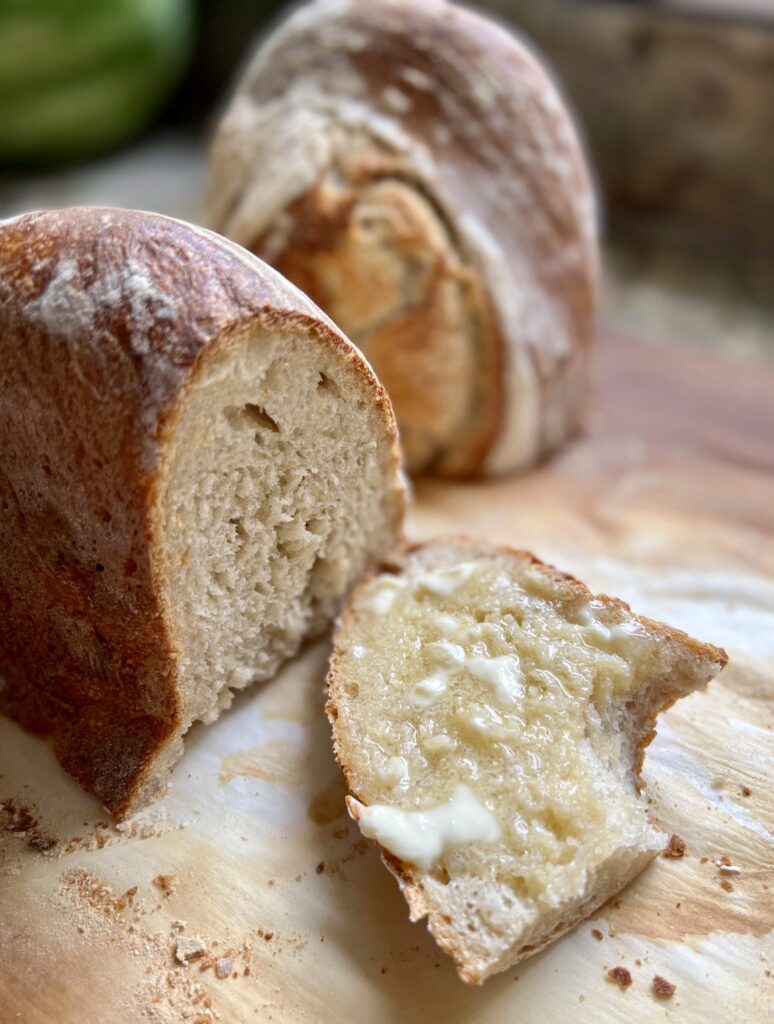
The float test is a method of indicating if a levain or sourdough starter is ready to be used. When I first started baking sourdough, I used it all the time to tell me if my levain was ready. Now I look for the clues my starter gives: doubled in size, bubbly, ripe smell. The float test can give false positives as the levain is ripening but it can be helpful when you’re starting out. Just look for the other indicators along with the float test if you’re going to use it. To perform. the float test, fill a clear cup with some room temperature water. Take a little drop of your ripe leaven and plop it in the cup. If it floats, you are ready to proceed with the recipe. If it sinks, it either hasn’t risen long enough, or it has risen too long. If you think it needs to rise longer (for example, it has only risen a few hours or has been rising in a cold kitchen overnight), test again in another hour. If it has risen too long, you can still use this leaven, but your bread may end up with more “sour” notes.
At their core: they are the same. They go through the same fermentation cycle. Both are fed flour and water. Their PURPOSE is different. Read more about their relationship here.
The short answer: maybe. If you are a beginner, I recommend choosing a recipe that is written specifically for sourdough bread. These recipes are formulated to the measurements needed for sourdough instead of commercial yeast. If I were new to sourdough baking, I wouldn’t take a recipe for commercial yeast and just sub in ripe sourdough. It won’t work well.
The long answer: yes. In order to do this, you need to know the weight of the ingredients and how adding extra flour/water/sourdough discard will affect your dough. Typically I start by calculating the weight of the flour. I take about about 15-20% of the weight of the flour and add in that much levain or starter in a recipe. You can read more about that process here.
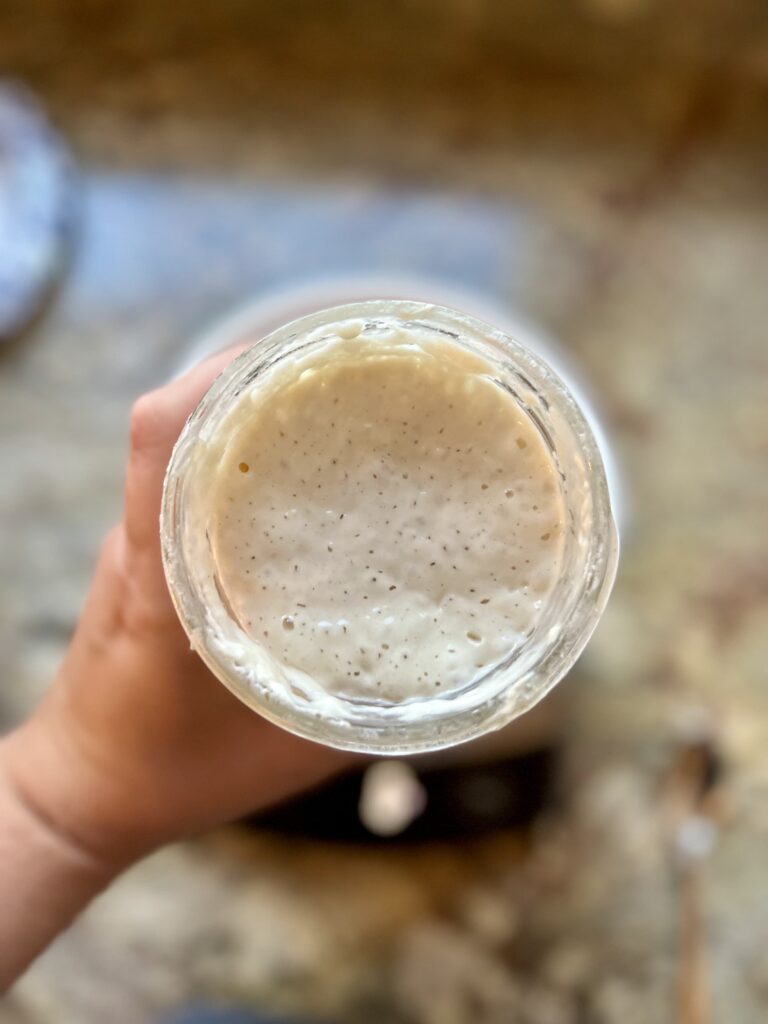
Sourdough has been around for thousands of years. It is the traditional method of leavening and baking bread. Making a levain for your bread is what I consider a “best practice” in sourdough, not necessarily that you can’t make good bread without one. Many recipes will call for “1 cup bubbly sourdough.” I interpret that as 1 cup of ripe levain (or sourdough starter if your starter produces enough). These recipes can also be difficult to understand especially if using volume measurements like cups: How much is exactly one cup of bubbly sourdough? Do I stir it down? Measure it based on height? I much prefer recipes that use metric measurements.
As long as it doesn’t have pink, orange or fuzz on it (these are all signs of mold), you should be able to revive it. Pour off the hooch (fermented liquid sitting on top of the starter) and dig down to the bottom of the starter. Take a tablespoon of that and feed it fresh flour and water. Feed it a few times until it’s revived and rising/falling predictably.
Place a pizza stone or baking sheet on the rack below the pot. This protects the base of the pot from too much heat, which prevents the bread from burning. Other ideas you can try:
1. Use good quality parchment paper
2. Lower the temperature of your oven by 25 degrees
3. Use a lighter colored pot
Gummy sourdough is usually a proofing or moisture issue. These are 5 reasons that I often see as the culprit of “gummy dough.”
-under-proved dough
-over-proved dough
-too much water
-loaf was underbaked
-bread didn’t cool moisture issue
Try adjusting some of these in your loaves and see if that helps get rid of the gummy texture.
My no-knead beginner sourdough bread is perfect for beginners! Also try your hand at some sourdough discard recipes and once you’re feeling comfortable, move on to my favorite sourdough artisan bread.
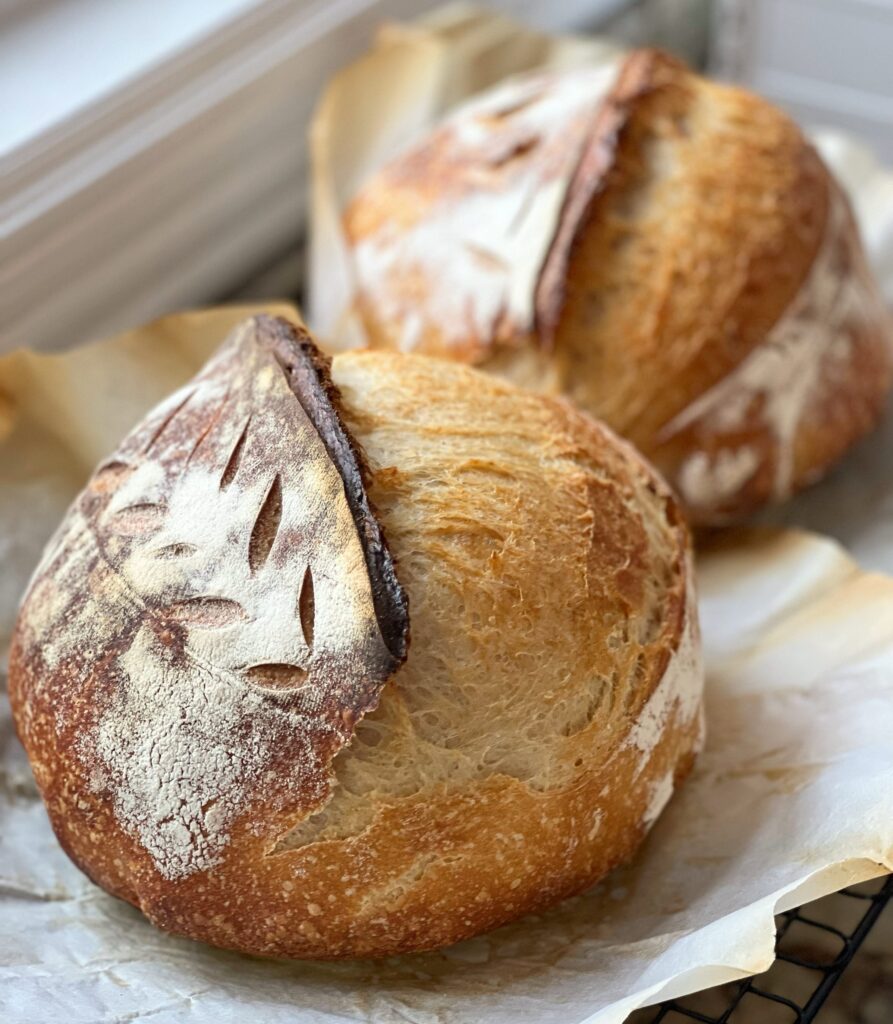
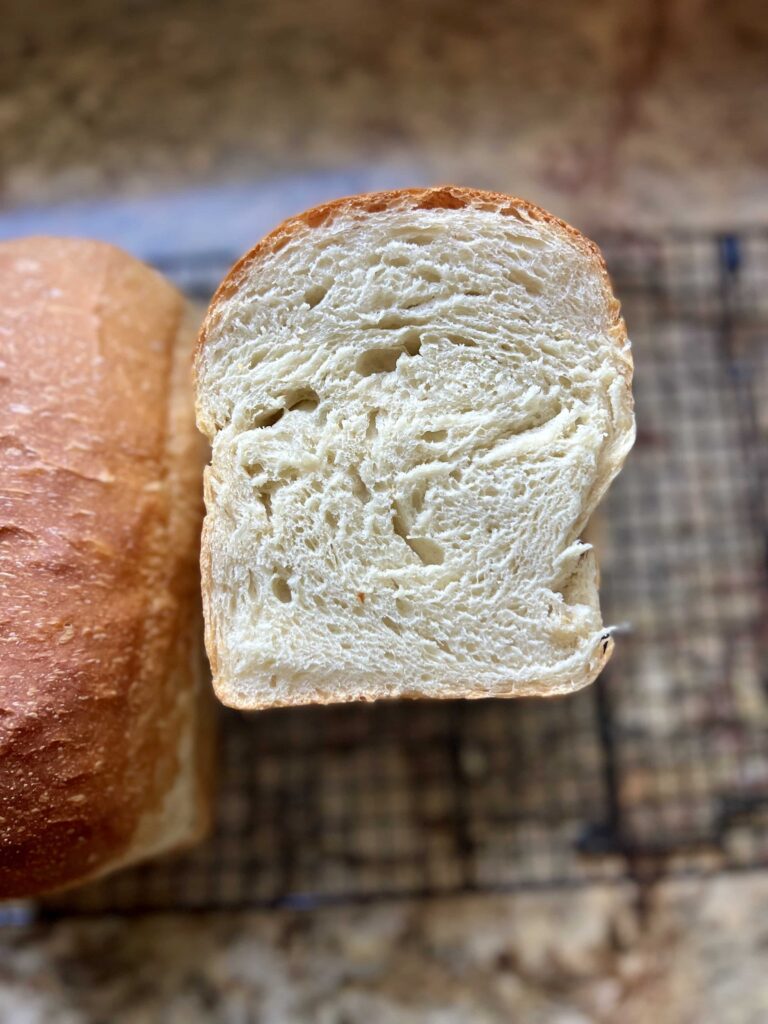
Yes. A lot of sourdough content you see online is artisan bread and for good reason. It’s delicious! But you can make any bread recipe with natural yeast instead of instant or dry active yeast. I love this soft sourdough sandwich bread and this cinnamon sugar babka is another favorite. Keep in mind the recipes will call for a much longer rise time due to the fermentation process, but they are delicious and full of the same amazing health benefits that artisan bread has.
Sometimes I think of sourdough discard as liquid gold. Seriously. It enhances many recipes and I feel like a rockstar finding ways to use it up in my baking. I keep sourdough discard in a crock in the back of my refrigerator and add to it throughout the week as I discard and feed my sourdough starter. I use up the discard throughout the week in my baking, adding it to pancakes, waffles, biscuits, cookies – you name it! For more about sourdough discard, check out this beginner guide to sourdough discard.
You can feed an active starter any type of flour you want. I usually use all purpose or bread flour to maintain my starter. Use what you have and try it out for a feed or two. You can always change up the flour you feed it if you notice it’s not working well. If your starter is sluggish, feed it some whole wheat flour mixed in with the all purpose or bread flour.
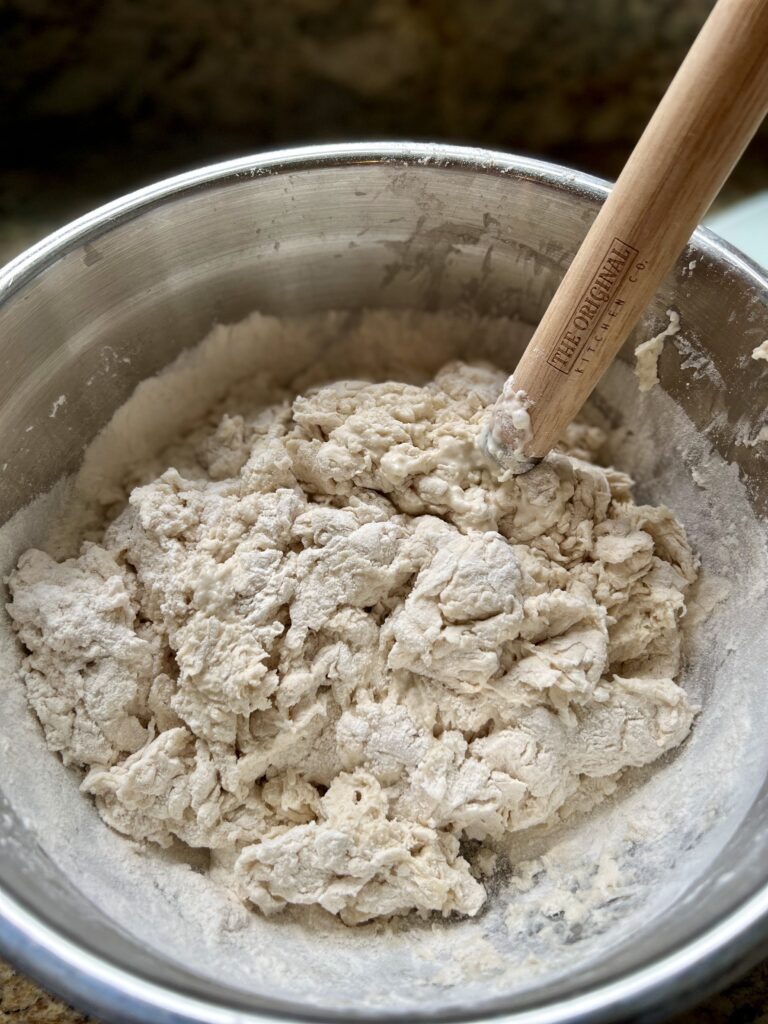
One of the amazing properties of sourdough bread is it won’t go bad as quickly as regular bread left at room temperature. You can leave sourdough on the counter for a couple of days and it will be good. Once my loaves are cooled, I slice the loaves and store them in a bread bag. I will leave them on my counter for 24-48 hours or freeze what we won’t eat right away. When you want a loaf of bread, pull it out and let it thaw before eating. I also like taking the frozen slices and toasting them individually as needed.
Most likely this is a temperature or sourdough starter issue. Make sure that the temperature of the dough is between 74-78 degrees while it’s rising. Read more about how temperature affects sourdough bread here. You may also need to proof this dough in a proofing box or oven with the light on if your kitchen is cold.
Another issue could have been with your sourdough starter: was it rising and falling predictably before you made the bread? Did you take starter at its peak ripeness to make the levain? Did you use the levain at the peak ripeness, when it has the most active yeast in it?
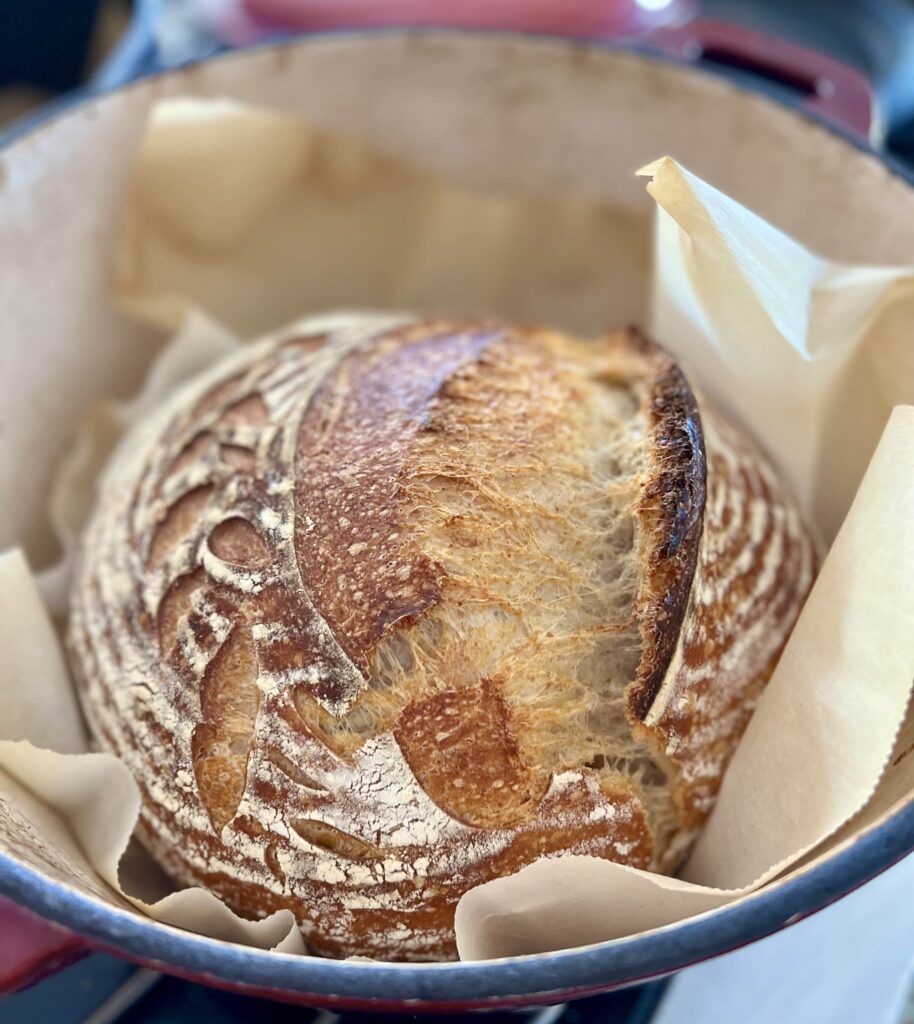
I love the sour flavor from some sourdough bread but my kids don’t always share that love. So I’ve learned some ways to make sourdough not so sour. If you’re looking for a mildly or non-flavored sourdough, try some of these ideas:
1. Keep the dough temperature lower: Bacteria love the higher temperatures of 89-91 degrees F, so keeping the dough in the 76-78 degree F range will not produce as much bacteria.
2. Use less or no whole grains: Whole grains (especially whole wheat) allow bacteria to function longer which make the sour flavor more pronounced.
3. Shorter Bulk Fermentation: I typically don’t let my bulk fermentation go over 4 hours (at 78 degrees F). The longer your dough bulk ferments, the more sour it can be.
4. Use Starter Earlier: Use starter right before its peak. It will have risen but use it right when it doubles in size instead of waiting for it to fall just a bit. A smaller amount of bacteria will develop resulting in more mild flavored bread.
5. Larger Amount of Levain: Use a larger amount of levain in your recipe. My sourdough sandwich bread takes this approach, using more levain to get a mild flavored loaf of bread.
If you are looking for a more sour flavor, you’ll want to reverse the ideas from above.
1. Keep the dough temperature higher: Bacteria love the higher temperatures of 89-91 degrees F, so keep the dough in that range will produce more bacteria resulting in a sour loaf.
2. Use more whole grains: Whole grains (especially whole wheat) allow bacteria to function longer which make the sour flavor more pronounced.
3. Longer Bulk Fermentation: I typically don’t let my bulk fermentation go over 4 hours (at 78 degrees F), but for a more sour loaf you could push that fermentation another hour or so, especially a cold bulk fermentation in the refrigerator. Be careful in over-proofing the dough if you choose this method. The longer your dough bulk ferments, the more sour it is.
4. Use Starter Later: Use starter right after its peak. It will have risen, doubled in size and is starting to go back down. The yeast are still active at this stage but more bacteria are present, and the starter smells much more acidic. A larger amount of bacteria will develop resulting in more sour flavored bread.
5. Smaller Amount of Levain: Use a smaller amount of levain in your recipe. This will increase the overall ph and give a more sour flavor to your bake.
Sourdough Beginner Guide
 What is Sourdough?
 How to Make a Sourdough Starter
 How to Feed and Maintain a Sourdough Starter
 When Is Sourdough Starter Ready to Use? Easy Signs to Look For
 What is Sourdough Discard?
 How and Why to Make Levain
 Sourdough Timeline for Beginners: How To Fit It Into Your Day
 How Temperature Affects Sourdough
 Sourdough Starter Ratios Explained
 Essential Tools for Baking with SourdoughSourdough Frequently Asked Questions
 How to Dehydrate and Rehydrate Sourdough Starter
 How to Add Sourdough Discard to Any Recipe
 How to Replace Yeast with Sourdough Starter
 Adjusting the Sour Flavor in Sourdough Bread
 Sourdough Artisan Bread Guide
 How to Bake Sourdough in A Loaf Pan
 Adding Inclusions to Sourdough Artisan Bread
Need More Help? Take a Sourdough Class with Amy Bakes Bread
Looking for in-depth Sourdough instruction?
You need my online sourdough course.
- Step by Step Instruction on Beginner and Advanced Recipes
- 2+ hours of pre-recorded video instructions
- Community forum to ask questions and help you troubleshoot
- 15+ PDF recipe downloads
- Make incredible sourdough bread today!


When using your recipe for sourdough rye bread, can I leave out the whole wheat flour and substitute rye or regular bread four for it?
I have been enjoying various recipes from your site! Thanks so much for sharing!
You can do that!
Can I freeze discard and use it later?
No – Sourdough discard and starter does not freeze prior to baking. The freezer kills the natural yeast in sourdough.
I tried starting other sourdough starters and they didn’t work. I purchased your book and used your recipe, I was shocked after day 1 my starter doubled, I fed it and it doubled within 8 hours, wasn’t sure if I should feed it again, I fed it before I went to bed, woke up 8 hours later and it was more than doubled, I was thrilled. I did feed it again this morning. Do I continue as it’s a day 3?
I’m glad it’s working well for you! I’d keep feeding it according to the schedule, feeding it once it has doubled.
Hi, when should I refrigerate my starter, after it rises or after I do a feed? I want to hold off baking as I just finished my first bake of 2 loaves?
thank you.
I keep my starter in the fridge during the week and bake with it on weekends (busy work schedule!). I feed it, let it double, and then stick it in the fridge. Then when I’m ready to bake with it again, I take it out of the fridge and feed it once or twice before using it to bake with.
Do I feed my starter each time I take some out and use? I don’t find this answer.
Put my dough in the oven with light on. My kitchen is on cold side. Doesn’t seem to be raising as has been in about 14 hours now. Maybe I should quit opening the oven door… going to give it a couple more hours.
Thank you!
You will feed your starter each time it peaks and is fully ripe. This will depend on your feeding ration. For example, if you are using a 1:10:10 ratio (10 grams starter, 100 grams water, 100 grams flour), it will need to be fed again in 10-12 hours. The timing is also influenced by temperature. A warmer environment can speed up fermentation. This post on how to feed and maintain a sourdough starter is really helpful. As for your dough, 14 hours is a long time to not see any activity. Was your starter ripe and active when you mixed the dough together? You will want to make sure you are using starter or levain when it is ripe and that it is doubling predictably prior to making a loaf. Hope that information helps!
My crust is almost too hard to slice. How do I adjust the baking to get a crunchy but not hard crust?
If the crust is coming out too hard, it’s usually from too much steam or baking a bit too long. Try reducing the covered bake time by 5–10 minutes or uncovering earlier so the crust doesn’t over-thicken. You can also lower the oven temperature slightly. That should give you a crunchy crust without it becoming too hard to slice.
Can I use my stand mixer to mix the dough? I want to make a same day artisan bread
I would use this recipe for Stand Mixer Sourdough. Enjoy!
Best way to reheat sour dough for parties
If you can’t bake it fresh the day of or the night before, I would reheat sourdough in the oven, wrapped loosely in foil at 350°F for about 15–20 minutes so it warms through without drying out. If you want a crisp crust, unwrap it for the last few minutes, and avoid the microwave since it tends to make sourdough tough and chewy.
my dough is too sticky. how do I fix it to bake bread?
Which recipe are you using? What stage of the process are you in? If making artisan bread and you are having difficulty shaping it, you can put it in a loaf pan to bake, which will help it get some structure. Sourdough does tend to be a stickier dough to work with. I suggest wetting your hands and using a bench scraper to work with the dough.
my dough for rye does not bond as well as my country style does during shaping and it not as thick as I believe it should be. my half loaf is 85 grams rye and 413 white. any suggestions?thanks
That’s pretty normal with rye. It doesn’t behave like white flour, so the dough won’t feel as thick or hold together the same way during shaping. Try adding a little more water, give it more time to hydrate, and handle it more gently when shaping. It’ll always feel a bit softer and less stretchy than a country loaf — that’s just rye doing its thing.
I’m getting ready to make Beginner Sourdough bread. I’m confused on the folds. It says there are 3 sessions of stretch and folds. Do I do 3 stretch and fold rounds for a total of 9 rounds for all 3 sessions spaced out every hour or 3 rounds total spaced out every hour?
Each set of stretch and folds is 3-4 folds. Repeat that set of 3-4 folds every 30 minutes for a total of 4 times over the course of 2 hours (so yes, it is a total of 9-12 individual folds spread over 2 hours). Hope that helps!